

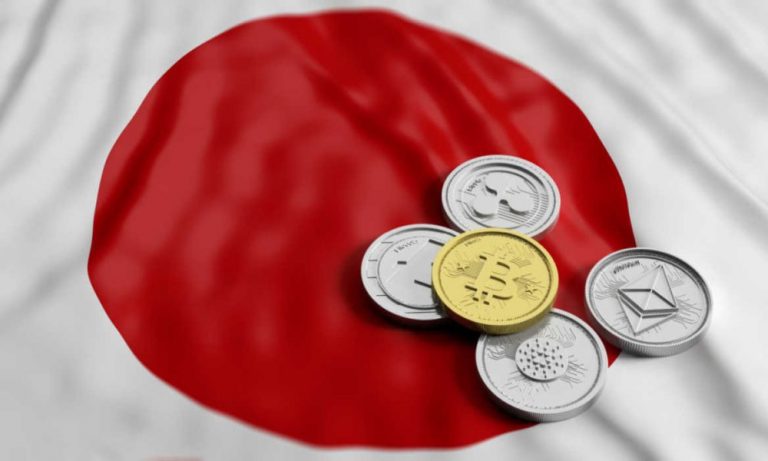
Japan is actively advancing a major overhaul of its cryptocurrency taxation framework, proposing to slash the tax rate on crypto gains from a progressive rate of up to 55% to a flat 20%.
This change aims to treat digital assets more like traditional financial instruments, such as stocks, to encourage investment, foster Web3 innovation, and boost institutional participation. However, the reform is not yet finalized—it’s pending parliamentary approval and is slated to take effect in the 2026 financial year starting April 2026.
The proposal has gained significant momentum following recent announcements from Japan’s Financial Services Agency (FSA). In Japan Under the existing system:Crypto gains are classified as “miscellaneous income” and added to your overall income.
They’re taxed at progressive national rates of 5%–45%, plus a flat 10% local inhabitant tax, resulting in a combined top rate of 55% for high earners (e.g., those with annual income over ~¥40 million or about $260,000 USD).
Register for Tekedia Mini-MBA edition 20 (June 8 – Sept 5, 2026).
Register for Tekedia AI in Business Masterclass.
Join Tekedia Capital Syndicate and co-invest in great global startups.
Register for Tekedia AI Lab.
This has been criticized as punitive, driving some traders offshore and hindering market growth compared to equities, which are taxed at a flat 20%. The high rates apply to disposals like selling, trading, or using crypto for payments, but not to simple transfers between your own wallets.
A flat 20% capital gains tax on profits from approved cryptocurrencies, aligning with stock taxation. This would apply to the 105 tokens listed on licensed Japanese exchanges (e.g., Bitcoin, Ethereum), but initially exclude many altcoins, NFTs, or speculative tokens, which may remain under the old 55% regime.
Crypto would shift from “property” under the Payment Services Act to “financial products” under the Financial Instruments and Exchange Act (FIEA). This enables:Three-year loss carry-forward provisions (offset losses against future gains, similar to stocks).

Insider trading bans and mandatory disclosures for listed tokens to enhance market fairness. Banks and insurers could offer crypto trading and custody via subsidiaries, potentially unlocking ¥5 trillion ~$33 billion in institutional and retail capital.
Public feedback and guidelines are expected by early 2026, with full implementation in FY2026. Corporate taxes currently ~30% on unrealized gains may see separate adjustments. Primarily 105 listed tokens; others may stay at 55%
Lower taxes could spur retail participation—over 11 million crypto accounts exist in Japan already—and make holding long-term more attractive. However, stricter reporting and exclusions for niche assets might limit benefits initially.

Analysts predict a surge in on-chain activity, corporate Bitcoin buying (e.g., by firms like Metaplanet), and even Bitcoin ETF approvals by mid-2026. This positions Japan as a competitive global hub, though rates like 20% are still higher than in places like Germany 0% for long-held assets or Singapore (l0% on capital gains.
Volatility concerns, enforcement of new rules, and expanding coverage to more tokens will be key hurdles. The Japan Blockchain Association has long advocated for this, citing growth stifled by the old regime.
If you’re a Japanese taxpayer or investor, consult a professional for personalized advice, as rules could evolve. This reform signals Japan’s pivot toward embracing crypto as mainstream finance—watch for Diet approval in early 2026.
By reclassifying approved cryptocurrencies like Bitcoin and Ethereum as “financial products” under the Financial Instruments and Exchange Act (FIEA), the reforms aim to integrate digital assets into mainstream finance. This could unlock ¥5 trillion (~$33 billion) in pent-up institutional and retail capital, fostering innovation while introducing safeguards like insider trading rules and mandatory disclosures.
High earners currently face a combined 55% rate 45% national + 10% local, which has deterred trading and driven activity offshore. The flat 20% aligns crypto with stocks, potentially saving investors millions on large gains. For example, a ¥10 million profit taxed at 55% costs ¥5.5 million; at 20%, it’s just ¥2 million—freeing up capital for reinvestment.
A new three-year offset for losses absent in the current system provides a safety net in volatile markets, encouraging long-term holding over short-term speculation. With 13.2 million crypto accounts already (e.g., 3.4 million via Mercari), lower barriers could push retail ownership from its current ~12% of the population toward global averages, accelerating mainstream use for payments and savings.
Banks and insurers can now offer crypto trading/custody through subsidiaries, drawing in conservative players. Analysts forecast ¥5 trillion in new inflows by mid-2026, as seen in early moves like Metaplanet’s addition to the FTSE Japan Index and its BTC purchases totaling 18,991 coins.
While individuals benefit most, corporations taxed at 20-30% may see indirect gains from clearer rules, though unrealized gains taxation persists. Startups could thrive with easier funding, but stricter FIEA compliance (e.g., risk disclosures) raises operational costs.
Licensed exchanges like SBI VC Trade and Mercari are expanding services, potentially repatriating traders from abroad and boosting liquidity. Expect heightened on-chain activity, ETF approvals and a 15-20% BTC price lift from Japanese demand alone. This addresses the “capital flight” caused by high taxes, positioning Japan as a Web3 hub.
Aligning with the “New Capitalism” initiative, reforms could inject vitality into Japan’s stagnant economy, promoting blockchain for payments (e.g., JPYC stablecoin) and reducing cash reliance. 20% flat tax + loss offsets = more affordable trading; easier reporting.
Initial exclusions for altcoins/NFTs keep some at 55%; stricter KYC/enforcement, ¥5T inflows; bank-integrated services. Higher compliance costs under FIEA; volatility risks amplified by new entrants. Web3 hub status; capital retention. Revenue dip for govt ~¥100B/year?; need for robust anti-fraud measures.
Lower taxes may fuel speculation, raising bubble risks. FIEA’s insider trading bans and disclosures aim to mitigate this, but enforcement on 105 tokens leaves others (e.g., speculative alts) vulnerable. Parliamentary approval in early 2026 is likely but not guaranteed—delays could temper optimism.
Tax authorities must handle increased filings, and global treaties ensure offshore compliance. Benefits skew toward high-volume traders; low-income users see minimal change, and corporate taxes remain unchanged.
Overall, this reform signals Japan’s evolution from crypto pioneer 2017 regulations to global leader, potentially adding billions in economic value while modeling balanced regulation.
Early market reactions—like Metaplanet’s BTC buys—show momentum building. For personalized impacts, consult a tax advisor, as details may evolve. If approved, 2026 could mark Japan’s “Satoshi era.”