

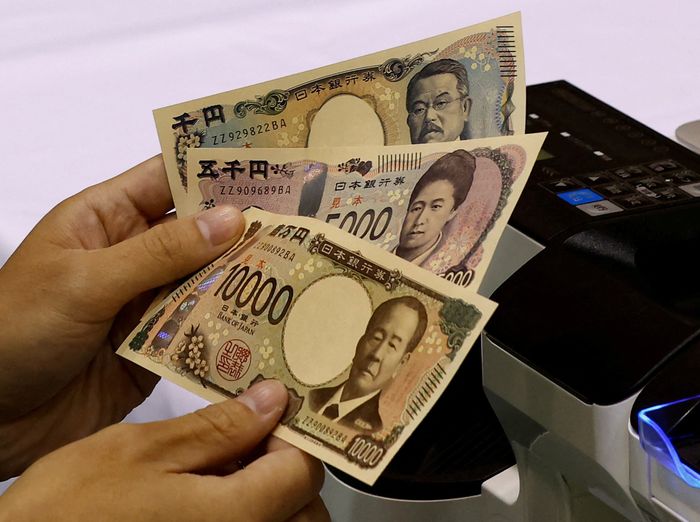
Japan’s top business leader on Tuesday said government intervention in currency markets would be justified if aimed at halting sharp and disorderly moves in the yen, as the Japanese currency remains caught between diverging monetary policies and rising trade frictions with the United States.
Yoshinobu Tsutsui, head of Keidanren, Japan’s most powerful business lobby, said recent developments had helped ease some of the damage caused by prolonged yen weakness, after the currency rebounded following so-called rate checks by the New York Federal Reserve.
“We welcome the fact that the demerits caused by excessive yen weakness have been arrested to some extent,” Tsutsui told a news conference.
Register for Tekedia Mini-MBA edition 20 (June 8 – Sept 5, 2026).
Register for Tekedia AI in Business Masterclass.
Join Tekedia Capital Syndicate and co-invest in great global startups.
Register for Tekedia AI Lab.
Rate checks, in which authorities inquire about market prices without direct intervention, are closely watched by traders as a signal that policymakers may be preparing to step in if volatility intensifies.
Tsutsui said the future direction of the yen would depend heavily on the policy paths of both the Bank of Japan and the U.S. Federal Reserve, underscoring how interest-rate differentials continue to dominate currency dynamics.
“The direction of Japanese and U.S. monetary policy would also affect the yen’s future moves,” he said, adding that he hoped the Bank of Japan would respond “appropriately,” without spelling out specific measures.

He was more explicit on the principle of intervention, however, saying it would be warranted under certain conditions.
“If there are rapid, volatile yen moves, then intervention would be justified,” Tsutsui said.
A currency under strain
The yen’s recent rebound comes after months of intense pressure that pushed it to multi-decade lows against the dollar. The currency has been weighed down by Japan’s ultra-loose monetary stance, even as the Federal Reserve kept U.S. interest rates elevated, widening yield gaps and encouraging capital to flow out of Japan.

While a weak yen has supported exporters by boosting overseas earnings when repatriated, it has also driven up import costs, squeezing households and companies dependent on energy, food, and raw material imports. That imbalance has increasingly worried policymakers and corporate leaders, who fear that excessive depreciation does more harm than good.
The currency’s troubles have been compounded by escalating trade tensions between Tokyo and Washington. President Donald Trump has repeatedly criticized Japan’s trade surplus with the United States and has suggested that a weak yen gives Japanese exporters an unfair advantage. His administration has floated the possibility of new tariffs or trade measures if it believes currency movements are distorting competition.
Those threats have revived memories of past U.S. pressure on Japan over exchange rates, particularly during periods when Washington accused Tokyo of tolerating yen weakness to support exports. Japanese officials have consistently denied manipulating the currency, insisting that any intervention would be aimed solely at smoothing volatility, not targeting specific exchange-rate levels.
Tariffs and policy divergence
The tariff faceoff has added another layer of uncertainty to yen markets. Any escalation in trade measures could hurt Japan’s export-driven economy, while also influencing currency flows as investors reassess risk. At the same time, the Bank of Japan faces a delicate balancing act: moving too slowly to normalize policy risks further yen weakness, while moving too quickly could destabilize financial markets and choke off fragile domestic growth.
Against that backdrop, Tsutsui’s comments reflect growing pressure from the corporate sector for stability rather than outright currency weakness. Large manufacturers may benefit from a softer yen, but smaller firms and consumers bear the cost through higher import prices and inflation.
Japan has already demonstrated its willingness to act. In recent years, authorities have spent billions of dollars intervening in the market to stem sharp yen declines, emphasizing that excessive volatility, not the level of the exchange rate itself, is their primary concern.
Tsutsui’s remarks suggest that the stance remains intact. With U.S.–Japan trade relations under strain, global markets on edge over tariffs, and monetary policy paths still diverging, the yen is likely to remain volatile.