

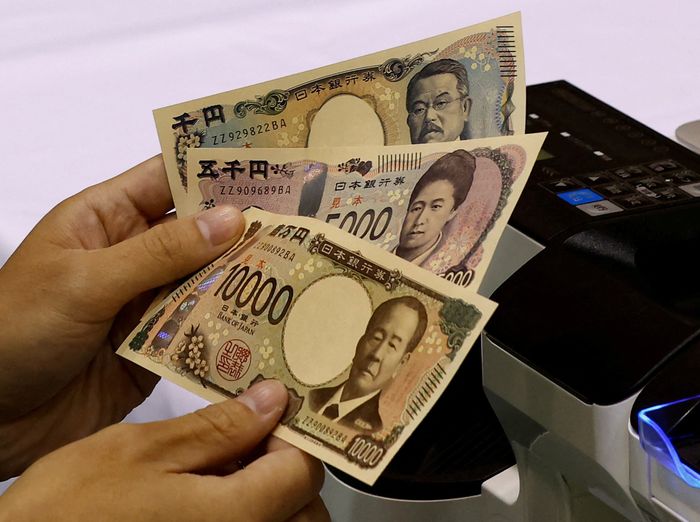
Japan’s headline inflation accelerated to 1.9% in July, the highest level recorded this year, as rising energy costs began to feed into consumer prices and renewed pressure on the yen kept the outlook for monetary policy in focus.
Core inflation, which excludes fresh food but includes energy, rose 1.8% from a year earlier, in line with economists’ expectations. The so-called core-core measure, which excludes both fresh food and energy, increased 1.9%, suggesting that underlying price pressures remain close to the Bank of Japan’s 2% target even after stripping out volatile energy costs.
Energy prices increased for the first time since November 2025 despite government subsidies, as higher oil prices linked to the Iran war began to work their way through the Japanese economy.
Register for the next Tekedia Mini-MBA.
Register for Tekedia AI in Business Masterclass.
Join Tekedia Capital Syndicate and co-invest in great global startups.
The impact has been more pronounced at the wholesale level. Japan’s wholesale inflation rose 7.2% in July, with electricity charges making the largest contribution, indicating that energy costs are putting significant pressure on businesses even as government measures limit their immediate impact on households.
The relatively contained consumer inflation rate has partly reflected subsidies introduced by the Takaichi administration to cushion households from higher energy costs. Without those measures, the pass-through from higher oil and electricity prices could be more visible in consumer prices.
The latest data nevertheless reinforce the Bank of Japan’s warning that inflation could accelerate further.

In its outlook report last month, the central bank said core inflation was likely to rise to a level “clearly above” 2% from the second half of fiscal 2026, which begins in September and runs through March 2027.
The BOJ cited several factors that could keep inflation elevated, including wage increases being passed through to selling prices, higher crude oil prices and the yen’s depreciation. It expects inflation to eventually move back toward 2% as crude oil prices decline.
The currency remains a key part of that outlook.

Japanese authorities have demonstrated a willingness to intervene in foreign-exchange markets to support the yen. The currency strengthened from around 164 per dollar before the intervention to roughly 155, but subsequently surrendered much of those gains and has moved back toward 159.
The limited durability of the yen’s recovery has reinforced expectations that intervention alone may not be sufficient to reverse the currency’s underlying weakness. Investors continue to focus on the substantial interest-rate gap between Japan and the United States, with the U.S.-Japan 10-year government bond yield spread at about 1.8 percentage points as of Thursday.
That differential continues to make yen-funded trades attractive. Investors can borrow or raise funds in Japan at relatively low costs and deploy the proceeds into higher-yielding assets overseas, particularly U.S. bonds and other G10 currencies.
The temporary strengthening of the yen may therefore have created an opportunity for some investors to rebuild those positions rather than prompting a fundamental shift away from carry trades.
Japanese institutional investors are among those maintaining pressure on the currency. Long-term investors such as pension funds and asset managers have continued selling yen, according to Masahiko Loo, fixed income strategist at State Street Global Advisors.
“The intervention only addressed a ‘symptom’, but [is] not curing the ‘disease,’” said Francis Tan, Asia chief strategist at Indosuez Wealth Management, pointing to structural factors such as Japan’s low borrowing costs and wide interest-rate differentials with other major economies.
Koll said Japanese retail and institutional investors have also used periods of yen strength to establish positions in non-yen assets, particularly higher-yielding U.S. Treasury bills and bonds.
“The market is far less one-sided than before the intervention, but the incentives to fund in yen remain attractive while U.S.-Japan rate differentials stay wide,” Loo said.
Other market-flow data indicate that carry trades remain an important source of demand for foreign currencies against the yen. Long-term investors continue to sell the low-yielding Japanese currency against higher-yielding G10 currencies, consistent with the use of yen as a funding currency.
Ashwin Binwani, founder of Alpha Binwani Capital, said institutional investors remained positioned in carry trades against a basket of G10 currencies, led by the Australian dollar.
There are also signs that some currency traders are rebuilding bearish positions against the yen after the intervention-driven gains faded.
Binwani said he closed long dollar-yen positions after the U.S.-backed intervention before rebuilding them once the dollar rose above 157 yen.
“Upon news of the U.S. intervention, we took profit and once again re-established dollar yen long positions just slightly above 157,” he said.
The strategy illustrates the challenge facing Japanese authorities. Each intervention-driven rally in the yen can potentially become an opportunity for investors to sell the currency again if the underlying interest-rate differential remains unchanged.
While such positions are not identical to borrowing yen directly to invest in higher-yielding assets, both trades are supported by the same fundamental factor: Japan’s relatively low interest rates compared with other major economies.
Still, speculative bearish positioning against the yen has moderated significantly following the authorities’ intervention.
Data from the Commodity Futures Trading Commission showed leveraged funds cut their net short yen positions to 59,526 contracts as of Aug. 11, from nearly 138,000 contracts at the end of June.
The reduction indicates that intervention has had an effect on speculative positioning, even if it has not fundamentally eliminated the forces weighing on the currency.