

Nvidia CEO Jensen Huang has offered a counter-narrative to the growing anxiety around artificial intelligence and job losses, arguing that the AI boom is set to create a wave of high-paying jobs far from traditional office settings.
Speaking at the World Economic Forum in Davos on Wednesday, Huang said the global rush to build AI infrastructure is already driving demand — and wages — for skilled trades, with salaries reaching into six figures for those helping to construct and maintain what he described as “AI factories.”
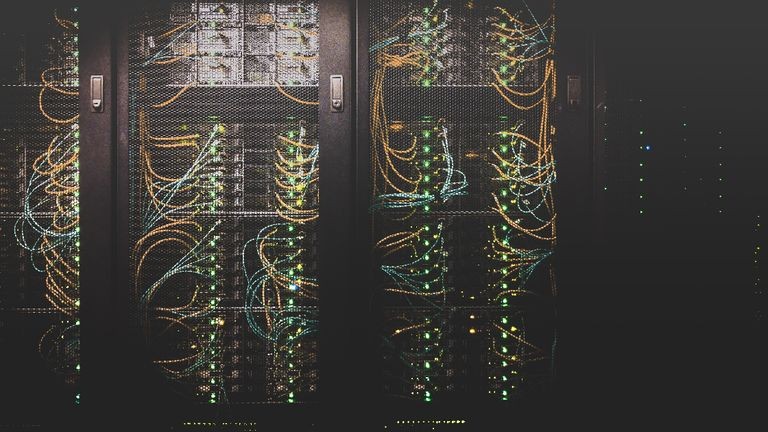
At the heart of Huang’s argument is scale. The global race to deploy artificial intelligence is no longer only about algorithms and software models. It is about factories, power systems, cooling plants, fiber networks, and specialized facilities that can house and operate vast amounts of computing equipment. Huang described this moment as the largest infrastructure buildout ever undertaken, measured not only in dollars but in geographic reach and industrial complexity.
Register for Tekedia Mini-MBA edition 20 (June 8 – Sept 5, 2026).
Register for Tekedia AI in Business Masterclass.
Join Tekedia Capital Syndicate and co-invest in great global startups.
Register for Tekedia AI Lab.
That buildout, he said, is already changing who benefits from the AI economy. Chip fabrication plants, data centers, and so-called AI factories require armies of electricians, plumbers, steelworkers, construction crews, and network technicians. These are roles that cannot be easily automated and cannot be filled overnight. As demand surges faster than supply, wages are rising sharply.
Huang told the Davos audience that salaries in some of these trades are nearly doubling, pushing total compensation into six-figure territory for workers involved in building and maintaining AI infrastructure. The implication is that while AI threatens to compress pay and reduce headcount in parts of the white-collar economy, it is creating scarcity — and pricing power — for skilled manual labor.
That view adds an important layer to a week dominated by warnings. Consulting firm Challenger, Gray & Christmas has linked nearly 55,000 U.S. layoffs in 2025 to AI adoption, with companies such as Amazon, Salesforce, Accenture, and Lufthansa pointing to automation and efficiency drives. IMF managing director Kristalina Georgieva captured the prevailing mood when she said AI is hitting the labor market “like a tsunami,” leaving governments and companies unprepared.

Huang does not deny the disruption. Instead, he is arguing that the focus has been too narrow. The AI economy, in his telling, is not a purely digital phenomenon. It is an industrial one, tied to energy systems, land use, supply chains, and construction capacity. Every new model trained and deployed increases demand for physical assets that must be built, installed, and serviced by people.
That argument finds support in Microsoft research released in 2025, which examined how often workers rely on AI tools to complete their tasks. Analyzing about 200,000 Bing Copilot conversations, Microsoft found that roles involving physical work with people or machines showed the lowest reliance on AI assistance. Jobs ranging from painters and plasterers to ship engineers and healthcare support workers were among the least exposed to automation pressure.
In practical terms, that means AI is not flattening the labor market evenly. It is accelerating a long-running divergence. Office roles built around routine information processing are becoming easier to automate or augment, while hands-on technical work tied to complex physical systems is becoming more valuable.

European policymakers at Davos acknowledged the implications. Roxana Mînzatu, the European Commission’s executive vice president for social rights and skills, said the semiconductor industry alone is searching for tens of thousands of vocationally trained workers. Her comments underline a growing concern across Europe and North America: the bottleneck in the AI era may not be software talent, but electricians, technicians, and engineers who can physically deliver projects.
The energy dimension adds another layer of pressure. AI infrastructure is energy-hungry, and regions with high power costs or limited grid capacity face constraints on how quickly they can build. That reality links Huang’s labor optimism to a broader policy challenge. Training workers is only part of the equation. Governments must also expand energy supply, streamline permitting, and modernize grids if they want to capture the industrial upside of AI.
There are social implications as well. For years, political leaders have encouraged university education as the primary path to economic security, even as tuition costs rose and returns became less certain. In the United States, the annual cost of attending a four-year public college increased by about 30% between 2011 and 2023, according to CNBC Make It calculations. Over that period, enrollment fell by roughly 2 million students.
At the same time, skilled trades have gained appeal, particularly among younger workers. Data from the Department of Labor and payroll firm Gusto show that Gen Z now accounts for a growing share of new hires in trade roles, outpacing their representation in the overall workforce. For many, the appeal is straightforward: lower training costs, faster entry into paid work, and wages that now rival or exceed many graduate-level office jobs.
Huang’s message taps directly into that shift. “You don’t need to have a PhD in computer science to make a great living,” he said, framing AI as a force that could rebalance opportunity rather than concentrate it further.
Still, the transition is not frictionless. Scaling vocational training fast enough to meet demand will test education systems that have spent decades prioritizing academic pathways. Labor shortages could delay projects, inflate costs, and slow the rollout of AI infrastructure. And while trade jobs may be safer from automation, they are not immune to economic cycles or policy shocks.
Even so, Huang’s intervention in Davos reframed the AI debate in a way that many executives and policymakers have avoided. The question is no longer only how many jobs AI will eliminate, but which kinds of work it will elevate. If the AI race continues at its current pace, the winners may include not just chip designers and software engineers, but the people wiring, cooling, and powering the factories that make the technology possible.