

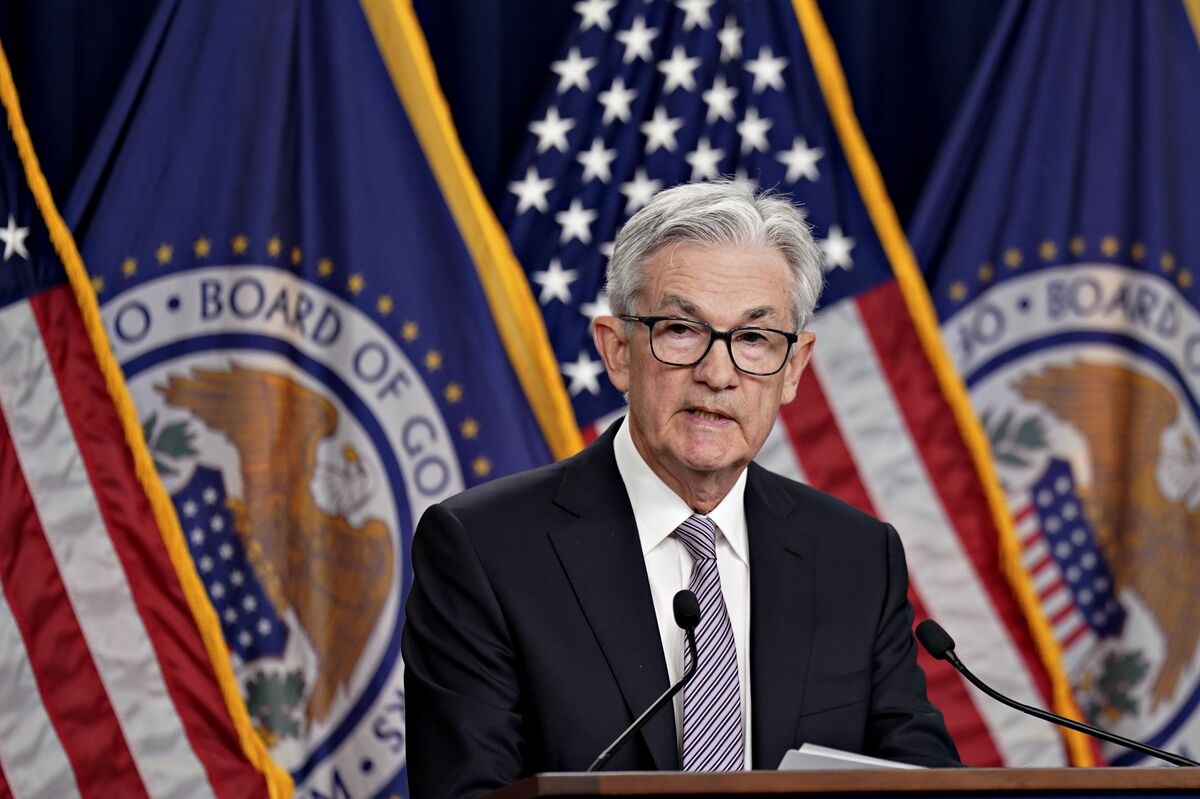
Chairman of U.S Federal reserve, Jerome Powell has issued a stark warning about the trajectory of America’s finances, cautioning that the nation’s debt is expanding at a pace far exceeding economic growth.
The Federal Reserve chief stressed that such an imbalance is unsustainable, signaling potential long-term risks for economic stability if urgent fiscal measures are not taken.
In an address at Stanford University on Monday, Powell highlighted the unsustainable trajectory of the United States’ national debt.
Register for Tekedia Mini-MBA edition 20 (June 8 – Sept 5, 2026).
Register for Tekedia AI in Business Masterclass.
Join Tekedia Capital Syndicate and co-invest in great global startups.
Register for Tekedia AI Lab.
He stated that the debt is expanding “substantially” faster than the overall economy, emphasizing that without timely action, “it will not end well.”
Powell made it clear that while the current level of debt remains manageable in the short term, its path is not sustainable. He noted the mismatch between rapid debt accumulation and slower economic growth, urging policymakers to address the issue “fairly soon.”
He added that fiscal policy falls outside the Federal Reserve’s mandate, limiting his comments to high-level observations that “everyone ignores.”

This warning echoes Powell’s repeated cautions in recent years, but his recent remarks gained fresh attention amid ongoing debates over government spending, deficits, and long-term economic stability.
Current State of U.S. Debt
As of early 2026, the U.S. gross national debt has surpassed **$38–39 trillion, with debt held by the public hovering around 100–101% of GDP. Interest payments on the debt now exceed $1 trillion annually in many projections, crowding out other spending priorities.
According to the latest Congressional Budget Office (CBO) outlook:

– The federal budget deficit for fiscal year 2026 is projected at approximately **$1.9 trillion** (about 5.8% of GDP).
– Debt held by the public is expected to rise from ~101% of GDP in 2026 to **120% by 2036** — surpassing the previous post-WWII record.
– Longer-term projections show debt potentially reaching 175% of GDP by 2056 under current policies.
Debt growth has outpaced GDP expansion, with annual debt increases significantly higher than the economy’s roughly 2% real growth rate in recent baselines. This dynamic raises concerns about higher interest rates, slower private investment, and potential pressure on future generations.
Powell and economists have long pointed out that persistent large deficits at or near full employment exacerbate the problem.
Key risks include:
– **Rising interest costs** consuming a larger share of the federal budget.
– **Crowding out** productive private-sector investment.
– **Potential loss of investor confidence** in U.S. Treasuries over the long term, though Powell stressed no immediate market crisis is expected.
– **Inflationary pressures** if debt is increasingly monetized.
Critics, including many in the crypto community, argue that the Fed’s own policies of low rates and quantitative easing in prior years enabled much of this debt buildup — leading to sarcastic reactions like “The Fed printed the debt. Now the Fed is warning about it.”
Historical Context and Powell’s Track Record
Powell has voiced similar concerns since at least 2019 and reiterated them multiple times in 2025–2026. In earlier remarks, he distinguished between the current debt stock (still “sustainable”) and the trajectory (“unsustainable”), urging Congress to act through a combination of spending reforms (especially on mandatory programs like healthcare and retirement) and revenue measures.
However, political gridlock has made meaningful fixes elusive. Both major parties have contributed to deficit spending through tax cuts, stimulus packages, and increased entitlements. Powell has avoided prescribing specific solutions, stressing that fiscal decisions belong to elected officials.
Outlook
Powell’s comments serve as a reminder that monetary policy alone cannot resolve structural fiscal imbalances. Markets largely shrugged off the remarks in real time, consistent with his view that no near-term disruption is imminent.
Yet the underlying math — rising debt service costs, slower growth relative to borrowing, and demographic pressures from an aging population — continues to worsen.
Without bipartisan action on entitlements, discretionary spending, or tax policy, projections point to ever-higher debt-to-GDP ratios. Economists warn this could eventually lead to slower economic growth, higher taxes, reduced public services, or inflationary outcomes.
Powell’s blunt assessment, “It will not end well if we don’t do something fairly soon”, underscores a growing consensus among policymakers and analysts that the status quo is untenable in the long run.