

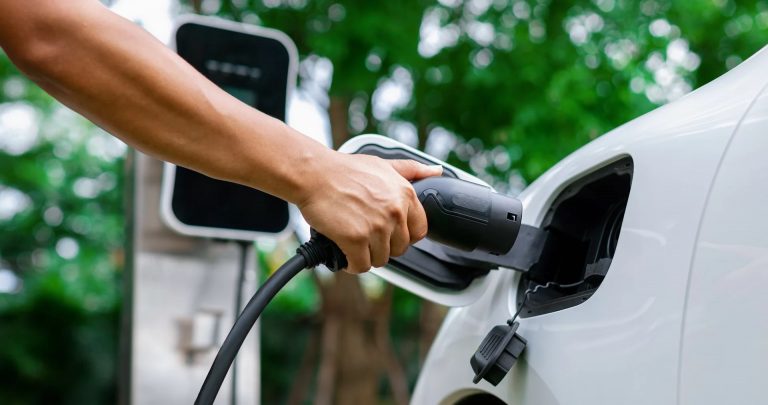
A federal judge in Seattle has temporarily blocked President Donald Trump’s administration from halting billions in electric vehicle (EV) infrastructure funding allocated to 14 states under a program established during the Biden presidency.
In a ruling issued Tuesday, U.S. District Judge Tana Lin sided with the states, stating they are likely to succeed in their lawsuit against the Department of Transportation (DOT), which abruptly froze disbursement from the $5 billion National Electric Vehicle Infrastructure (NEVI) program earlier this year. The program, a key part of former President Joe Biden’s Inflation Reduction Act, was designed to fund the nationwide buildout of EV charging stations.
The legal challenge was brought by a coalition of Democratic-led states, including California, New York, Illinois, and Washington, who accused the Trump administration of illegally suspending the program and rescinding previously approved state-level EV infrastructure plans without lawful justification.
Register for Tekedia Mini-MBA edition 20 (June 8 – Sept 5, 2026).
Register for Tekedia AI in Business Masterclass.
Join Tekedia Capital Syndicate and co-invest in great global startups.
Register for Tekedia AI Lab.
“This ruling reaffirms that the federal government cannot abruptly derail legally established programs and betray commitments made to states and the public,” said California Attorney General Rob Bonta, one of the lead plaintiffs. “The administration cannot dismiss programs illegally, like the bipartisan Electric Vehicle Infrastructure Formula Program, just so that the President’s Big Oil friends can continue basking in record-breaking profits.”
Judge Lin’s injunction gives the administration seven days before it takes effect, giving the government a window to appeal the decision to a higher court and potentially seek a stay on the order.
The ruling applies to 14 plaintiff states, but excludes three others—District of Columbia, Minnesota, and Vermont—which also joined the suit but did not present sufficient evidence of imminent harm resulting from the funding freeze.

Judge Lin found that the states had relied on federal commitments to plan, launch, and co-finance their EV charging infrastructure, investing their own resources in anticipation of federal cost-sharing. She ruled that revoking those funds midstream caused irreparable harm, disrupting state-level projects aimed at improving EV access, reducing carbon emissions, and fostering clean energy economies.
Trump’s Policy Shift Reignites Climate Funding Tensions
The lawsuit follows a broader push by the Trump administration and Republican-led Congress to roll back federal support for electric vehicles and repeal climate-focused provisions enacted under Biden.
In February, the Department of Transportation under Trump rescinded approvals for state EV charger deployment plans and effectively paused the NEVI program, arguing that the administration was “reassessing” all federally funded EV-related initiatives.

The administration has since taken further steps to dismantle climate-focused transportation policies. In March, the General Services Administration instructed agencies to deactivate EV chargers at federal buildings unless deemed “mission critical” and barred the installation of new charging infrastructure. In May, the House passed a bill seeking to eliminate the $7,500 tax credit for new EVs and repeal federal vehicle emissions rules designed to spur EV manufacturing.
Most recently, California and 10 other states filed a separate lawsuit challenging Congress’s repeal of the state’s 2035 zero-emission vehicle mandate and strict emissions rules for heavy-duty trucks, a repeal viewed as a win for fossil fuel interests and a blow to states’ environmental autonomy.
The plaintiff states argued that freezing the EV infrastructure funds could undermine U.S. climate goals, disrupt state green economies, and slow down the transition to zero-emission transportation at a time when global investment in EVs and renewables is rapidly accelerating.
In their complaint, they indicated that the Trump administration’s withholding of the funds will devastate the ability of states to build the charging infrastructure necessary for making EVs accessible to more consumers, combating climate change, reducing other harmful pollution, and supporting the states’ green economies.
With Judge Lin’s ruling, the Biden-era funding plans remain alive—at least for now—but the broader legal and political battle over America’s clean energy future appears far from over.
The White House and Department of Transportation have not yet issued formal responses to the ruling.