

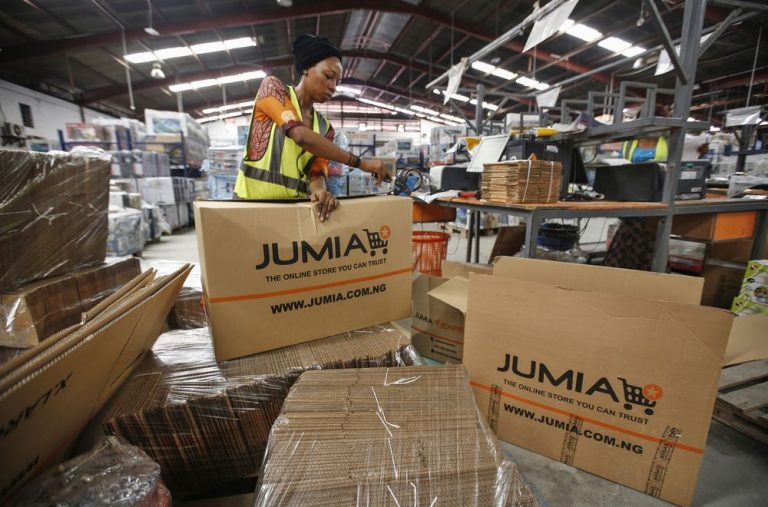
Jumia Technologies has taken another confident step toward profitability, delivering a robust performance in the second quarter of 2025.
The African e-commerce giant posted a significant revenue growth, improved operational efficiency, and narrowed losses, signaling that its strategic focus on cost discipline, core category expansion, and enhanced customer experience is paying off.
Jumia reported revenue of $45.6 million, a 25% increase year-over-year from $36.5 million in Q2 2024, and a 22% rise in constant currency. Gross Merchandise Value (GMV) climbed to $180.2 million, up 6% year-over-year, or 5% in constant currency. Excluding South Africa and Tunisia, GMV recorded an even stronger 10% year-over-year growth in physical goods.
Register for Tekedia Mini-MBA edition 20 (June 8 – Sept 5, 2026).
Register for Tekedia AI in Business Masterclass.
Join Tekedia Capital Syndicate and co-invest in great global startups.
Register for Tekedia AI Lab.
Operating loss improved to $16.5 million, down 18% from $20.2 million in Q2 2024. Adjusted EBITDA loss also narrowed to $13.6 million, representing a 17% year-over-year improvement. Loss before income tax fell by 28% to $16.3 million, while the company ended the quarter with $98.3 million in liquidity. Net cash used in operating activities was $12.7 million, aided by a positive working capital contribution of $4.1 million.
Commenting on Jumia’s Q2 2025 report, CEO Francis Dufay expressed confidence in the company’s trajectory, highlighting robust usage growth, strong engagement across markets, and a significant reduction in cash burn compared to the previous quarter.
He said,

“Our second quarter results demonstrate continued momentum in our core consumer business, with robust usage growth and strong engagement across markets. We believe year-over-year trends are reflecting the underlying strength of our platform. We also delivered a meaningful improvement in cash burn quarter-over-quarter, driven by growth and a positive impact from working capital.
“This reinforces our confidence in reaching our strategic goal to break even on a Loss before Income tax basis in the fourth quarter of 2026 and achieving full-year profitability in 2027. Based on current trends, we are raising our full-year 2025 guidance and long-term profitability targets. These results underscore the resilience of our platform and our focus on profitable growth and operational excellence.”
Orders grew 18% year-over-year, driven by strong execution and improved product assortment across.

Key categories
• Quarterly Active Customers ordering physical goods grew by 13% year-over-year, demonstrating sustained engagement and customer retention.
• GMV increased 10% year-over-year, driven by robust consumer demand, partially offset by lower corporate sales in Egypt. Excluding corporate sales, GMV in reported currency grew 24% year-over-year.
• Nigeria’s momentum accelerated, with Orders growth up 25% and total GMV up 36% year-over-year.
• Gross items sold from international sellers grew 36% year-over-year in the second quarter 2025, reflecting strong cross-border merchant engagement and rising consumer demand for differentiated products.
Gross profit reached $23.9 million, up 11% year-over-year, with gross profit margins improving to 13.3% of GMV, driven by stronger marketplace margins. Jumia’s strategic initiatives, particularly the launch of an advanced seller advertising platform in June 2025 are expected to enhance monetization, with advertising revenue currently representing 1% of GMV and significant room for expansion.
The company’s GMV increase was driven by robust consumer demand, partially offset by lower corporate sales in Egypt. Orders grew 4% year-over-year to 5 million, with physical goods orders rising 18% when adjusted for perimeter effects. Orders from secondary cities represented 59% of the total, up from 52% in the same period last year.
Jumia has intentionally reduced emphasis on digital products sold via its JumiaPay App, which contributes high order volumes but limited revenue. Instead, it is focusing on physical goods and expanding into upcountry regions, while maintaining a disciplined approach to marketing spend through targeted online campaigns, CRM, SEO, and select offline channels.
Looking Ahead
Jumia now anticipates physical goods orders to grow between 25% and 30% year-over-year, up from the previous forecast of 20% to 25%, citing strong value propositions and momentum in key marketing channels.
The company remains committed to scaling usage, improving operational efficiency, and driving further reductions in cash burn as it navigates the remainder of 2025.