

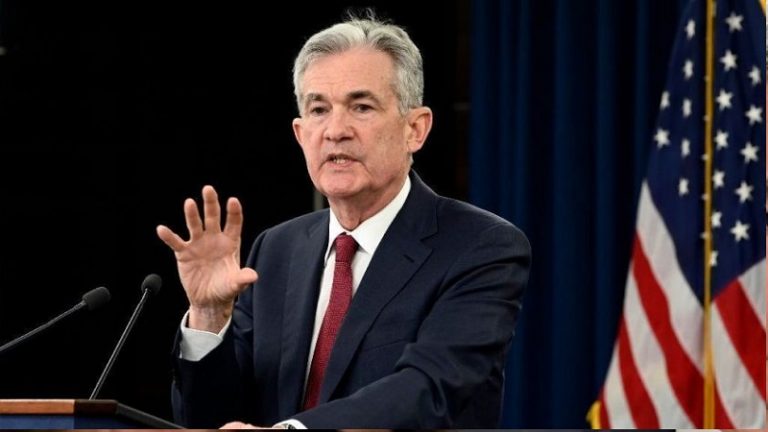
Market-implied odds of a single 25 basis point 0.25% rate cut by the Federal Reserve at its FOMC meeting on September 17-18, 2025, have climbed to around 90% or higher as of September 16, based on Fed funds futures data and economic analyses.
This reflects cooling in the labor market (e.g., recent downward revisions to job gains and unemployment at 4.2%), inflation trending toward the Fed’s 2% target around 2.7% as of June 2025, and signals from Fed Chair Jerome Powell suggesting easing to manage downside risks.
The current federal funds target range is 4.25%-4.50%, and a cut would bring it to 4.00%-4.25%. Probabilities for other outcomes are low: less than 10% for no change, and a small but growing chance (around 5-10%) of a larger 50 basis point cut due to labor weakness, though most analysts expect a measured 25 bp move.
The CME FedWatch Tool, which derives these odds from futures pricing, shows this consensus building since mid-August, with earlier estimates at 80-85% now firming up closer to 95% in some aggregates. The decision will be announced Wednesday afternoon, followed by Powell’s press conference.
Register for Tekedia Mini-MBA edition 20 (June 8 – Sept 5, 2026).
Register for Tekedia AI in Business Masterclass.
Join Tekedia Capital Syndicate and co-invest in great global startups.
Register for Tekedia AI Lab.
Reduced rates on loans (e.g., mortgages, auto loans, credit cards) encourage spending. Mortgage rates, already declining (7.05% for 30-year fixed as of early September 2025), could drop further, boosting housing demand.
Cheaper corporate borrowing lowers the cost of capital for investment in equipment, expansion, or hiring, stimulating business activity. With inflation at ~2.7% and trending toward the Fed’s 2% target, lower rates ease financial pressure on households, especially as real wage growth has slowed (1.3% annualized in Q2 2025).
More disposable income could drive consumption, which accounts for ~70% of U.S. GDP. Recent data shows labor market softening. A rate cut signals the Fed’s intent to prevent further deterioration, potentially encouraging firms to maintain or increase hiring.

Lower rates typically lift stock markets by reducing discount rates for future cash flows, making equities more attractive. S&P 500 and Nasdaq futures have rallied slightly 1-2% in September on rate cut expectations. Housing and other asset prices may also rise, increasing wealth effects.
A rate cut could weaken the U.S. dollar, making exports more competitive. This helps manufacturing and trade sectors, though the effect may be modest given global currency dynamics (e.g., ECB and BoJ also adjusting policies).
With inflation close to 2%, a small cut is unlikely to reignite price pressures but will provide breathing room for the Fed to balance growth and price stability. However, if cuts are too aggressive, markets may worry about inflation rebounding.

How Rate Cuts Bolster the Economy
By lowering borrowing costs, a rate cut encourages investment and consumption, directly supporting GDP growth. Current projections estimate 2025 GDP growth at 1.8-2.2%; a cut could push this toward the higher end by reducing recession risks.
The Chicago Fed’s National Financial Conditions Index has tightened slightly in 2025 around 0.15 in August, above neutral. A rate cut loosens conditions, making credit more accessible and reducing default risks for households and firms.
With labor market signals (e.g., 818,000 fewer jobs created in 2024 than initially reported) and manufacturing PMI near contraction 47.2 in August, a cut acts as a preemptive measure to avoid a downturn, especially as consumer confidence dipped to 65.9 in September.
Lower rates reduce the hurdle rate for corporate projects, potentially reversing the 2% decline in business investment seen in Q2 2025. This supports long-term productivity and job creation.
A single 25 bp cut is modest and may not significantly alter economic trajectories if global demand weakens or geopolitical risks escalations. Markets have already priced in a 90%+ chance of a cut, so the impact on asset prices may be muted unless the Fed signals a more aggressive easing cycle.
A 25 bp rate cut would bolster the economy by lowering borrowing costs, encouraging spending and investment, and supporting a softening labor market, all while keeping inflation in check. It acts as a cautious step to sustain 2% GDP growth and avoid recession, though its impact depends on follow-through policies and global conditions.