

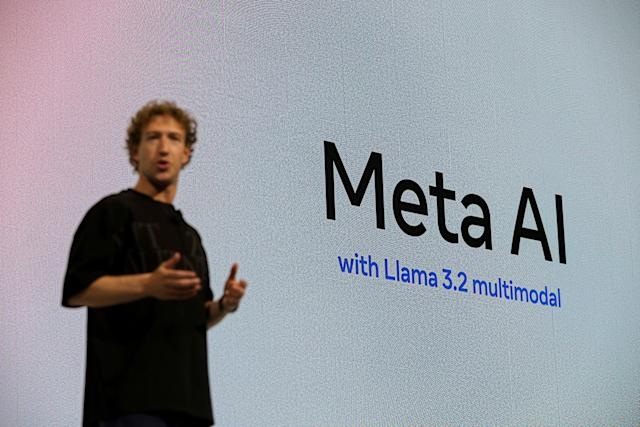
Meta heads into its first-quarter earnings under intensified scrutiny, with its newly launched Muse Spark model at the center of investor focus.
The model, unveiled in early April, represents a decisive shift in the company’s artificial intelligence strategy and raises fresh questions: Can a late but decisive shift in its AI posture translate into durable competitive standing against entrenched leaders?
For years, Meta relied on open distribution through its Llama models to build developer adoption. Muse Spark breaks from that approach. It is closed-source and designed for commercial deployment, aligning Meta more closely with rivals such as OpenAI, Anthropic, and Google, which are monetizing access to their systems.
Register for the next Tekedia Mini-MBA.
Register for Tekedia AI in Business Masterclass.
Join Tekedia Capital Syndicate and co-invest in great global startups.
The pivot underpins a recalibration under CEO Mark Zuckerberg, who is pushing the company beyond experimentation into revenue generation. Analysts at Citizens Financial Group, quoted by CNBC, framed the shift succinctly, describing AI as a “complementary good” for Meta’s broader business. In the same report, they added: “We are impressed with Meta’s Muse Spark model,” citing its capabilities in text and vision.
However, they cautioned that execution remains incomplete, noting, “While the company integrated Meta AI into its core apps, we are awaiting a strategy to drive scaled consumer usage that is akin to other AI chatbots like ChatGPT and Claude as we believe this can unlock new data and ad budgets.”
On technical performance, Meta remains competitive but not dominant. Benchmark tracking shows its models trail Anthropic’s Claude and Google’s Gemini in text tasks, and Claude in vision, though Meta maintains an edge over some competitors in select areas. That positioning places Muse Spark within reach of the leaders, but not ahead of them.

That explains why sentiment is shifting. Analysts at JPMorgan Chase wrote that Muse Spark “has brought Meta back into the AI conversation,” while adding, “Investor sentiment on Meta is turning increasingly constructive.” They pointed to prior concerns weighing on the stock, including “elevated expenses and capex, concerns around AI model delays, and an adverse social media legal decisions.”
The more immediate impact of AI is being felt in Meta’s core advertising business. Enhanced targeting and content optimization are driving growth, with first-quarter revenue expected to rise 31% year-on-year to $55.6 billion, according to LSEG data. That momentum reinforces the view that AI is, for now, an amplifier of Meta’s existing strengths rather than a standalone revenue engine.
Still, the market is looking for more. Rivals have translated AI leadership into significant valuation gains, with OpenAI and Anthropic collectively surpassing $1 trillion. Alphabet shares have surged on the back of Gemini’s growth, outpacing Meta’s more modest stock performance.

Internally, Meta is moving aggressively to close the gap. Muse Spark is the first major output from its restructured AI division, with leadership that includes Alexandr Wang, alongside high-profile hires such as Nat Friedman and Daniel Gross. Analysts at Truist Financial described the overhaul as a “leadership shift and the subsequent nine-month rebuild of Meta’s AI stack,” adding that it “signal[s] an aggressive effort to close the gap with competitors like OpenAI (private) and Google.”
The company is backing that effort with significant capital. Meta plans to spend between $115 billion and $135 billion on AI infrastructure in 2026, up sharply from $72.2 billion in 2025, even as it cuts about 10% of its workforce to improve efficiency.
That spending has drawn scrutiny with analysts at Loop Capital noting a prevailing concern that Meta is “a company desperately spending to fix problematic AI initiatives.” However, they argued that performance benchmarks alone may not determine success.
“Foundational LLM/agentic reasoning models are certainly key for Meta, but we view image/video generation models as strategically important with greater near-term engagement and monetization implications,” they wrote. They added a clearer metric for success: “The real bar for success is building models that power excellent products for users, creators and advertisers.”
That framing captures the core of Meta’s challenge. Unlike pure AI firms, it does not need to win every benchmark category to succeed. Its advantage lies in distribution, data, and its advertising ecosystem. The task now is to convert those strengths into a coherent platform that can both support its core business and stand on its own commercially.
The upcoming earnings call will not resolve the competitive hierarchy. But it will, however, clarify whether Meta can translate a late pivot into coherent execution. For now, Muse Spark has altered the narrative, moving Meta from the periphery of the AI race back into contention.