

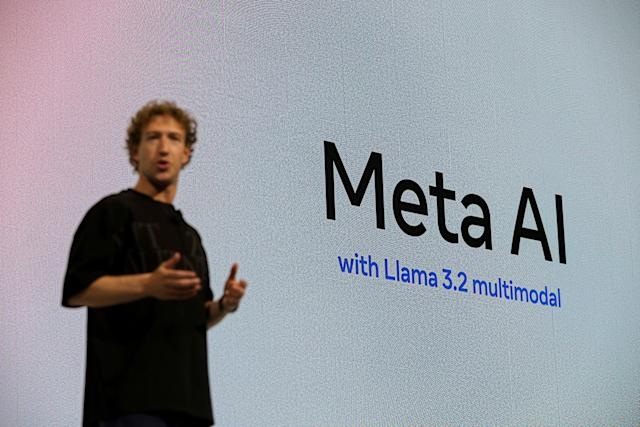
Meta will deploy Nvidia GPUs, CPUs, and networking equipment at scale, embedding Nvidia more deeply across its AI stack even as Meta develops in-house chips.
Meta Platforms is significantly expanding its reliance on Nvidia through what Nvidia described as a “multigenerational” agreement to power Meta’s next wave of artificial intelligence infrastructure.
The deal will see Meta construct data centers running on millions of Nvidia’s current and next-generation chips for both AI training and inference. The scope goes beyond graphics processing units (GPUs) to include central processing units (CPUs), networking hardware, and confidential computing technologies, signaling a deeper integration of Nvidia across Meta’s AI architecture.
Register for Tekedia Mini-MBA edition 20 (June 8 – Sept 5, 2026).
Register for Tekedia AI in Business Masterclass.
Join Tekedia Capital Syndicate and co-invest in great global startups.
Register for Tekedia AI Lab.
From GPUs to Full-Stack AI Infrastructure
Nvidia’s dominance in AI has largely been built on its GPUs, which are optimized for the parallel computing demands of training large language models and generative AI systems. The new agreement reinforces that position, but its significance lies in how it broadens Nvidia’s role.
Meta will also deploy Nvidia CPUs, including its forthcoming Vera architecture, beyond the current Grace model. CPUs, traditionally dominated by Intel and Advanced Micro Devices, handle general-purpose computing tasks and coordinate workloads alongside GPUs inside data centers.
As AI workloads evolve from training toward inference — where models respond to user queries at scale — CPUs become increasingly important. Inference often demands lower latency and improved energy efficiency, areas where CPUs can complement GPUs effectively.

Rob Enderle of Enderle Group noted that CPUs “tend to be cheaper and a bit more power-efficient for inference,” reflecting this shift in workload balance.
By supplying GPUs, CPUs, and networking components, Nvidia is positioning itself not merely as an accelerator vendor but as a vertically integrated AI infrastructure provider. This approach increases switching costs and deepens vendor lock-in, particularly as Meta scales its data center footprint globally.
Meta’s expanded commitment to Nvidia comes even as the company pursues multiple supply strategies. The social networking giant has been developing in-house AI accelerators and has collaborated with AMD. Reports have also indicated that Meta explored the possibility of using Tensor Processing Units (TPUs) developed by Google.

Patrick Moorhead of Moor Insights & Strategy said the Nvidia deal could cool speculation around TPU adoption, though he noted that large technology firms frequently evaluate several vendors simultaneously to maintain pricing leverage and supply resilience.
The broader AI chip industry is becoming increasingly contested. While Nvidia leads in high-performance AI chips, competitors including AMD and Broadcom are investing heavily to capture market share. Google continues to expand internal TPU deployment within its own cloud ecosystem.
Yet demand for AI infrastructure remains so elevated that analysts do not expect immediate revenue contraction for Nvidia’s rivals. Hyperscale companies are collectively investing hundreds of billions of dollars in AI-related capital expenditures, creating sufficient demand to sustain multiple suppliers in the near term.
Meta’s decision to source both GPUs and CPUs from Nvidia may also mark operational pragmatism. Analysts describe a “one-throat-to-choke” procurement model in which consolidating suppliers can simplify integration, reduce interoperability risk, and streamline accountability in the event of system failures.
The agreement underscores the intensifying race among hyperscalers to secure long-term access to advanced AI silicon. Chip supply constraints have been a recurring concern as generative AI adoption accelerates, and securing multigenerational commitments provides Meta with greater visibility into capacity planning.
Beyond hardware, Meta will integrate Nvidia’s networking equipment and confidential computing technology into its data centers, including support for AI features within WhatsApp. Confidential computing enhances data security by protecting sensitive information during processing — a growing priority as AI features expand into messaging platforms and enterprise applications.
The deal reinforces Nvidia’s position as the foundational layer of AI infrastructure. The company strengthens its ecosystem moat and extends its relevance beyond pure training workloads by embedding its processors and networking systems across Meta’s stack.
The move is believed to represent a balancing act for Meta: deepen ties with the market leader to ensure performance and supply continuity, while continuing to invest in proprietary silicon and alternative partnerships to preserve strategic flexibility.
Overall, infrastructure decisions are becoming long-duration bets as AI shifts from experimentation to scaled deployment. This multigenerational alignment signals that both companies view the AI cycle not as a short-term surge, but as a structural transformation of computing that will require sustained capital investment, architectural integration, and supplier alignment over many years.