

Meta Platforms suffered its sharpest one-day stock decline since October 2022, tumbling more than 11% on Thursday, after investors balked at the company’s surging artificial intelligence expenditures even as it reported robust third-quarter results.
The selloff came after Meta raised its 2025 capital expenditures forecast to between $70 billion and $72 billion, from an earlier range of $66 billion to $72 billion, signaling a further ramp-up in spending on AI infrastructure and data centers. The move places Meta’s investment trajectory among the most aggressive in Silicon Valley, as the company races to secure its place in the global AI arms race alongside Microsoft, Alphabet, Amazon, and Nvidia.
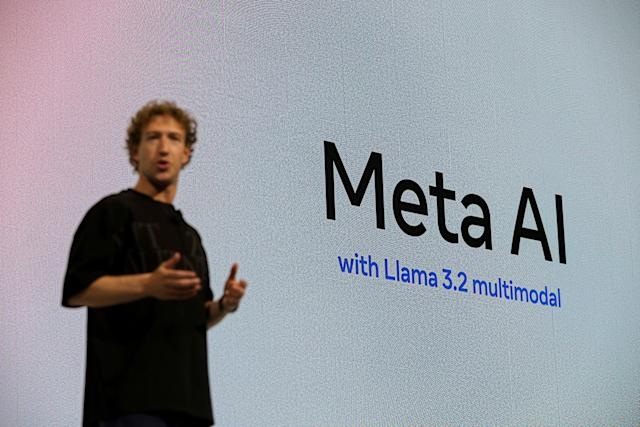
During Wednesday’s earnings call, CEO Mark Zuckerberg staunchly defended the company’s strategy, saying the early benefits of AI integration are already visible across Meta’s platforms.
Register for Tekedia Mini-MBA edition 20 (June 8 – Sept 5, 2026).
Register for Tekedia AI in Business Masterclass.
Join Tekedia Capital Syndicate and co-invest in great global startups.
Register for Tekedia AI Lab.
“It’s pretty early, but I think we’re seeing the returns in the core business,” Zuckerberg said. “That’s giving us a lot of confidence that we should be investing a lot more, and we want to make sure that we’re not underinvesting.”
Zuckerberg said Meta is “aggressively” preparing for the next phase of AI, including the development of what he described as superintelligence—AI systems that far surpass current models in reasoning and autonomy. He argued that Meta’s early and large-scale investments would ensure it remains “ideally positioned for a generational paradigm shift in many large opportunities.”
The company’s AI ambitions span several fronts. Meta is developing custom AI chips to power its large language models and recommendation systems, building vast data center networks to handle growing workloads, and expanding its open-weight model strategy to encourage wider adoption of AI tools across developers.

However, analysts say the spending surge highlights the growing tension between Meta’s long-term vision and short-term investor expectations. While AI is widely seen as the future of computing, many investors worry that Meta’s payoff horizon remains distant and that ballooning costs could weigh on profitability in the coming quarters.
Meta’s rivals are taking similar routes. On Wednesday, Alphabet lifted its capex guidance to between $91 billion and $93 billion, while Microsoft forecast another fiscal year of high spending growth, underscoring the enormous cost of maintaining AI leadership. Yet investors have treated Meta more harshly, partly because its AI monetization strategy—through ads, social media engagement, and messaging tools—is less defined than the enterprise-focused offerings of its peers.
Meta’s heavy AI push includes a $14.3 billion investment in Scale AI, a startup specializing in training data, and the creation of Superintelligence Labs, led by Scale AI founder Alexandr Wang and former GitHub CEO Nat Friedman. The lab is tasked with developing next-generation models that could power Meta’s AI assistants and creator tools across Facebook, Instagram, and WhatsApp.

Zuckerberg has repeatedly said that AI will be at the heart of Meta’s long-term transformation. The company is rolling out AI chatbots, image-generation tools, and digital assistants across its platforms, aiming to boost engagement and advertising revenue.
Despite the stock market’s reaction, Meta’s third-quarter performance beat expectations. The company reported adjusted earnings of $7.25 per share on $51.24 billion in revenue, topping Wall Street estimates. Revenue jumped 26% year-over-year, marking one of its strongest growth rates in recent years, fueled by a rebound in digital advertising and improved monetization of its Reels and WhatsApp Business products.
Meta also absorbed a $15.93 billion tax charge linked to President Donald Trump’s One Big Beautiful Bill Act, a sweeping fiscal policy overhaul that altered corporate tax deductions and foreign income repatriation rules.
Even with the one-time charge, Meta maintained healthy margins and reported strong user engagement across its family of apps. Daily active users on Facebook surpassed 2.2 billion, while Instagram and WhatsApp continued to expand globally.
Still, the selloff reflects deeper market uncertainty about whether Meta’s vast AI spending will translate into tangible profit. Some investors fear that the company’s strategy could mirror its earlier costly pivot to the metaverse — a project that has yet to produce meaningful financial returns despite billions in investment.
Meta’s Reality Labs division, which houses its virtual and augmented reality projects, posted another quarterly operating loss exceeding $3.7 billion, underscoring the challenge of balancing innovation with investor patience.
Zuckerberg, however, maintains that both AI and immersive technologies will converge over time. “AI will be the foundation of everything we build,” he said earlier this month, adding that it will eventually power Meta’s metaverse ambitions.
With the company now valued above $1.5 trillion, Meta remains one of the world’s most influential technology firms. But as the competition for AI dominance intensifies, its path forward is expected to be determined by how soon its colossal bets begin to show tangible returns — not just in user growth, but in profits.