

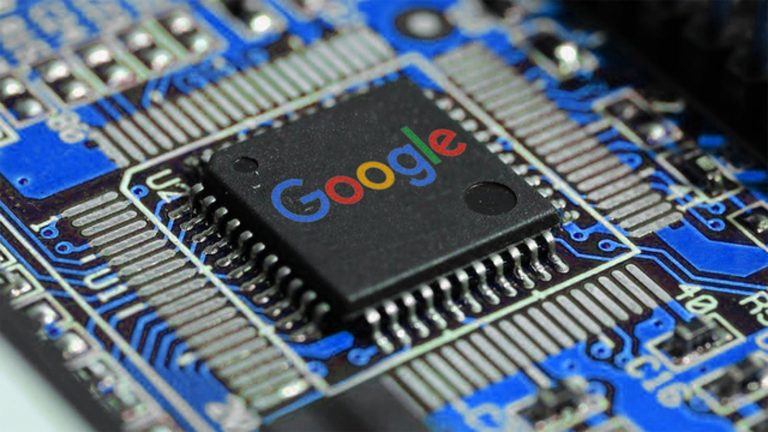
The AI chip wars tightened on Tuesday after The Information reported that Meta Platforms is in talks to buy billions of dollars’ worth of Google-designed processors for its data centers starting in 2027 — a move that would break Meta’s heavy dependence on Nvidia and thrust Google into the center of the global semiconductor contest.
The report triggered immediate ripples across financial markets. Nvidia shares fell about 4% in premarket trading on Tuesday, extending pressure from the day before as investors digested the prospect of a giant customer like Meta diversifying away from its GPUs. Alphabet rose 4.2% in early trade, adding to a more than 6% rally on Monday, as investors cheered the possibility that Google’s tensor processing units (TPUs) could finally break into the mainstream hardware market beyond Google’s own fleet. Broadcom, which helps Google design its TPUs, gained more than 2% after an 11% surge the prior day.
A Google spokesperson told CNBC: “Google Cloud is experiencing accelerating demand for both our custom TPUs and NVIDIA GPUs; we are committed to supporting both, as we have for years.”
Register for Tekedia Mini-MBA edition 20 (June 8 – Sept 5, 2026).
Register for Tekedia AI in Business Masterclass.
Join Tekedia Capital Syndicate and co-invest in great global startups.
Register for Tekedia AI Lab.
Google launched its first-generation TPU back in 2018, originally built for its own internal cloud computing needs. Since then, the company has rolled out increasingly advanced generations of the chip, each tailored to handle larger and more complex AI workloads. TPUs are fully customized AI processors — a design choice that experts say gives Google an efficiency advantage when training or deploying models.
If Meta adopts TPUs at scale, it would amount to a major endorsement of Google’s technology and instantly place Google as a serious challenger to Nvidia’s supremacy.
The talks, according to The Information, include Meta potentially renting Google’s chips through Google Cloud as early as next year. That arrangement would allow Meta to begin shifting some workloads long before the 2027 hardware rollout.

The negotiations also fall under Google’s broader strategy to sell or lease TPUs directly to customers for use in their own data centers — a departure from the company’s earlier approach of keeping TPUs exclusive to Google facilities.
Winning Meta would be one of Google’s biggest coups yet. Meta is one of Nvidia’s largest customers and is planning between $70 billion and $72 billion in capital spending this year alone, much of it dedicated to AI infrastructure. A carve-out of that budget for TPUs would open a vast new commercial pipeline for Google’s chips.
The implications for Nvidia, though not immediately existential, are significant. Nvidia remains the undisputed market leader in AI hardware, with its graphics processing units powering the generative AI boom. Its ecosystem is entrenched: more than 4 million developers rely on Nvidia’s CUDA software platform, which has made its GPUs the default foundation for training and running advanced AI models. Analysts say that dominance will not be overturned soon.

But the surge in global demand for compute — coupled with tight supplies and rising costs — has pushed companies to hunt for alternative suppliers. Google’s TPUs, Anthropic’s move to use up to one million Google chips, Amazon’s custom Trainium and Inferentia processors, and the resurgence of AMD have together begun chipping away at Nvidia’s previously unchallenged position.
Meta’s potential pivot shows how aggressively firms are trying to diversify their supply, both to cut costs and to reduce exposure to one hardware vendor. A Meta–Google deal would send a strong signal through the industry that custom silicon is becoming a central part of long-term AI strategy.
Alphabet’s market surge on Tuesday also reflects broader enthusiasm around Google Cloud, which has gained momentum from strong customer demand, recent high-profile partnerships, and positive early reviews for Google’s new Gemini 3 model. The cloud unit has also drawn heavyweight backing from Warren Buffett’s Berkshire Hathaway and has started turning a once-marginal division into an engine of profitability.
The share-price moves unfolded amid an ongoing debate over whether the AI boom is showing signs of a bubble. Nvidia sits at the center of that conversation. The company reported a stronger-than-expected sales forecast last week, yet tech stocks broadly slipped afterward as traders questioned how long current valuations can hold.
Still, for now, any sign that a top-tier AI player like Meta is exploring hardware alternatives is enough to shift markets. This points to how fluid the competition has become in an industry where companies are spending hundreds of billions of dollars on compute.