

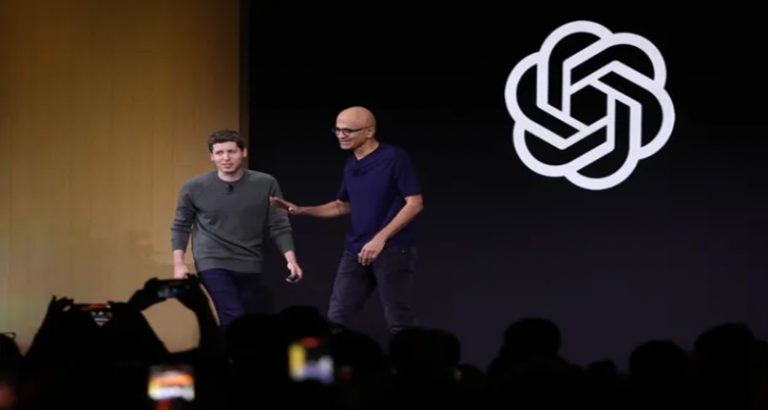
Microsoft CEO Satya Nadella, whose company has poured billions of dollars into OpenAI, is taking a surprisingly skeptical stance on the current state of artificial intelligence.
In a recent interview with podcaster Dwarkesh Patel, Nadella dismissed the hype surrounding artificial general intelligence (AGI), calling it “nonsensical benchmark hacking”. He said that instead of chasing fantastical milestones, the industry should focus on whether AI is actually delivering real-world economic growth.
“Us self-claiming some [AGI] milestone, that’s just nonsensical benchmark hacking to me,” Nadella said. “The first thing that we all have to do is, when we say this is like the Industrial Revolution, let’s have that Industrial Revolution type of growth.”
Register for Tekedia Mini-MBA edition 20 (June 8 – Sept 5, 2026).
Register for Tekedia AI in Business Masterclass.
Join Tekedia Capital Syndicate and co-invest in great global startups.
Register for Tekedia AI Lab.
His comments come as Microsoft’s $12 billion investment in OpenAI has yet to yield significant financial returns, raising concerns that the company may have overestimated AI’s economic impact.
Microsoft has invested heavily in OpenAI, securing a dominant stake in its operations while integrating OpenAI’s models into products like Microsoft 365 Copilot and Azure’s AI services. However, despite all the hype, OpenAI has struggled to generate the kind of revenue that justifies such an enormous investment.
While tools like ChatGPT have attracted massive user interest, they have yet to translate into sustainable profits. OpenAI’s enterprise offerings, such as paid API access and premium versions of ChatGPT, haven’t seen the explosive growth expected by investors.

Nadella’s latest remarks are seen as a soft admission that AI’s economic impact has been exaggerated, especially given OpenAI’s continued dependence on Microsoft’s financial backing.
Nadella directly challenged comparisons between AI and the Industrial Revolution, stating that true economic transformation would be reflected in measurable gains in global productivity.
“So, the first thing that we all have to do is, when we say this is like the Industrial Revolution, let’s have that Industrial Revolution type of growth,” he said.

“The real benchmark is: the world growing at 10 percent,” he explained. “Suddenly productivity goes up and the economy is growing at a faster rate. When that happens, we’ll be fine as an industry.”
For now, however, that isn’t happening.
Despite the immense investment into AI research, productivity growth remains stagnant, and global economic expansion has yet to reflect AI’s supposed transformative potential. While companies have integrated AI into various processes, the technology still faces fundamental limitations, including:
- AI hallucinations (fabricating false information), making it unreliable for critical decision-making.
- High computational costs, making AI expensive to scale profitably.
- Legal and regulatory hurdles, slowing widespread adoption.
A Stark Contrast to OpenAI’s Optimism
Nadella’s skepticism is a direct contrast to the aggressive AI narrative pushed by OpenAI CEO Sam Altman, who has repeatedly claimed that AGI is within reach and that AI will reshape the global economy.
Altman’s vision, however, hasn’t materialized. OpenAI’s latest AI models remain expensive to run and require significant human intervention, contradicting the idea that AI is poised to revolutionize industries overnight.
Adding to OpenAI’s challenges, Chinese competitors have begun threatening its market dominance. Earlier this year, Chinese AI startup DeepSeek released its R1 reasoning model, which delivered similar capabilities at a fraction of OpenAI’s costs. The result was a $1 trillion market shakeup, as investors dumped AI stocks in fear that OpenAI’s premium pricing was unsustainable.
Is The AI Hype Starting to Crack?
The AI sector is dealing with serious financial turbulence, and Microsoft is not the only company feeling the heat.
The massive financial commitment to AI has yet to yield proportionate economic gains, leading to growing skepticism among investors. While Microsoft, Google, and Amazon have rushed to dominate the AI space, the revenue models remain uncertain, and AI services remain too costly to be profitable at scale.
The Stargate Project Contradicts Nadella
While Nadella is publicly tempering expectations about AI, Microsoft’s financial commitments tell a different story.
Microsoft is a key backer of President Donald Trump’s $500-billion “Stargate” project, a highly ambitious AI initiative. When Elon Musk publicly questioned whether Sam Altman had secured the necessary funds, Nadella’s response to CNBC with respect to that was: “All I know is I’m good for my $80 billion.”
This contradiction thus raises the following questions: is Nadella merely managing investor expectations, or is Microsoft hedging its bets in case AI fails to live up to its grand promises?