

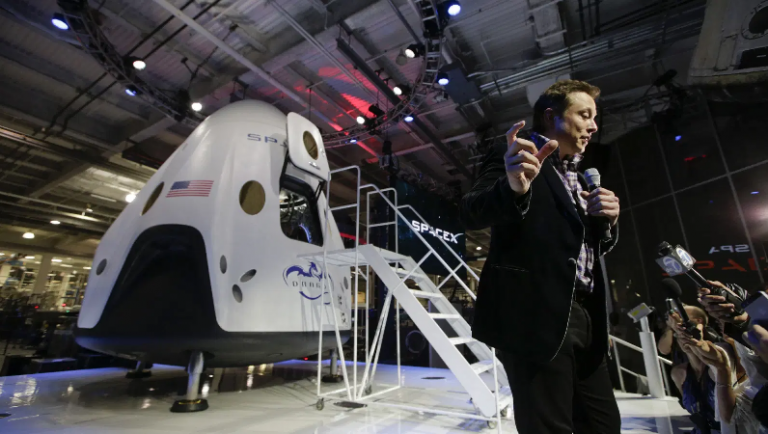
Musk’s lunar pivot is not just about speed, but about anchoring SpaceX’s commercial, AI, and geopolitical ambitions closer to Earth before attempting the harder leap to Mars.
Elon Musk has redrawn the roadmap for SpaceX’s interplanetary ambitions, elevating the Moon from a stepping stone to a strategic destination in its own right.
The billionaire founder said the company is now prioritizing the construction of a “self-growing city” on the lunar surface, a project he believes could be realized in less than 10 years, even as plans for Mars are pushed slightly further into the future.
In a post on X on Sunday, Musk said SpaceX still intends to begin building a city on Mars within five to seven years, but described the Moon as the faster and more urgent option.
Register for Tekedia Mini-MBA edition 20 (June 8 – Sept 5, 2026).
Register for Tekedia AI in Business Masterclass.
Join Tekedia Capital Syndicate and co-invest in great global startups.
Register for Tekedia AI Lab.
“The overriding priority is securing the future of civilization and the Moon is faster,” he wrote.
The comments echoed a Wall Street Journal report that SpaceX has told investors it will focus first on lunar missions, targeting March 2027 for an uncrewed Moon landing.
The shift marks a subtle but meaningful change in tone from Musk, who for more than a decade has framed Mars as SpaceX’s ultimate destination. As recently as last year, he said an uncrewed Mars mission could launch by the end of 2026. The revised emphasis suggests a reassessment of timelines, technical readiness, and near-term strategic value, at a moment when the Moon is once again at the center of global space competition.

The United States faces mounting pressure from China, which has outlined plans to land astronauts on the Moon and establish a long-term presence later this decade. With humans absent from the lunar surface since NASA’s Apollo 17 mission in 1972, the return to the Moon has taken on renewed geopolitical significance, extending beyond exploration to questions of technological leadership, security, and access to resources.
SpaceX is deeply embedded in Washington’s lunar strategy. The company holds a $4 billion contract under NASA’s Artemis programme to use its Starship vehicle to land astronauts on the Moon. Yet Musk has increasingly downplayed the role of government contracts in SpaceX’s overall business. On Monday, he said NASA would account for less than 5% of the company’s revenue this year, underscoring how commercial activities now dominate its financial model.
“Vast majority of SpaceX revenue is the commercial Starlink system,” Musk said, highlighting the satellite broadband business that has transformed the company’s cash flow.

That commercial focus was reinforced on Sunday when SpaceX aired its first Super Bowl advertisement, pitching Starlink’s internet service to a global audience.
The lunar pivot also comes as Musk tightens the links between SpaceX and his broader technology empire. Less than a week ago, he announced that SpaceX had acquired xAI, the artificial intelligence company he also leads, in a deal valuing SpaceX at $1 trillion and xAI at $250 billion. Supporters of the move argue it strengthens Musk’s long-term vision of space-based computing infrastructure, as demand for AI processing power strains electricity grids and land availability on Earth.
Musk has repeatedly argued that space offers a solution to those constraints. He has promoted the idea of orbital data centers powered by abundant solar energy, and a sustained lunar presence could eventually support similar ambitions, whether through power generation, manufacturing, or serving as a logistics hub for deeper-space infrastructure. In that light, a Moon city is not just a symbolic achievement, but a potential anchor for commercial, industrial, and AI-driven activity beyond Earth.
Financing remains a critical question. SpaceX is reportedly considering a public offering later this year that could raise as much as $50 billion, a sum that would make it the largest IPO in history. Such capital would help fund the enormous costs associated with Starship development, lunar missions, satellite deployment, and longer-term plans for Mars.
At the same time, Musk is reshaping Tesla, his publicly traded electric vehicle company, to align more closely with his bets on autonomy and robotics. Tesla plans to spend about $20 billion this year to accelerate its push into self-driving technology and humanoid robots. Musk said last month the company would halt production of two car models at its California factory to free up capacity for manufacturing its Optimus robots.
Together, the moves point to a broader strategy: reallocating capital and engineering talent from maturing businesses toward ventures Musk believes will define the next technological era. The Moon, once treated largely as a waypoint on the journey to Mars, is now being recast as the most practical proving ground for those ambitions.
Whether SpaceX can deliver a self-sustaining lunar city within a decade remains uncertain, given the technical, financial, and regulatory hurdles involved. But Musk’s recalibration suggests that, for now, the future he envisions for humanity beyond Earth begins not on the red plains of Mars, but much closer to home.