

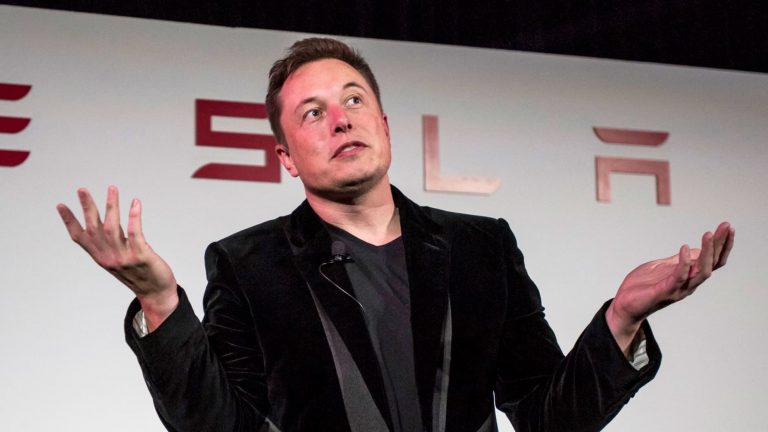
Elon Musk has opened his wallet again, this time pouring $1 billion into Tesla shares, though the move barely shifts the needle toward his long-stated goal of tightening control over the electric vehicle maker.
A regulatory filing released Monday revealed Musk bought about 2.6 million shares on Friday, lifting his total holding to roughly 413 million shares. That raised his ownership stake only slightly, from 12.7% to 12.8%. The incremental increase, which underscores the scale of Tesla’s $1.2 trillion market value, marked Musk’s first open-market buy since 2020 and signals renewed confidence in Tesla’s trajectory. The new purchase Yet in percentage terms, the gain was small. The $1 billion outlay increased his stake by just 0.08%.
To reach the 25% threshold he has publicly demanded — a level he said would give him enough sway to be “influential” while still leaving room for him to be “overturned” — Musk would need to more than double his current holding. That means acquiring an additional 12.2% of Tesla, a stake worth upward of $150 billion at current prices.
Register for Tekedia Mini-MBA edition 20 (June 8 – Sept 5, 2026).
Register for Tekedia AI in Business Masterclass.
Join Tekedia Capital Syndicate and co-invest in great global startups.
Register for Tekedia AI Lab.
Even Musk, with a net worth of $419 billion according to the Bloomberg Billionaires Index, would face steep hurdles. His wealth is largely tied up in Tesla stock itself and illiquid stakes in his private ventures, including SpaceX and artificial intelligence startup xAI. Freeing up cash on that scale would be extraordinarily difficult. And that’s before considering the market effect: any large-scale, open-market buying spree would likely push Tesla’s share price even higher, inflating the bill.
Legal Clouds Over His Compensation Shares
Musk’s calculations are further complicated by unresolved disputes over his 2018 compensation plan. That package awarded him 304 million stock options — shares that would substantially boost his influence if unlocked. But earlier this year, a Delaware court voided the deal, ruling that Tesla’s board failed to exercise independence in approving it.
The 304 million disputed shares were not included in the latest filing. Nor were the 96 million restricted shares Musk was granted in August, which remain tied up in conditions. Business Insider, which first broke down the filing, excluded both tranches in calculating his effective stake.

The legal fight over those shares hangs over Tesla’s governance as its board now pushes a fresh $1 trillion compensation proposal for Musk. That deal, tied to ambitious operational milestones like boosting Tesla’s valuation eightfold to $8.5 trillion and deploying a million robotaxis, could catapult him toward the ownership levels he craves without the need for open-market purchases.
Confidence or Power Play?
For now, Musk’s $1 billion purchase could be read two ways. On one hand, it fits with his January 2024 declaration that he wants 25% voting control or else would prefer to “build products outside of Tesla.” The buy-in could be part of a long-term strategy to claw toward that threshold.
On the other hand, it may be less about power and more about signaling. With Tesla navigating slowing EV demand and intensifying competition, Musk may be using his own capital to reassure investors of his conviction in the company’s future.

Either way, this was his first open-market buy in four years, making it a significant gesture. Whether more follow could provide critical clues about whether Musk intends to chip away gradually at Tesla’s ownership structure — or whether he is simply flexing confidence in a company he insists is only getting started.
What Comes Next?
Looking ahead, analysts say Musk’s path to 25% control could play out in several ways.
Gradual accumulation: If Musk continues buying shares on the open market, each additional billion-dollar purchase would barely move the needle. To realistically double his stake through this method would take years and vast amounts of liquid cash — something even Musk may struggle to free up without offloading parts of SpaceX or other ventures.
Board-driven compensation: The more plausible route lies in Tesla’s proposed $1 trillion compensation package. If shareholders approve it and Musk meets the ambitious milestones, he could secure enough new stock to elevate his voting power toward the 25% mark without draining his personal fortune. But the deal faces legal and governance scrutiny, especially given the court’s rejection of his earlier package.
Status quo: Musk may choose to hold steady, using symbolic stock buys like this one to demonstrate confidence while focusing his real energy on steering Tesla toward growth targets that justify his influence. In this case, the 25% goal could remain aspirational rather than operational.
However, Musk’s latest move has given him little in terms of numbers — but it has reignited speculation about how far he will go to cement his hold over Tesla and whether the next chapter will be written in the courtroom, the boardroom, or the stock market.