

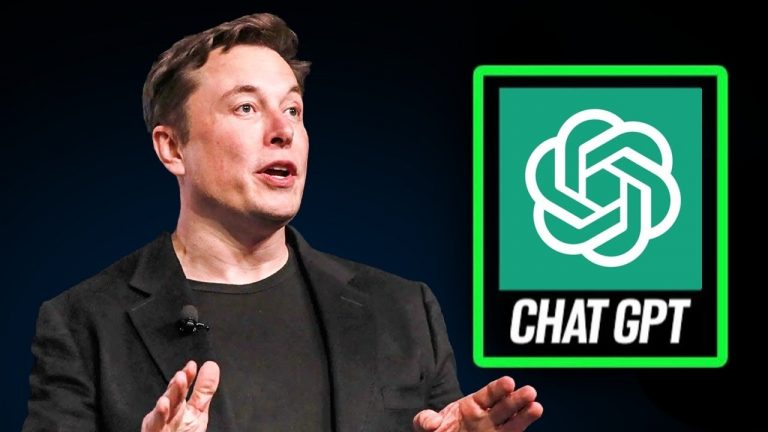
Elon Musk pushed to transform OpenAI into a for-profit company and demanded full control because he needed to raise massive sums of money, including $80 billion, to colonize Mars. OpenAI President Greg Brockman testified Tuesday in a high-stakes California trial that could reshape the future of one of the world’s most valuable artificial intelligence companies.
Brockman’s testimony, now in its second day, painted a picture of tense negotiations in 2017 when Musk, then on OpenAI’s board, argued that a nonprofit structure would make it impossible to raise the enormous capital required to compete in the race for advanced AI. According to Brockman, Musk made it clear he should lead the organization if it converted to for-profit status.
“Altman was the only other candidate,” Brockman said.
Register for the next Tekedia Mini-MBA.
Register for Tekedia AI in Business Masterclass.
Join Tekedia Capital Syndicate and co-invest in great global startups.
The testimony revealed a particularly heated meeting in August 2017. Brockman described Musk growing angry during discussions about equity structure. When he didn’t get the terms he wanted, Musk stood up abruptly.
“He said he needed $80 billion to create a city on Mars,” Brockman testified. “In the end, he needed full control.”
Musk reportedly told the group he would decide when to relinquish that control.

The meeting, which had started on a positive note, Musk had recently given Teslas to several OpenAI employees, and former chief scientist Ilya Sutskever had painted a portrait of a Tesla as a gift, ended dramatically. According to Brockman, Musk grabbed the painting and stormed out, saying he would withhold further funding until the issues were resolved.
Musk left OpenAI’s board in February 2018. He has since accused Sam Altman and Brockman of misleading him when he contributed $38 million to the nonprofit, claiming they abandoned its original mission to enrich themselves through a for-profit structure.
Musk is seeking $150 billion in damages to be paid to the nonprofit and wants Altman and Brockman removed from their leadership positions. OpenAI has countered that Musk is bitter about leaving before the company’s explosive success and is using the lawsuit to benefit his own AI venture, xAI.

Brockman’s testimony also touched on personal financial motivations. On Monday, he disclosed that his stake in OpenAI is now worth nearly $30 billion. He also acknowledged holding stakes in two startups backed by Altman and a 1% stake in Altman’s family fund.
A 2017 diary entry shown in court revealed Brockman writing: “Financially, what will take me to $1B?”
OpenAI restructured in March 2019, creating a for-profit subsidiary controlled by the original nonprofit. That move allowed it to raise more than $100 billion from investors. The company is reportedly preparing for a potential $1 trillion initial public offering later this year.
OpenAI plans to spend $50 billion on computing resources alone in 2026, Brockman told the court, underscoring the enormous capital requirements that Musk had foreseen years earlier.
Musk’s deep interest in Mars colonization was further highlighted by details from SpaceX. According to a registration statement, SpaceX’s board approved a package in January granting Musk 200 million super-voting restricted shares if the company reaches a $7.5 trillion market value and successfully establishes a permanent colony on Mars with at least one million people.
SpaceX is also reportedly preparing for its own IPO later this year, potentially larger than OpenAI’s.
Musk’s lawyers have tried to portray Brockman as similarly motivated by financial gain. However, Brockman’s testimony framed Musk’s demands as driven by his broader ambitions for humanity’s future on Mars, rather than purely commercial interests in AI.
The trial, now in its second week, carries enormous stakes. A ruling against OpenAI could destabilize its leadership and force major changes to its structure at a critical time, as the company races to commercialize advanced AI models. A victory for Musk could set a precedent affecting how nonprofits transition to for-profit entities in the technology sector.
The case has also laid bare the deep personal and philosophical rifts that existed from OpenAI’s earliest days. What began as a collaborative nonprofit effort to ensure artificial intelligence benefits humanity has evolved into a fierce battle between some of Silicon Valley’s most powerful figures.
Musk has long warned about the existential risks of AI and originally co-founded OpenAI as a counterweight to Google. His departure and subsequent founding of xAI, which merged with SpaceX in February, reflect his determination to pursue his own vision for the technology.
The proceedings are expected to continue for several more weeks, with additional witnesses and evidence likely to shed more light on the contentious early years of one of the defining companies of the AI era. Whatever the outcome, the case has already exposed the complex mix of idealism, ambition, ego, and vast financial stakes that have shaped the development of transformative artificial intelligence.