

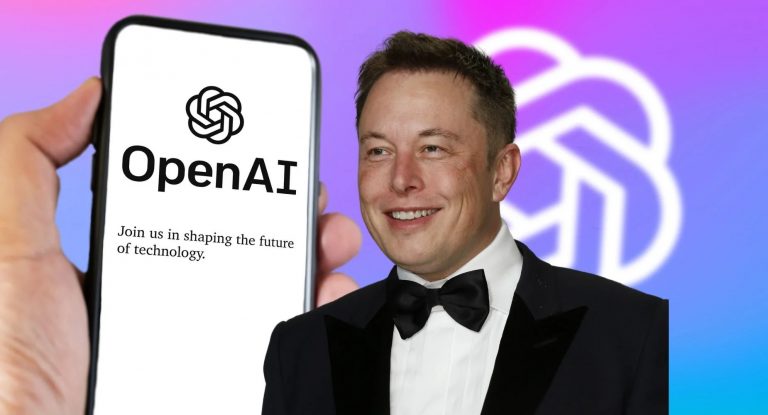
Elon Musk’s artificial intelligence startup, xAI, has filed a new lawsuit against OpenAI in the U.S. District Court for the Northern District of California, escalating an already bitter feud between the two companies.
The complaint, lodged on Wednesday, accuses OpenAI of deliberately poaching xAI employees and stealing proprietary technology underpinning Grok, xAI’s flagship chatbot. Musk’s lawyers argued that OpenAI has engaged in a “deeply troubling pattern” of raiding talent to gain inside knowledge of xAI’s systems.
“OpenAI is not merely soliciting or hiring a competitor’s employees,” the filing states. “OpenAI is waging a coordinated, unfair, and unlawful campaign: OpenAI is targeting those individuals with knowledge of xAI’s key technologies and business plans.”
Register for Tekedia Mini-MBA edition 20 (June 8 – Sept 5, 2026).
Register for Tekedia AI in Business Masterclass.
Join Tekedia Capital Syndicate and co-invest in great global startups.
Register for Tekedia AI Lab.
The lawsuit further alleges that OpenAI encouraged recruits to violate confidentiality agreements signed with xAI, effectively breaching non-disclosure obligations to secure a competitive advantage.
OpenAI rejected the allegations outright. “This new lawsuit is the latest chapter in Mr. Musk’s ongoing harassment,” the company told Business Insider. “We have no tolerance for any breaches of confidentiality, nor any interest in trade secrets from other labs.”
The case names ex-xAI engineer Xuechen Li, who is already facing a separate trade secrets lawsuit Musk’s company filed in August. Earlier this month, a judge granted xAI’s request for a temporary order barring Li from working on or communicating about AI technology with OpenAI. Still, a source familiar with the matter said Li had never worked for OpenAI, raising questions about the scope of Musk’s claims.

The complaint also references other departures, including “early xAI engineer” Jimmy Fraiture and a senior finance executive, both of whom have since joined OpenAI. While Fraiture is not a defendant, xAI alleges the hires form part of OpenAI’s broader strategy to extract sensitive information.
This lawsuit is the latest escalation in a widening legal war between Musk and OpenAI, the company he cofounded in 2015 but later abandoned amid strategic disagreements. Musk has since become one of OpenAI’s most vocal critics, accusing the company of betraying its nonprofit origins by morphing into a multibillion-dollar for-profit venture aligned with Microsoft.
In addition to suing OpenAI, Musk has also taken aim at Apple. In August, xAI filed suit against the iPhone maker, alleging it conspired with OpenAI to stifle competition in the AI market. OpenAI, for its part, has countersued Musk, arguing that his barrage of lawsuits constitutes harassment rather than legitimate grievances.

The xAI–OpenAI clash is not unfolding in isolation. Talent raids and trade secrets lawsuits have become a defining feature of the AI industry’s rapid growth. Google’s DeepMind, for instance, has faced poaching pressure from rival labs, while Anthropic—founded by former OpenAI employees—was itself born out of a rift over how safely and profitably AI should be developed. Earlier this year, Meta sued a former research scientist, alleging he had misappropriated proprietary algorithms, while smaller AI startups have accused Big Tech players of using their recruiting pipelines to siphon off both staff and intellectual property.
The legal battles underscore the extraordinary value of human capital in AI. Unlike other tech sectors where patents or hardware dominate, much of AI’s competitive edge lies in research talent and access to training data. This has fueled aggressive recruitment wars, leading to disputes like xAI’s claim that OpenAI is systematically targeting employees with insider knowledge of Grok’s architecture and roadmap.
Analysts say the outcome of Musk’s lawsuits could carry broad implications. If xAI were to succeed in its trade secrets claims, OpenAI might face restrictions on how it builds and trains its models, potentially slowing its ability to compete with rivals like Google DeepMind, Anthropic, and Amazon-backed labs. But if the cases are dismissed, Musk risks being seen as weaponizing litigation in a corporate grudge match.
The courtroom battles also highlight a deeper rift over the direction of artificial intelligence development. Musk has long argued that AI must be developed safely and transparently, a vision he claims OpenAI abandoned when it pivoted toward commercial partnerships. OpenAI, by contrast, maintains it remains committed to responsible innovation and sees Musk’s legal onslaught as an attempt to discredit a competitor rather than safeguard the industry.
As filings stack up, the dispute underlines how the race for AI supremacy is unfolding not just in research labs and cloud servers but also in courtrooms. With Musk’s xAI and OpenAI at the center of one of the tech industry’s most personal and high-stakes legal clashes, the outcome could set important precedents for how talent, intellectual property, and competitive boundaries are managed in the artificial intelligence industry.