

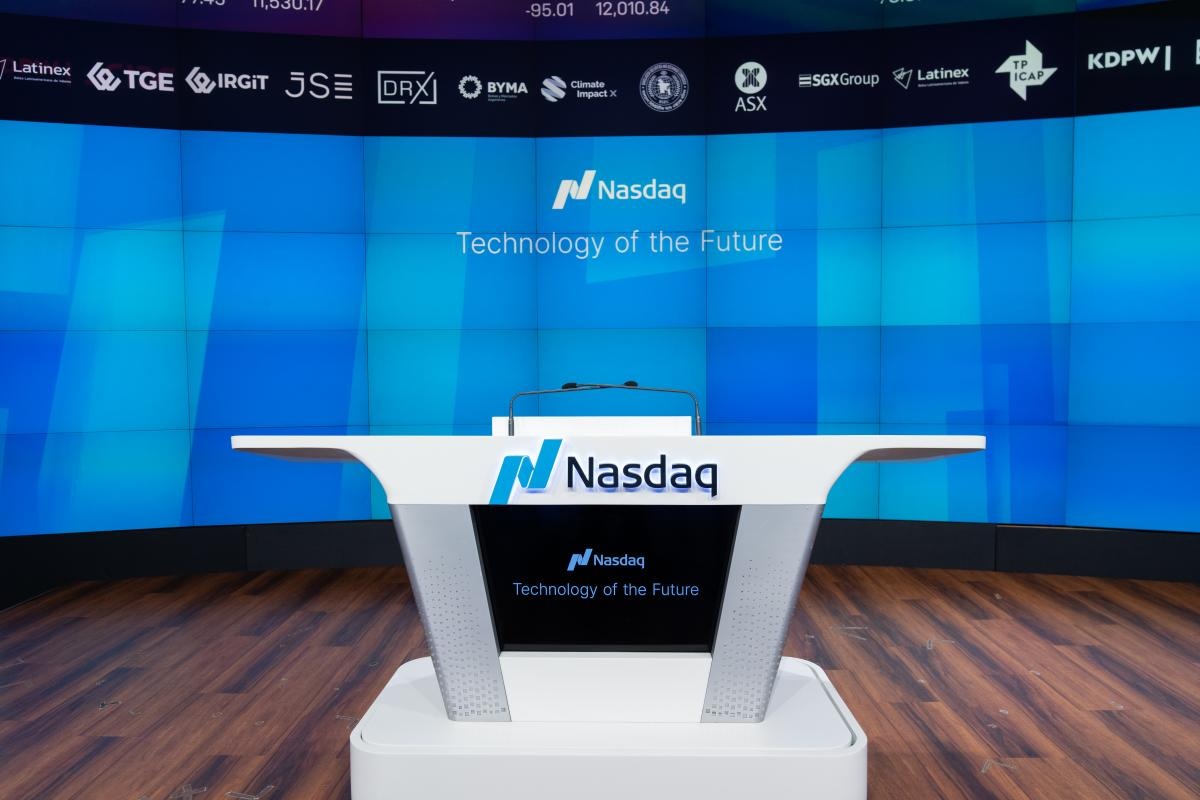
The tech-heavy NASDAQ Composite staged its most powerful monthly rally since the early days of the Covid pandemic, surging 15.29% in April as investor confidence returned to artificial intelligence-linked technology companies after a turbulent start to 2026.
The rebound marks a dramatic reversal for a sector that entered the year under pressure from concerns about stretched valuations, slowing enterprise software demand, and fears that rapid advances in AI could destabilize existing business models. By the end of March, the Nasdaq was still down roughly 7% for the year. One month later, it had swung back into positive territory, now up about 7% year-to-date.
The rally was largely driven by renewed conviction that the AI investment cycle remains far stronger and more durable than many investors had feared earlier this year. Earnings from major technology companies reinforced that narrative. Alphabet, Amazon, and Microsoft all exceeded expectations on revenue and cloud growth, easing concerns that corporate AI spending might be slowing after a period of unprecedented capital expenditure.
Register for the next Tekedia Mini-MBA.
Register for Tekedia AI in Business Masterclass.
Join Tekedia Capital Syndicate and co-invest in great global startups.
Alphabet rose 10% following earnings and finished April up 34%, marking its strongest monthly performance since 2004, the year the company went public. The scale of the gain underscores how aggressively investors are rewarding firms viewed as central beneficiaries of the AI economy, particularly those with dominant cloud and advertising ecosystems capable of monetizing generative AI tools at scale.
Amazon climbed 27% during the month as investors responded positively to continued acceleration in Amazon Web Services growth and management’s commitment to expanding AI infrastructure. Microsoft also benefited from sustained demand for cloud computing and enterprise AI services, cementing the view that hyperscalers remain the backbone of the global AI buildout.
Even where investor reactions were mixed, the underlying theme remained intact. Meta fell sharply after announcing a fresh increase in capital expenditure, but still ended the month nearly 7% higher. The reaction underlines growing investor sensitivity to the enormous cost of building AI infrastructure, particularly data centers, networking systems, and custom silicon.

That tension is becoming one of the defining features of the current market cycle. Investors remain enthusiastic about AI-driven growth, but are increasingly scrutinizing whether the billions being poured into infrastructure will translate into sustainable profit expansion.
The strongest gains were concentrated in semiconductors, where the AI boom continues to strain global supply chains and drive demand for advanced computing hardware.
Advanced Micro Devices surged 74% in April, while Micron Technology jumped 53% as investors bet that demand for memory and AI accelerators will remain elevated for years. Broadcom gained 35%, benefiting from its exposure to networking infrastructure essential for hyperscale AI clusters.

Nvidia, whose chips remain the foundation of most advanced AI systems, rose about 14%, its best month since June. While smaller than some peers’ gains, Nvidia’s rally is significant given its already enormous market value and dominant role in the AI ecosystem.
Perhaps the most striking move came from Intel, whose shares doubled in April, marking the strongest month in the company’s 55-year history. The rally suggests investors are reassessing Intel’s position amid efforts to rebuild its manufacturing capabilities and participate more aggressively in AI-related chip production after years of falling behind rivals.
The rebound in chip stocks also underpins a structural shift underway in technology markets. Earlier waves of digital transformation were driven largely by software. The current AI cycle is increasingly hardware-intensive, requiring massive investments in processors, memory, networking equipment, and energy infrastructure.
That shift is reshaping capital allocation across the industry. Major cloud providers are committing hundreds of billions of dollars toward AI infrastructure, while semiconductor companies are racing to expand production capacity amid persistent supply shortages.
The rally also comes against a backdrop of growing geopolitical tension and rising energy costs linked to the ongoing conflict involving Iran. Higher oil prices have injected inflation concerns back into markets, yet investors appear willing, for now, to look past macroeconomic risks in favor of AI-driven earnings momentum.
Still, questions remain about sustainability. Valuations across parts of the tech sector have returned to elevated levels, and the sharp rise in capital expenditure by major firms has revived debate about whether the industry may eventually face diminishing returns on AI spending.