

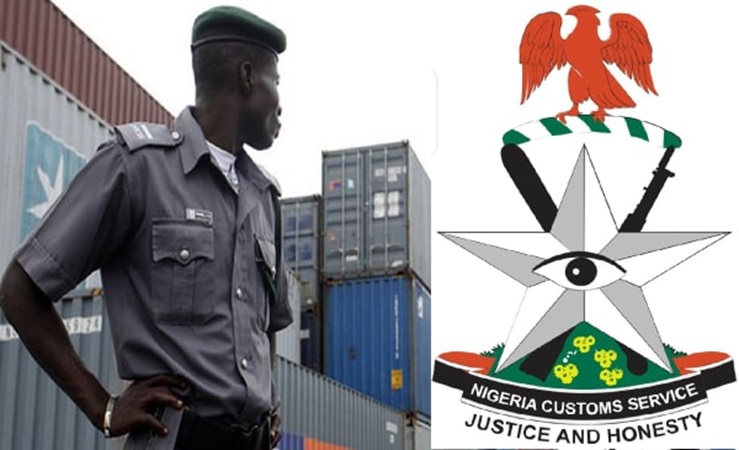
The Nigeria Customs Service (NCS) has announced a new De Minimis policy that will allow duty-free clearance for imported goods valued at $300 or less, effective Monday, September 8, 2025.
The policy is designed to simplify customs procedures, support cross-border trade, and strengthen Nigeria’s position as a regional hub for e-commerce.
Announcing the decision in a press release issued Sunday, September 7, 2025, Abdullahi Maiwada, PhD, Assistant Comptroller of Customs and National Public Relations Officer for the Comptroller-General of Customs, said the new framework will cover low-value consignments, e-commerce shipments, and passenger baggage. He noted that the initiative brings Nigeria in line with global benchmarks under the World Trade Organization Trade Facilitation Agreement and the World Customs Organization’s Revised Kyoto Convention.
Register for Tekedia Mini-MBA edition 20 (June 8 – Sept 5, 2026).
Register for Tekedia AI in Business Masterclass.
Join Tekedia Capital Syndicate and co-invest in great global startups.
Register for Tekedia AI Lab.
“The Nigeria Customs Service Board (NCSB), at its 63rd regular meeting held on Tuesday, September 2, 2025, chaired by the Honourable Minister of Finance and Coordinating Minister of the Economy, Mr. Wale Edun, has approved a De Minimis Threshold Value for low-value consignments imported through express shipments or by passenger baggage,” the statement read.
It continued: “This decision, which takes effect on Monday, 8th September 2025, aligns with the best global practices that aim to simplify clearance processes for low-value consignments, enhance trade facilitation, and provide clarity for e-commerce stakeholders and travelers. After a comprehensive review of similar practices across continents, the Board approved $300 as Nigeria’s official De Minimis threshold. This exemption will apply to low-value imports, e-commerce consignments, and passenger baggage.”
How the policy works
Each individual will be allowed to benefit from the exemption for up to four importations per year, provided the items are not prohibited or restricted. Eligible consignments will be released immediately at ports or entry points without the need for post-clearance documentation, significantly reducing delays that have long frustrated importers and travelers.

The NCS also announced the creation of multi-channel helpdesk platforms to guide stakeholders, address inquiries, and resolve complaints. However, the agency cautioned against abuse of the new framework, warning that attempts to manipulate invoices or evade duties will attract strict penalties, including forfeiture of goods or arrest.
Comparative context
Nigeria’s $300 threshold is significant, but it also highlights how countries balance revenue protection with trade facilitation. In the United States, before the Trump administration axed it, the De Minimis threshold stood at $800 — one of the most generous in the world — a policy credited with fueling the country’s booming e-commerce market by encouraging imports of small packages. The European Union operates a much lower limit, at €150, while in the United Kingdom the threshold is £135.
Within Africa, thresholds vary widely. South Africa does not operate a clear De Minimis framework, often applying duties even on very small imports. Kenya allows exemptions up to $50, while Ghana’s level is $200. Nigeria positions itself above many regional peers by setting its limit at $300, signaling an openness to e-commerce-driven trade while still being more conservative than the U.S. or some advanced economies.

Trade experts suggest that this move could help Nigeria capture a larger share of cross-border retail transactions in West Africa, especially as Lagos continues to emerge as a logistics hub for international delivery firms.
Some analysts believe that the $300 threshold could serve as a catalyst for Nigeria’s fast-growing e-commerce sector, where small merchants and individual shoppers often face bottlenecks due to complex and costly customs procedures. The policy is expected to improve supply chain efficiency, reduce costs for online retailers, and encourage more Nigerians to engage in cross-border e-commerce by easing clearance for lower-value items.
It also positions Nigeria closer to regional peers that already operate with De Minimis thresholds, boosting competitiveness and investor confidence in its trade infrastructure.
The new policy is expected to reduce clearance delays, lower trade transaction costs, and make Nigeria more attractive as a hub for logistics and retail. However, many believe that its success will depend on consistent enforcement and transparency, as stakeholders warn that any abuse or uneven application could undermine the gains.