

Nigeria’s inflation rate continued its downward movement in July 2026, providing evidence that price pressures may be gradually easing across the economy.
Headline inflation fell to 15.43% year-on-year in July from 15.91% in June, a decline of 0.48 percentage points and the second consecutive monthly reduction.
The latest figure is also substantially below the 24.94% recorded in July 2025, highlighting the extent of the disinflation achieved over the past year.
On a month-on-month basis, inflation also moderated, falling to 1.57% in July from 1.66% in June. While prices are still increasing, the slower monthly pace indicates that the intensity of price growth has weakened.
Register for the next Tekedia Mini-MBA.
Register for Tekedia AI in Business Masterclass.
Join Tekedia Capital Syndicate and co-invest in great global startups.
The headline figure does not tell the full story of Nigeria’s inflation environment, as an acceleration in food prices offset some of the improvement recorded in other parts of the economy.
The clearest sign of easing underlying pressure came from core inflation, which excludes volatile food and energy prices. Core inflation dropped to 14.97% year-on-year in July from 15.92% in June. Its month-on-month performance was even more significant, falling to 0.15% from 1.66% in June.
This moderation suggests that improvements in currency stability and logistics are beginning to feed into the prices of non-food and non-energy goods and services. A more stable naira can reduce the cost pressures associated with imported inputs.

While lower logistics expenses can reduce the amount businesses need to spend moving goods through the country. If these conditions persist, companies may gain greater certainty over costs and consumers could gradually benefit from slower price increases.
Food inflation, remains a major concern. Instead of following the broader downward trend, food inflation accelerated sharply in July. Year-on-year food inflation climbed to 20.31% from 17.52% in June, while the month-on-month rate jumped to 5.56% from 3.75%.
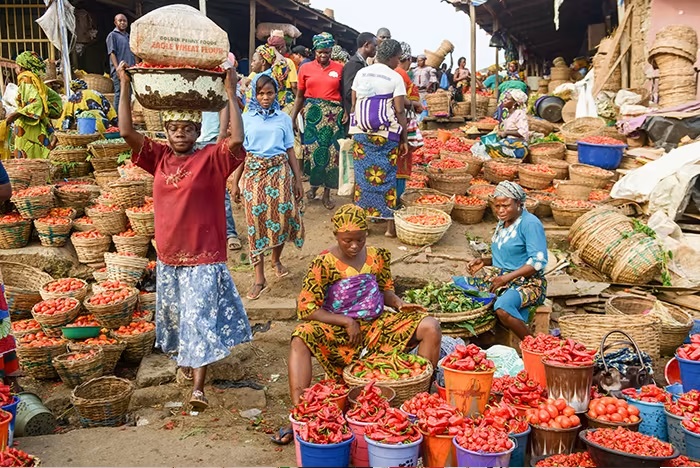
The increase was driven by higher prices for several consumed products, including crayfish, pepper, onions, tomatoes, rice, garri and beef. Because food represents a substantial share of household spending in Nigeria.
Rising food prices can continue to place significant pressure on living standards even when headline inflation is declining.

The divergence between core and food inflation underscores the structural nature of Nigeria’s price challenges. Monetary and currency conditions can help moderate imported inflation and stabilize non-food prices.
But food costs are also heavily influenced by agricultural output, seasonal supply, transportation, storage, insecurity, distribution networks and market efficiency. The July data therefore represents both progress and a warning.
The decline in headline and core inflation suggests that stabilization efforts are producing results, but the renewed acceleration in food inflation shows that monetary measures alone cannot deliver broad-based price relief.
Maintaining the disinflation trend will require continued naira stability, alongside measures that increase agricultural productivity and improve food distribution. Investments in storage, roads, transportation and supply chains could reduce the losses and costs that ultimately reach consumers.
Nigeria’s July inflation report is therefore a mixed but important signal. The economy is moving toward slower overall price growth, particularly outside food, but households remain exposed to significant increases in essential goods.
The real test will be whether the current improvement can translate into lower and more predictable living costs. For millions of Nigerians, the success of disinflation will be measured not by the headline number alone, but by what they can afford to buy with their income.