

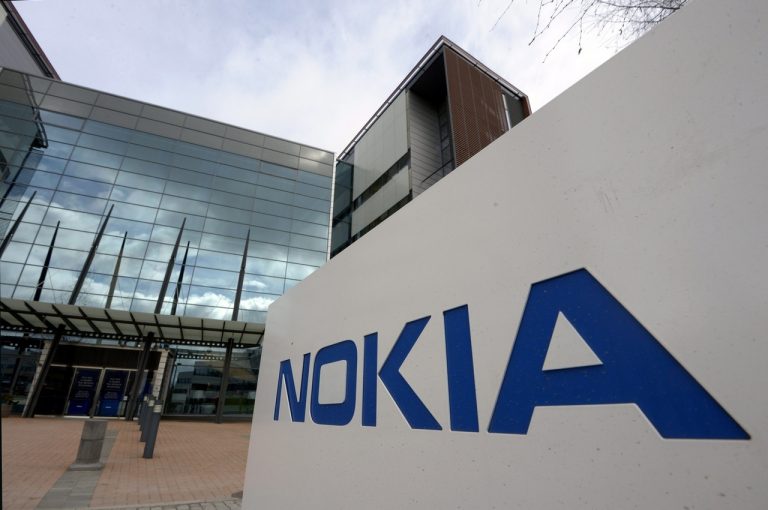
Nokia has laid out an ambitious reinvention plan centered on artificial intelligence, placing itself squarely in the escalating global race among the world’s biggest technology companies to dominate the next wave of digital infrastructure.
The Finnish telecoms equipment maker said the shift marks a structural reset designed to simplify its business, expand beyond its traditional markets, and ride a sector-wide belief that AI is the next major engine of corporate growth.
Beginning in 2026, Nokia will reorganize its operations into two major units. The first, Network Infrastructure, will focus on AI-powered and data-center-grade technologies such as optical networking, routing, and cloud connectivity. The second, Mobile Infrastructure, will oversee the company’s core telecoms operations, including the radio-access equipment that powers mobile networks.
Register for Tekedia Mini-MBA edition 20 (June 8 – Sept 5, 2026).
Register for Tekedia AI in Business Masterclass.
Join Tekedia Capital Syndicate and co-invest in great global startups.
Register for Tekedia AI Lab.
The new structure will support a financial overhaul. Nokia is now targeting an annual comparable operating profit of 2.7 billion to 3.2 billion euros by 2028, up from 2 billion euros last year. That would amount to as much as a 60% jump in profitability.
The move comes as virtually every major tech company intensifies its AI push. Google, Amazon, Meta, Microsoft, Nvidia, IBM, and startups like OpenAI and Anthropic have poured tens of billions into training compute, data-center expansions, and model development. Executives across Silicon Valley now describe AI as the next major platform shift — a transformation akin to the rise of the smartphone, cloud computing, or the early internet. Nokia’s plan signals its determination not to be left behind as AI becomes the focal point of both innovation and investment.
Nokia’s strategic pivot follows a difficult period for telecom equipment suppliers, who have been hit by a global slowdown in 5G rollouts and weak capital spending from mobile operators. In search of steadier ground, the company has been building deeper ties with the cloud and AI ecosystem. Earlier this year, it acquired U.S. optical networking firm Infinera, whose technology is widely used by hyperscale cloud providers. The purchase has already boosted sales and expanded Nokia’s reach into the fast-growing data-centre connectivity market.

That expansion was reinforced when Nvidia pumped $1 billion into Nokia for a 2.9% stake, an endorsement from the most influential chipmaker in the AI boom. Nvidia’s investment signaled confidence in Nokia’s attempt to realign itself with the needs of AI infrastructure builders rather than relying solely on telecoms operators.
At Nokia’s capital markets day in New York, CEO Justin Hotard pointed out that the balance of power in global connectivity has shifted.
“The largest hyperscalers are now investing more each quarter than the largest telcos invest in a year,” he said.

Hotard noted that nine of the world’s ten biggest cloud providers now rely on Nokia technology, underscoring the company’s growing relevance beyond mobile networks.
Alongside its commercial strategy, Nokia announced plans to launch a new defense incubation unit to develop secure connectivity for Western governments — a reflection of rising geopolitical tensions and growing spending on cyber-secure communication capabilities.
The company also intends to cut operating expenses dramatically. It aims to bring group operating costs down to 150 million euros by 2028 from 350 million euros today, freeing up capital for AI-heavy infrastructure and product development.
Investors, however, were not impressed in the immediate term. Nokia shares fell as much as 6%, making it one of the weakest performers on the Stoxx 600 on Wednesday, though the stock remains up about 25% so far this year. Analysts said the sell-off stemmed from lofty expectations after the recent rally.
“Market expectations were higher after a strong share price increase,” said Atte Riikola of Inderes.
Paolo Pescatore of PP Foresight added that the strategy was not dramatically different from the company’s existing direction and warned that the AI build-out is capital-intensive with uncertain long-term returns.
Nokia’s plan aligns with the wider industry narrative that AI is now seen as the defining force of the digital economy. Every major player wants to secure a role, whether through chipmaking, cloud infrastructure, model development, or the communications backbone that keeps these systems running.
The next several years will determine whether Nokia’s repositioning itself at the heart of the AI surge is enough to transform its fortunes.