

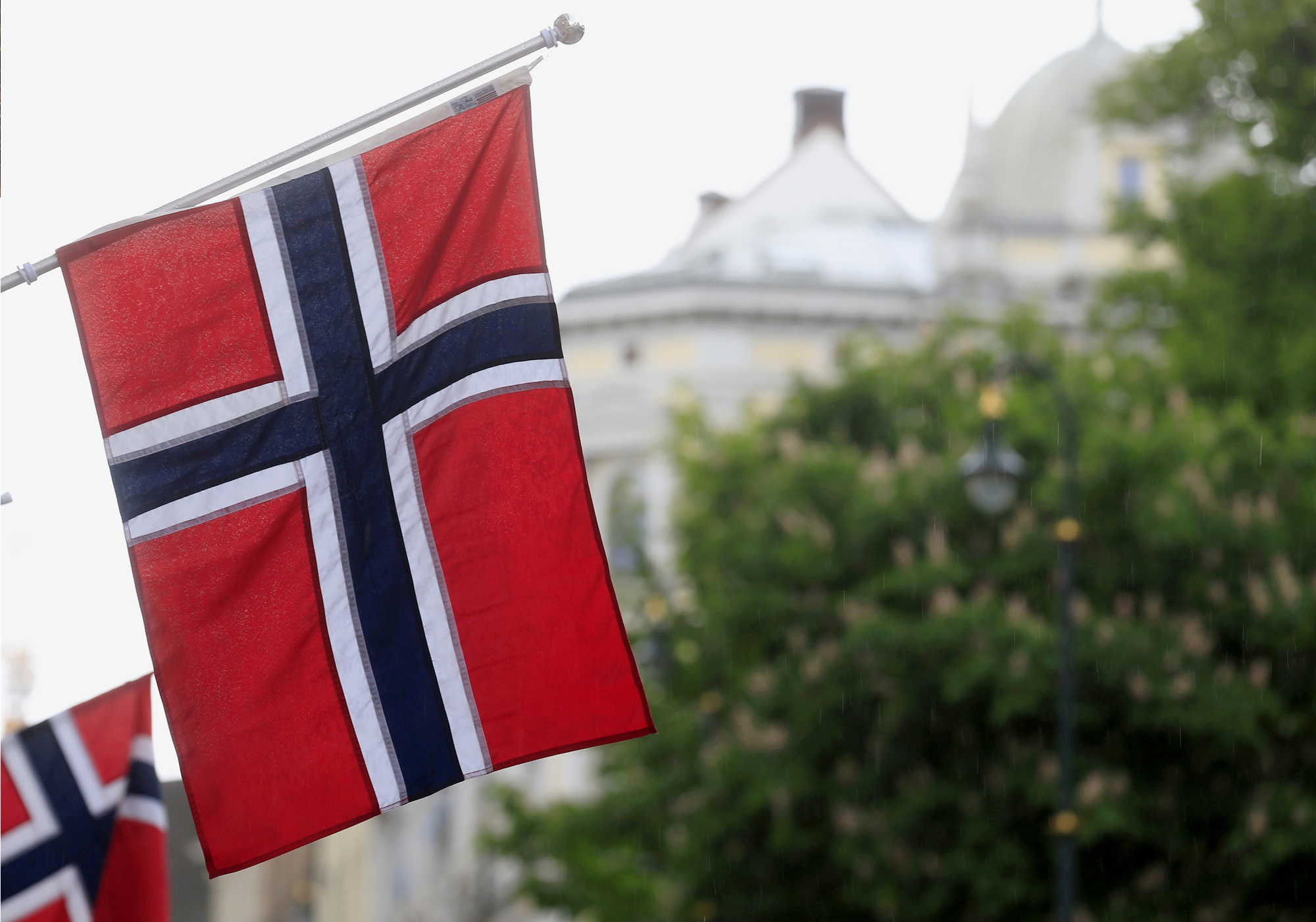
Norway’s $2.3 trillion sovereign wealth fund could resume investing in major Western defense companies involved in nuclear weapons production under proposed changes to its ethical investment rules, marking a potential shift in how the country balances responsible investing with its security interests and financial returns.
A government-appointed commission recommended on Thursday that the fund introduce an exemption for defense companies based in countries recognized as nuclear-weapon states under the Treaty on the Non-Proliferation of Nuclear Weapons (NPT), provided those countries are allies of Norway within NATO. If adopted by the government and parliament, the proposal could unlock investments worth tens of billions of dollars in companies currently excluded from the portfolio.
The proposed changes form part of a broader review of the ethical framework governing the world’s largest sovereign wealth fund, which invests Norway’s oil and gas revenues to support the country’s long-term financial security. The review comes as European governments reassess defense capabilities and security arrangements amid changes in the international security environment.
Register for the next Tekedia Mini-MBA.
Register for Tekedia AI in Business Masterclass.
Join Tekedia Capital Syndicate and co-invest in great global startups.
Among the companies that could benefit are Airbus, Boeing, BAE Systems and Lockheed Martin, all of which have been excluded under existing rules because of their involvement in producing nuclear weapons or related components.
“Several European and US companies that produce components for nuclear weapons can therefore be reincluded,” the commission said in its proposal.
The recommendation does not automatically restore the companies’ eligibility. Norway’s government and parliament must decide whether to adopt the changes, and individual companies could remain excluded if their activities breach other ethical standards.

Finance Minister Jens Stoltenberg, a former NATO secretary general, commissioned the review, citing changes in the global security environment and Norway’s reliance on NATO’s nuclear deterrence arrangements.
Under the existing framework, the fund has been barred from investing in companies linked to nuclear weapons production. The restrictions have affected a broad group of Western defense and industrial businesses, including Safran, Thales, BWX Technologies, Northrop Grumman, Fluor, General Dynamics, Huntington Ingalls Industries, Jacobs Solutions, L3Harris Technologies and India’s Larsen & Toubro.
The proposed exemption would narrow the circumstances in which nuclear weapons involvement automatically disqualifies a company from investment. Its underlying premise is that Norway’s security relationships should influence how the fund assesses defense businesses operating in allied countries.

That would represent a significant adjustment to the fund’s approach to ethical investment. Rather than applying the existing nuclear weapons restriction uniformly to affected companies, the proposed framework would allow certain firms to qualify based on their country of domicile and that country’s security relationship with Norway.
However, the commission’s recommendation does not amount to a blanket endorsement of the defense industry. Other ethical grounds could still justify excluding individual companies, preserving a role for restrictions beyond the specific rules governing nuclear weapons production.
The debate highlights the difficulty of separating ethical investment principles from national security considerations. Defense companies can produce conventional military equipment, civilian technologies and components used in nuclear weapons systems, sometimes within the same industrial supply chain. Determining which activities warrant exclusion becomes more complicated when governments view those companies as part of their collective defense infrastructure.
Stoltenberg acknowledged this challenge in comments to Reuters ahead of the report’s release.
“The world is changing and the value chain is becoming more and more integrated. It is difficult to distinguish between civil and military products,” he said.
His statement indicates that the review is concerned not only with nuclear weapons but also with whether the fund’s existing ethical rules remain workable in an increasingly interconnected global economy.
Ethical Oversight Faces Changes As Scrutiny Intensifies
The proposed reforms also address how the fund enforces its ethical standards and communicates decisions to the public. Norway’s parliament paused ethics-based divestments by the fund last year while the government reviewed its investment rules. The suspension followed scrutiny from the Trump administration and has left the existing framework under reassessment.
Before the pause, the Council on Ethics, the fund’s independent ethical watchdog, assessed companies and recommended divestments to the board of Norway’s central bank, which had final authority over the decisions. The board generally followed the council’s recommendations.
The commission has proposed retaining the Council on Ethics but changing how it operates. Under its recommendations, reports explaining the council’s decisions would no longer be automatically made public. That proposal could alter the balance between transparency and the fund’s ability to manage political and commercial sensitivities. Publishing the reasons for exclusions has made the fund’s ethical decisions visible to investors, companies and civil society organizations. Less automatic disclosure could give the authorities greater flexibility, but it could also make it harder for outsiders to assess how consistently the fund applies its standards.
Stoltenberg has previously told Reuters that the fund’s openness about the reasons for divestment creates dilemmas. The challenge is acute when ethical decisions affect major companies or intersect with geopolitical disputes.
More than half of the fund’s assets are invested in the United States, making its exposure to American markets a central consideration in any significant change to its investment policy. The fund’s size also means that changes to its eligibility rules could have consequences well beyond Norway, particularly if its decisions influence how other institutional investors assess defense companies.
Stoltenberg has described protecting the fund as one of Norway’s most important responsibilities, given its contribution to the country’s public finances.
“The world is changing and the value chain is becoming more and more integrated,” he said, while emphasizing the need to preserve a sound ethical framework.
Portfolio Concentration Adds Another Constraint
Beyond defense investments, the review comes as Norway confronts a separate challenge: the growing concentration of its equity portfolio in a relatively small number of large companies.
Stoltenberg pointed to the influence of major US technology companies, including Nvidia, Apple and Amazon. According to his remarks, the fund’s 10 largest holdings account for more than 20% of the value of its share portfolio.
“This type of concentration … means that individual decisions can have much greater consequences than in the past,” he said, adding that his priority was for the fund to remain broadly invested.
“We should not do things that can undermine that. At the same time, we must have a good ethical framework,” he said in an interview at Norway’s parliament.
The concentration issue underscores the competing demands facing the fund. Restricting investments on ethical grounds can limit exposure to particular industries or companies, while a broad investment mandate is intended to spread risk across markets and businesses. As the largest holdings account for a substantial share of portfolio value, individual investment decisions can also have greater financial consequences.
Allowing some Western defense companies back into the portfolio could expand the fund’s investment universe. However, the financial implications would depend on the final rules, the companies deemed eligible and the size of any eventual investments. The commission’s recommendation alone does not establish that the fund will commit tens of billions of dollars to the affected businesses.
The proposals will form the basis for the Norwegian government’s own recommendations in its annual white paper on the sovereign wealth fund, expected in spring 2027.
Civil society organizations have already raised concerns about the direction of the review. The Norwegian Red Cross argued in its submission to the commission that the proposed approach would legitimize investment in weapons of mass destruction.
“The way Norway invests significant sums contributes to setting standards globally,” the organization said.
That objection goes to the heart of the policy debate. Norway’s fund is not simply a vehicle for managing national wealth; its investment restrictions also communicate the country’s position on corporate conduct and the production of certain weapons. Relaxing those restrictions could give the fund access to a wider range of defense investments, but it could also weaken the perceived consistency of its ethical commitments.