

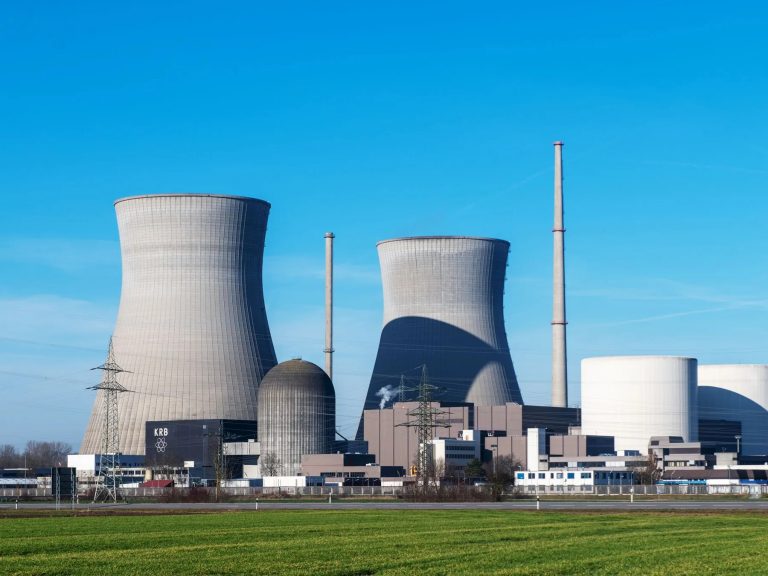
Nuclear energy stocks experienced a significant surge on Friday following Meta Platforms’ announcement of sweeping agreements with three providers to secure up to 6.6 gigawatts of nuclear power by 2035, positioning the tech giant as one of the largest corporate buyers of nuclear energy in U.S. history.
The deals, aimed at powering Meta’s expansive artificial intelligence infrastructure, including the one-gigawatt Prometheus AI supercluster in New Albany, Ohio, highlight the escalating energy demands of AI development and Big Tech’s pivot toward reliable, low-carbon baseload power sources. The partnerships with Vistra Corp., Oklo Inc., and TerraPower LLC stem from Meta’s nuclear request-for-proposals (RFP) process initiated in December 2024, which sought 1 to 4 gigawatts of new nuclear capacity.
These agreements encompass long-term power purchase agreements (PPAs), uprates at existing reactors, and financial backing for advanced nuclear technologies, reflecting a comprehensive strategy to address both immediate and future energy needs. Under the 20-year PPA with Vistra, Meta will procure over 2.6 gigawatts from three operational plants: the Perry and Davis-Besse facilities in Ohio, and the Beaver Valley plant in Pennsylvania.
Register for Tekedia Mini-MBA edition 20 (June 8 – Sept 5, 2026).
Register for Tekedia AI in Business Masterclass.
Join Tekedia Capital Syndicate and co-invest in great global startups.
Register for Tekedia AI Lab.
This includes funding for 433 megawatts of uprates—the largest such enhancements ever supported by a corporate entity—and license extensions to prolong operations.
Deliveries are slated to begin in late 2026, with additional capacity ramping up through 2034, providing Meta with stable pricing and reducing exposure to grid volatility.
Meta’s collaboration with Oklo, an advanced nuclear startup backed by OpenAI CEO Sam Altman—who stepped down as board chairman in August 2025—will support the development of a 1.2-gigawatt Aurora fast-reactor campus in Pike County, Ohio.

Through prepayments and development funding, Meta is enabling early procurement, site preparation, and phased deployment starting as early as 2030.
Oklo CEO Jacob DeWitte emphasized the deal’s role in realizing the company’s vision for next-generation nuclear powerhouses in Ohio, noting it as a “major step in moving advanced nuclear forward.”
The agreement with TerraPower, founded by Bill Gates, accelerates the rollout of up to eight Natrium reactors, delivering 2.8 gigawatts of baseload power integrated with 1.2 gigawatts of energy storage, potentially boosting output to 4 gigawatts.

Initial units, starting with two reactors generating up to 690 megawatts, are targeted for the early 2030s.
This modular design promises enhanced efficiency and flexibility for data center operations. These pacts build on Meta’s prior nuclear commitments, including a June 2025 deal with Constellation Energy to extend an Illinois reactor’s life for 20 years.
Combined, they underscore Meta’s strategy to mitigate the “primary bottleneck” of energy supply for AI advancement, as articulated by industry observers.
Market response was robust, with shares of directly involved companies leading the charge. Oklo surged as much as 20% in premarket trading, closing the day up 13%, while Vistra climbed 15% amid intraday highs reaching 18%.
The rally extended to peers: NuScale Power rose 6%, Constellation Energy gained 4%, and BWX Technologies advanced 5%. Broader nuclear exchange-traded funds, such as URA and URNM, also saw upward momentum.
Analysts viewed the news as “incrementally positive for the entire nuclear energy industry,” reaffirming hyperscalers’ commitment to new energy sources amid AI-driven power constraints.
The deals are projected to create thousands of construction jobs and hundreds of permanent positions, particularly in Ohio and Pennsylvania, while generating local tax revenues and bolstering clean energy workforces.
Urvi Parekh, Meta’s head of global energy, highlighted the agreements’ focus on preventing premature reactor closures and fostering early investments in new nuclear capacity. He said the deal enables the development of 1.2 gigawatts of nuclear energy in Southern Ohio, supporting Meta’s operations in the region—including our AI supercluster in New Albany.
Joel Kaplan, Meta’s chief global affairs officer, framed the initiatives as vital for U.S. AI leadership.
This move aligns with a broader industry trend, as AI’s energy-intensive nature—projected to drive substantial U.S. electricity demand growth—prompts tech firms to embrace nuclear for its 24/7 reliability and low emissions.
While financial terms remain undisclosed, the contracts could represent billions in revenue for providers, signaling a revival in nuclear investment amid competition from faster-to-build natural gas options.
Public reaction on social platforms echoed the enthusiasm, with traders and analysts noting the deals’ potential to cement Meta’s edge in AI while spurring nuclear sector growth.