

Election campaigns have always been about winning public trust. Candidates travel from community to community, unveil ambitious manifestos, and make promises about jobs, roads, education, and healthcare. Today, however, another campaign tool has become just as important: numbers.
Open a newspaper during an election season and you will notice a pattern. Headlines announce that “500 members defected to a political party,” “10,000 women have been mobilised,” “3,000 supporters received business grants,” or “3,763 BVAS machines will be deployed.” These figures appear almost every day, giving readers the impression that politics can be measured through statistics.
The Osun 2026 governorship election offers a good example of this growing trend. Campaign stories have increasingly focused on how many people joined a party, how much money candidates distributed, how many campaign volunteers were recruited, and how many election materials had been delivered. While these figures provide useful information, they also serve another purpose. They help shape how voters see candidates, political parties, and the election itself.
Register for the next Tekedia Mini-MBA.
Register for Tekedia AI in Business Masterclass.
Join Tekedia Capital Syndicate and co-invest in great global startups.
For political parties, numbers have become a way to tell a story about success. A headline reporting that hundreds of politicians have defected to a party creates the impression that the party is gaining momentum. Announcing thousands of campaign volunteers suggests widespread grassroots support. Promising a five-point development agenda makes a campaign appear organised and focused. Supporting traders with millions of naira signals generosity and economic commitment.
Whether these figures eventually translate into votes is another matter. Their immediate value lies in influencing public perception. People often associate large numbers with strength, popularity, and credibility. A political party that appears to be attracting more supporters may also appear more likely to win.
This is where the media play an important role. Newspapers do much more than report campaign events. They also decide which facts become headlines. In many cases, numbers are placed at the centre of the story because they are easy to understand and attract readers’ attention. A headline that says “500 members defect” is likely to receive more attention than one that simply reports a political meeting.

However, numbers should never replace questions. When a party claims that thousands of people attended a rally or hundreds of members defected, readers deserve to know how those figures were obtained. Were the numbers independently verified? Who counted the participants? What qualifies someone as a campaign volunteer or a party member? These questions are just as important as the figures themselves.
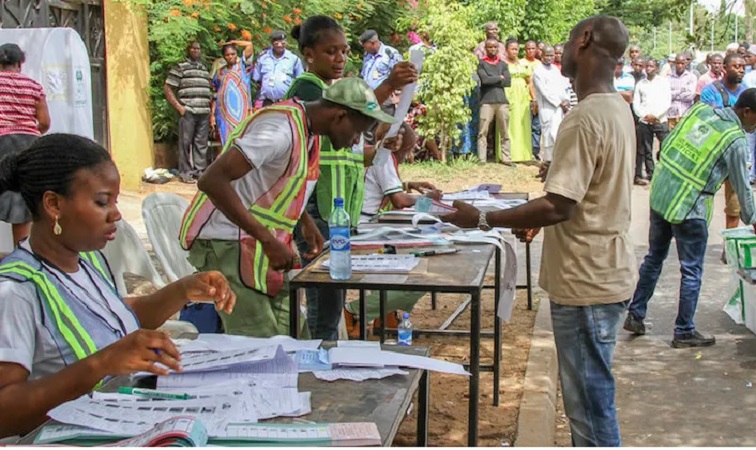
Election officials also rely heavily on numbers to reassure the public. Information about the number of BVAS machines deployed, the percentage of election materials delivered, or the identification of security flashpoints is intended to build confidence in the electoral process. These updates help citizens monitor election preparations and hold institutions accountable.
Yet even official figures are not always accepted without debate. Political parties sometimes question the number of identified flashpoints or argue that election preparations are progressing differently from what has been announced. As a result, the same set of figures can be interpreted in different ways depending on who is speaking.

Civil society organisations have also become important voices during elections. Groups that monitor elections regularly publish findings on vote buying, campaign spending, violence, and electoral misconduct. Their reports introduce additional evidence into public discussions and provide an alternative perspective to official statements and political campaigns. This diversity of information helps strengthen public accountability, even though their findings may also become subjects of political disagreement.
Perhaps the most interesting aspect of election numbers is that they do more than describe what is happening. They can also influence what happens next. News about mass defections may encourage more politicians to switch parties. Reports of thousands of campaign volunteers may convince undecided voters that a candidate enjoys broad support. Announcements that election materials have already reached most polling areas can increase public confidence in the electoral process.
In other words, numbers do not simply reflect political reality. They can also shape it.
This is why citizens should approach campaign statistics with curiosity rather than blind acceptance. Every figure tells a story, but not always the complete story. It is worth asking where the numbers came from, how they were calculated, and whether they have been independently confirmed. Large figures may be accurate, but they may also be selective, exaggerated, or presented without important context.
As Nigeria’s elections become more competitive and information moves faster than ever, voters need more than campaign promises. They also need reliable information. Political parties should recognise that credibility comes not only from presenting impressive statistics but also from ensuring that those figures can withstand public scrutiny. Likewise, the media should continue reporting election numbers while giving readers enough context to understand what those numbers truly mean.
Democracy is strengthened when citizens look beyond impressive headlines and ask informed questions. In the end, elections should be decided by the quality of leadership and the choices of voters, not simply by the size of the numbers that dominate campaign coverage.