

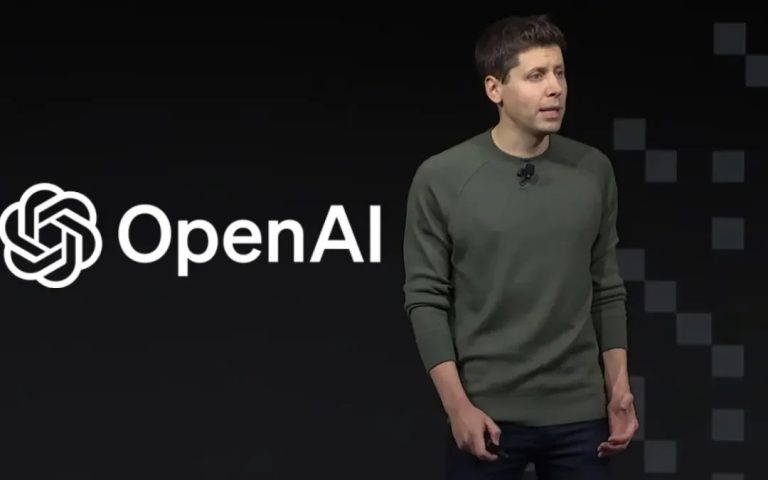
OpenAI CEO Sam Altman on Friday reiterated the company’s call for the U.S. government to expand eligibility under the Advanced Manufacturing Investment Credit (AMIC), part of the Chips Act, to include AI server production, AI data centers, and grid components.
The move comes as the U.S. accelerates efforts to secure its global leadership in artificial intelligence and maintain competitiveness in high-tech manufacturing.
Altman’s remarks follow an October 27 letter from OpenAI Chief Global Affairs Officer Chris Lehane to Michael Kratsios, Director of the White House Office of Science and Technology Policy, in which Lehane formally requested the expansion.
Register for Tekedia Mini-MBA edition 20 (June 8 – Sept 5, 2026).
Register for Tekedia AI in Business Masterclass.
Join Tekedia Capital Syndicate and co-invest in great global startups.
Register for Tekedia AI Lab.
The AMIC is a federal tax incentive designed to stimulate domestic semiconductor production, providing financial support to companies that invest in U.S.-based fabrication facilities and related high-tech infrastructure. Expanding the credit to cover AI hardware could reduce costs and accelerate the deployment of critical AI infrastructure across the country.
In his post on X, Altman emphasized the broader industrial impact of such policies, saying, “We think U.S. re-industrialization across the entire stack — fabs, turbines, transformers, steel, and much more — will help everyone in our industry, and other industries (including us).”
He clarified that the tax credit is “super different than loan guarantees to OpenAI,” noting that while the company has previously discussed federal loan guarantees to spur chip factory construction, no such support has been sought for AI data centers.

OpenAI has committed to investing $1.4 trillion in computational resources over the next eight years to support its AI models, including the widely used ChatGPT. The company’s investment underlines the massive scale of infrastructure required to sustain AI development, particularly as demand for AI services continues to surge. Other leading tech firms have similarly announced plans to expand their data centers and chip development programs, reflecting the rapid growth of AI applications in sectors ranging from enterprise software to generative AI.
However, White House AI and crypto czar David Sacks has made it clear that there will be no federal bailout for AI companies, signaling that any government support would need to operate within existing frameworks like the AMIC. The call for direct federal subsidies for AI comes as the Trump administration dismantles existing tax credit initiatives, especially on green energy, although tax incentives have been touted as key in enabling large-scale private investment in advanced manufacturing.
Thus, expanding the AMIC to AI-related hardware will help to strengthen U.S. competitiveness against countries like China, where governments are actively investing in semiconductor and AI capabilities. OpenAI aims to not only accelerate its own AI deployment but also contribute to the wider U.S. industrial base, fostering economic growth and technological leadership by reducing costs for domestic AI hardware.

This push comes amid a broader national debate on how to ensure that U.S. technological leadership is sustained in the face of global competition. The potential expansion of the AMIC would align AI infrastructure development with broader economic policy objectives, potentially influencing investment decisions across the sector while supporting the government’s stated goal of reinforcing domestic manufacturing.