

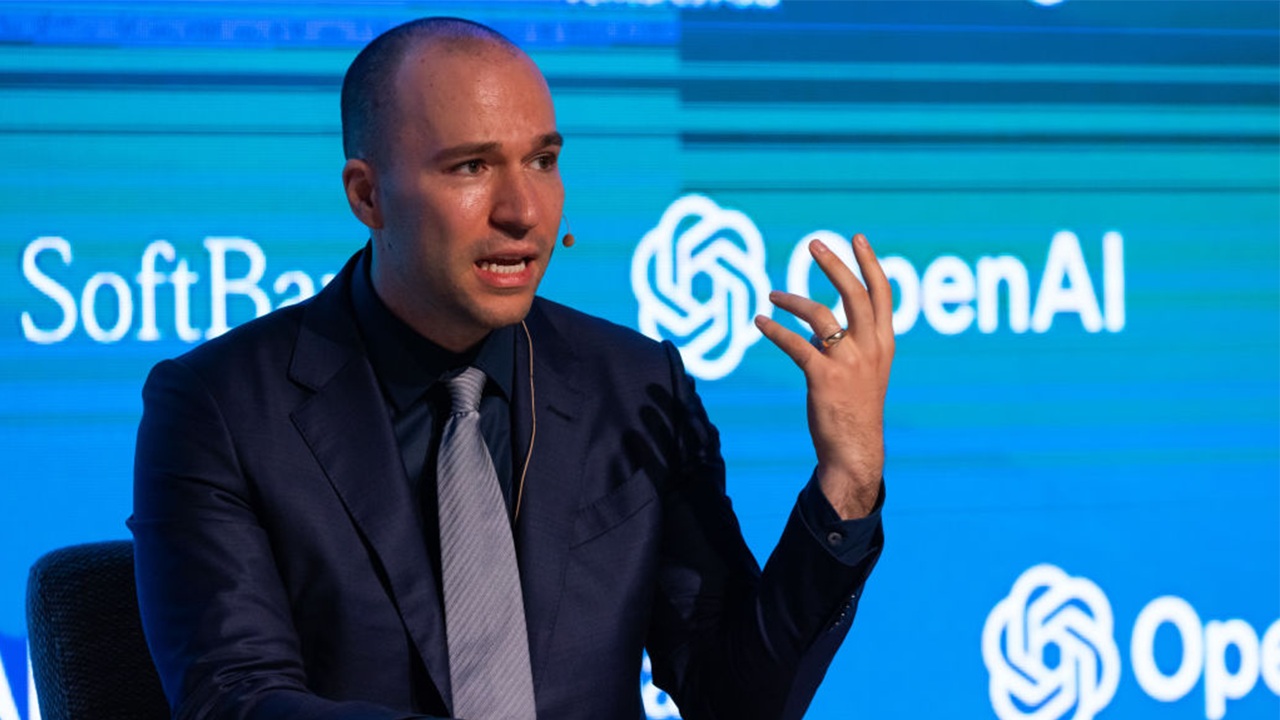
OpenAI co-founder Greg Brockman is formally taking control of the company’s product strategy in a move that signals a deeper restructuring inside the artificial intelligence firm as it intensifies focus on ChatGPT, coding tools, and AI agents.
According to a report by Wired, Brockman will now officially oversee OpenAI’s product direction, solidifying a transition that had already been unfolding internally while Fidji Simo remains on medical leave.
The report said Brockman outlined plans in a staff memo to combine ChatGPT and OpenAI’s programming platform Codex into a unified product experience as the company pushes toward what executives increasingly describe as an “agentic” future for artificial intelligence.
Register for the next Tekedia Mini-MBA.
Register for Tekedia AI in Business Masterclass.
Join Tekedia Capital Syndicate and co-invest in great global startups.
“We’re consolidating our product efforts to execute with maximum focus toward the agentic future, to win across both consumer and enterprise,” Brockman reportedly wrote in the memo.
OpenAI confirmed to TechCrunch that Simo collaborated with Brockman on the organizational changes before taking leave and said the company had already been discussing broader plans to integrate ChatGPT, Codex, and its API offerings into a single platform supported by one central product team.
OpenAI Refocuses Around ChatGPT
The restructuring reflects growing pressure inside OpenAI to concentrate resources around its core commercial products as competition intensifies across the AI industry. At the end of last year, Sam Altman reportedly declared a “code red” internally and warned that the company needed to refocus aggressively on the ChatGPT ecosystem.

Since then, OpenAI has scaled back or deprioritized several side initiatives, including its video-generation platform Sora and OpenAI for Science, according to reports.
The shift highlights how quickly the economics and competitive dynamics of artificial intelligence have evolved. While OpenAI remains one of the industry’s most influential companies following the explosive success of ChatGPT, rivals including Google, Anthropic, Microsoft, and Meta Platforms are spending tens of billions of dollars to build competing AI ecosystems.
The market is also increasingly shifting from standalone chatbots toward AI “agents” capable of carrying out complex tasks autonomously across software environments.

That transition is becoming central to OpenAI’s strategy. Rather than operating ChatGPT, Codex, and developer tools as relatively separate products, OpenAI now appears to be building a unified AI platform that combines conversational AI, coding assistance, and workflow automation into one integrated ecosystem.
Codex Integration Signals Bigger Enterprise Push
The decision to integrate Codex more deeply into ChatGPT also points to OpenAI’s expanding ambitions in enterprise software and developer tools. Codex, which powers AI programming capabilities, has become strategically important as software development emerges as one of the most commercially valuable applications of generative AI.
AI coding assistants are rapidly transforming software engineering workflows by automating code generation, debugging, and testing.
Competition in the sector has also intensified sharply. Microsoft’s GitHub Copilot, startups such as Cursor, and enterprise AI coding platforms are all competing aggressively for developers and corporate customers.
By merging ChatGPT and Codex more tightly, OpenAI appears to be positioning itself to compete more directly for enterprise productivity spending while creating a more seamless experience across coding, research, and workflow automation. The integration may also strengthen OpenAI’s effort to create a broader “AI operating system” that keeps users inside its ecosystem across multiple tasks rather than relying on isolated tools.
That approach increasingly mirrors the broader direction of the AI industry, where companies are racing to build integrated platforms capable of handling communication, coding, search, reasoning, and task execution within a single interface.
Brockman’s formal elevation over product strategy is also significant internally because it consolidates influence around one of OpenAI’s original architects during a period of rapid organizational change. As OpenAI scaled from a research lab into one of the world’s most valuable AI companies, leadership responsibilities became increasingly distributed across research, commercialization, and product divisions.
Brockman, who helped found the company alongside Altman and other early researchers, has historically been deeply involved in both technical and product development decisions. His expanded role suggests OpenAI is prioritizing tighter coordination between engineering and product execution as the company attempts to move faster in an increasingly competitive environment.
The changes also come after a turbulent period for OpenAI management. The company has undergone several high-profile leadership transitions, governance disputes, and executive departures over the past two years as it evolved from a research-focused organization into a commercial AI giant.
Maintaining strategic coherence has become increasingly important as OpenAI simultaneously manages rapid user growth, enterprise expansion, infrastructure demands and escalating competition.
AI Industry Moves Toward “Agentic” Systems
Brockman’s emphasis on an “agentic future” underpins one of the biggest shifts currently underway in artificial intelligence.
The first wave of generative AI centered largely on chatbots capable of responding to prompts. The next phase increasingly involves AI systems that can independently complete multi-step tasks, interact with software tools, and make limited decisions autonomously.
Technology companies are now racing to develop AI agents capable of handling workflows such as coding, scheduling, research, customer service, and enterprise operations with minimal human intervention. That transition could dramatically expand the commercial value of AI systems but also substantially increase competitive pressure among leading AI developers.
For OpenAI, unifying ChatGPT and Codex may be an early step toward creating a broader AI agent platform capable of serving both consumers and businesses. The strategy also aligns with investor expectations that AI companies must move beyond novelty chatbots toward products capable of generating durable enterprise revenue.