

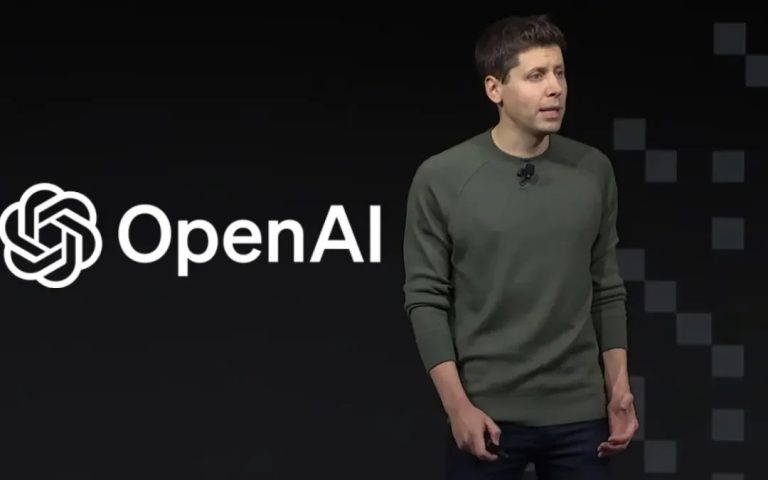
OpenAI has landed a $200 million contract with the U.S. Department of Defense, marking a pivotal shift in its business as the company formally enters the lucrative defense technology sector.
The one-year agreement, announced Monday, tasks OpenAI with building prototype “frontier AI” capabilities to support U.S. military operations and internal government functions—a move that underscores how national defense has become a key frontier for artificial intelligence firms seeking growth beyond commercial applications.
This is the first contract with OpenAI listed on the Pentagon’s procurement database and comes at a time when U.S. military agencies are racing to incorporate cutting-edge AI tools into both battlefield strategy and back-office operations. The agreement is being executed under a newly launched initiative, OpenAI for Government, which includes OpenAI’s public-sector-tailored ChatGPT Gov product.
Register for Tekedia Mini-MBA edition 20 (June 8 – Sept 5, 2026).
Register for Tekedia AI in Business Masterclass.
Join Tekedia Capital Syndicate and co-invest in great global startups.
Register for Tekedia AI Lab.
“Under this award, the performer will develop prototype frontier AI capabilities to address critical national security challenges in both warfighting and enterprise domains,” the Department of Defense said in its official contract notice.
From Research Lab to Military Contractor
Founded as a nonprofit research organization, OpenAI has undergone a dramatic transformation in recent years. With soaring commercial demand for its generative AI models and deepening ties to Microsoft, the company is now expanding its reach into defense, healthcare, finance, and enterprise productivity. But this deal with the Pentagon marks perhaps the clearest signal yet that OpenAI is not just a tech company but an emerging contractor in America’s trillion-dollar defense apparatus.
“This contract… will bring OpenAI’s industry-leading expertise to help the Defense Department identify and prototype how frontier AI can transform its administrative operations—from improving how service members and their families get healthcare, to streamlining how they look at program and acquisition data, to supporting proactive cyber defense,” OpenAI said in a blog post.

The $200 million ceiling, while modest relative to the scale of Pentagon procurement, is expected to be just the beginning. With the U.S. defense budget topping $800 billion annually, and artificial intelligence now seen as a core asset in military competitiveness, analysts believe OpenAI is well positioned to secure a larger share of government AI spending in the years ahead.
Military Spending Offers Path to Close Revenue Gap
While OpenAI has surged in popularity thanks to ChatGPT and enterprise licensing deals, the company is still in an aggressive expansion phase. It currently generates more than $10 billion in annualized revenue but faces mounting infrastructure costs and competition in both consumer and enterprise markets. Defense contracts like this one offer a new—and highly stable—revenue stream that could help close the company’s capital gap as it pursues longer-term dominance in AI development.
Competitors like Anthropic have already entered the race. In December, Anthropic announced a collaboration with Palantir and Amazon to deliver AI solutions to defense and intelligence agencies. Around the same time, Anduril Industries—OpenAI’s defense tech partner—secured a $100 million Pentagon contract, further indicating that the military sector is fast becoming a core market for AI innovation.

OpenAI CEO Sam Altman, speaking in April alongside OpenAI board member and former NSA director Paul Nakasone, made it clear that the company sees national security not as an obligation, but as a strategic mission.
“We have to and are proud to and really want to engage in national security areas,” Altman said during a public event at Vanderbilt University.
The new OpenAI for Government initiative is designed to cater to this strategy. It offers U.S. agencies access to customized AI models, implementation support, and roadmap insights tailored to defense needs. OpenAI emphasized that all applications under the defense contract will remain within the boundaries of its usage policies—though the company did not specify how oversight or enforcement would work in highly classified environments.
From the White House to the War Room
The contract announcement comes on the heels of OpenAI’s participation in the Stargate Project, a $500 billion U.S.-based AI infrastructure initiative announced in January by Altman alongside President Donald Trump at the White House. The project, aimed at building large-scale computing power within the U.S., positions OpenAI at the center of Washington’s push to outpace China and other geopolitical rivals in artificial intelligence capabilities.
Meanwhile, Microsoft, which provides OpenAI’s cloud infrastructure, has secured clearance from the Defense Information Systems Agency (DISA) to handle classified data through its Azure OpenAI service. This regulatory green light further strengthens OpenAI’s credentials as a trusted partner for national security work.
As AI reshapes industries from finance to healthcare, its deepening role in military and intelligence operations signals a profound change in how technology companies relate to the state. What was once the domain of traditional defense contractors is now being populated by Silicon Valley’s most powerful AI labs.