

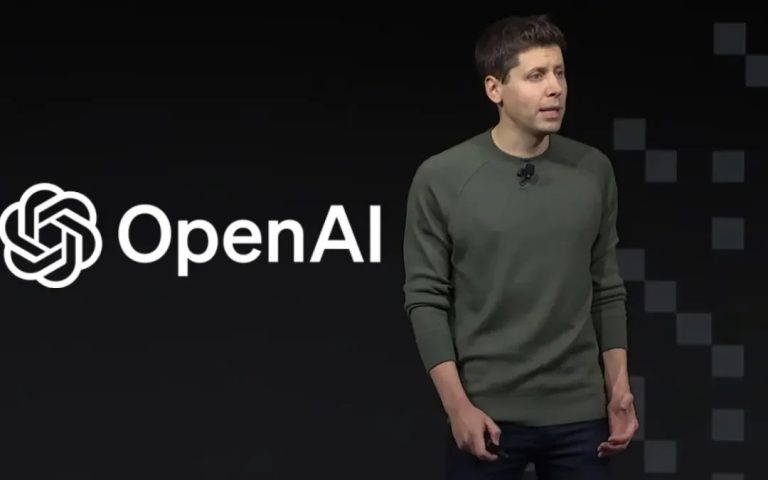
Reports indicate that OpenAI is actively preparing for an initial public offering (IPO) that could value the AI powerhouse at up to $1 trillion—potentially making it one of the largest debuts in history, second only to Saudi Aramco’s $29 billion raise in 2019.
This news, first broken by Reuters yesterday, has sparked widespread discussion on Wall Street and X (formerly Twitter), blending excitement over AI’s growth with skepticism about the frothy valuation. OpenAI has not confirmed a firm timeline, emphasizing its focus on advancing artificial general intelligence (AGI), but insiders suggest momentum is building.
OpenAI could file IPO paperwork with the U.S. Securities and Exchange Commission (SEC) as early as the second half of 2026, with a potential listing by late 2026 or 2027. CFO Sarah Friar has reportedly told associates to expect a 2027 debut, though advisers believe market conditions could accelerate it.
Register for Tekedia Mini-MBA edition 20 (June 8 – Sept 5, 2026).
Register for Tekedia AI in Business Masterclass.
Join Tekedia Capital Syndicate and co-invest in great global startups.
Register for Tekedia AI Lab.
Fundraise Size: The offering might raise around $60 billion, aimed at fueling massive AI infrastructure investments, including data centers and computing power to reduce reliance on partners like Microsoft.
OpenAI is already the world’s most valuable private company at about $500 billion, following a recent secondary share sale. Microsoft holds a 27% stake valued at $135 billion after $13 billion in investments, while backers like SoftBank, Thrive Capital, and Abu Dhabi’s MGX stand to benefit.
The company is projected to hit $20 billion in annualized revenue by year-end 2025, up from $4.3 billion earlier this year, but it’s burning cash fast—losing $13.5 billion in the first half of 2025 alone. A $1 trillion valuation would imply a price-to-sales multiple of around 50x forward revenue, drawing comparisons to Nvidia’s explosive growth.
This shift follows OpenAI’s recent restructuring into a public benefit corporation, which lifts prior caps on capital raising and aligns its nonprofit roots with for-profit ambitions.

The timing aligns with a red-hot AI sector driving public market gains: AI-related stocks like Nvidia recently hit a $5 trillion market cap, while cloud provider CoreWeave IPO’d at $23 billion earlier this year and has tripled since.
OpenAI’s ChatGPT and models like GPT-5 have cemented its lead, but competition from Google, Meta, and open-source alternatives (e.g., DeepSeek, Qwen) is intensifying. An IPO would provide liquidity for acquisitions and talent wars.
On X, the buzz is immediate and polarized. Influential accounts like Kobeissi Letter highlighted the historic scale, warning it could signal an AI “bubble” akin to the dot-com era, while traders like zerohedge reposted analyses questioning profitability.

Skeptics point to OpenAI’s $5 billion burn rate in 2024 and the need for $50–100 billion in annual revenue to justify $1 trillion. Is $1 Trillion Realistic? Pros, Cons, and Expert Takes on Yahoo Finance analysts debated this today, comparing OpenAI to Nvidia profitable, hardware-focused and CoreWeave.
$20B ARR by EOY 2025; ads and enterprise deals could explode to $100B+ by 2027. Still unprofitable; GPU costs and data center amortization could eat 50%+ of revenue. Dominant in generative AI; Microsoft partnership ensures scale.
Free open-source rivals outperform on benchmarks; regulatory scrutiny on AGI ethics looms. Nvidia at $5T; AI could surpass cloud computing ($105B for MSFT’s segment). Dot-com echoes—Alibaba’s 2014 IPO ($26B raise) later crashed 80%; $1T pre-profit is “wild.”
Enables trillion-dollar infra buildout for AGI. Broader market pullback (e.g., Nvidia down 50% in a correction) tanks sentiment. Crossmark’s Victoria Fernandez suggested a more grounded $70–100 billion valuation initially, viewing Microsoft as the safer AI proxy for now.
Reddit threads (e.g., r/investing, r/stocks) echo this, with users calling it a “black hole for investors” unless margins improve. In short, while OpenAI’s IPO could redefine tech debuts, it’s a high-stakes bet on AI’s trillion-dollar promise amid mounting losses and hype.
Watch for SEC filings in 2026—the real test will be execution, not just valuation dreams. If you’re eyeing exposure, consider indirect plays like MSFT or NVDA for now.