

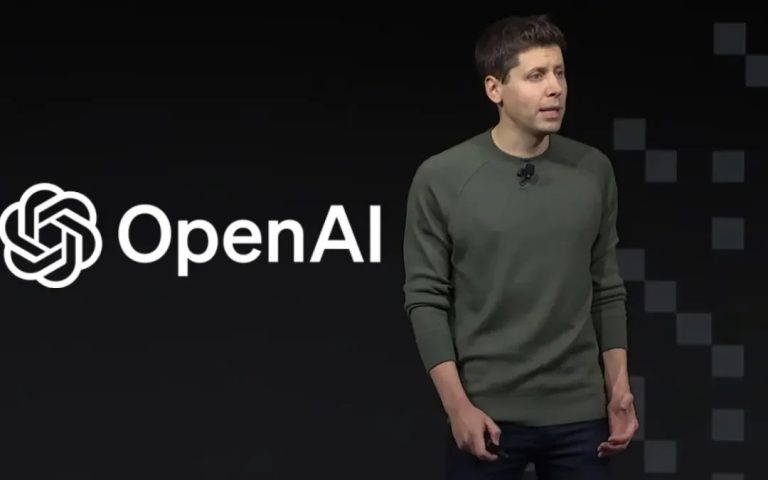
OpenAI’s board of directors has flatly rejected an unprompted $97.4 billion buyout bid from Elon Musk, reinforcing its stance that the artificial intelligence research company is “not for sale.”
The board’s chair, Bret Taylor, issued a sharp response on Friday, stating that the bid was unanimously dismissed and that any future restructuring of OpenAI will be focused on strengthening its nonprofit mission rather than serving individual interests.
“OpenAI is not for sale, and the board has unanimously rejected Mr. Musk’s latest attempt to disrupt his competition. Any potential reorganization of OpenAI will strengthen our nonprofit and its mission to ensure AGI benefits all of humanity,” Bret Taylor, chair of OpenAI’s board, said in a Friday statement posted on X.
Register for Tekedia Mini-MBA edition 20 (June 8 – Sept 5, 2026).
Register for Tekedia AI in Business Masterclass.
Join Tekedia Capital Syndicate and co-invest in great global startups.
Register for Tekedia AI Lab.
Musk, the billionaire CEO of Tesla, and SpaceX, and founder of xAI, had led a group of investors in an attempt to take control of OpenAI, the company he co-founded in 2015 but departed in 2018 following a reported power struggle with CEO Sam Altman. Musk’s bid was met with immediate resistance from OpenAI’s leadership, with Altman dismissing it outright in a series of public statements, including at an AI summit in Paris.
“There’s been like versions of Elon trying to, you know, somehow take control of OpenAI for a long time, so, it’s like, okay, here’s this week’s episode,” Altman quipped in an interview with Axios, indicating his exasperation over Musk’s persistent attempts to influence the company.
The rejection of Musk’s buyout bid marks the latest chapter in his tumultuous relationship with OpenAI. Initially a key funder and co-founder of the organization, Musk had envisioned OpenAI as a nonprofit entity dedicated to the open development of artificial intelligence for the benefit of humanity. However, his departure from the company in 2018 set the stage for an ongoing rivalry between himself and Altman.

At the core of their dispute is OpenAI’s shift from its original nonprofit model to a capped-profit structure. Musk has repeatedly accused OpenAI of straying from its founding principles, alleging that it is prioritizing profit over public good and becoming too closely aligned with Microsoft, which has invested billions into OpenAI’s operations. This tension escalated into legal battles, with Musk suing OpenAI in early 2024 for allegedly violating its mission statement. He later withdrew that lawsuit but has continued to publicly challenge OpenAI’s direction.
In his latest statement regarding the rejected bid, Musk said: “At x.AI, we live by the values I was promised OpenAI would follow. We’ve made Grok open-source, and we respect the rights of content creators. It’s time for OpenAI to return to the open-source, safety-focused force for good it once was. We will make sure that happens.”
Musk’s advocacy for open-source AI stands in contrast to OpenAI’s current strategy, which has prioritized controlled releases of its models, citing concerns over misuse. His company, xAI, has positioned itself as an alternative to OpenAI, promoting its chatbot Grok as an open-source competitor to ChatGPT.

Investor Group Claims “Self-Dealing” at OpenAI
While OpenAI’s board rejected Musk’s offer outright, the investor group backing him did not let the decision go unchallenged. Marc Toberoff, an attorney for the Musk-led investors, accused OpenAI’s leadership of engaging in a “self-dealing transaction,” suggesting that they were selling control of the organization to themselves at a lower valuation instead of considering Musk’s offer.
“We are surprised to see the board, which has strict fiduciary duties to carefully consider the bid in good faith on behalf of the charity, use the same kind of deflective double-talk Altman used in testifying to the Senate,” Toberoff stated.
He went further, alleging that OpenAI’s restructuring was aimed at enriching board members and key executives like Altman and co-founder Greg Brockman rather than serving its nonprofit mission.
This accusation echoes broader concerns about OpenAI’s governance model, which has been under scrutiny since Altman was briefly ousted by the board in November 2023, only to be reinstated following an employee and investor revolt. The shakeup raised questions about whether the company’s leadership is truly accountable to its stated mission or whether it is being steered by private interests.
What This Means for the AI Industry
Musk’s failed takeover bid and OpenAI’s strong resistance highlight the increasing commercialization and power struggles within the AI industry. What began as a collective effort to democratize artificial intelligence research has now become a battleground for corporate influence, intellectual property control, and competitive dominance.
With Microsoft deeply embedded in OpenAI’s operations and Musk aggressively pushing xAI as an alternative, the AI sector is seeing a clear division between corporate-backed AI research and Musk’s vision of open-source AI.
The implications of this divide are significant. OpenAI, backed by Microsoft’s resources, has been at the forefront of AI development, particularly with its GPT models and integration into Microsoft’s cloud and enterprise solutions. Meanwhile, Musk’s xAI is positioning itself as a “purist” alternative, advocating for greater transparency and open-source development, but facing challenges in achieving the same level of market penetration.
Additionally, the broader regulatory landscape could shape how these rival factions evolve. Governments worldwide are increasingly scrutinizing AI companies over ethical concerns, data privacy, and economic impacts. If Musk’s claims about OpenAI’s deviation from its mission gain traction, regulators might be more inclined to impose tighter restrictions on AI companies that operate under a hybrid nonprofit-profit structure.
Despite Musk’s persistent efforts to influence OpenAI, the latest rejection suggests that the company’s leadership has no intention of yielding to external pressures, even from one of its most prominent co-founders. However, this battle is evidently far from over. Musk’s AI ambitions remain aggressive, and his criticism of OpenAI’s governance will likely fuel further public discourse over transparency and control in the AI sector.