

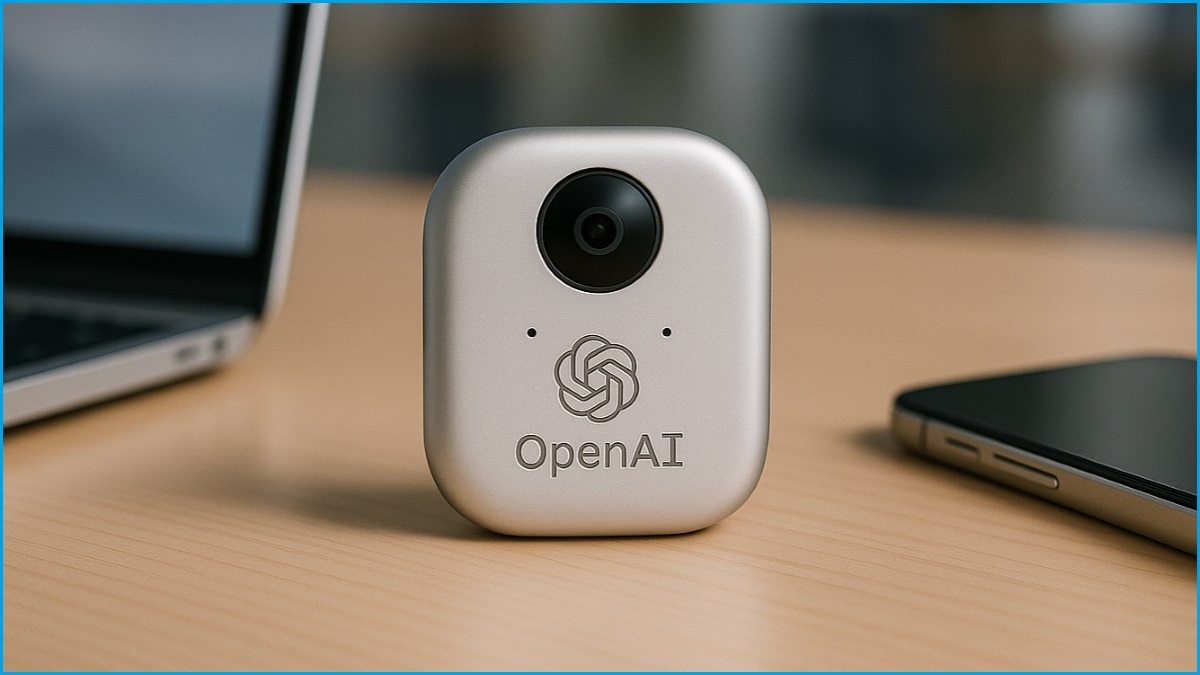
OpenAI’s long-anticipated move into consumer hardware is no longer just an experiment in design or form factor. It is emerging as a strategic response to a harder reality facing the company: how to convert unprecedented scale and investor confidence into durable, long-term profit.
After months of speculation following its acquisition of Jony Ive’s startup, io, the AI company has now confirmed that its first hardware device is on track for release in the second half of the year. The confirmation came from OpenAI’s Chief Global Affairs Officer, Chris Lehane, speaking at an Axios-hosted panel at the World Economic Forum in Davos. While details remain scarce, the timing and context of the announcement point to a broader commercial recalibration underway inside the company.
OpenAI today sits at the center of the generative AI boom, backed by tens of billions of dollars in investment and partnerships, most notably with Microsoft. ChatGPT alone is approaching a billion weekly users, a level of reach that rivals the world’s largest consumer platforms. Yet that scale comes at a steep cost. Training and running large language models requires enormous capital outlay for data centers, specialized chips, and energy. Even with paid subscriptions and enterprise deals, the company remains under pressure to diversify revenue streams beyond software access fees.
Register for Tekedia Mini-MBA edition 20 (June 8 – Sept 5, 2026).
Register for Tekedia AI in Business Masterclass.
Join Tekedia Capital Syndicate and co-invest in great global startups.
Register for Tekedia AI Lab.
Hardware offers one such path. By building its own device, OpenAI can reduce reliance on third-party platforms like Apple’s iOS or Google’s Android, where distribution is mediated through app stores and operating system rules. More importantly, a proprietary device creates room for tighter integration between AI models and the physical world, opening up new categories of paid services, upgrades, and long-term user lock-in.
Hints from OpenAI leadership suggest the company is aiming for something deliberately different from the smartphone. Sam Altman has described the upcoming product as more “peaceful and calm” than the iPhone, language that aligns with earlier reporting pointing to a screen-free, pocketable device. The underlying idea appears to be an AI companion that fades into the background, accessible through voice or subtle interactions rather than constant visual engagement.
Industry reporting from Asia has added further color. Multiple outlets suggest OpenAI’s first device may take the form of AI-powered earbuds, internally codenamed “Sweet Pea”. These earbuds are reported to use a custom 2-nanometre processor, enabling certain AI tasks to be handled directly on the device rather than routed to the cloud. If accurate, this would lower operating costs over time, reduce latency, and address growing concerns around data privacy, all while easing pressure on OpenAI’s server infrastructure.

Manufacturing plans underline the scale of ambition. Reports indicate that OpenAI has explored partnerships with Luxshare, a major assembler of Apple products, and is also weighing Taiwan’s Foxconn as a long-term manufacturing partner. Initial shipment targets of 40 to 50 million units in the first year, if realized, would place OpenAI instantly among the largest players in the global wearables market. Such volumes also suggest that the company is thinking well beyond a niche developer device and aiming squarely at mass adoption.
The commercial logic is that hardware allows OpenAI to capture value at multiple points: device sales, premium AI features, subscriptions bundled with hardware, and potentially a marketplace for AI-driven services built specifically for its ecosystem. In an environment where investors are increasingly focused on revenue clarity and cost discipline, owning both the software and the hardware stack offers a more predictable path to monetization.
However, consumer hardware is a brutally competitive arena, and earbuds in particular are already dominated by incumbents with deep integration into operating systems and existing user habits. Convincing users to replace or supplement devices like AirPods will require seamless cross-platform compatibility and a compelling reason to switch, beyond novelty.

The wider track record of AI-first devices offers cautionary lessons. High-profile launches over the past year have struggled to translate hype into sustained usage. Humane’s AI Pin was eventually sold to HP. Rabbit’s handheld assistant has yet to break into the mainstream. Other AI wearables have faced swift backlash over unclear value propositions.
These outcomes have sharpened investor scrutiny around whether AI hardware can move beyond concept appeal to everyday utility.
At the same time, momentum is building elsewhere. Meta’s Ray-Ban smart glasses are steadily improving, blending AI features into a familiar product category and seeing strong consumer demand. Amazon’s recent acquisition of Bee, an AI meeting recorder, signals interest in ambient assistants that live alongside users rather than compete for attention.
OpenAI’s hardware effort sits at the intersection of these trends. It is a bet that the company’s unmatched AI capabilities, combined with design leadership and manufacturing scale, can succeed where others have faltered. More than that, it is a bet driven by financial necessity.
With vast investment to justify and operating costs that continue to rise, OpenAI’s push into hardware is less about curiosity and more about control: control over distribution, over user experience, and ultimately over how generative AI turns popularity into profit.
As the second-half launch window approaches, the device itself will matter. But the bigger story lies in what it represents — a pivotal shift in OpenAI’s business model, from being a powerful engine inside other people’s products to becoming a full-stack company determined to own its future.