

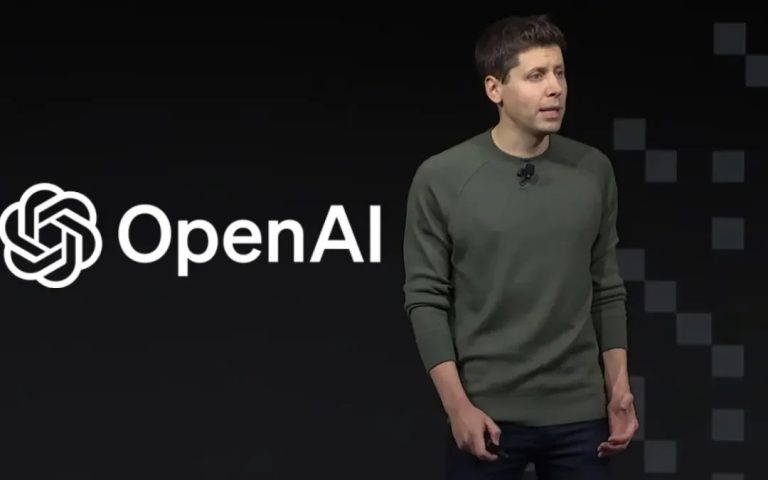
Reports confirm that OpenAI is accelerating the launch of a new advanced reasoning model, potentially as early as next week around December 10, 2025.
This move stems from an internal “Code Red” memo issued by CEO Sam Altman, signaling an all-hands-on-deck effort to counter competitive threats from Google’s Gemini 3 and emerging models like China’s DeepSeek-V3.2.
It’s described as a “new reasoning model” optimized for complex tasks like math, coding, multimodal understanding, and real-world problem-solving. Internal evaluations reportedly place it ahead of Gemini 3 on benchmarks such as AIME 2025 (math), SWE-bench (coding), and MMMU (multimodal).
Register for Tekedia Mini-MBA edition 20 (June 8 – Sept 5, 2026).
Register for Tekedia AI in Business Masterclass.
Join Tekedia Capital Syndicate and co-invest in great global startups.
Register for Tekedia AI Lab.
Some sources speculate it could be a refined version of the “Shallotpeat” codename a successor to models that aced IMO and IOI competitions or an incremental update like GPT-5.1 or o4-mini successor, emphasizing stability, speed, and fewer “unnecessary refusals.”
Altman explicitly mentioned the release in the memo, with rollout targeted for next week to preempt Gemini 3’s full impact. This aligns with earlier rumors of a December drop, possibly previewed around Christmas like the o1 series in 2024.
Similar to recent patterns, it will likely start with ChatGPT Plus/Pro/Team users, expanding to Free, Enterprise, and Edu tiers shortly after. Expect initial rate limits like 30-50 messages/week for preview versions to manage demand.

ChatGPT’s daily active users dropped 6% in the two weeks following Gemini 3’s launch, as Google’s chatbot surged to 650 million monthly users up from 450 million in July. All non-essential projects—like ads, autonomous AI agents for shopping/health, and “Pulse” —are paused. Teams are laser-focused on enhancing image generation via Imagegen.
Boosting ChatGPT’s speed, stability, and personalization like warmer tones, better instruction-following. Regaining leaderboard dominance on arenas like LMSYS.
This echoes Google’s 2023 “Code Red” after ChatGPT’s debut. Now reversed, it’s a sign of maturing competition—DeepSeek’s V3.2 already matches GPT-5 on some reasoning metrics, forcing OpenAI to iterate faster.

If benchmarks hold, this model could deliver superior reasoning, 94%+ on advanced math (AIME), 75%+ on coding benchmarks—ideal for developers and researchers. Better visual/health tasks (e.g., 84% on MMMU, 46% on HealthBench).
User-Friendly Tweaks: Reduced “neutering” (e.g., fewer content flags), more natural speech in voice mode, and options like “Auto/Fast/Thinking” modes for GPT-5 integration.
Community buzz on X is electric—users are speculating it’ll “reset the game” and pull back defectors from Gemini/Claude, though some worry about rushed quality or persistent limits. OpenAI hasn’t officially confirmed details yet, but the memo leak via The Information has lit a fire under the industry.
This could mark a pivotal rebound for OpenAI post-GPT-5, launched August 2025. While the model possibly a GPT-5 refinement or “Garlic” precursor promises breakthroughs in math 94%+ on AIME 2025, coding (75%+ on SWE-bench), and multimodal tasks, its rushed rollout carries ripple effects across markets, society, ethics, and innovation.
OpenAI’s shift from annual flagships to “tactical nukes”—weekly or bi-weekly updates—mirrors Google’s 2023 “Code Red” but escalates it. This could flood the market with fragmented advancements, benefiting users with rapid gains but risking quality dips, like rushed benchmarks or overlooked bugs.
Expect competitors like Anthropic and Mistral to match pace, turning 2026 into a blur of releases. China’s DeepSeek-V3.2, released December 1 as a free open-weight rival to GPT-5, undercuts OpenAI’s premium pricing by matching reasoning metrics at lower costs.
This erodes U.S. dominance, forcing efficiency-focused innovations over sheer scale. In a compute-starved world, it democratizes frontier AI, but heightens U.S.-China tensions over chip access and export controls.
With models excelling in real-world coding and health diagnostics, AI could automate 40% of global jobs by 2027, per projections—hitting developers, analysts, and researchers hardest. Yet, it boosts productivity in R&D and manufacturing, potentially adding trillions to GDP while demanding massive reskilling.