

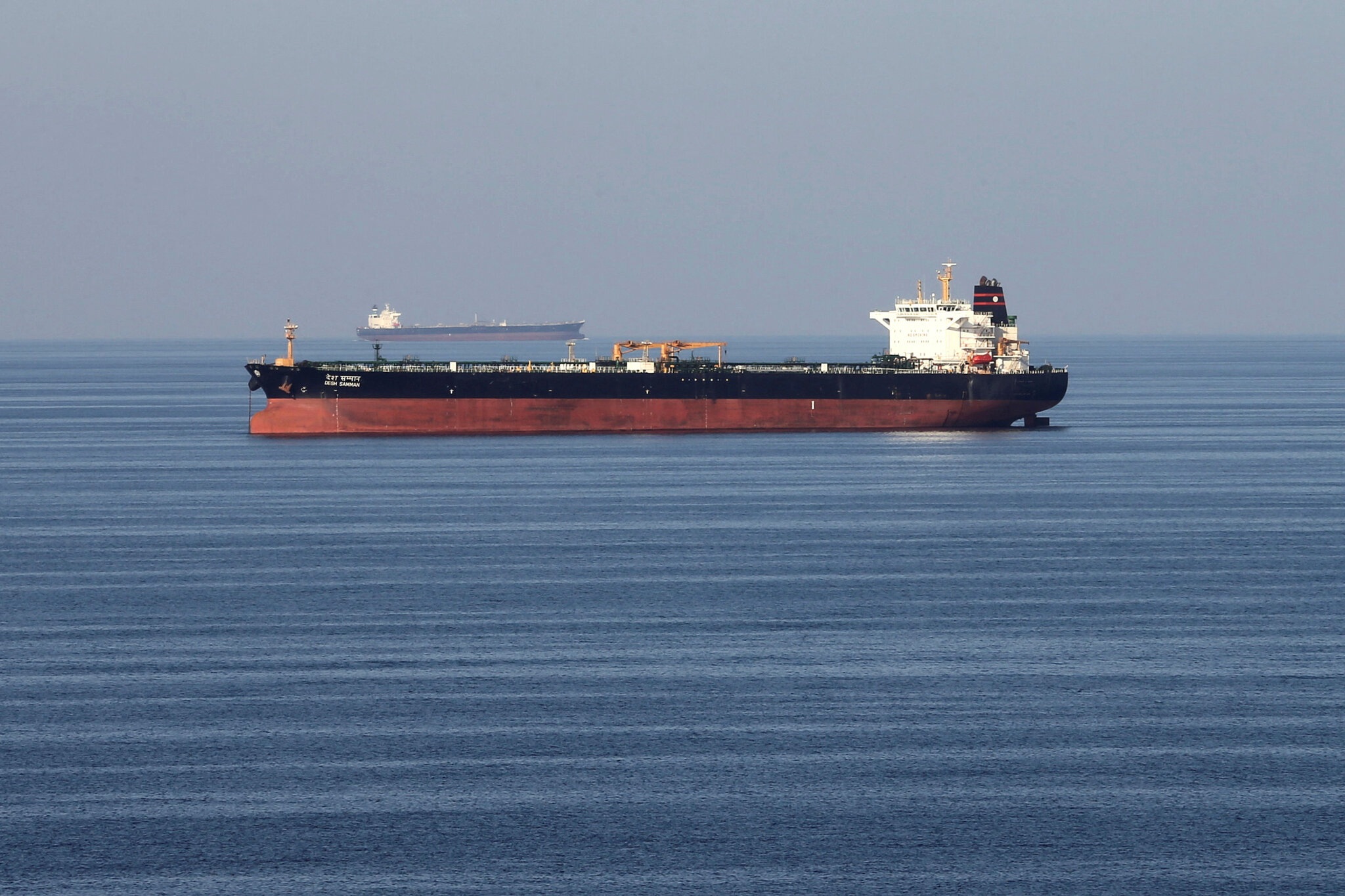
Abu Dhabi expands ports, pipelines and alternative trade corridors as Gulf states seek greater economic and security autonomy from the Strait of Hormuz
The United Arab Emirates is accelerating efforts to develop alternative routes for energy exports and international trade, seeking to ensure that its economy is not held hostage by the continuing conflict between the United States and Iran, a senior presidential adviser said on Monday.
The war has exposed the vulnerability of Gulf economies that depend heavily on the Strait of Hormuz, a critical maritime chokepoint through which a large share of global energy supplies normally passes.
Register for the next Tekedia Mini-MBA.
Register for Tekedia AI in Business Masterclass.
Join Tekedia Capital Syndicate and co-invest in great global startups.
The UAE has been particularly affected after Iran launched missile attacks against the country and targeted oil tankers operating in and around the strategic waterway.
“Our energy exports will not be held hostage, nor will our trade and economic activity,” UAE presidential adviser Anwar Gargash told the Hili Forum in Abu Dhabi.
Gargash said the UAE was expanding port capacity along its eastern coast while developing pipelines, rail links and alternative trade corridors that could allow energy and commercial shipments to bypass the Strait of Hormuz.

The investments represent more than an infrastructure programme. They are part of a broader effort by Gulf states to reduce the economic consequences of future disruptions in the waterway and strengthen their ability to operate independently during regional crises.
The alternative export infrastructure is expected to provide the country with greater flexibility if maritime traffic through Hormuz remains restricted or becomes vulnerable to renewed attacks. It could also reduce the extent to which disruptions in the Gulf immediately translate into interruptions in the country’s oil exports and wider trade flows.
The conflict has also prompted a reassessment of the Gulf’s long-standing reliance on the United States for regional security. Gargash said relations with Iran could eventually recover, but warned that rebuilding confidence after the attacks could take decades.

He also criticized Gulf Arab states for failing to develop a sufficiently coordinated response to Iran, arguing that countries with similar security concerns had struggled to turn those shared interests into a unified strategy.
Qatar’s Foreign Ministry spokesperson, Majed al-Ansari, delivered a similar message at the forum, saying the region could not rely exclusively on its strategic partnership with Washington.
“We need to realize in the Gulf that having international forces in the region, having a strategic alliance with the U.S. is very important but is not enough,” al-Ansari said.
“Self-sufficiency when it comes to security is the only way forward.”
Gargash said the UAE would continue to regard its relationship with the United States as essential, but argued that the conflict had demonstrated the limits of relying entirely on an external security guarantor.
“Our security is our first priority. When we depend entirely on others, we cannot always assume it will be their priority,” he said.
The comments point to a potentially important long-term shift in Gulf policy. Rather than abandoning alliances with Washington, regional governments appear increasingly focused on building their own economic and security buffers so that a future conflict does not automatically translate into a systemic disruption.
The Strait of Hormuz remains one of the most contentious issues in negotiations between Washington and Tehran, which are being mediated by Qatar and Pakistan.
Iran followed through on threats to restrict traffic through the waterway, causing major disruption to energy shipments and sending oil prices sharply higher.
The strait has historically carried roughly one-fifth of global energy supplies, making any prolonged disruption capable of producing consequences far beyond the Gulf. Its strategic importance also explains why the waterway has become a central obstacle to efforts to revive negotiations.
Iran has asserted that the strait is under the jurisdiction of Iran and Oman, a position that Gulf Arab states broadly reject. For the UAE and other Gulf economies, the issue is not simply territorial. It is directly connected to their ability to export energy and maintain access to international markets.
“Freedom of navigation is not a concession to be granted, nor a principle to be renegotiated under pressure,” Gargash said.
He added that any durable settlement would need to include credible guarantees preventing further Iranian attacks against Gulf Arab states.
Economic Diversification Meets Geopolitical Reality
The UAE has spent years positioning itself as a global logistics, trading and financial hub, making uninterrupted access to international shipping routes a threat to its economic model.
The current conflict has demonstrated the limits of that model when regional instability reaches a major maritime chokepoint. Developing alternative ports, pipelines, railways and overland trade corridors could therefore serve two purposes. It would strengthen the UAE’s economic resilience while giving Abu Dhabi greater strategic autonomy in any future confrontation involving Iran or other regional powers.
The approach could also influence how other Gulf states think about infrastructure. If the cost of disruption at Hormuz remains high, governments may view redundant export routes, domestic logistics networks and alternative shipping corridors as strategic assets rather than simply commercial infrastructure.
The immediate challenge, however, remains the unresolved conflict.
The war began with U.S. and Israeli strikes on Iran on February 28. A preliminary ceasefire reached in June has since unraveled, while negotiations aimed at restoring a durable peace have made limited progress.
For Gulf governments, the lesson is that even with American military support, regional stability cannot be assumed.
Thus, the UAE’s response is to build economic infrastructure that gives it more options when diplomacy or military deterrence fails. Its message is that energy exports and trade must continue regardless of who controls the battlefield or how negotiations over Hormuz unfold.