

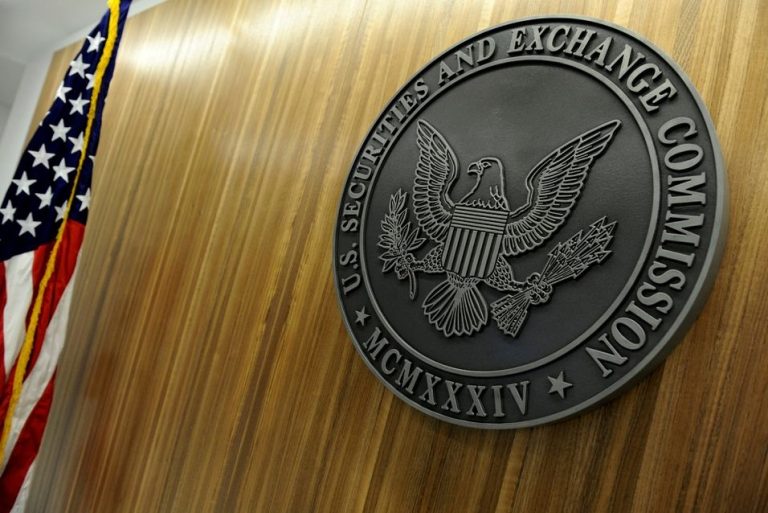
The U.S. Securities and Exchange Commission (SEC)’s Division of Corporation Finance issued a significant no-action letter to DoubleZero, a decentralized physical infrastructure network (DePIN) project.
This letter confirms that the project’s native 2Z token, distributed programmatically to network participants, does not qualify as a security under federal securities laws. As a result, the SEC will not recommend enforcement action against DoubleZero for these distributions, provided they adhere to the specifics outlined in the company’s legal submission.
This marks one of the rare instances where the SEC has provided proactive regulatory clarity to a crypto project before its network launch, potentially serving as a blueprint for other utility-focused tokens in the DePIN space.
What is DoubleZero and the 2Z Token
Register for Tekedia Mini-MBA edition 20 (June 8 – Sept 5, 2026).
Register for Tekedia AI in Business Masterclass.
Join Tekedia Capital Syndicate and co-invest in great global startups.
Register for Tekedia AI Lab.
DoubleZero is building a global network that leverages underutilized subsea and terrestrial fiber optic cables to enhance blockchain communication efficiency. It enables distributed systems like blockchains to access high-performance fiber-optic infrastructure, speeding up data movement and improving user experiences.
The 2Z token acts as “fuel” for the network—a pure utility mechanism. It is distributed as rewards to validators and contributors who provide bandwidth, perform network calculations, or contribute physical resources. Participants use 2Z to access bandwidth and earn staking rewards proportional to their contributions.
Importantly, it is not marketed as an investment with promises of profit from the project’s promoters. Unlike traditional token sales for fundraising, 2Z distributions are automated (“programmatic transfers”) based on network rules, compensating users for services rendered rather than soliciting investments.

The SEC determined that 2Z programmatic transfers do not need to be registered under Section 5 of the Securities Act of 1933, and the token itself is not required to be registered as an equity security under Section 12(g) of the Securities Exchange Act of 1934.
SEC Commissioner Hester M. Peirce, in a accompanying statement titled “Deep In,” explained that DePIN projects like DoubleZero differ from typical capital-raising schemes. Tokens here are rewards for “work performed or services rendered,” not investments expecting profits from others’ efforts. This economic reality places them outside the SEC’s core mandate, avoiding suppression of innovative networks.
This is hailed as a “game-changer” for utility tokens, providing clarity amid years of uncertainty. It signals a potential shift toward a more innovation-friendly stance from the SEC, especially for DePINs that incentivize real-world resource contributions via storage, energy, or connectivity.

Analysts suggest it could encourage similar projects, as the letter was issued pre-launch, emphasizing functional use over speculative value. The full no-action letter is available on the SEC website, detailing the conditions for non-enforcement. Peirce’s statement highlights how this fosters growth without overreach.
Co-founder Austin Federa called it “proof that U.S. founders can work with regulators to achieve clarity and still move fast.” The project shared the news via an X thread, expressing pride in the outcome.
Crypto media and analysts view this as a milestone, potentially reducing barriers for non-investment tokens. This development comes at a time when DePIN projects are gaining traction for bridging blockchain with physical infrastructure.
It sets a precedent for distinguishing utility tokens from investment contracts under the Howey Test, focusing on their functional role rather than speculative value. DePINs, which incentivize real-world contributions gain a regulatory framework to operate in the U.S. without fear of enforcement for programmatic token distributions.
This could spur innovation in DePINs, encouraging projects to integrate blockchain with physical infrastructure, as the letter validates their economic model. Unlike past SEC actions, which often followed enforcement or litigation, this no-action letter was issued before DoubleZero’s network launch.
This proactive approach signals that the SEC is open to working with projects early, potentially fostering compliance without stifling innovation. It may encourage other startups to seek no-action relief, creating a more predictable regulatory environment.
The no-action letter serves as a blueprint for other projects with similar tokenomics, particularly those avoiding investment-like promises. It could inspire a wave of DePIN and utility token projects to seek similar SEC relief.
However, it’s specific to DoubleZero’s structure.
Projects with different models via token sales for capital may still face scrutiny. Issued late in the current administration it reflects a potential shift toward innovation-friendly policies, possibly influenced by political pressures or evolving SEC priorities.