DD
MM
YYYY

PAGES

DD
MM
YYYY

spot_img

PAGES

Home Blog Page 10

Implications of US Senate’s 309-page Draft on the CLARITY Act

0

The release of the United States Senate’s latest 309-page draft of the CLARITY Act marks another major step in the evolution of America’s digital asset regulatory framework.

At the same time, the Senate’s advancement of Kevin Warsh’s nomination for Federal Reserve Chairman signals a broader shift in how Washington may approach monetary policy, financial innovation, and market regulation in the coming years. Together, these developments highlight a transformative moment for both traditional finance and the rapidly expanding cryptocurrency sector.

The CLARITY Act has emerged as one of the most closely watched legislative efforts in the digital asset industry. For years, crypto companies, investors, and policymakers have debated how cryptocurrencies should be classified and regulated. Regulatory uncertainty has often been cited as one of the biggest barriers preventing the United States from fully embracing blockchain innovation.

The new Senate draft attempts to address these concerns by defining oversight responsibilities between federal agencies, particularly the Securities and Exchange Commission and the Commodity Futures Trading Commission. Supporters of the bill argue that clearer rules could encourage innovation while protecting consumers and investors.

Many crypto firms have complained that existing regulations were designed for traditional financial products and are ill-suited for decentralized networks, tokenized assets, and blockchain-based financial systems. By creating a more structured legal framework, lawmakers hope to reduce confusion surrounding token issuance, exchange operations, custody standards, and decentralized finance applications.

The sheer size of the legislation — spanning 309 pages — reflects the complexity of the digital asset industry itself. Cryptocurrencies are no longer a niche technology experiment. They now intersect with banking, payments, securities trading, artificial intelligence infrastructure, and even geopolitical strategy. Stablecoins, tokenized real-world assets, and blockchain settlement systems are increasingly being discussed as core components of the future financial system.

The Senate’s move to advance Kevin Warsh’s nomination for Federal Reserve Chairman adds another layer of significance to current financial policy debates. Warsh, a former Federal Reserve governor, is widely viewed as a market-oriented policymaker with strong views on inflation, central banking credibility, and economic discipline.

His nomination arrives during a period of persistent inflation concerns, elevated government debt, and heightened scrutiny over interest rate policy.

Financial markets are closely analyzing what a Warsh-led Federal Reserve could mean for risk assets, including cryptocurrencies and equities. Some investors believe he could favor tighter monetary conditions to preserve the Fed’s inflation-fighting reputation, while others argue he may support policies that encourage long-term economic growth and financial innovation.

Either way, his leadership would likely shape global capital markets at a critical time. The simultaneous progress of the CLARITY Act and Warsh’s nomination underscores how interconnected digital assets and macroeconomic policy have become. Cryptocurrency is no longer operating outside the traditional financial system; it is increasingly becoming part of it.

Regulatory clarity and central bank leadership will both play decisive roles in determining how capital flows, innovation develops, and financial markets evolve over the next decade. These developments suggest the United States is entering a new phase in financial regulation — one where crypto policy and monetary policy are becoming deeply intertwined.
21Shares HYPE ETF Launches, As Ondo Finance Moves to Bridge Tokenized Stocks on Hyperliquid

0

The launch of the 21Shares HYPE ETF marks another significant milestone in the evolution of digital asset markets, particularly as institutional finance continues to merge with decentralized finance infrastructure.

At the same time, Ondo Finance’s move to bridge tokenized stocks onto the Hyperliquid ecosystem through LayerZero highlights how blockchain networks are rapidly transforming from speculative environments into fully integrated financial systems. Together, these developments represent the next stage of crypto’s convergence with traditional capital markets.

The debut of the HYPE ETF by 21Shares reflects growing investor appetite for regulated exposure to emerging blockchain ecosystems. Exchange-traded funds have already reshaped the perception of cryptocurrencies over the past several years, especially after the success of Bitcoin and Ethereum ETFs.

By launching a HYPE-focused ETF, 21Shares is signaling confidence that newer decentralized trading and liquidity ecosystems can attract institutional participation in the same way Bitcoin did during earlier adoption cycles. The ETF structure matters because it lowers the friction for traditional investors.

Pension funds, hedge funds, family offices, and retail brokerage users often cannot directly access decentralized exchanges or manage self-custodied crypto wallets. ETFs simplify this process by packaging exposure into familiar financial instruments traded through conventional brokerage accounts. As a result, products like the HYPE ETF could accelerate capital inflows into blockchain ecosystems that previously operated mostly within crypto-native circles.

At the center of this momentum is Hyperliquid, a decentralized trading platform that has rapidly gained traction due to its speed, liquidity, and trader-focused infrastructure. Hyperliquid has positioned itself as a serious competitor to centralized exchanges by offering on-chain perpetual futures trading with lower latency and improved user experience.

In many ways, it represents the broader industry trend toward building decentralized systems that can rival traditional financial platforms in efficiency and scale. Simultaneously, Ondo Finance is pushing tokenization deeper into decentralized markets by enabling tokenized stocks to move into the Hyperliquid ecosystem through LayerZero.

This development is particularly important because tokenized equities are widely viewed as one of the most promising applications of blockchain technology. Instead of limiting trading hours to traditional stock exchanges, tokenized assets can theoretically trade 24/7 across global blockchain networks.

LayerZero’s interoperability infrastructure serves as the bridge connecting these ecosystems. Cross-chain communication has become one of the most critical components of modern crypto architecture because liquidity is fragmented across numerous blockchains.

By enabling secure communication between networks, LayerZero allows tokenized assets to move more freely across decentralized applications and trading venues. This reduces barriers between ecosystems and increases capital efficiency. The combination of ETFs, tokenized stocks, and interoperable trading infrastructure points toward a broader financial transformation.

Traditional finance is no longer merely observing blockchain innovation from a distance; it is increasingly integrating crypto rails into mainstream investment products. What began as an experiment centered around Bitcoin has evolved into a multi-layered financial ecosystem involving tokenized securities, decentralized exchanges, synthetic assets, and institutional-grade investment vehicles.

Critics still argue that regulatory uncertainty, smart contract vulnerabilities, and market volatility remain significant risks. However, the pace of institutional adoption suggests that financial firms increasingly view blockchain infrastructure as inevitable rather than experimental.

The launch of the HYPE ETF and Ondo’s expansion into Hyperliquid may ultimately be remembered as early indicators of a future where traditional assets and decentralized networks operate side by side in a unified global financial system.

Google Expands Gemini Into an AI Operating Layer for Android as Smartphone Competition Shifts Beyond Apps

0

Google has unveiled a sweeping expansion of its Gemini AI ecosystem for Android, signaling a major shift in how smartphones may operate in the AI era.

The move follows the growing trend of AI assistants increasingly acting less like passive chatbots and more like autonomous operating systems capable of navigating apps, completing tasks, and making decisions across devices.

At its “Android Show: I/O Edition” event on Tuesday, Google introduced a series of Gemini Intelligence-branded features that push Android deeper into the emerging world of agentic AI. The new capabilities include cross-app task execution, autonomous web browsing, AI-assisted form completion, advanced voice dictation, and even tools that allow users to create Android widgets through natural language prompts.

The announcement underscores how aggressively Google is trying to position Android as the dominant consumer AI platform at a time when the smartphone industry is undergoing its biggest interface transition since the rise of touchscreens and mobile apps. Rather than relying on users to manually navigate applications, Google is increasingly redesigning Android around AI orchestration, where Gemini functions as an intelligent layer sitting above apps and services.

The strategy mirrors a broader shift across the technology industry. Major companies, including Apple, Microsoft, and Alibaba, are all racing to transform AI assistants into action-oriented systems capable of handling workflows, shopping, communication, and productivity tasks with minimal human input.

For Google, however, the stakes are particularly high because Android remains the world’s largest mobile operating system. Embedding Gemini deeply into Android gives the company an opportunity to defend its ecosystem against the growing risk that standalone AI assistants could weaken traditional app stores and search-driven business models.

Gemini Evolves From Assistant To Operating System Layer

The new features significantly expand Gemini’s ability to act autonomously across applications. One demonstration showed Gemini copying a grocery list from a notes app and automatically transferring items into a shopping cart inside another application after a user simply described the task. The assistant uses the content currently visible on the phone’s screen as contextual input and pauses for final user confirmation before completing transactions.

That seemingly simple workflow highlights a much larger transformation underway in mobile computing. For more than a decade, smartphones have depended on users manually switching between apps, searching menus, and performing repetitive interactions. Google is now betting that AI agents capable of understanding intent and coordinating multiple services can dramatically reduce that friction.

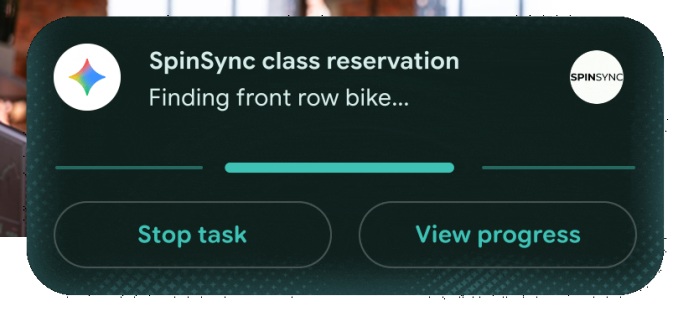
The company had already previewed some of these “agentic” capabilities earlier this year during the launch of Samsung Galaxy S26 devices, where Gemini demonstrated tasks such as booking exercise classes and pulling information from Gmail.

Tuesday’s announcements indicate Google is accelerating those ambitions. Another major addition is Gemini’s expanding ability to browse the web and complete online actions autonomously. Initially launched experimentally earlier this year, the feature is now coming directly to Android devices. The functionality pushes Google closer to a future where AI agents may increasingly interact with websites on behalf of users, potentially reshaping how online commerce, advertising, and search traffic operate.

That possibility is seen as a huge advantage for Google. The company’s advertising empire was built around traditional search behavior, where users actively browse links and web pages. AI agents capable of directly executing tasks could fundamentally alter those patterns by reducing the number of conventional search queries and page visits.

But Google risks losing ground if competitors define the next computing interface first. That tension explains why Google is moving aggressively to integrate Gemini into nearly every layer of Android.

AI Competition Moves Directly Onto Smartphones

The company is also introducing Gemini-powered capabilities inside Gboard, Android’s widely used keyboard. A new feature called Rambler uses multimodal AI to transcribe speech in a user’s natural tone while automatically removing filler words and formatting text more coherently.

The push reflects a broader industry trend that has seen generative AI increasingly replacing traditional voice assistants and dictation tools with systems capable of understanding context, tone, and conversational structure. Google is additionally leaning into the fast-growing “vibe coding” movement, where users generate software tools through natural language rather than conventional programming.

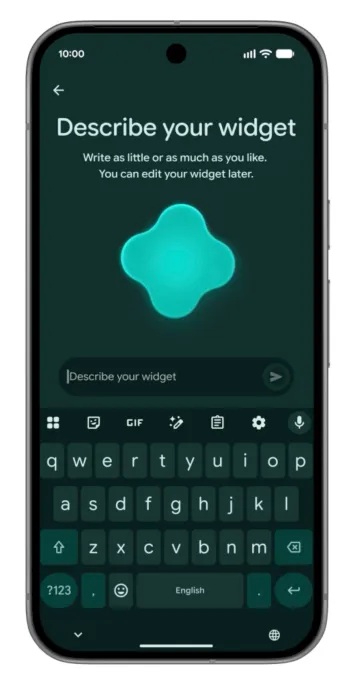
The company announced a feature allowing users to create custom Android widgets simply by describing what they want. One example included building a meal-planning widget in response to a prompt requesting weekly high-protein recipes.

The capability is seen as an example of how AI may gradually lower barriers to software creation for ordinary consumers. Instead of downloading prebuilt apps or learning coding languages, users may increasingly generate personalized digital tools dynamically through AI interfaces.

That trend is already reshaping software development more broadly. Companies such as Anthropic, OpenAI, and Google itself have reported explosive growth in AI-assisted coding tools, with executives increasingly arguing that software engineering is becoming partially automated.

Google recently disclosed that AI now generates a substantial portion of new code internally across the company. The latest Android announcements also intensify competition with Apple ahead of its upcoming developer conference, where investors expect the iPhone maker to reveal expanded AI features for iOS.

While Apple has traditionally prioritized tightly controlled privacy-centric ecosystems, Google appears to be prioritizing aggressive functionality and ecosystem integration. The race may ultimately determine which company controls the next dominant consumer computing interface.

For years, smartphones were defined by hardware quality and app ecosystems. Increasingly, however, the battleground is shifting toward AI agents capable of understanding user intent, navigating digital environments, and automating everyday tasks. Google’s latest Gemini expansion suggests the company believes the future smartphone experience may no longer revolve around apps at all, but around intelligent systems operating continuously between them.

Volume Trading Analysis Tool: How Order Flow Reveals Weak Breakouts Before Price Reverses

0

Breakouts are seductive. Price clears a well-watched resistance level, a long green candle prints, and the chart looks ready to run. Many traders click buy at that exact moment. Hours later, the same chart shows a reversal that takes out their stop. The standard candlestick view never warned them, because it only records where the price travelled. It does not show the conviction behind the move.

Order flow tells a very different story. By breaking each candle down into its bid and ask transactions, traders can see what is actually happening. They can tell whether the buyers driving a breakout are genuinely aggressive. They can also see whether those buyers are simply getting absorbed by passive sellers at that level. That single distinction often decides whether a breakout extends or fails within minutes.

Inside the Candle: What Footprint Data Shows

A clean breakout, viewed through a footprint chart, shows stacked imbalances on the ask side:

  • Aggressive buyers lift offer after offer, and each price step prints a buy-to-sell ratio of three to one or higher.
  • Cumulative delta rises in lockstep with price, and the highest-volume node forms in the upper half of the candle.

These are the signatures of buyers who want to be filled regardless of price slippage.

A weak breakout looks superficially similar but reads very differently inside the bar:

  • Volume spikes, yet the imbalance pattern is flat or evenly distributed.
  • Cumulative volume delta climbs only marginally while price punches through.
  • The point of control sits below the breakout level rather than above it.

This pattern signals that limit-order sellers are quietly absorbing the aggressive buying. They are building inventory at the very level where retail traders are entering long positions.

Why Delta Divergence Matters at the High

Delta divergence is one of the most reliable early warnings of an exhausted breakout. The pattern appears when the price makes a new high, but the cumulative delta makes a lower high. In practical terms, the second push required less aggressive buying than the first, even though it produced a marginally higher print. Larger market participants often use such moments to distribute size into late-entering retail demand.

Spotting delta divergence in real time without specialised software is almost impossible. A standard chart compresses every transaction into a single volume bar. It hides whether the volume came from initiating buyers or initiating sellers.

Few retail platforms ship with cumulative delta as a default chart layer. Most still treat volume as a single number per bar. This is where a Volume trading analysis tool earns its place in a serious trader’s workflow. Such a platform overlays bid-ask volume, cumulative delta, market profile, and footprint data on the same chart. Weak breakouts can then be flagged in the seconds after they form rather than the hours after they fail.

How Institutional Flow Shapes the Trap

Failed breakouts rarely happen by accident. They tend to cluster around levels where larger participants need liquidity to fill sizeable orders. When pension funds, proprietary desks, or token treasuries want to offload inventory, they need willing counterparties. A visible breakout above resistance produces exactly that pool of buyers.

The institutional seller hits those bids quietly, and price reverses once the demand has been absorbed. Recent analysis of how institutional capital flowing into a market lifts trading volume and tightens spreads illustrates this broader point. Large players move price not by predicting it, but by sourcing the liquidity they need at predictable technical levels. Footprint data is what makes that sourcing visible after the fact and, with practice, in real time.

The Algorithmic Layer Beneath the Data

The order flow that footprint charts visualise is also the data that quantitative funds and execution algorithms consume continuously. High-frequency systems read bid-ask depth and trade-by-trade tape thousands of times per second. They adjust their orders to extract small edges from imbalances.

Retail traders cannot match that speed, but they can still use the same information frame to avoid the worst traps. Recent coverage of how AI is reshaping modern investment strategies notes how far predictive analytics has come. Machine-learning models have moved from hedge fund desks to consumer-grade platforms. Volume analytics is one of the areas where that levelling has been most pronounced. The underlying data is centralized, standardized, and now widely available across futures, equity, and major crypto venues.

Practical Filters for a Weak Breakout

Three filters separate a genuine breakout from a likely trap.

  1. First, the breakout candle should produce a positive delta that is at least the size of the candle’s range. A small delta on a large range almost always means absorption.
  2. Second, stacked imbalances should appear at or above the broken level, not below it.
  3. Third, the next two to three candles should show continuation in both price and delta. If price holds but delta turns negative, the breakout is being faded by aggressive sellers, and the reversal is usually close.

Combining these filters does not guarantee winning trades. It does, however, remove the most common failure mode for retail breakout strategies. That failure mode is acting on price action alone while ignoring the transaction-level evidence underneath. Many traders have spent years staring at candlesticks and wondering why their breakouts keep failing. For them, the shift to reading order flow is rarely subtle. The breakout you would once have bought now looks obviously weak, and the setup you would have skipped looks structurally sound.

Osun 2026: Adeleke, Others, and the Expanding Web of AI and Deepfakes

0

As Osun State gradually moves towards the 2026 governorship election, the political battlefield is already changing shape. Campaign posters, rallies, jingles, and television appearances are no longer the only instruments of persuasion. A new force has entered the arena. Artificial intelligence, deepfakes, and algorithm-driven propaganda are beginning to redefine how political narratives are created, circulated, and consumed.

The recent controversy surrounding a viral video allegedly linked to Governor Ademola Adeleke revealed more than partisan tensions. It exposed the arrival of a dangerous and transformative phase in Nigerian politics where truth, loyalty, technology, and perception are becoming increasingly entangled.

Yet the most revealing aspect of the incident was not the video itself. It was the reaction that followed.

Across social media platforms, supporters and critics rushed into familiar political formations. Some dismissed the video as “APC AI at work.” Others defended Adeleke by pointing to roads, bridges, and visible infrastructure projects across Osun State. A few demanded evidence. Many simply doubled down on pre-existing political loyalties.

Sample of a deepfake image

Very quickly, the conversation stopped being about whether the video was manipulated. It became about identity. This may become the defining feature of Osun 2026.

Artificial intelligence is introducing a new era where seeing is no longer believing. Audio can be cloned. Videos can be manipulated. Speeches can be fabricated. Political opponents can be digitally inserted into events that never happened. In previous elections, propaganda relied heavily on exaggeration and selective storytelling. Today, technology can manufacture synthetic political realities with alarming sophistication.

But Osun’s online reactions reveal an even deeper democratic challenge. Citizens are not only struggling to identify truth. Increasingly, many appear less interested in verifying truth at all.

The comments surrounding the Adeleke controversy reflected a behavioural pattern now visible across many democracies. Political interpretation no longer begins with evidence. It begins with loyalty. People first decide who they trust emotionally, then interpret information through that emotional lens.

For Adeleke’s supporters, the alleged deepfake was immediately reframed as opposition propaganda. For critics, it became another opportunity to attack the governor. Verification came later, if at all. This is how digital polarization evolves.

The danger is not simply that fake content exists. The greater danger is that society gradually loses a shared standard for determining what is real. Once politics becomes entirely tribal, truth itself becomes negotiable. Interestingly, however, the reactions also exposed something powerful about voter behaviour in the state. Despite the noise surrounding artificial intelligence and manipulation, many commenters returned repeatedly to one issue: infrastructure.

Roads. Bridges. Transportation. Everyday experience.

One commenter explained that improved roads had reduced the frequency of vehicle repairs. Another praised the Oshogbo to Ikirun to Offa road corridor. Others openly declared continued support for Adeleke based on visible development projects.

This reveals a critical insight for Osun 2026. In the midst of digital propaganda wars, physical governance still matters.

Citizens may debate manipulated videos online, but they continue to evaluate leadership through lived realities offline. A repaired road carries more emotional weight than a thousand social media narratives. People trust what they can physically experience.

This creates an interesting political paradox. Artificial intelligence may shape perception, but governance performance still shapes memory.

For opposition parties hoping to challenge Adeleke, this means technology alone will not be enough. Deepfakes and online propaganda may dominate headlines temporarily, but electoral success in Osun will likely depend on whether opponents can present a more convincing story of material improvement and everyday governance.

At the same time, Adeleke and his supporters cannot afford complacency. The age of AI introduces vulnerabilities for every political actor. Today’s target could become tomorrow’s beneficiary. Once synthetic media becomes normalized, no politician remains permanently protected from manipulation. This is why the Osun conversation should concern more than politicians alone.

It raises urgent questions for democratic institutions, media organizations, and citizens themselves. How should societies regulate political deepfakes? What responsibility do social media platforms carry during election cycles? How can voters distinguish authentic communication from manufactured deception? Most importantly, how can democratic trust survive in an environment where any video can be dismissed as fake and any fabrication can appear believable?

The linguistic texture of the online reactions also deserves attention. Yoruba expressions, Nigerian Pidgin, and informal English flowed naturally through the comment section. Political slogans like “Imole” became identity markers repeated almost ritualistically.

This reflects the growing personalization of politics in Nigeria. Increasingly, elections are becoming less about institutions and more about emotional political brands. Supporters no longer merely defend policies. They defend identities, symbols, and movements that represent belonging.

Social media amplifies this behaviour because online participation is performative. Citizens are not simply debating issues. They are publicly signaling loyalty to their political communities before digital audiences.

This helps explain the hostility visible in many of the reactions. Opponents were mocked, insulted, and dismissed as enemies rather than fellow citizens with differing opinions. Such polarization weakens democratic culture because it discourages critical engagement and rewards emotional aggression.

The challenge for democracy will not merely be defeating fake videos. It will be preserving society’s willingness to care about truth in the first place. That is the real web of AI and deepfakes now unfolding around Osun 2026.