DD
MM
YYYY

PAGES

DD
MM
YYYY

spot_img

PAGES

Home Blog Page 10

Wall Street Rally Loses Steam as Iran Tensions Reignite Inflation Fears Ahead of CPI Data

0

Wall Street’s record-breaking rally hit a pause on Monday as renewed concerns over the stalled U.S.-Iran peace process injected fresh uncertainty into markets already grappling with rising oil prices and the prospect of stickier inflation.

The pullback was modest, but it reflected growing investor caution after weeks of relentless gains that pushed the S&P 500 and the Nasdaq Composite to successive record highs.

Markets initially opened mixed after U.S. President Donald Trump swiftly rejected Iran’s response to a U.S. peace proposal, reviving fears that the 10-week-old conflict could drag on and prolong disruptions around the Strait of Hormuz, one of the world’s most critical oil shipping chokepoints.

Brent crude climbed sharply again, extending a run that has kept energy markets on edge and complicated the inflation outlook globally.

The market’s resilience, however, remains striking. Even with oil prices elevated and geopolitical risks intensifying, equities have continued to push higher in recent weeks, driven largely by surging enthusiasm around artificial intelligence, blockbuster technology earnings, and signs that the U.S. economy remains sturdier than many investors expected earlier this year.

By mid-morning trading, the Dow Jones Industrial Average was little changed, slipping just 3.54 points to 49,605.62. The S&P 500 gained 0.15% to 7,410.31, while the Nasdaq Composite edged up 0.04% to 26,257.27 after both indexes touched fresh all-time highs earlier in the session.

“The worry list is long, but the economy keeps proving the bears wrong,” said Robert Edwards, chief investment officer at Edwards Asset Management.

“Big tech has regained its leadership, backed by solid and growing revenue and earnings. These names sit at the center of every major secular theme.”

Oil shock collides with AI-driven optimism

The latest market tension underpins the increasingly fragile balance investors are trying to maintain between geopolitical risk and the AI-fueled growth narrative dominating Wall Street. For much of the year, investors have largely brushed aside concerns over war in the Middle East, betting instead that artificial intelligence investment, strong corporate profits, and resilient consumer spending would continue powering the economy higher.

That optimism has been reinforced by an earnings season that has broadly exceeded expectations. More than 80% of companies reporting results have beaten profit forecasts, with technology and semiconductor firms once again driving much of the upside momentum.

The AI trade remains the market’s dominant force. Shares of Intel rose another 3.5% Monday after surging nearly 14% on Friday following reports of a preliminary chip manufacturing agreement with Apple. Qualcomm jumped 8.6% to a record high, underscoring continued investor appetite for semiconductor and AI-linked names.

The gains reflect growing expectations that AI infrastructure spending will remain enormous for years, benefiting companies across the semiconductor supply chain, cloud computing, and networking sectors. Investors are also awaiting earnings later this week from Cisco and Applied Materials, while heavyweight reports from Nvidia and Walmart later this month could further shape sentiment.

Yet the longer the Iran conflict drags on, the greater the risk that energy prices begin undermining the broader economic expansion that has supported the rally. Investors increasingly worry that persistently high oil prices could reignite inflationary pressures just as markets had started pricing in eventual Federal Reserve easing.

Inflation data now becomes the market’s next major test

Attention is now shifting toward Tuesday’s U.S. consumer price index report, which could become the next major catalyst for markets. Economists expect inflation to edge higher in April as higher fuel and transportation costs begin filtering through the economy.

Additional producer price data and retail sales figures later this week will offer further insight into whether consumers and businesses are beginning to feel more strain from the geopolitical shock. The stakes are high because markets have already sharply reduced expectations for Federal Reserve rate cuts this year.

Strong payroll data released last week supported the view that the U.S. labor market remains resilient, giving the Fed more room to keep interest rates elevated if inflation remains stubborn.

But that dynamic is believed to have created a more complicated environment for investors. The economic resilience supports corporate earnings and stock valuations, while stronger growth combined with higher oil prices risks delaying monetary easing and tightening financial conditions.

Energy and materials stocks led gains Monday, reflecting those inflation concerns. The S&P 500 energy sector rose 1.5%, while the materials sector gained 1.3% alongside rising precious metal prices.

Airline stocks, however, came under pressure as investors worried that higher fuel costs would squeeze margins. Shares of Southwest Airlines, Delta Air Lines, Alaska Airlines, and United Airlines fell between 1.8% and 2%.

Geopolitics returns to the center of markets

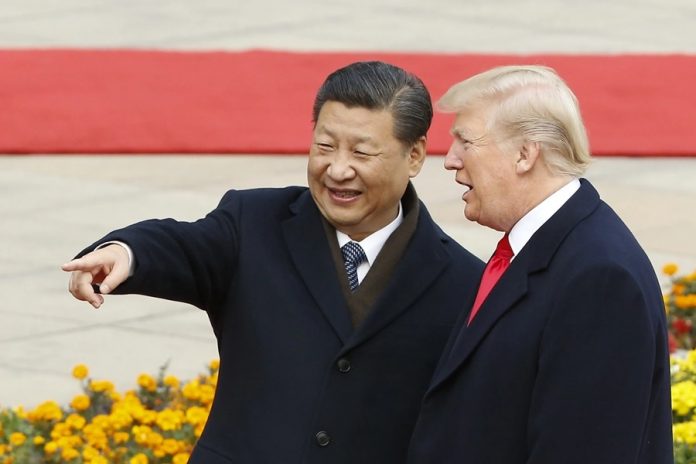
Beyond inflation and earnings, investors are also closely watching preparations for Trump’s meeting later this week with Chinese President Xi Jinping. The summit is expected to cover Iran, Taiwan, artificial intelligence, nuclear weapons, and a possible extension of a critical minerals agreement between the two countries.

The discussions come at a time when global markets are increasingly being shaped by geopolitical fragmentation, supply-chain security, and industrial policy rather than traditional economic cycles alone.

The biggest question for Wall Street is whether the market’s AI-driven optimism can continue overpowering mounting geopolitical and inflation risks. So far, investors have repeatedly chosen growth over fear. But with oil climbing again, inflation data looming, and the Middle East conflict showing little sign of resolution, economists believe that markets may soon face a tougher test of that confidence.
JPMorgan-Led Banks Slash Exposure to Struggling FS KKR Capital Fund Days Before KKR’s $300m Lifeline

0
JP Morgan Chase puts contents through its CEO account, it goes viral. But the same content via JPMC account, no one cares (WSJ)

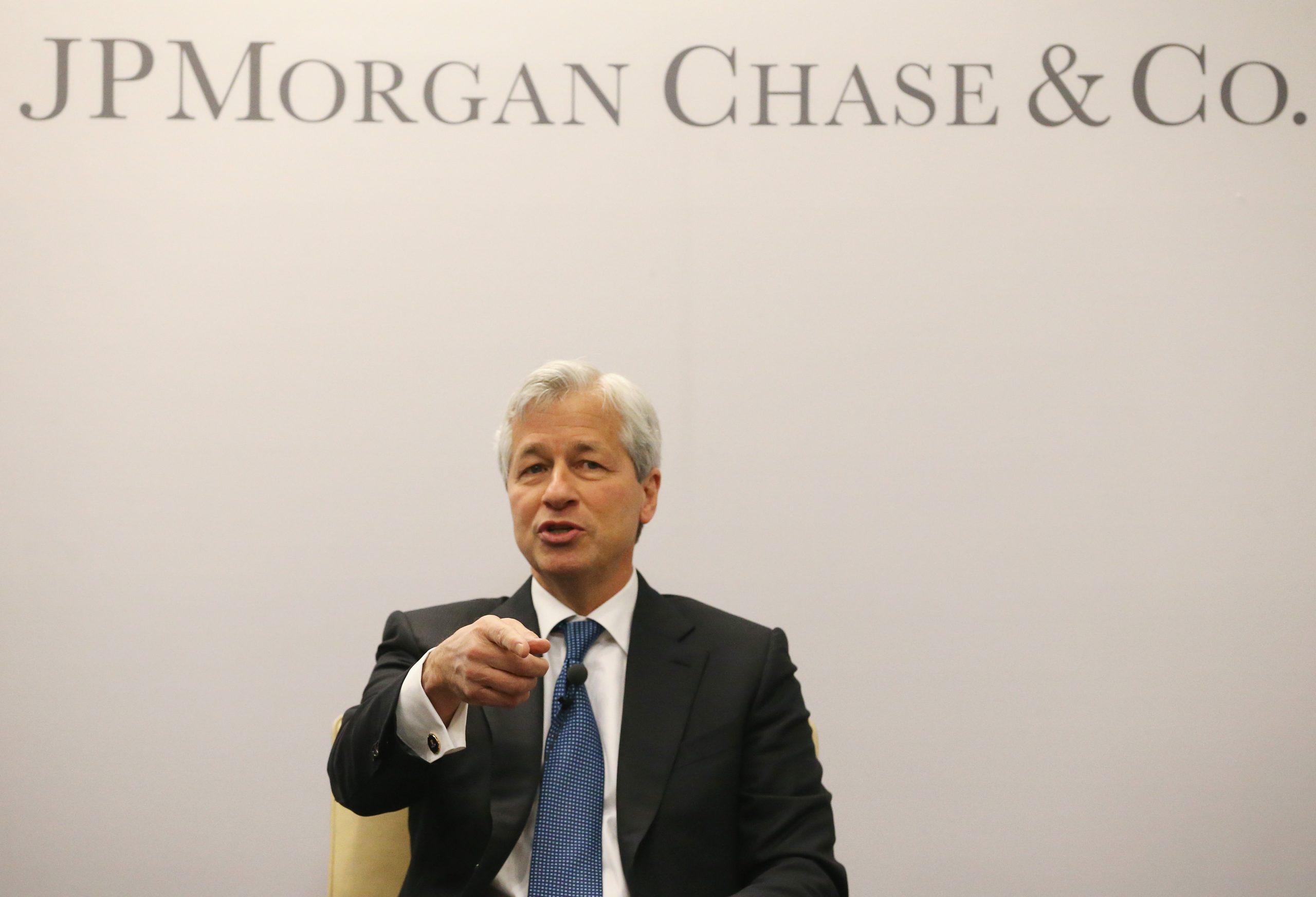
A JPMorgan Chase-led syndicate of banks sharply reduced its commitment to one of the largest publicly traded business development companies (BDCs) in the private credit space, just days before co-manager KKR stepped in with a substantial rescue package aimed at stabilizing the beleaguered fund.

FS KKR Capital Corp., co-managed by KKR and Future Standard, announced Monday that KKR would inject $150 million in new equity through cumulative convertible perpetual preferred stock and commit another $150 million via a tender offer to buy common shares at $11.00 each from investors seeking liquidity. The fund labeled these “Strategic Value Enhancement Actions.” In tandem, FSK’s board authorized a separate $300 million open-market share repurchase program, and KKR agreed to waive half of its incentive fees for the next four quarters.

These moves came after the JPMorgan-led group cut FSK’s senior secured revolving credit facility by $648 million (about 14%) on May 8, reducing total commitments to approximately $4.05 billion from $4.70 billion. Some lenders reportedly exited the syndicate entirely.

The amendment also raised interest rates (spreads) on the remaining facility for extending lenders and lowered the minimum shareholders’ equity covenant floor from roughly $5.05 billion to $3.75 billion. While this provides more cushion against defaults, it signals lenders’ concerns that asset values could decline further. JPMorgan acted as administrative agent, with ING Capital as collateral agent.

FSK has become a prominent symbol of strain in the private credit sector. Its shares have plunged nearly 50% over the past year and trade at a steep discount to net asset value (NAV). In March, Moody’s downgraded the fund’s ratings to junk status (Ba1 from Baa3), citing asset quality deterioration that outpaced peers, weaker profitability, and greater NAV erosion.

In the first quarter of 2026, FSK reported losses of $2 per share, totaling roughly $560 million, driving a roughly 10% decline in NAV. Non-accrual loans (those no longer generating interest income) rose sharply to 8.1% of the portfolio on a cost basis (4.2% at fair value) at quarter-end, up from 5.5% (3.4% at fair value) at year-end. Key problem credits include loans to software company Medallia and dental services provider Affordable Care.

“Our first quarter decline in net asset value was driven by investments which have impacted prior quarters, certain new non-accrual assets, and the impact of market-driven spread widening,” CEO Michael Forman and President Daniel Pietrzak said in the release.

However, they added a note of optimism: “We believe FSK’s current stock price underappreciates the long-term value associated with FSK’s investment portfolio and the KKR Credit platform.”

Software and related services remain the fund’s largest exposure, comprising 16.4% of the portfolio at year-end. Executives have conducted AI risk assessments across holdings, reflecting broader concerns about technology disruption in the sector.

The troubles have already forced distribution cuts. FSK reduced its quarterly dividend in prior periods, with the board declaring $0.42 per share for the second quarter—aligned with paying out 100% of GAAP net investment income. The stock has offered high yields (recently in the mid-teens) even after cuts, but at the cost of significant principal erosion for shareholders.

Investor frustration has escalated into legal action. A proposed class-action lawsuit filed in early May in Pennsylvania alleges that FSK and executives downplayed bad loans while promoting portfolio stability and attractive dividends. The suit covers investors who purchased shares between May 2024 and February 2026.

Stress Testing Private Credit

FSK’s challenges highlight vulnerabilities across the roughly $2 trillion U.S. private credit market, which expanded rapidly in a low-rate environment but now faces higher-for-longer interest rates, refinancing pressures, and sector-specific risks. The Financial Stability Board recently warned that the asset class remains untested in a severe downturn, pointing to leverage, liquidity mismatches in semi-liquid structures, interconnections with banks and insurers, and concentrations in areas like software.

Redemption pressures have mounted at some funds, with occasional gates or liquidations. FSK’s experience, banks tightening credit, ratings downgrades, heavy markdowns, and manager intervention, illustrate how liquidity and covenant relief can come at the price of higher costs and signaling further downside.

As a middle-market lender formed through a 2018 merger, FSK once ranked as the second-largest publicly traded BDC. It now confronts a painful transition: executives have signaled expectations of a smaller, better-positioned balance sheet over time. The fund maintains substantial liquidity, with cash and availability under financing arrangements, but faces over $2 billion in unsecured debt maturities in 2026–2027.

JPMorgan has taken broader defensive steps, including marking down private credit exposures on its own books, many tied to software firms potentially disrupted by artificial intelligence.

While KKR’s intervention and buybacks aim to restore confidence and narrow the share price discount, analysts expect sustained improvement to hinge on stabilizing the legacy portfolio and navigating an environment of elevated defaults and cautious bank lending.

Trump Takes Musk, Cooper, other America’s Corporate Elite, to China as Industry Groups Demand Tough Line on Chinese EV Threat

0

U.S. President Donald Trump is heading into one of the most consequential meetings of his second term with Chinese President Xi Jinping this week, accompanied by a powerful delegation of Wall Street and Silicon Valley executives.

Trump’s trip is also accompanied by mounting pressure at home to block Chinese vehicles from entering the American market.

The Trump-Xi summit comes at a pivotal moment for U.S.-China relations, with both governments attempting to stabilize ties strained by escalating battles over trade, artificial intelligence, export controls, industrial policy, Taiwan, and the Iran conflict.

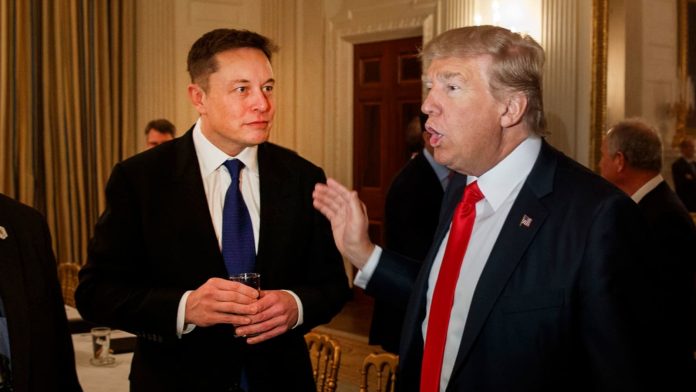
According to a White House official, Trump’s delegation includes some of the most influential names in American business, among them Elon Musk of Tesla, Tim Cook of Apple, and Kelly Ortberg of Boeing. Also expected to participate are David Solomon, Stephen Schwarzman, Larry Fink, Jane Fraser, and Dina Powell McCormick from Meta Platforms.

The presence of executives spanning technology, banking, aerospace, and manufacturing highlights how deeply intertwined the American and Chinese economies remain, even as distrust intensifies.

The administration hopes the summit will generate fresh commercial agreements, large Chinese purchase commitments, and broader economic cooperation. Yet beneath the diplomacy lies growing anxiety in Washington that China’s industrial dominance, particularly in electric vehicles and advanced manufacturing, is becoming an existential threat to sections of the U.S. economy.

China’s EV Rise Alarms Washington

With Trump set to meet Xi this week, a broad coalition spanning the American auto sector, steelmakers, unions, and politicians from both parties is pressing him with one clear demand: keep Chinese cars out of the United States.

The intense lobbying campaign reflects rising fears that Chinese automakers, armed with enormous state support, unmatched manufacturing scale, advanced battery technology, and ultra-low pricing, could devastate domestic producers and suppliers if granted meaningful access to the U.S. market.

Executives and labor groups increasingly argue that China’s electric vehicle sector is no longer merely competitive but structurally capable of overwhelming rivals globally through aggressive overcapacity and pricing power.

“Chinese automakers are not normal market competitors. Their EVs are the product of decades of state-backed mercantilism designed to help China capture global leadership in advanced industries,” said ITIF vice president Stephen Ezell.

Chinese EV giants such as BYD, NIO, and XPeng have expanded rapidly over the past several years, helped by massive government subsidies, low-cost financing, vertically integrated supply chains, and dominant control over critical battery minerals and processing.

Industry executives warn that Chinese manufacturers are now capable of producing EVs at price points Western automakers struggle to match profitably.

“Once China’s subsidized firms are embedded in the U.S. market, the economic and national security damage would be far harder to reverse — and it would not be limited to Detroit,” Ezell added.

That concern extends far beyond Detroit.

Steelmakers, parts suppliers, and labor unions fear that a flood of low-cost Chinese vehicles could hollow out large parts of America’s industrial base, threatening jobs across manufacturing-heavy states already battered by decades of globalization.

The issue has become one of the few areas drawing unusually strong bipartisan consensus in Washington. Democrats aligned with organized labor and Republicans focused on industrial competitiveness increasingly agree that allowing Chinese EVs into the American market at scale could trigger severe political and economic consequences.

The debate reflects a broader shift in U.S. thinking about China. For years, Washington viewed economic integration with Beijing as mutually beneficial. Today, policymakers increasingly frame the relationship through the lens of economic security, industrial resilience, and technological competition.

AI, Chips, and Strategic Rivalry

Artificial intelligence and semiconductor controls are also expected to dominate discussions between Trump and Xi. The United States has spent years tightening restrictions on advanced chip exports to China in an effort to slow Beijing’s progress in frontier AI and military technologies.

The restrictions have heavily affected companies such as Nvidia, whose CEO Jensen Huang recently said the company’s direct AI accelerator market share in China had effectively collapsed to zero.

Washington has since adjusted some policies, allowing exports of modified lower-tier Nvidia chips tailored for Chinese customers. But analysts say those efforts have largely failed to restore momentum, as Chinese security concerns and Beijing’s push for technological self-sufficiency appear to have undermined confidence in relying on American AI infrastructure.

Chinese firms are increasingly turning toward domestic alternatives from companies such as Huawei, while Beijing continues pouring resources into semiconductor independence.

The result is a rapidly deepening technological decoupling between the world’s two largest economies. At the same time, many American companies remain heavily dependent on China.

Tesla’s Shanghai factory remains one of the company’s most important production hubs globally. Apple still relies extensively on Chinese manufacturing capacity even as it diversifies parts of its supply chain into India and Southeast Asia. Wall Street firms also continue viewing China as a major long-term growth market, even as geopolitical risks rise.

That tension defines the summit itself: American corporations still need access to China’s vast market and supply chains, while Washington increasingly views China as its primary strategic competitor.

Iran, Trade And Economic Diplomacy

The Iran war is expected to add another layer of complexity to the talks. China remains one of the world’s largest importers of Gulf energy and has carefully balanced its relationships with both Tehran and Washington during the conflict.

For the Trump administration, securing stability in energy markets has become increasingly urgent as prolonged tensions threaten global oil supplies, shipping routes, and inflation. The summit is therefore likely to mix traditional diplomacy with economic bargaining across multiple fronts simultaneously: trade access, technology restrictions, energy security, industrial policy, and geopolitical competition.

Trump’s decision to bring corporate leaders directly into the diplomatic process underlines his longstanding preference for transactional statecraft built around commercial leverage and business relationships.

Analysts say the trip may ultimately produce headline-grabbing investment deals, aircraft purchases, or AI-related agreements. But the deeper reality is that Washington and Beijing are now managing a far more adversarial economic relationship than at any point in decades.

China’s Factory-Gate Inflation Surges to Nearly Four-Year High as Iran War Drives Energy Shock Through Economy

0

China’s producer inflation accelerated sharply in April to its highest level in nearly four years, highlighting how the Middle East conflict is beginning to ripple through the world’s second-largest economy and complicate Beijing’s efforts to revive weak domestic demand.

Data released by the National Bureau of Statistics of China on Monday showed the producer price index (PPI) climbed 2.8% from a year earlier, far above market expectations of 1.6% and the strongest reading in 45 months.

The figures underline a significant shift in China’s inflation dynamics. For much of the past three years, Beijing has battled persistent deflationary pressures driven by weak household spending, industrial overcapacity, and a prolonged property-sector downturn.

Now, inflation is returning, but in a form policymakers are unlikely to welcome. Rather than being fueled by stronger domestic consumption or healthier economic momentum, the latest surge is being driven largely by external shocks, especially rising global energy prices following the U.S.-Israeli conflict with Iran and the resulting disruptions in oil flows through the Strait of Hormuz.

“The fallout from the Iran war pushed up inflation again in April, but price pressures remain narrow in scope and aren’t likely to build into a wider reflationary impulse,” analysts at Capital Economics said.

The rise in producer prices marks a dramatic reversal from the prolonged industrial deflation that began in October 2022, when China’s manufacturing sector entered a deep pricing slump amid slowing growth and collapsing confidence in the property market.

That deflationary cycle had become one of Beijing’s biggest economic concerns because falling factory prices steadily eroded corporate profits and discouraged investment. The return of positive PPI territory in March initially raised hopes that industrial activity was stabilizing. But economists now say the April data tells a more complicated story.

Instead of reflecting stronger demand, the inflation spike is being powered by higher costs for oil, metals, and industrial inputs, raising fears that manufacturers are facing another squeeze on margins at a time when domestic demand remains fragile. On a monthly basis, producer prices rose 1.7% in April after increasing 1% in March, showing that pricing pressures are intensifying rather than easing.

The statistics bureau attributed the jump largely to rising prices in sectors tied to non-ferrous metals, oil and gas, and advanced technology equipment. Those sectors have become increasingly sensitive to global commodity volatility and supply-chain disruptions linked to the Middle East conflict.

The broader concern for Beijing is that China may be entering a period of “bad inflation” rather than healthy reflation. In normal economic recoveries, moderate inflation is often welcomed because it reflects stronger demand and rising business activity. But inflation driven by energy shocks can instead suppress consumption by raising living costs without increasing household incomes.

That risk is particularly acute in China, where consumer confidence remains weak after years of property-sector turmoil and uneven post-pandemic recovery.

Consumer inflation also accelerated in April.

The consumer price index rose 1.2% year-on-year, above both economists’ expectations and March’s 1% increase. The gains were driven mainly by higher gasoline prices and rising gold jewelry costs, according to the statistics bureau.

Core inflation, which strips out volatile food and fuel prices, rose slightly to 1.2% from 1.1%.

Although the reading suggests some stabilization in underlying prices, economists caution that domestic demand remains too weak to sustain broader inflationary momentum. Food prices, a key indicator of household spending conditions, continued to decline. Pork prices plunged 15.2%, while overall food costs fell 1.6%, reinforcing evidence that consumer demand inside China remains subdued.

That divergence between rising industrial costs and weak consumer spending is creating a difficult balancing act for Chinese policymakers. Beijing has spent months trying to stimulate consumption, curb destructive price wars in sectors such as electric vehicles and solar panels, and pull the economy out of a deflationary spiral. But the latest inflation surge may reduce pressure on the central bank to aggressively loosen monetary policy, even though underlying growth challenges remain unresolved.

Analysts at Capital Economics warned that inflationary pressures are still too narrow to signal a genuine economic recovery.

“It is possible that cost-push pressures work their way through to wider inflation over the coming months. But with overcapacity in most sectors unresolved and domestic demand growth still sluggish, the ingredients for a sustained reflationary impulse still appear to be missing,” the firm said.

That assessment reflects a growing concern among economists that China’s economic model is becoming increasingly vulnerable to external shocks. The country remains heavily dependent on manufacturing exports at a time when many of its major trading partners are themselves confronting slowing growth, inflation concerns, and geopolitical instability.

The Middle East conflict has added another challenge. China has substantial strategic energy reserves and diversified oil suppliers, which have helped cushion the immediate impact of supply disruptions. Still, higher fuel costs are steadily feeding into the broader economy.

China’s state planner has already raised retail gasoline and diesel prices multiple times since the war began in late February, although authorities have capped increases to prevent excessive pressure on consumers. Major Chinese airlines have also imposed higher fuel surcharges for domestic flights.

Those rising transport and logistics costs threaten to further weaken household spending at a time when consumption has already struggled to recover meaningfully.

The property crisis remains another major drag.

Years of declining home prices, unfinished projects, and developer defaults have damaged household wealth and confidence, limiting consumers’ willingness to spend even as Beijing rolls out support measures.

That weakness is one reason analysts remain skeptical that inflation will become deeply entrenched. However, many believe China may continue facing a strange combination of industrial cost pressures and weak underlying demand, a scenario that complicates policymaking and threatens profit margins across large sections of the economy.

Financial markets nevertheless reacted positively to the inflation data. The Shanghai Composite Index rose 0.9% by midday trading, while the blue-chip CSI300 gained 1.4%, as investors interpreted the stronger price readings as evidence that deflation risks may be easing.

Yet beneath the market optimism lies a more fragile reality. China’s export-driven economy is deeply tied to global demand conditions, and many of its largest trading partners are themselves grappling with the economic fallout from the Middle East conflict.

If higher energy costs begin slowing global growth or reigniting inflation elsewhere, China’s manufacturing sector could once again face weakening external demand just as domestic consumption remains subdued. That would leave Beijing confronting an increasingly difficult challenge: reviving growth in an economy where inflation is rising for the wrong reasons.

Trump-Xi Summit: U.S. Auto Industry and Bipartisan Coalition Warn Trump: No Chinese Cars in America

0

With President Donald Trump set to meet Chinese President Xi Jinping this week, a broad coalition spanning the American auto sector, steelmakers, unions, and politicians from both parties is pressing him with one clear demand: keep Chinese cars out of the United States.

The intense lobbying effort stems from fears that Chinese automakers, backed by massive state support, enormous scale, superior EV technology, and rock-bottom prices, could overwhelm domestic producers and foreign competitors alike, eroding the heart of U.S. manufacturing. According to Reuters, this pushback gained urgency after Trump’s comments in January to the Detroit Economic Club, where he said it would be “great” if Chinese automakers built plants in the U.S. and employed Americans.

He added, “I love that. Let China come in, let Japan come in.”

Those remarks sent ripples of concern through an industry that has long fought to protect the American market with strict data security measures and high tariffs on Chinese electric vehicles. Automakers, suppliers, dealers, and their allies have now unified in opposition, warning that any opening would repeat damaging patterns already visible abroad.

Democratic Senator Elissa Slotkin of Michigan took the message directly to the Detroit forum on Thursday, per Reuters. She urged Trump not to strike any deal with Xi that would allow Chinese investment, leading to Chinese-brand cars on U.S. dealership lots.

“Please don’t make a bad deal,” Slotkin said.

She joined Republican Senator Bernie Moreno of Ohio in sponsoring the Connected Vehicle Security Act, which would codify and strengthen data protections against Chinese vehicles, making any reversal by the administration far more difficult.

A companion House bill goes further by also banning industry partnerships with Chinese companies.

Congressional aides say the legislation enjoys broad support and could pass this year, possibly attached to a transportation spending bill.

Representatives Debbie Dingell, a Democrat, and John Moolenaar, a Republican, both from Michigan’s auto-heavy districts, sponsored the House version and stated jointly: “Every vehicle on American roads is a rolling data collection device, capturing information on location, movement, people, and infrastructure in real time, and we cannot allow Chinese vehicles or components to be a part of that system.”

Seventy-four House Democrats and 52 House Republicans have signed letters imploring Trump to bar Chinese automakers from the American market.

U.S. Automakers Unite Against China

The U.S. auto industry has displayed rare unity on the issue. In March, groups representing American and foreign-brand automakers, car dealers, and parts manufacturers warned the administration that China’s drive to dominate global auto production and enter the U.S. market “pose a direct threat to America’s global competitiveness, national security and automotive industrial base.”

Steel industry groups sent a similar letter on April 30. Even the Information Technology and Innovation Foundation, which has criticized some past Trump tariffs on Chinese goods, endorsed the ban legislation.

ITIF Vice President Stephen Ezell explained: “Chinese automakers are not normal market competitors. Their EVs are the product of decades of state-backed mercantilism designed to help China capture global leadership in advanced industries.”

He added, “Once China’s subsidized firms are embedded in the U.S. market, the economic and national security damage would be far harder to reverse — and it would not be limited to Detroit.”

Administration officials have signaled continuity so far. U.S. Trade Representative Jamieson Greer said in Detroit in April that there were no plans to change the connected car rule and that autos were not on the agenda for the summit with Xi.

Commerce Secretary Howard Lutnick has ruled out Chinese investments in the U.S. autos sector. Still, Scott Paul, president of the Alliance for American Manufacturing, expressed ongoing worry that Trump, who frequently speaks of drawing more auto plants to America, “has left wiggle room in dealing with the auto sector.”

Any approved plant would take two to three years to start production, shifting long-term consequences to a future administration.

Industry leaders point to troubling precedents in Europe and Mexico. Chinese brands doubled their European market share to 6% last year, capturing 14% in Norway, 9% in Italy, 11% in Britain, and 9% in Spain. Consumer interest in Chinese EVs has grown as gasoline prices rise amid the Iran war. Canada now imports 49,000 Chinese EVs annually, while 34 Chinese brands hold about 15% of the Mexican market at prices far below U.S. levels.

Geely’s EX2 EV sells for roughly $22,700 in Mexico—more than double its Chinese domestic price but well under the $38,630 U.S. starting price of the cheapest Tesla Model 3. Even Toyota struggles with the pricing pressure there.

Toyota Motor North America division manager David Christ said, “Obviously there’s some level of government support, or else they couldn’t transact at that price. So it has a huge impact on business.”

With Kelley Blue Book reporting average U.S. vehicle list prices now exceeding $51,000 amid an affordability crisis, many fear American consumers could be drawn to far cheaper Chinese options.

As the Trump-Xi meeting approaches, the American auto sector and its bipartisan supporters are making their position unmistakably clear: opening the door even slightly risks irreversible damage to a vital industry, national security, and the broader manufacturing base that has long powered the U.S. economy.