DD
MM
YYYY

PAGES

DD
MM
YYYY

spot_img

PAGES

Home Blog Page 10

Meta’s AI Advertising Push Raises Concerns Over Accuracy and Accountability

0

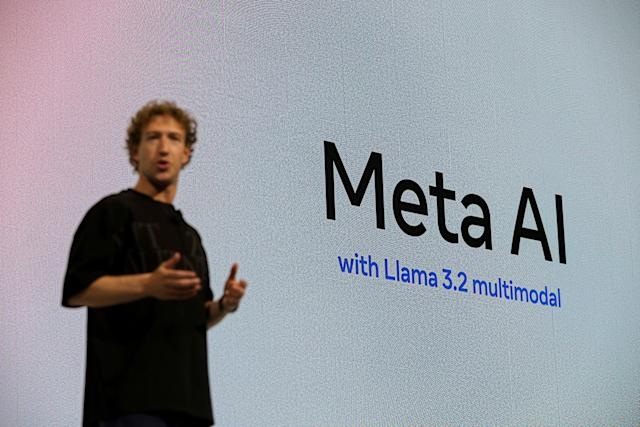
Meta has aggressively positioned artificial intelligence at the center of its advertising business. The company envisions a future where brands can generate images, videos, copy, audience targeting, and campaign optimization with minimal human intervention.

With billions of users across Facebook, Instagram, and WhatsApp, Meta believes AI-driven advertising can dramatically reduce the cost and complexity of digital marketing. However, many advertisers are finding that the reality falls short of the promise.

A growing number of brands and advertising executives argue that Meta’s AI tools remain unreliable, frequently generating inaccurate, distorted, or even absurd outputs. According to several industry insiders, problems such as altered product appearances, misshapen images, incorrect branding elements, and misleading promotional content have become increasingly common.

Rather than simplifying advertising operations, these issues often create additional layers of review, correction, and risk management.

For many businesses, brand consistency is one of the most valuable assets they possess. Consumers expect products to appear exactly as they are in reality. Yet advertisers report instances where Meta’s AI-generated creatives significantly changed product designs, colors, packaging, or key features.

In some cases, the AI created unrealistic visuals that bore little resemblance to the original product being marketed. Such inaccuracies can have serious consequences. Misrepresented advertisements may confuse customers, damage brand credibility, and potentially expose companies to regulatory concerns related to false advertising.

In industries such as healthcare, finance, food, and consumer goods, even minor inaccuracies can create legal and reputational risks. What has particularly frustrated advertisers is Meta’s reported stance regarding responsibility. Several executives claim that when issues arise.

Meta often places the burden on brands themselves, arguing that advertisers are responsible for reviewing and approving AI-generated materials before publication.

While this position may be legally defensible, many marketers believe it undermines Meta’s marketing narrative that its AI tools are mature enough to automate significant portions of the creative process.

This tension highlights a broader issue facing the technology industry: the gap between AI ambition and practical implementation. Generative AI systems are powerful, but they still struggle with contextual understanding, brand nuance, and visual accuracy.

AI models can produce impressive results in controlled environments while simultaneously generating outputs that appear strange, inconsistent, or entirely fabricated. Despite these challenges, advertisers continue using Meta’s AI tools because of the company’s immense market power.

Meta remains one of the world’s largest digital advertising platforms, controlling access to billions of consumers and a vast amount of behavioral data. Many brands feel compelled to experiment with the company’s AI offerings in order to remain competitive, even if the tools require substantial human oversight.

The situation also raises important questions about accountability in the age of AI-generated content. If an automated system produces misleading advertisements, who should bear responsibility—the technology provider or the advertiser using the system? The answer remains legally and ethically uncertain.

As AI becomes increasingly integrated into marketing workflows, trust will become as important as innovation. Advertisers are not merely seeking automation; they require reliability, transparency, and safeguards against errors that could damage their brands.

Meta’s experience demonstrates that while AI may eventually transform digital advertising, the technology still has significant limitations.

For now, many advertisers appear to be adopting a cautious approach: embracing AI’s efficiency gains while maintaining substantial human supervision.

Until generative systems can consistently deliver accurate and brand-safe outputs, human judgment will remain indispensable in the advertising industry.

India’s Top Private Banks Deliver Strong Q1 Earnings as Credit Demand Accelerates, Lower Bad Loan Costs Lift Profitability

0

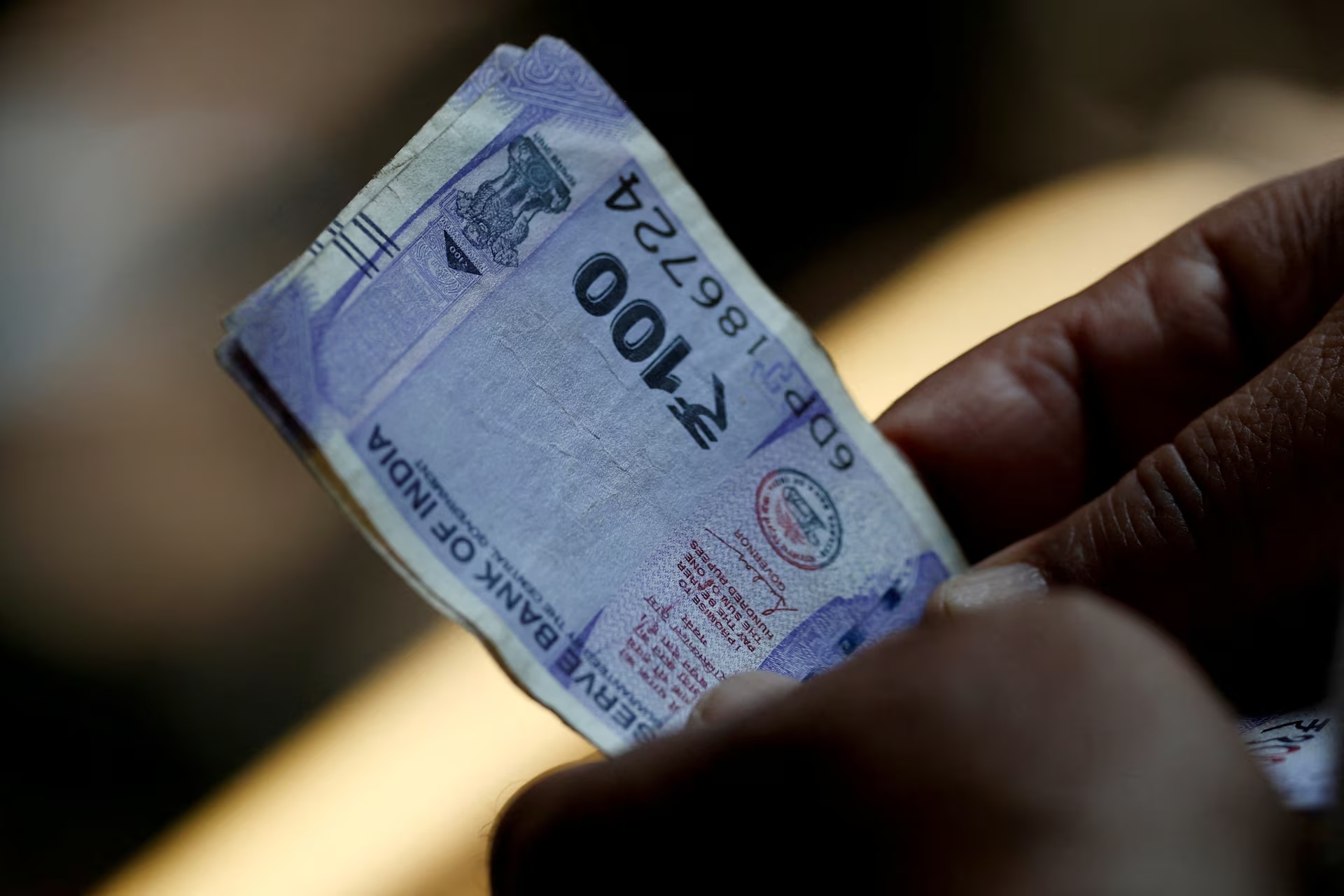
India’s largest private-sector banks delivered another quarter of robust earnings growth, underscoring the resilience of the country’s banking sector as stronger retail and corporate loan demand, improving asset quality, and lower provisions for bad loans offset pressure on lending margins and weaker treasury income.

Results from HDFC Bank, ICICI Bank, Axis Bank, Kotak Mahindra Bank and Yes Bank point to a banking sector benefiting from a broad-based recovery in credit demand, fueled by resilient consumer spending, rising borrowing by small businesses and corporates, and continued expansion in mortgages, personal loans and gold-backed lending.

The earnings also boost investor confidence in India’s financial sector, which is increasingly being viewed as one of the country’s strongest beneficiaries of robust economic growth, rising infrastructure investment, and expanding digital financial services.

Among the major lenders, ICICI Bank, Axis Bank, Kotak Mahindra Bank, and Yes Bank all comfortably exceeded analysts’ expectations, while HDFC Bank, India’s largest private lender, broadly met estimates.

Collectively, the results indicate that India’s banking sector is entering the second half of fiscal 2027 with healthy loan growth, improving balance sheets and manageable credit costs, even as lenders continue to navigate tighter liquidity conditions, volatile bond markets and pressure on net interest margins.

HDFC Bank Meets Estimates As Lending Growth Gathers Pace

HDFC Bank reported a 5% year-on-year increase in standalone net profit to 190.60 billion rupees ($1.98 billion) for the quarter ended June 30, broadly matching analysts’ expectations of 191.9 billion rupees.

The country’s largest private lender continues to attract investor attention following governance changes earlier this year. Part-time Chairman Atanu Chakraborty resigned in March, citing ethical differences, prompting a legal review by the bank. HDFC said the independent review found no evidence supporting the concerns raised by Chakraborty.

The bank has since appointed former senior bureaucrat Rajiv Kumar as chairman, while CEO Sashidhar Jagdishan is still awaiting reappointment approval from regulators.

Operationally, HDFC showed encouraging signs that lending momentum is strengthening.

Loans expanded 15.4% year-on-year, driven primarily by retail lending, including mortgages and personal loans, while deposits increased 13.3%.

Net interest income, a key measure of profitability, rose 6.7% to 335.3 billion rupees, although the bank’s net interest margin (NIM) remained unchanged at 3.26%, still below the roughly 4% margin achieved before its landmark $40 billion merger with mortgage lender HDFC in 2023.

Investors continue to monitor margin recovery closely as one of the clearest indicators that the merger is delivering the expected financial benefits.

Asset quality remained largely stable, although the gross non-performing asset (NPA) ratio edged up slightly to 1.17% from 1.15% in the previous quarter.

One of the biggest positives came from credit costs. Provisions and contingencies plunged 78% year-on-year to 30.6 billion rupees, significantly boosting profitability.

However, treasury and fee income came under pressure. Other income declined 41% quarter-on-quarter to 128.21 billion rupees, reflecting rising government bond yields and tighter Reserve Bank of India restrictions on foreign exchange derivatives trading.

ICICI Bank Posts Strongest Earnings Surprise

ICICI Bank produced one of the strongest performances among India’s major lenders. The country’s second-largest private lender reported net profit of 148 billion rupees, up nearly 16% from 127.68 billion rupees a year earlier and comfortably ahead of analysts’ forecast of 131.8 billion rupees.

The results were driven by strong balance-sheet expansion.

Domestic loans climbed 19.6%, lifting net interest income 12.7% to 243.8 billion rupees, while deposits increased 14%.

Unlike many peers facing margin pressure, ICICI maintained one of the strongest profitability profiles in the industry, with its net interest margin edging higher to 4.36%.

Credit quality also continued to improve.

The bank reduced provisions for bad loans and contingencies by 30.5% to 12.6 billion rupees, while the gross NPA ratio improved marginally to 1.38%, from 1.40% in the previous quarter.

Unlike several competitors that suffered weaker treasury performance, ICICI benefited from volatile financial markets. Other income rose 16% to 84.25 billion rupees, supported by gains from bond investments and treasury operations.

Axis Bank Beats Expectations Despite Margin Pressure

Axis Bank also delivered stronger-than-expected earnings. Net profit increased 22.5% to 71.14 billion rupees, surpassing analysts’ estimate of 65.5 billion rupees. The strong comparison was partly aided by a one-off charge recorded during the same quarter last year relating to an industry-wide reassessment of overdraft lending.

Core banking operations remained healthy.

Net interest income increased 8% to 146.46 billion rupees, supported by a 19% rise in domestic lending. However, deposit growth was relatively modest at 6%, and profitability margins weakened. The bank’s net interest margin declined to 3.46%, from 3.62% in the previous quarter, highlighting ongoing industry-wide pressure from funding costs.

Axis nevertheless benefited from substantially lower loan-loss expenses.

Provisions fell 44% to 22.22 billion rupees, helping lift bottom-line earnings. Treasury income weakened amid volatile bond and currency markets, contributing to a 7% decline in other income. Asset quality remained stable, with the gross NPA ratio at 1.28%, compared with 1.23% in the previous quarter.

Kotak Mahindra Exceeds Estimates As Credit Quality Improves

Kotak Mahindra Bank also outperformed expectations. Standalone net profit rose 26% to 41.23 billion rupees, exceeding analysts’ projection of 37.37 billion rupees.

The results come as the lender prepares for a leadership transition after CEO Ashok Vaswani announced he will step down when his term ends in December, with the bank currently searching for his successor.

Kotak’s lending business continued expanding steadily.

Net advances increased 15%, driven by both retail and corporate loans, while deposits grew 12%. Net interest income climbed 9% to 79.28 billion rupees. Although provisions rose 30% sequentially, they were 42% lower than a year earlier, reflecting improved credit conditions.

The bank also continued to strengthen its balance sheet, with the gross NPA ratio declining to 1.18% from 1.20% a year earlier.

Yes Bank Extends Turnaround With 34% Profit Growth

Yes Bank continued its multi-year turnaround, reporting the fastest profit growth among the five major lenders.

Net profit surged 34% year-on-year to 10.7 billion rupees, supported by strong lending growth and improving operating performance. Loans expanded 18.3%, while deposits increased 14.3%, driving net interest income up 17.5% to 27.9 billion rupees.

The bank also improved profitability, with its net interest margin rising to 2.7%, compared with 2.5% a year earlier. Asset quality remained stable, with gross NPAs holding at 1.3%.

Unlike several larger peers that sharply reduced provisions, Yes Bank more than doubled provisions quarter-on-quarter to 3.9 billion rupees, reflecting a more conservative provisioning approach as it continues rebuilding its balance sheet.

Sector Outlook Remains Constructive

The latest earnings underscore a favorable backdrop for India’s banking industry. Loan demand has strengthened since April, supported by resilient consumer spending, increased borrowing against gold, expanding mortgage activity, stronger corporate credit demand and financing needs among small businesses, partly backed by government loan guarantee programmes introduced during disruptions linked to the Iran conflict.

While lending activity remains robust, banks continue facing several headwinds.

Net interest margins remain under pressure as competition for deposits keeps funding costs elevated. Treasury income has also weakened across much of the sector as higher government bond yields and foreign exchange market volatility reduce investment gains.

Nevertheless, the sharp decline in provisions across most lenders indicates that asset quality remains healthy, allowing banks to convert stronger loan growth into higher profitability.

Together, the results bolster expectations that India’s private banking sector remains well positioned to benefit from the country’s accelerating economic expansion, rising credit penetration, and continued digitalization of financial services.

Universal, Sony, and X End Copyright Battle Over Music Licensing

0

Elon Musk’s X Corp and a coalition of major music publishers, including Universal Music Group and Sony Music Publishing, have agreed to end their long-running legal dispute over copyrighted music on the X platform, bringing an end to one of the most significant copyright battles facing the social media company.

Court filings made on Thursday show that both sides jointly asked federal courts in Tennessee and Texas to dismiss their respective lawsuits.

The parties requested that the cases be dismissed with prejudice, meaning neither side can revive the same claims in the future. While the filings strongly suggest the dispute has been resolved, neither X nor the publishers disclosed whether a financial settlement or licensing agreement was reached.

Representatives for X, Universal Music Group, Sony Music Publishing, and the National Music Publishers Association (NMPA) declined to comment on the filings or provide additional details.

The legal battle began in 2023, when a coalition of 17 music publishers filed a lawsuit against X in federal court in Nashville, Tennessee. The publishers accused X of allowing users to upload and distribute copyrighted songs without obtaining the necessary music licenses or taking sufficient action to remove infringing content.

The lawsuit sought more than $250 million in damages, alleging infringement of nearly 1,700 copyrighted musical works. According to the complaint, X “routinely ignores” copyright violations while competing social media platforms such as TikTok, Facebook, and YouTube have negotiated licensing agreements with rights holders that compensate songwriters and publishers when copyrighted music is used on their services.

The case highlighted a key distinction in the social media industry. While platforms generally benefit from “safe harbor” protections under the U.S. Digital Millennium Copyright Act (DMCA) when they promptly remove infringing content after receiving notices, rights holders argued that X failed to implement adequate systems to prevent repeated copyright violations.

In 2024, U.S. District Judge Aleta Trauger narrowed the publishers’ case, dismissing allegations that X was directly or vicariously liable for copyright infringement. However, the court allowed a central claim of contributory copyright infringement to proceed, finding that the publishers had plausibly argued X may have knowingly facilitated infringement by failing to adequately address repeated unauthorized uses of copyrighted music.

That ruling kept substantial legal pressure on X and left the company exposed to potentially significant damages if the case ultimately went to trial.

Rather than limiting its defense to the copyright lawsuit, X escalated the dispute earlier this year. In January, the company filed a separate lawsuit in federal court in Texas accusing the publishers of violating U.S. antitrust laws.

X alleged that the publishers had coordinated their licensing strategies through the National Music Publishers Association, refusing to negotiate individual licensing agreements and instead collectively forcing the platform to accept what it described as artificially inflated licensing fees.

The publishers rejected those allegations and asked the Texas court in April to dismiss the case.

Now, both the copyright lawsuit in Tennessee and the antitrust action in Texas are set to be dismissed, bringing an end to litigation that had expanded beyond copyright into broader questions surrounding competition in the digital music licensing market.

However, the resolution has removed a significant legal overhang for X as Musk continues efforts to transform the platform into what he has described as an “everything app.” Music licensing has become an increasingly important issue for social media platforms as video content drives user engagement. Platforms that lack comprehensive licensing agreements face growing legal risks because copyrighted music frequently appears in user-generated videos.

Unlike TikTok, Meta’s Facebook and Instagram, and Google’s YouTube, X has historically maintained a more limited portfolio of music licensing agreements, leaving it vulnerable to lawsuits from rights holders.

The dismissal of the litigation could indicate that the parties have reached a commercial understanding behind the scenes, although no licensing arrangement has been publicly confirmed. If such an agreement exists, it could improve X’s ability to compete with rival platforms that have long offered licensed music libraries for creators while reducing future litigation risks.

China Warns UK Nationalization of British Steel Could Hurt Investment Ties, Seeks Compensation For Jingye

0

China has warned that the United Kingdom’s decision to nationalize British Steel could damage Chinese investor confidence and strain bilateral investment relations, marking the latest escalation in a dispute that has become a test case for the balance between national security and foreign investment.

China’s Foreign Ministry said on Saturday it would closely monitor Britain’s handling of the nationalization and take “appropriate measures” to protect the legitimate rights and interests of Chinese companies if necessary.

The warning follows Britain’s formal nationalization of British Steel on Thursday, completing the government’s takeover of the loss-making steelmaker from China’s privately owned Jingye Group after months of political and legal wrangling over the future of the strategically important business.

“The issue has drawn widespread attention in China,” the ministry said in a statement.

It added that Britain’s handling of the case would “directly affect Chinese investors’ confidence in the UK’s investment climate” and influence public perceptions in China regarding the credibility and reliability of the British government as a destination for foreign investment.

The ministry urged London to pursue a mutually acceptable resolution with Jingye, including arrangements for compensation, rather than relying solely on administrative action.

The statement comes off as one of Beijing’s strongest public interventions over the dispute and suggests the issue is no longer viewed as a commercial disagreement but as a matter affecting broader China-UK economic relations.

Jingye Steel has already signaled that it intends to seek compensation for losses arising from the takeover.

The company said it has initiated consultation procedures under the China-United Kingdom Bilateral Investment Treaty (BIT), the first formal step before potential international investment arbitration.

Under most bilateral investment treaties, investors can seek compensation if they believe a host government has unlawfully expropriated assets or failed to provide fair and equitable treatment. If consultations fail, disputes can typically proceed to international arbitration, where governments may face substantial compensation claims.

Jingye said it hopes the British government will fully protect the legitimate rights and interests of the company as well as those of other Chinese businesses and international investors.

The Chinese steelmaker has argued that it invested heavily after acquiring British Steel in 2020, committing significant capital to modernize production facilities and replace ageing equipment.

From Jingye’s perspective, the nationalization risks depriving it of the value created through those investments.

National Security Concerns Drove Britain’s Intervention

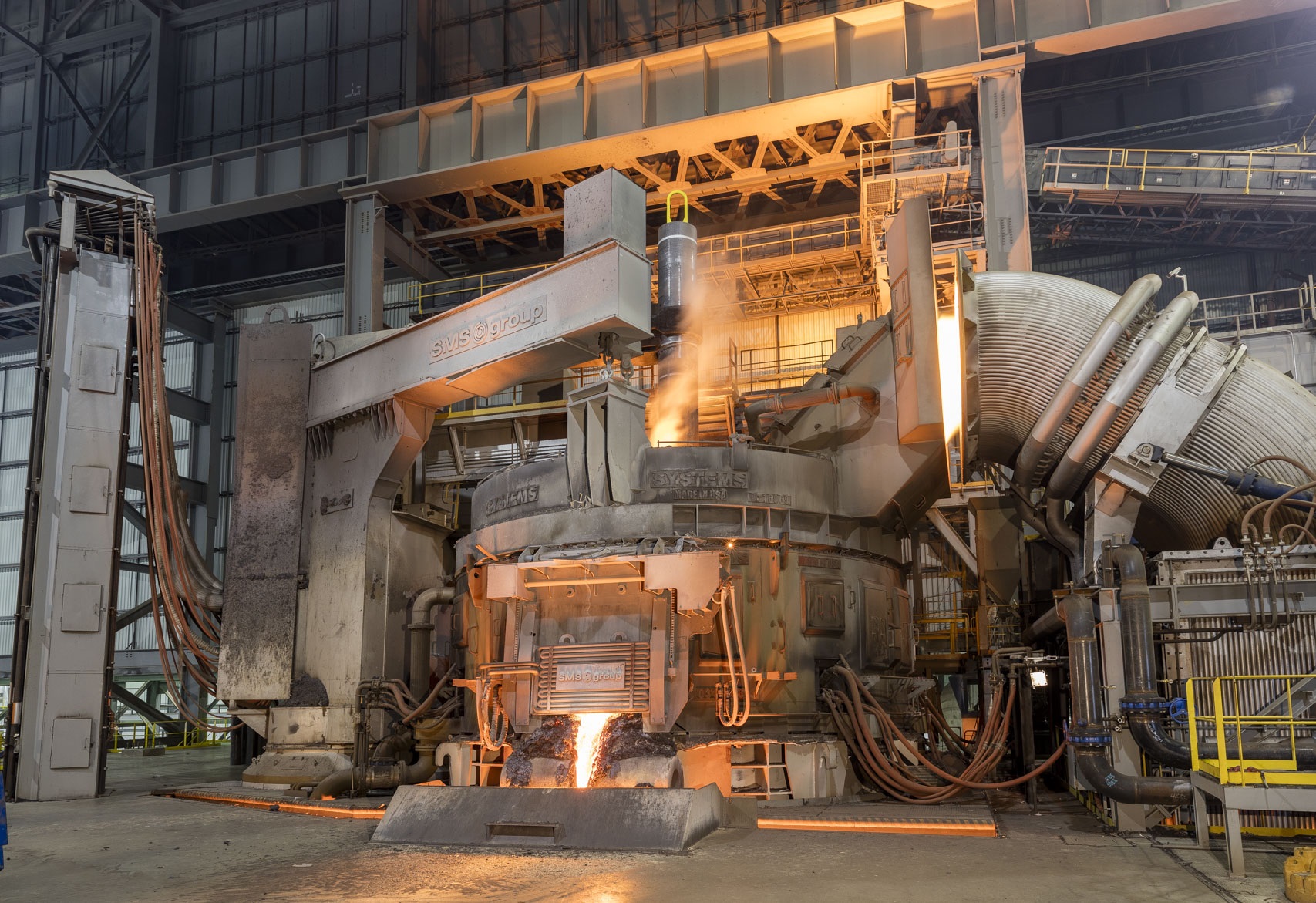
Britain’s takeover culminates a process that began in April 2025 when the government seized operational control of British Steel, citing national security concerns and the importance of maintaining domestic steel production. British Steel operates one of the country’s last remaining blast furnace facilities capable of producing virgin steel, which is considered critical for sectors including defense, infrastructure, railways, and major construction projects.

Prime Minister Keir Starmer’s government subsequently announced plans to fully nationalize the company, arguing that continued government ownership was necessary to safeguard jobs, preserve industrial capacity and secure long-term steel production.

The formal nationalization completed this week transfers ownership entirely to the British state after the government concluded that a private-sector solution was no longer viable.

The dispute comes at a sensitive time for China’s overseas investments. Chinese companies have increasingly faced tighter scrutiny across Western economies as governments expand national security reviews covering sectors such as steel, semiconductors, telecommunications, critical minerals, energy infrastructure and artificial intelligence.

The British Steel case is seen as another indication that geopolitical considerations are increasingly influencing investment policy, even where assets are owned by private rather than state-owned Chinese companies. Beijing’s warning suggests Chinese authorities are concerned that the nationalization could discourage future Chinese investment in Britain by raising questions about regulatory certainty and property rights.

China’s Foreign Ministry urged the British government to “make decisions prudently,” calling on London to respect market principles, honor companies’ wishes and avoid what it described as the abuse of administrative coercive measures.

Potential Impact on UK-China Relations

Beyond British Steel itself, the dispute risks becoming another point of friction in an already complicated UK-China relationship. Britain has in recent years tightened investment screening rules under the National Security and Investment Act, giving ministers broad powers to block or unwind foreign acquisitions involving strategically sensitive sectors.

Several Chinese investments have faced increased regulatory scrutiny as successive British governments have sought to reduce dependence on foreign ownership in critical infrastructure while strengthening economic security.

If Jingye proceeds to international arbitration under the bilateral investment treaty, the dispute could extend over several years and potentially result in a substantial compensation claim against the British government.

The outcome may also serve as an important precedent for how future disputes involving Chinese investors are handled, particularly as Western governments continue to strengthen national security oversight of foreign investment in strategic industries.

“They Took A Lead And Put Their Best Player At Defending:” Trump Says Tuchel’s Defensive Gamble Cost England

0

U.S. President Donald Trump has weighed in on England’s dramatic World Cup semi-final defeat to Argentina, noting that manager Thomas Tuchel made a costly tactical mistake by abandoning attack and asking his best players to defend after taking the lead.

Trump’s assessment has found support from several former England players, pundits, and the match statistics, which paint a picture of a team that surrendered possession, territory, and attacking intent before conceding twice late on to crash out of the tournament.

England were within minutes of reaching their first men’s World Cup final since 1966 after Anthony Gordon gave the Three Lions a deserved 55th-minute lead against reigning champions Argentina at Atlanta Stadium. Instead, the match turned dramatically in the closing stages. Enzo Fernández fired home an 85th-minute equalizer before Lautaro Martínez headed the winner in the second minute of stoppage time, with both goals created by Lionel Messi, ending England’s hopes of ending a 60-year wait for a World Cup final appearance.

Reacting to England’s defeat, Trump questioned Tuchel’s decision to adopt a defensive approach after taking the lead.

“They put their best player at defending,” Trump said.

“You have a great player in England, who I played golf with, he is Harry Kane.

“And maybe England made a mistake when they put him as a defensive player.

“They took a lead and they put their best player at defending,” the president said.

While Trump did not offer a detailed tactical analysis, his central argument was echoed by a number of former England internationals, who argued that Tuchel’s conservative substitutions handed control of the match to Argentina rather than allowing England to pursue a second goal.

Former England captain Wayne Rooney described England’s collapse as self-inflicted.

“We have crumbled,” Rooney told BBC Sport.

“It started with the manager and the decisions he made. It was too passive.

“Against this team, the world champions, you will not get away with it. This has been the biggest test and we have failed it.”

Rooney added that Tuchel’s substitutions effectively removed England’s attacking threat.

“I felt the changes we made at 1-0, that if Argentina scored we wouldn’t make extra time,” the former Manchester United Forward said.

Former England defender Micah Richards shared a similar view.

“When England scored that first goal they should have gone for the second,” Richards said.

“Yes, you respect their quality, but dropping deep allowed Argentina to get into their flow.”

Former Blackburn striker Chris Sutton went even further, calling the tactical switch “a coaching catastrophe.”

“You can’t expect to defend for 30 minutes against the quality Argentina had,” Sutton said on BBC Radio 5 Live.

“It’s all on the coach. He made the changes. He was negative.”

Alan Shearer also questioned Tuchel’s approach, noting that England’s earlier comeback victories over DR Congo, Mexico, and Norway were not comparable because Argentina possessed far greater attacking quality.

“The difference is hanging on against Norway or Mexico. They have not got the quality this Argentina team have got,” Shearer said.

“Tuchel played his cards very, very early and it has backfired.”

Joe Hart argued Argentina never looked rattled after falling behind.

“I didn’t see one bit of panic from that Argentina side,” Hart said.

“I saw belief, I saw them realizing they could free up the great man Lionel Messi in the pocket, and they were running all over England.”

He also drew parallels with Gareth Southgate’s England teams, which were frequently criticized for becoming overly defensive after taking the lead in major tournaments.

The tactical shift was clear.

Following Gordon’s opener, Tuchel gradually dismantled England’s attacking shape.

In the 72nd minute, he replaced goalscorer Gordon with defender Ezri Konsa, switching to a back five. Around 10 minutes later, Dan Burn and Nico O’Reilly were introduced to reinforce the defense, while attacking substitutes Marcus Rashford and Ivan Toney were not sent on until deep into stoppage time, leaving England with little opportunity to restore attacking momentum after Argentina equalized.

Tuchel defended his decisions after the match, insisting the changes were necessary because England had already begun losing control before the substitutions.

“We decided to go to a back five to close the gaps,” Tuchel said.

“Straight after our goal, with no substitutions, we just conceded way too many crosses and way too many chances, so we tried to help.

“The responsibility is on the coach. When it doesn’t go well, it’s easy to say it was wrong.

“We were very close today.”

However, the statistical evidence strongly supports the criticism levelled at England’s tactical retreat.

According to Opta, England completed only three successful passes from eight attempts between the 66th minute and Argentina’s equalizer in the 85th minute. Only goalkeeper Jordan Pickford and defender John Stones completed those passes, with Pickford accounting for two of them.

The broader numbers between Gordon’s goal and Fernandez’s equalizer underline how completely Argentina controlled the contest. England had just 12% possession during that period, successfully completed only 24 of 34 passes, failed to register a single touch inside Argentina’s penalty area, and did not produce sustained attacking pressure.

Argentina, by contrast, dominated with 88% possession, recorded 15 touches inside England’s penalty area, continuously pinned England back, and eventually found the breakthrough through Fernandez before Messi created Martinez’s stoppage-time winner.

England’s attacking stars were also effectively removed from the contest. Neither Harry Kane nor Jude Bellingham recorded a single touch inside Argentina’s penalty area after England went ahead, illustrating how little opportunity they had to influence the game once England retreated into a defensive shell.

The numbers suggest England’s downfall was not simply the result of two late goals, but of an extended period in which they struggled to retain possession, relieve pressure, or threaten Argentina’s defense. That sustained dominance eventually told, allowing the world champions to complete another dramatic comeback and book their place in the World Cup final, while leaving Tuchel facing intense scrutiny over tactical decisions that many, including Trump, believe cost England their best opportunity in six decades to return to football’s biggest stage.