DD
MM
YYYY

PAGES

DD
MM
YYYY

spot_img

PAGES

Home Blog Page 1041

US Treasury Secretary Projects Dollar-Linked Stablecoins Could Top $2tn, Bolstering U.S. Global Financial Power

0

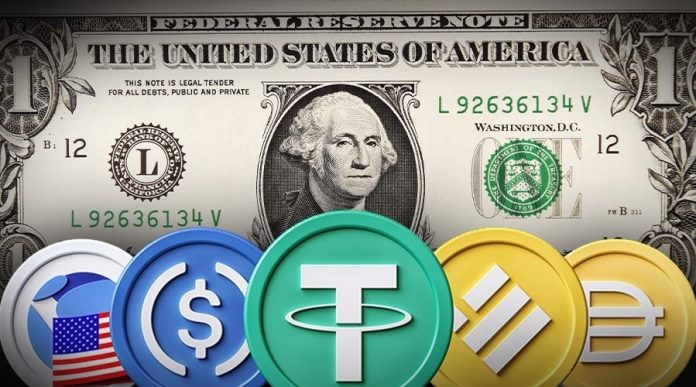
U.S. Treasury Secretary Scott Bessent has projected that dollar-linked stablecoins could exceed $2 trillion in market capitalization, reaffirming the administration’s view that these digital assets have the potential to reinforce the dollar’s global dominance and offer new momentum for the U.S. economy.

Speaking before a Senate Appropriations subcommittee on Wednesday, Bessent said the rise of stablecoins is part of a larger strategy to “enhance and preserve” the U.S. dollar’s position as the world’s reserve currency. He pointed to legislation currently being drafted in Congress that would mandate stablecoins to be fully backed by high-quality liquid assets, such as U.S. Treasury bills, to ensure stability and trust.

“This administration is committed to keeping the reserve currency status and enhancing that,” said Bessent, a veteran of global currency markets during his hedge fund career. “Stablecoin legislation backed by U.S. Treasuries or T-bills will create a market that will expand U.S. dollar usage via these stablecoins all around the world.”

Institutional Adoption Accelerates Stablecoin Expansion

Bessent’s bold $2 trillion projection comes amid a wave of institutional adoption of stablecoins in global finance. Major financial institutions including Visa, Mastercard, and PayPal have integrated stablecoin transactions into their networks, betting that tokenized dollars will play a central role in cross-border payments and programmable finance.

In late 2023, PayPal launched its own U.S. dollar-backed stablecoin, PYUSD, in partnership with Paxos Trust Company, with the goal of bridging traditional finance and blockchain-based systems. Similarly, Visa began testing USDC (a stablecoin issued by Circle) for settling payments on the Ethereum blockchain, an initiative that has since expanded to other platforms and regions.

Even banks that once viewed crypto with caution are now involved. JPMorgan Chase has developed its own JPM Coin, a digital token used internally for institutional settlements, while also exploring tokenized deposits and blockchain-based payment rails.

This momentum is part of why the U.S. government is now leaning into stablecoins as a lever for economic and financial policy. With trillions of dollars flowing globally in search of stable digital currencies, policymakers are aiming to cement the dollar’s place at the heart of digital trade by formalizing the rules of engagement through legislation.

Policy Support as a Strategic Move

Bessent’s remarks underscore a broader geopolitical and economic rationale: by ensuring that dollar-linked stablecoins are secure, transparent, and widely available, the U.S. can counter the rise of non-dollar digital currencies, especially state-backed versions like China’s digital yuan, and shore up demand for U.S. debt in the form of Treasury-backed reserves.

Citigroup earlier estimated that stablecoin-related purchases of Treasuries could surpass $1 trillion by 2030, but Bessent believes the ceiling could be far higher.

“I think that $2 trillion is a very, very reasonable number,” he said, “and I could see it greatly exceeding that.”

This forecast comes at a time when U.S. debt issuance is accelerating and the government is looking for new classes of investors to absorb that supply. Stablecoins, by their structure, naturally demand large amounts of Treasury assets for backing—making them a strategic tool not just for financial innovation, but for public finance stability.

At present, dollar-backed stablecoins such as USDT (Tether) and USDC (Circle) dominate the market, with a combined circulation of over $160 billion. But the market has evolved from retail-driven crypto speculation into one with institutional-grade infrastructure, compliance tools, and real-world use cases—including global remittances, trade finance, and on-chain treasury operations.

Even BlackRock, the world’s largest asset manager, has entered the space with its tokenized fund BUIDL, built on public blockchain networks and tied to U.S. dollars. These moves signify a shift in perception: stablecoins are no longer fringe fintech but a foundational part of the next generation of financial infrastructure.

In his testimony, Bessent positioned stablecoins not as a regulatory headache, but as a U.S. policy asset, capable of defending the dollar’s supremacy in a fast-changing digital world. This means that stablecoins are increasingly becoming the vehicle of choice for dollar usage abroad, especially in regions with limited access to U.S. banking, and Washington’s shift toward regulation and support signals a historic turning point in American monetary strategy.

How Exin Therapeutics is Opening a New Era in the Fight Against Brain Diseases

0

Many people struggle to find effective treatments for brain diseases. Brain diseases like epilepsy and Parkinson’s affect millions each year. This post explains how Exin Therapeutics, a biotech company utilizing genetic therapies and AI-driven drug discovery, is changing the fight. While public interest often leans towards topics like slingo not on GamStop for entertainment, breakthroughs in neuroscience are quietly reshaping how we approach long-term health.

Read on to learn how breakthroughs could help improve brain health soon.

Exin Therapeutics: Revolutionising Brain Disease Treatment

By using genetic therapies that alter neural activity, Exin offers a new avenue for tackling complex brain conditions that affect millions globally.

Targeting neural activity through genetic therapies

Traditional pharmaceutical treatments for neurological disorders, such as antiepileptics, antipsychotics, or dopamine agonists, often act as temporary fixes. They manage the external symptoms but do not address the core biological imbalances in the brain. This symptom-based approach means many patients experience limited relief and often require long-term medication with potential side effects.

Exin Therapeutics moves beyond this conventional model by embracing precision medicine. Its genetic therapies are not one-size-fits-all solutions. Instead, they are engineered to act at the level of neuronal circuits, where many brain diseases originate. By modifying the behaviour of specific neurons or groups of neurons, these therapies aim to reset abnormal activity patterns that drive disorders such as epilepsy, autism spectrum disorder, and Parkinson’s disease.

The process involves targeted genetic modulation—altering the expression or function of certain genes that influence neural firing and connectivity. In disorders like epilepsy, where misfiring neurons cause seizures, these interventions could restore balance and prevent episodes altogether. Similarly, in autism spectrum disorder, where neural connectivity may be dysregulated, Exin’s therapies seek to improve communication between brain regions, potentially enhancing cognitive and social functioning. Recent developments in Rett syndrome gene therapy further support the promise of this approach in reversing deep-rooted neurological dysfunctions.

Ultimately, the goal is to offer durable, circuit-specific solutions that promote long-term brain health without relying on high doses of chronic medication. This approach holds promise not only for symptom control but also for true functional recovery and improved mental clarity.

Focused on neurological and neuropsychiatric disorders

By prioritising neurological and neuropsychiatric disorders, Exin addresses a category of illnesses often underserved by traditional medicine. Unlike acute diseases that can be treated with antibiotics or surgery, brain disorders are typically chronic, multifactorial, and deeply rooted in brain circuitry. That’s why Exin’s focus on innovative solutions is especially valuable in this space.

Investment in this area has the potential for an outsized impact. A successful breakthrough in just one of these conditions could revolutionise care standards. For instance, reducing seizure frequency in epilepsy or slowing progression in Parkinson’s could significantly enhance a patient’s ability to live independently.

The Importance of Exin Therapeutics’ Approach

Exin Therapeutics targets critical brain diseases with innovative solutions. Their methods offer hope for conditions like epilepsy and Parkinson’s disease, addressing both neurological and neuropsychiatric challenges.

Addressing conditions like epilepsy, autism spectrum disorder, and Parkinson’s disease

Exin Therapeutics targets epilepsy, autism spectrum disorder, and Parkinson’s disease. Their innovative approach focuses on understanding neural circuits. This strategy promises to change how we treat these conditions.

By honing in on the specific needs of each disorder, Exin aims to improve lives significantly. Recent findings in brain stimulation treatments suggest that direct modulation of neural activity can enhance memory and cognitive function, reinforcing the potential of Exin’s precision-targeted therapies. Such advancements represent a breakthrough in brain disease management at the circuit level.

Circuit-level treatment for brain disorders

Building on addressing conditions like epilepsy, autism spectrum disorder, and Parkinson’s disease, Exin Therapeutics focuses on circuit-level treatment for brain disorders. This approach targets the neural circuits responsible for these diseases. By understanding how different parts of the brain work together, researchers can develop more effective therapies.

Innovative techniques allow scientists to map these circuits accurately and develop focused interventions. Recent advances in living brain tissue research have further improved our ability to model disease progression in realistic conditions, providing valuable insights into early-stage neurological disorders. The insights gained through high-throughput mouse studies enhance this research further.

The game-changing AI drug discovery platform

Improving drug development efficiency

Exin Therapeutics utilises a game-changing AI drug discovery platform. This technology significantly boosts the efficiency of drug development. By conducting high-throughput mouse studies, researchers can quickly assess potential treatments for brain diseases. These studies allow scientists to evaluate many compounds at once, speeding up the overall process.

This innovative approach streamlines research and cuts down on time spent in labs. More efficient development means faster access to new therapies for conditions like epilepsy and Parkinson’s disease. The advances made by Exin Therapeutics promise exciting breakthroughs in neurological treatment methods.

Utilising high-throughput mouse studies

Exin Therapeutics aims to transform brain disease research by utilising high-throughput mouse studies. This method allows scientists to test multiple drug candidates quickly and efficiently.

By screening many compounds in a short time, researchers can identify the most promising treatments for conditions like epilepsy and Parkinson’s disease.

High-throughput studies create immense amounts of data. These insights drive innovative approaches in genetic therapies. Through this technology, Exin Therapeutics makes significant strides towards neurological breakthroughs that can change lives.

The next wave of progress awaits with the company’s dedicated founders leading the charge toward better brain health solutions.

Meet the Founders of Exin Therapeutics

Gabriel Ocana Santero, Ivan Lazarte, and Marko Tvrdic lead Exin Therapeutics with passion and vision. Their combined expertise drives the company’s innovative approach to tackling brain diseases.

Gabriel Ocana Santero

Gabriel Ocana Santero is the scientific architect behind Exin Therapeutics’ bold approach. With a strong academic foundation in neuroscience and molecular biology, he brings deep expertise in gene expression, neural circuitry, and disease modelling. His career spans both laboratory research and leadership roles in biotech startups, making him uniquely positioned to translate complex science into practical therapies.

Ocana Santero’s core belief is that precision genetic interventions are the key to long-lasting neurological improvements. He advocates for reprogramming dysfunctional neural circuits, rather than merely masking symptoms—a philosophy that defines Exin’s therapeutic strategy. His leadership has also been central in integrating AI-driven analysis with wet-lab research, allowing Exin to dramatically accelerate its discovery cycle.

Under his direction, the company has developed robust platforms for target selection, in vivo validation, and early preclinical trials, all powered by data-driven decision-making. Gabriel is not only a scientist but also a system builder, laying the groundwork for scalable, efficient, and repeatable discovery pipelines.

Ivan Lazarte

Ivan Lazarte brings a results-driven mindset rooted in years of experience within biotech entrepreneurship and neuroscience commercialisation. With a background in both molecular science and business development, Lazarte serves as a crucial link between Exin’s scientific innovations and its long-term growth strategy.

He played a pivotal role in securing early-stage backing through Y Combinator, giving Exin the resources and mentorship needed to rapidly prototype and validate its technologies. Lazarte focuses on translating early research into viable therapeutic products, guaranteeing that Exin’s discoveries don’t remain locked in the lab but move quickly toward clinical relevance.

Lazarte is also instrumental in shaping regulatory strategy, partnership development, and investor relations. He understands the path from discovery to market and is deeply committed to building therapies that are not only scientifically groundbreaking but also accessible and scalable. His leadership guarantees that Exin stays nimble, fundable, and focused on its long-term impact in healthcare.

Marko Tvrdic

Marko Tvrdic adds a powerful scientific engine to Exin’s leadership. With deep roots in neuroscience, genetic engineering, and translational research, he is responsible for advancing the core technologies that underpin the company’s unique value proposition.

Tvrdic is the driving force behind Exin’s high-throughput mouse studies, which allow the team to rapidly test and optimise gene therapies across a wide range of disease models. These preclinical trials generate massive datasets that feed directly into Exin’s AI systems, creating a virtuous cycle of learning and refinement.

More than just an experimentalist, Tvrdic also plays a key role in designing Exin’s gene-editing tools and delivery platforms, which are tailored for safety, precision, and clinical scalability. He works closely with the AI and wet-lab teams to guarantee every therapeutic candidate is grounded in both data science and biological insight.

Marko’s contributions help guarantee that Exin remains at the frontier of brain disease research, capable of tackling even the most complex neurological conditions with clarity, focus, and innovation.

The Future of Brain Disease Treatment with Exin Therapeutics

The advances in genetic therapies will change the landscape of brain disease treatment. Exin Therapeutics aims to enhance patients’ quality of life while pushing the boundaries of science and shaping the future of technology in healthcare.

Potential impact on improving the quality of life

Exin Therapeutics promises to change lives through its innovative treatments. Their advanced therapies can improve symptoms significantly. Patients may experience better control over their conditions and enjoy increased independence.

High-throughput mouse studies enhance drug development efficiency at Exin. This approach allows rapid testing of new treatments, speeding up the process from lab to clinic. 

People affected by brain diseases could see a brighter future with improved care options available to them. Exin Therapeutics is truly opening a new era in the fight against brain diseases.

Continual advancements in genetic therapies and AI technology

Exin Therapeutics consistently advances genetic therapies and AI technology to tackle brain diseases. This innovative approach aims to enhance treatment options for various neurological disorders.

High-throughput mouse studies provide key data that guide research strategies. Such methods help scientists understand complex brain functions better. Exin Therapeutics continues to lead the charge in creating impactful solutions through its cutting-edge techniques.

Ripple (XRP) Price Prediction: Which One Will Reach $10 First? XRP, SUI, Toncoin, or Rexas Finance (RXS)?

0

As crypto markets regain momentum, a new question dominates investor chatter: which sub-$10 token is realistically capable of crossing that psychological threshold first? With XRP, SUI, Toncoin, and the fast-rising newcomer Rexas Finance (RXS) all trading well below $10, speculation is heating up. Here’s a deep dive analysis of each project’s current standing, growth potential, and whether a $10 price tag is within reach.

XRP: Resistance Builds, Momentum Weakens

Ripple (XRP) has long been a heavyweight in the altcoin space, but its current technical setup reflects more frustration than opportunity. XRP has been stuck under key resistance zones between $2.30 and $2.60, and it continues to trade beneath its 50-, 100-, and 200-period EMAs — a clear bearish signal for short-term traders. Adding to the unease, the RSI is below 50, indicating a lack of bullish strength, and derivatives data show a drop in open interest to $4.7 billion as volume spikes — a telltale sign of long liquidation pressure. Unless XRP can break and sustain a move above $2.30–$2.40, analysts warn that a drop back toward $2.20 or lower is likely. With a $10 target requiring over four times the upside from its previous cycle high (~$2.70), Ripple would need a significant catalyst, such as a favorable SEC ruling or major institutional adoption, to shift this narrative. Until then, XRP’s trajectory appears more like a consolidation than a moonshot.

SUI: Rising Adoption, Real Fundamentals

SUI has emerged as one of the more impressive performers in 2025, recently climbing from $2 to the $3.20 range. Behind this rise is a wave of user and ecosystem growth: SUI is adding over 1 million new wallets per day, with roughly 80% of them being new participants. Daily DEX volume has remained consistently above $400 million, and the stablecoin market cap on SUI has surged to nearly $900 million. Institutional moves also support SUI’s growth story, most notably the launch of a dedicated SUI product by 21Shares. These fundamentals give SUI real credibility as a Layer 1 contender. However, while the growth is strong, a jump from $3.20 to $10 is still over a 3× move. Most price forecasts only target around $5 for 2025, meaning $10 could remain out of reach, unless a full-blown alt season occurs.

Toncoin (TON): News-Driven Spikes, Volatile Path

Toncoin, trading around $3.12, benefits from a strong association with Telegram and intermittent bursts of hype. In late May, speculation of a collaboration between Telegram and Elon Musk’s AI product caused a temporary rally to $3.68. A subsequent announcement of a $300 million integration with Grok sparked another 12% surge. Despite this, Toncoin struggles with consistency. It needs to hold $2.95 to maintain a bullish bias, while resistance around $3.30–$3.50 continues to cap any upside. While Toncoin’s MACD recently triggered a bullish golden cross, analysts stress the need for more sustained ecosystem traction beyond speculative headlines. To realistically reach $10, TON would need a persistent growth narrative, stronger tokenomics, and broader momentum in the crypto market.

Rexas Finance (RXS): Microcap Wild Card with Massive Upside

Rexas Finance (RXS) is currently the dark horse in this race, and also the most explosive. It just wrapped up a heavily subscribed presale, selling over 465 million tokens and preparing for its initial listing at $0.25. That alone sets it apart: even a jump to $10 from $0.25 is just a 40x increase. However, from its current presale base of $0.06, that would be over 150x. The project aims to bring real-world asset tokenization to DeFi, which is competing with giants like Ondo and Mantra. It’s a bold vision, but still in its infancy. RXS’s path to $10 isn’t about slow adoption; it’s about viral momentum, investor speculation, and timing. With no historical trading data and pending exchange listings, the token is essentially a high-risk lottery ticket. Still, the ultra-low market cap and rising hype give RXS what others don’t: mathematical leverage. Even small inflows could move the price dramatically. The risk is high, but so is the upside.

Conclusion

SUI stands on solid fundamental ground among the contenders but will likely stall around $5–$6. XRP faces strong resistance and will require significant catalysts to break out of its current range. Toncoin has branding and news momentum but lacks consistency. Rexas Finance, though unproven, offers the most direct path to $10 thanks to its low base and explosive upside potential. If there’s one token with the raw leverage to surprise everyone in 2025, it’s RXS.

For more information about Rexas Finance (RXS) visit the links below:

Website: https://rexas.com

Win $1 Million Giveaway: https://bit.ly/Rexas1M

Whitepaper: https://rexas.com/rexas-whitepaper.pdf

Twitter/X: https://x.com/rexasfinance

Telegram: https://t.me/rexasfinance

A Foray Into The Potential $1.5 Billion IPO of Uphold

0

Uphold, a New York-based digital asset trading platform, is exploring a U.S. initial public offering (IPO) targeting a valuation above $1.5 billion, as reported by various sources in June 2025. CEO Simon McLoughlin revealed that the company’s board has engaged investment bank FT Partners to evaluate strategic options, including a potential Nasdaq listing or a sale to a financial or payments firm. This move follows significant revenue growth, with Uphold projecting $300 million in 2025, a 275% increase from $80 million in 2022, driven by retail expansion and enterprise partnerships, such as with IG Group and a German bank.

The platform’s focus on XRP, including a U.S. debit card with XRP rewards and yield farming via Flare Network, aligns with its strategy to capitalize on the loyal XRP community. The recent success of Circle’s IPO, with shares surging over 300%, has fueled enthusiasm for crypto fintech IPOs, positioning Uphold to potentially ride this wave. However, McLoughlin emphasized that any decision would require careful analysis, and discussions with banks, brokers, and payment firms are ongoing.

A successful IPO could signal further integration of crypto platforms into traditional financial markets, following the likes of Coinbase and Circle. This legitimizes digital assets, attracting institutional investors and retail users wary of unregulated markets. Uphold’s focus on XRP and innovative offerings like yield farming and crypto-linked debit cards could set a precedent for other platforms to bridge crypto and fiat services.

With Circle’s IPO surging over 300%, Uphold’s $1.5 billion valuation target reflects bullish sentiment in the crypto fintech sector. A strong debut could drive valuations higher across the industry, encouraging other crypto firms to pursue public listings. However, an overheated market risks volatility if investor expectations outpace fundamentals.

Listing on Nasdaq would subject Uphold to stringent U.S. regulatory oversight, particularly from the SEC. This could set a benchmark for compliance in the crypto space, especially for platforms handling assets like XRP, which has faced legal battles over its security status. A successful IPO might pressure regulators to clarify crypto rules, benefiting the broader market.

Uphold’s partnerships, such as with IG Group and a German bank, and its XRP-centric products position it as a hybrid fintech-crypto player. A public listing or sale could accelerate its growth, enabling acquisitions or expansion into new markets, particularly in regions with high crypto adoption. Uphold’s emphasis on XRP and its rewards programs taps into the loyal XRP community, potentially boosting user engagement. A high-profile IPO could drive retail interest in crypto trading, especially if marketed as a success story for XRP holders.

Uphold, like Coinbase, operates as a centralized entity, offering user-friendly interfaces and fiat integration but relying on traditional financial infrastructure. An IPO reinforces this model, aligning with Wall Street and regulatory frameworks. DeFi protocols and decentralized exchanges (DEXs) like Uniswap prioritize user sovereignty and anonymity, rejecting centralized control. These platforms are unlikely to pursue IPOs, as their ethos clashes with traditional finance.

Centralized platforms like Uphold must navigate complex regulations, which can limit innovation but provide stability and trust for mainstream users. An IPO would deepen Uphold’s regulatory commitments. DeFi projects often operate in gray areas, resisting oversight to preserve decentralization, which appeals to crypto purists but risks regulatory crackdowns.

Uphold’s IPO could attract traditional investors and retail users seeking regulated, familiar platforms, widening the gap with DeFi’s tech-savvy, crypto-native audience. DeFi’s permissionless nature caters to users in underbanked regions or those avoiding KYC requirements, a segment Uphold’s model may not fully serve. Centralized platforms prioritize scalability and user experience, as seen in Uphold’s XRP debit card and yield farming.

However, they may lag in adopting cutting-edge DeFi innovations like automated market makers or governance tokens. DeFi’s rapid experimentation drives innovation but often lacks the stability and customer support of centralized platforms, creating a trade-off. A successful IPO could tilt market favor toward centralized crypto firms, potentially diverting capital from DeFi projects. Conversely, a failed IPO or regulatory hurdle might bolster the narrative that decentralized systems are more resilient.

Uphold’s IPO could bridge the gap by bringing crypto to traditional markets, but it also risks widening the ideological divide. Centralized platforms may dominate in regulated markets, while DeFi thrives in decentralized ecosystems, creating parallel financial systems. The outcome of Uphold’s IPO—whether it fuels mainstream adoption or highlights regulatory tensions—will shape how this divide evolves.

The Scar On My Foot – The Meat Seller and His Boy

0

As I made my way home through the alley of the bustling Egbeda market, traders called out to passersby as others haggle. Okada riders honk indiscriminately jostling for passengers. In this potpourri of confused sounds I noticed a mild drama that brought back memories of a childhood experience I had. A meat seller had his son on his laps screaming, with his left hand he held the lads hands and, with his right hand, he sharpens his knife. And when our eyes met he said laughing, “Don’t beg me o! I am going to cut off his hands.” I laughed too.

How I Got the Scar

I was six years old when my Dad threatened to cut off my leg if I do not stretch it for treatment. And in my innocence I believed he would as he kept the machete beside my leg. The thought of a greater pain of having my leg chopped off made me surrender it. The incident that led to that event happened a day before. There was a burning bush a block away. Someone had set fire to dried stalks of corn on his farm and this, as expected, attracted all the children around, including me. I found a comfortable place to sit in the middle of the road and watched how other children went in and beat the fire with sticks that had nylon tied at the tips.

It was fun watching how excited fire flakes jumped into the sky with exploding sounds. And as I watched in awe I saw how a burning nylon went beyond the radius and descended, not knowing that it would land on my left foot. I cannot remember the pain but I cannot forget how I cried as I was carried home. The scar, still obvious on my foot is a daily reminder of the inherent dangers of being a spectator on life’s stage. How come the children that played in the fire never got burnt?

A sitting duck is an easy target.

Life Rewards the Bold

It is more risky for an airplane to remain on the ground than being in the sky.

I was told by my Mom that when I was a kid I rarely played with other children. I always sat a distance and watched them play. It was this behavior, though not bad in itself, that gave me a permanent scar. I am really glad this happened to teach me a valuable lesson that life rewards only those who go out and make things happen and not to those who wait.

He that observeth the wind shall not sow; and he that regardeth the clouds shall not reap. – Ecclesiastes 11:4

Take that Risk!

Why are we sitting here until we die? -2Kings 7:3-20

The Biblical event of the four leprous men sums up my reason for writing. They were ostracized from society to be onlookers but that day they decided to become actors, they did not only save their lives but those of countless others in the city. Today I no longer sit and watch. I have gone beyond throwing my hat in the ring to building it because I have experienced the consequences of being an onlooker and also, I have tasted the rewards of putting my best foot forward.

I will end this piece with the story of the crow and the rabbit. A crow was sitting on a tree doing nothing all day. A small rabbit saw the crow, and asked him, ‘Can I also sit like you and do nothing all day?’ The crow answered: ‘Sure, why not.’ So, the rabbit sat on the ground below the crow, and rested. All of a sudden, a fox appeared, he jumped on the rabbit and ate it. The moral of this story is, to be sitting and doing nothing, you must be sitting very, very high up.

The ball is in your court. Do with it as you please.