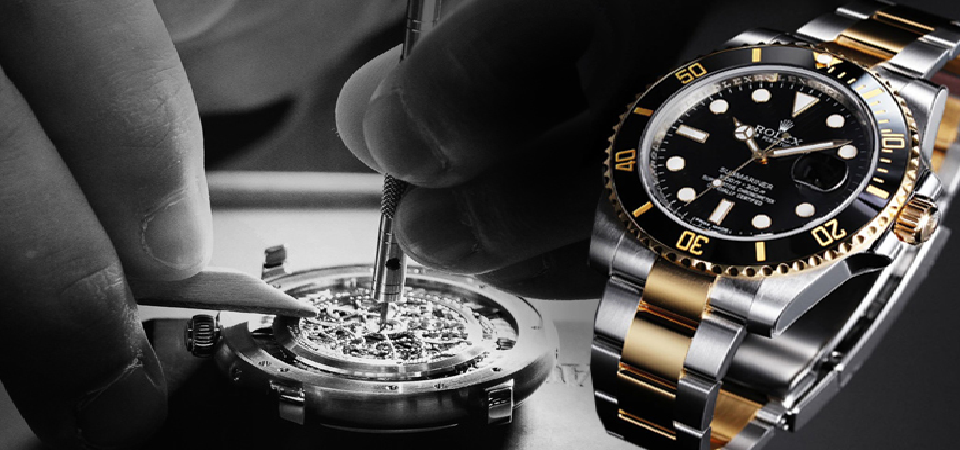
Automatic watches are often described as if their winding systems all work in essentially the same way. In reality, the movement of the rotor is only part of the story, especially for owners who use watch winders to keep their timepieces running when they are off the wrist. The rotor inside an automatic watch can physically swing in either direction as the wrist moves, but that does not necessarily mean that both directions contribute to winding the mainspring.
Some automatic movements are designed to harvest energy from the rotor in only one direction. When the rotor turns the opposite way, it may effectively freewheel rather than transfer energy into the winding train. Other movements use reversing wheels, pawls, or similar mechanisms to convert rotation in both directions into useful winding action.
This distinction is particularly relevant to companies such as Barrington Watch Winders, whose products are designed around controlled rotation for automatic watches. Understanding how different calibers respond to clockwise, counterclockwise, or alternating movement helps explain why winding direction is a practical consideration rather than an obscure technical detail.
At first glance, bidirectional winding may seem like the obvious engineering choice because it appears to make use of more rotor movement. Yet unidirectional systems remain common in respected and proven calibers. That is because winding architecture is not simply a question of maximizing every possible movement. It involves tradeoffs in efficiency, friction, component count, movement layout, durability, and servicing.
So why would a watchmaker deliberately choose unidirectional winding when bidirectional winding appears, at first glance, to make better use of rotor movement?
How an Automatic Watch Turns Wrist Movement Into Stored Energy
At the heart of an automatic watch is an oscillating rotor, a weighted component that pivots around the movement as the wearer moves their wrist. Because the rotor has inertia, changes in wrist position cause it to swing and rotate relative to the movement. This motion provides the energy that the automatic winding system can use.
The rotor does not wind the mainspring directly. Its movement passes through the automatic winding train, which may include gears, reversing wheels, pawls, or other components depending on the design of the caliber. The purpose of this system is to control the rotor’s movement and transfer usable energy toward the mainspring barrel.
Inside the barrel sits the mainspring, which stores the mechanical energy needed to keep the watch running. As the winding system acts on the barrel, the mainspring is gradually tensioned. The stored energy is then released through the gear train and escapement at a controlled rate.
The important point is that rotor movement and mainspring winding are two separate stages of the process. The rotor can turn clockwise or counterclockwise as the wrist moves, often changing direction repeatedly throughout the day. The winding system determines which rotor movements are converted into useful winding.
In some calibers, only one direction of rotor rotation engages the winding train. In others, the mechanism is designed to make use of movement in both directions. The rotor itself may behave similarly in either case, but the way its motion is transmitted to the mainspring is different.
This distinction is the foundation for understanding why some automatic movements use unidirectional winding while others rely on bidirectional systems.
What Unidirectional and Bidirectional Winding Actually Mean
The difference between unidirectional and bidirectional winding is not about whether the rotor can physically move both ways. In both systems, the rotor is free to respond to wrist movement in either direction. The distinction lies in what the movement does with that rotation and whether one or both directions are converted into energy for winding the mainspring.
Unidirectional Winding
In a unidirectional automatic movement, the rotor can rotate both clockwise and counterclockwise, but only one of those directions actively engages the winding train. When the rotor turns in the designated winding direction, its motion is transferred through the automatic winding mechanism and ultimately contributes to tensioning the mainspring.
When the rotor moves in the opposite direction, that motion does not contribute to winding. Depending on the architecture of the caliber, the rotor may effectively freewheel or rotate with noticeably less resistance until its direction changes again.
A well-known example is the ETA/Valjoux 7750. ETA officially describes the 7750 as having a “self-winding mechanism, unidirectional,” making it one of the clearest examples of this type of winding architecture.
This does not mean that half of the rotor’s movement is simply wasted in practical use. Wrist motion is irregular and constantly changing, so the rotor repeatedly accelerates, slows, and reverses direction throughout the day. A well-designed unidirectional system can still provide effective winding under normal wearing conditions.
Bidirectional Winding
A bidirectional system is designed to use rotor movement in both directions. Whether the oscillating weight turns clockwise or counterclockwise, the winding mechanism redirects that motion so that useful energy can still be transferred toward the mainspring.
This requires a mechanism capable of managing changes in rotor direction. Depending on the caliber, this may involve reversing wheels, pawls, or other components that convert opposite rotor movements into the controlled rotation required by the winding train.
Rolex provides a clear example of this approach. Its Perpetual rotor system uses reversing wheels that allow energy to be transmitted to the mainspring regardless of which direction the oscillating weight is rotating. Rolex describes the reversing wheels as components that coordinate the automatic winding process so that each direction of rotor movement can contribute to the power reserve.
Bidirectional winding therefore captures useful motion from both directions, but this should not automatically be interpreted as proof that the movement is more advanced or more efficient overall. The winding system is only one part of a much larger mechanical design.
| |
Unidirectional Winding |
Bidirectional Winding |
| Rotor can move both ways |
Yes |
Yes |
| Both directions contribute to winding |
No |
Yes |
| Non-winding direction |
Typically freewheels or offers less resistance |
Converted into winding motion |
| Typical mechanism |
Single-direction engagement |
Reversers or pawl system |
| Example |
ETA/Valjoux 7750 |
Rolex Perpetual rotor system / Seiko Magic Lever |
|
|
|
|
|
|
|
|
|
|
|
|
|
|
|
|
|
|
How Unidirectional Automatic Winding Works
A unidirectional automatic movement is designed so that only one direction of rotor rotation actively contributes to winding the mainspring. The rotor itself can still move both clockwise and counterclockwise, but the winding train responds differently depending on which way it is turning.
The process can be understood in three stages:
- The rotor turns in the winding direction. The relevant gears, clutches, or intermediate components engage, allowing torque from the rotor to pass through the automatic winding train. That energy is then transmitted toward the mainspring barrel, where it contributes to winding the mainspring.
- The rotor reverses direction. The active winding path disengages. Instead of continuing to drive the winding train, the rotor is allowed to move with less resistance. In many calibers, this creates a freewheeling effect during the non-winding phase.
- The rotor changes direction again. Once it returns to the active winding direction, the mechanism re-engages and resumes transferring energy to the mainspring.
This difference in resistance can give some unidirectional movements a distinctive feel on the wrist. When the rotor enters its non-winding direction, it may accelerate more freely than when it is actively driving the winding train. A sudden wrist movement can therefore produce a brief sensation of the rotor spinning inside the case.
Enthusiasts often refer to this as rotor spin. The ETA/Valjoux 7750 is particularly well known for making this behavior noticeable, although the sensation is not identical in every watch that uses a unidirectional system.
How strongly the wearer notices rotor movement can depend on several factors:
- rotor mass;
- bearing design;
- case thickness and construction;
- the layout of the automatic winding system;
- how much resistance the rotor encounters in the non-winding direction.
For this reason, free rotation should not automatically be interpreted as a fault. In many unidirectional calibers, reduced resistance in one direction is simply part of the intended operation of the winding system.
Some watches make this behavior easy to feel or hear, while others provide very little feedback at all. The defining characteristic is not how noticeable the rotor feels, but the fact that only one direction of its movement is used to transfer energy to the mainspring.
How Bidirectional Automatic Winding Works
Bidirectional winding is more complex than simply allowing the rotor to wind the mainspring in both directions. The rotor still changes direction constantly as the wrist moves, but the movement needs a mechanism capable of translating those opposite rotations into a consistent winding action.
Different manufacturers solve this problem in different ways. Two of the best-known approaches are reversing wheel systems and pawl-based mechanisms.
Reversing Wheel Systems
A reversing wheel system uses specially designed wheels that engage differently depending on the direction in which the rotor is turning. When the rotor changes direction, the relevant reversing components redirect that motion so the winding train continues to drive the mainspring correctly.
The important point is that clockwise and counterclockwise rotor movement do not simply travel through the same gear path unchanged. The reversing system determines how each direction is transmitted and ensures that useful energy continues to reach the mainspring.
Rolex provides a clear example. Its Perpetual rotor system uses reversing wheels to transfer energy from the oscillating weight to the mainspring regardless of which direction the rotor is moving. Rolex explains that these wheels coordinate the automatic winding process so that movement of the rotor in either direction can contribute to the power reserve.
This type of system allows the watch to make use of a wide range of natural wrist movements without requiring the rotor to reach a preferred direction before winding can occur.
Pawl-Based Systems
Bidirectional winding does not always rely on reversing wheels. Another approach uses a lever or pawl system that converts rotor movement into a consistent motion within the winding train.
One of the best-known examples is Seiko’s Magic Lever, first introduced in 1959. Instead of using a conventional pair of reversing wheels, the system uses two spring-loaded pawls that remain in contact with a transmission wheel.
As the rotor moves in one direction, one part of the lever pulls the transmission wheel. When the rotor reverses, the other part pushes it from the opposite side. In both cases, the transmission wheel continues to move in the direction required to wind the mainspring. Seiko describes the principle as a push-and-pull action that allows movement of the oscillating mass in either direction to contribute to winding.
The Magic Lever is a useful reminder that bidirectional winding is not a single standardized mechanism. Reversing wheels, pawls, and other systems can all achieve the same broad goal through different mechanical layouts.
What defines bidirectional winding is therefore not the specific component used, but the ability of the movement to convert rotor motion in both directions into useful energy for the mainspring.
Why Would a Watchmaker Choose One Direction Instead of Both?
Bidirectional winding may seem more efficient because it uses rotor movement in both directions. In practice, however, winding direction is only one part of movement design. Watchmakers choose between unidirectional and bidirectional systems based on architecture, complexity, efficiency, friction, and serviceability.
| Design Factor |
Unidirectional Winding |
Bidirectional Winding |
| Movement architecture |
Can suit a simpler one-direction winding path |
Requires a system that redirects motion from both directions |
| Mechanical complexity |
May use fewer reversing components |
Usually relies on reversers, pawls, or similar mechanisms |
| Energy capture |
Uses one rotor direction |
Uses both rotor directions |
| Friction |
Fewer engagement paths in some designs |
More interacting components may create additional friction points |
| Serviceability |
Can be relatively straightforward |
Reversing components require inspection and maintenance |
| Quality |
Depends on the complete caliber |
Depends on the complete caliber |
|
|
|
|
|
|
|
|
|
|
|
|
|
|
|
Movement Architecture
The winding system must fit the overall layout of the caliber. Rotor position, gear train arrangement, barrel location, movement thickness, and available space all influence the choice.
Historical design also matters. A manufacturer may continue refining a proven unidirectional system rather than redesigning an established caliber simply to introduce bidirectional winding.
Mechanical Simplicity
A unidirectional system can be mechanically simpler because it does not always require a mechanism to redirect both directions of rotor movement.
This can mean:
- fewer reversing components;
- fewer engagement points;
- a more direct path from rotor to winding train.
However, fewer components do not automatically mean better quality. Simplicity is an engineering choice, not a measure of superiority.
Winding Efficiency
Bidirectional winding can capture energy from more rotor movements, but overall efficiency depends on the complete system.
Important factors include:
- rotor mass;
- gear ratios;
- friction;
- engagement geometry;
- winding train design;
- the wearer’s level of activity.
A well-designed unidirectional movement can therefore wind very effectively even though only one rotor direction contributes directly.
Durability and Serviceability
Both systems have wear points.
Bidirectional mechanisms may contain reversing wheels, pawls, or clutches that require proper lubrication and maintenance. Unidirectional systems may have fewer engagement components, but the active winding path still experiences repeated mechanical loads.
Serviceability also depends on how easily the winding components can be inspected, cleaned, lubricated, and replaced.
There is no universal rule that one system is more durable than the other. The choice depends on how the entire caliber is engineered.
Ultimately, watchmakers do not choose winding direction simply to capture the maximum possible rotor movement. They choose the system that best fits the movement’s architecture, efficiency requirements, mechanical design, and long-term service needs. Neither approach is inherently superior, and winding direction should be viewed as a design characteristic rather than a measure of caliber quality.
Why Winding Direction Matters When Using a Watch Winder
While an automatic watch is being worn, rotor movement is naturally unpredictable. The wrist changes direction constantly, creating a mixture of clockwise and counterclockwise rotation throughout the day. The movement’s automatic winding system determines which of those motions can be converted into useful winding.
A watch winder creates a much more controlled form of rotation. Because the direction and number of turns can be controlled, the winding requirements of the specific movement become more important. If the chosen rotation does not match the way the caliber is designed to wind, the watch may receive plenty of movement without gaining the expected amount of power reserve.
For this reason, understanding the winding direction of a movement is not simply a technical detail. It becomes a practical part of off-wrist care.
Clockwise, Counterclockwise, or Alternating?
Automatic movements generally fall into one of three practical categories when used with a watch winder:
- Clockwise winding. The movement receives useful winding when the watch is rotated in the clockwise direction.
- The movement receives useful winding from counterclockwise rotation.
- Bidirectional winding. The movement can use rotation in both directions, so alternating rotation is often suitable when supported by the manufacturer’s recommendations.
The important point is that the correct setting depends on the movement itself. A watch may physically rotate in any direction on a winder, but only the directions supported by its winding architecture will contribute effectively to maintaining the mainspring’s power reserve.
Alternating rotation should also not be treated as a universal default. For a bidirectional movement, it may closely match the ability of the caliber to use motion from either direction. For a unidirectional movement, however, only part of that alternating cycle may contribute to winding.
Direction and TPD Are Not the Same Setting
Winding direction and Turns Per Day, or TPD, describe two different aspects of watch winder operation.
Direction determines which rotational movement is useful for the caliber. TPD determines how much rotational activity the watch receives over a given period.
A correct setup therefore requires both parameters to be considered. For example:
- the correct direction with too few turns may not provide enough winding activity;
- the correct TPD with the wrong direction may still fail to maintain the expected power reserve;
- excessive turns are not a substitute for choosing the appropriate winding direction.
This is why adjusting TPD alone does not solve every winding issue. The amount of rotation and the direction of rotation must both correspond to the requirements of the movement.
Because winding requirements can differ even between watches from the same manufacturer, settings should always be based on the specific caliber rather than the brand alone.
Automatic Watch Care Beyond Winding Direction
Winding direction is only one part of automatic watch care. Long-term reliability also depends on proper storage, servicing, and handling.
Key principles include:
- follow the service intervals recommended by the manufacturer or a qualified watchmaker;
- protect the watch from strong impacts and magnetic fields;
- store it in stable temperature and humidity conditions;
- treat a watch winder as a support tool, not a replacement for professional servicing;
- consider the caliber, complications, power reserve, and winding requirements of watches that are worn only occasionally.
Proper care is not about keeping an automatic watch moving at all costs. It is about using and storing it in a way that matches the movement’s actual design.
How to Find Out Which Direction Your Automatic Watch Winds
The safest way to determine winding direction is to identify the exact movement inside the watch rather than relying on the brand name alone. The same manufacturer may use several calibers across different collections, and those calibers can have different winding requirements.
A practical way to check is:
- Identify the exact watch reference. Start with the model or reference number. This helps distinguish between watches that may look similar but use different movements.
- Identify the movement or caliber. Check the caseback, product documentation, manufacturer specifications, or service records if the caliber is not immediately known.
- Consult the manufacturer’s documentation. Official technical information is the best source for confirming how the movement is designed to wind.
- Confirm the winding direction. Determine whether the caliber winds clockwise, counterclockwise, or in both directions.
- Check both direction and TPD when using a watch winder. Do not assume that one setting will work for every automatic watch. The correct rotation direction and the recommended Turns Per Day should both match the movement’s requirements.
Conclusion
Unidirectional and bidirectional winding are simply two different engineering approaches to converting rotor movement into energy for the mainspring. One is not inherently better than the other, and winding direction alone says little about the overall quality of a caliber.
For the owner, the difference matters most when the watch is off the wrist and controlled rotation is used. Matching rotation direction and Turns Per Day to the requirements of a specific movement is where solutions such as Barrington Watch Winders become relevant. The key is not whether a movement winds in one direction or both, but how effectively it is designed to convert motion into stored energy.
Like this:
Like Loading...