DD
MM
YYYY

PAGES

DD
MM
YYYY

spot_img

PAGES

Home Blog Page 11

Is OpenAI Running Out of Money? Financial Experts Think so

0

The artificial intelligence boom is no longer just a story of rapid breakthroughs and bold promises. It is increasingly a story about money — staggering amounts of it — and how long investors are willing to keep writing cheques before profits appear.

Across the industry, companies are spending tens of billions of dollars on ever-larger models, sprawling data centers, and specialized chips, all in pursuit of dominance in what is widely described as a once-in-a-generation technological shift.

For now, the narrative still holds. AI, its backers argue, will eventually transform productivity, business models, and entire economies. That belief has been strong enough to support eye-watering valuations and justify losses that would be unthinkable in most other sectors. But as spending accelerates, a harder question is pushing its way to the surface: who can afford to stay in the race long enough to win?

That question hangs most heavily over OpenAI, the company that did more than any other to bring generative AI into the mainstream. Since the release of ChatGPT just over three years ago, OpenAI has become a household name and a central force in the global AI conversation. Yet behind the visibility and influence lies a financial position that many analysts now see as increasingly precarious.

Unlike rivals such as Google and Meta, OpenAI does not have a mature, cash-generating core business to fund its ambitions. Google can lean on advertising and cloud computing. Meta can tap profits from its social media empire. Both can afford to pour hundreds of billions of dollars into AI over many years, even if returns are slow to materialize. OpenAI cannot. It survives on external funding, partnerships, and the hope that scale will eventually unlock a sustainable business.

That has not stopped the company from committing to extraordinary levels of spending. OpenAI is expected to lay out well over $1 trillion before the end of the decade, largely on computing infrastructure and model development. It is a bet that size and speed will prove decisive, even as revenue lags far behind costs.

Subscription uptake for ChatGPT has been weaker than many early forecasts suggested, highlighting users’ limited willingness to pay directly for AI tools. While the company has begun exploring enterprise services, licensing deals, and other commercial avenues, those efforts are still in their infancy.

The imbalance between spending and income has sharpened concerns about how long OpenAI can keep burning cash. In a recent essay for the New York Times, quoted by Yahoo Finance, Sebastian Mallaby, a senior fellow at the Council on Foreign Relations, warned that the company could run out of money “over the next 18 months.” His argument is rooted less in skepticism about AI itself and more in the brutal economics of the race now unfolding.

Mallaby is not dismissive of the technology. On the contrary, he is bullish, arguing that while new technologies usually take decades to be deployed effectively, AI has made “striking” progress in just three years. His analysis instead focuses on competitive advantage. Companies with deep, profitable legacy businesses can afford to treat AI as a long-term investment. OpenAI, without that cushion, must repeatedly return to capital markets to fund losses that are already enormous.

Those losses are mounting fast. Despite raising record sums for a private company, OpenAI is estimated to have burned through more than $8 billion in 2025 alone. Mallaby argues that even if the firm scales back some commitments or uses its highly valued shares to offset certain costs, it still faces a daunting funding gap. The scale of capital required, he suggests, may simply exceed what investors are willing to provide indefinitely.

If funding dries up, consolidation becomes the most likely outcome. Mallaby suggests OpenAI could be absorbed by a cash-rich technology giant such as Microsoft or Amazon, effectively ending its existence as an independent player. Such a scenario would not necessarily mark a failure of AI as a technology. Instead, it would underline how capital-intensive the industry has become and how difficult it is for standalone firms to compete with tech behemoths that can afford years of losses.

That distinction matters. Even in a collapse or takeover scenario, OpenAI’s influence would be hard to erase. The company helped set the pace of innovation, forced competitors to accelerate their own AI efforts, and reshaped public expectations of what machines can do. As Mallaby puts it, the failure of OpenAI would not be an indictment of AI, but rather the end of what he describes as the most hype-driven builder of it.

Others across the industry share the sense that a reckoning is approaching. Several analysts describe 2026 as a make-or-break year for OpenAI, as investor patience wears thin and competition intensifies. Pressure is also rising on the broader AI sector to show clearer paths to profitability, particularly as interest rates and macroeconomic uncertainty make easy money harder to come by.

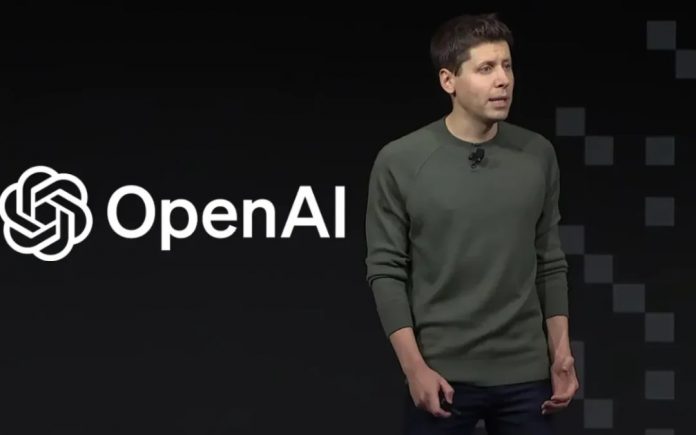
Sam Altman, OpenAI’s chief executive, shows no sign of backing down. He has reportedly declared “code red” internally and is doubling down on ChatGPT, determined to keep pace with Google, which is rapidly closing the gap with its own AI models. The strategy suggests a belief that retreat would be more dangerous than pressing ahead.

However, the efforts have done so little to quell growing skepticism. One venture capital executive, who invested in a rival AI firm, recently described OpenAI’s trajectory to The Economist as “the WeWork story on steroids,” invoking a company that expanded aggressively on the back of hype and capital before collapsing under the weight of its own business model.

Against this backdrop, it is becoming clear that the AI boom is entering a more unforgiving phase, and the focus is shifting from what the technology can do to what it can earn.

European Shares Take a Pause After Strong Start to 2026; Luxury and Mining Stocks Drag on Market Mood

0

European equities closed Friday on a subdued note, as investors stepped back after a strong start to the year to reassess valuations, earnings prospects, and easing geopolitical risks.

The pan-European STOXX 600 ended the session flat at 614.38 points, capping a week that was marked more by consolidation than conviction, even as the index logged its fifth consecutive weekly gain — its longest winning streak since May 2025.

The muted close reflected a market searching for direction after scaling multiple record highs in recent sessions. Earlier gains had been driven largely by commodity-linked stocks, buoyed by spikes in oil and precious metals prices amid geopolitical tensions surrounding Iran and Venezuela. By Friday, however, some of those fears appeared to ease, triggering a pullback in mining stocks and removing a key source of momentum.

Luxury stocks bore the brunt of the selling pressure. The sector fell 3.2%, recording its sharpest daily decline since early October, as concerns around valuations resurfaced. Richemont was among the heaviest laggards, sliding 5.4% after Bank of America Global Research downgraded the Swiss jewellery group to “neutral” from “buy,” urging investors to wait following a strong rally that had pushed valuations higher.

The selloff underscored lingering unease about the luxury sector’s growth outlook, particularly as wealthy consumers remain selective and demand signals from China continue to fluctuate.

Strategists say the pullback reflects a broader recalibration rather than a decisive shift in sentiment. Michael Field, chief European equity strategist at Morningstar, noted that while European equities are not excessively priced, the cushion that once gave investors confidence has largely evaporated. Markets, he said, are now less forgiving of disappointment.

Mining stocks dropped nearly 2% as commodity prices retreated, reversing some of the sector’s earlier gains. The decline came as geopolitical tensions that had pushed investors toward safe-haven assets earlier in the week showed signs of cooling. With risk premiums easing, traders appeared more willing to lock in profits.

Still, not all sectors struggled. Defense stocks rose about 1%, continuing to benefit from sustained government spending commitments and geopolitical uncertainty that, while calmer on the day, has not disappeared. Healthcare also offered support, led by Novo Nordisk, whose shares surged 6.5% after analysts described the early rollout of its weight-loss pill Wegovy as encouraging. Britain’s health regulator approved a higher dose of the drug for obesity patients, while Berenberg raised its price target on the stock, adding to the bullish momentum.

The broader market tone was also shaped by the opening phase of Europe’s earnings season, which has so far delivered a mixed picture. Updates from companies including Richemont, BP, and BE Semiconductor have highlighted uneven performance across sectors. Data compiled by LSEG shows fourth-quarter earnings are expected to fall 4.1% from a year earlier, with consumer cyclical companies among the hardest hit — a reminder that parts of the European economy remain under pressure.

HSBC shares dipped modestly after the bank said it was conducting a strategic review of its insurance business in Singapore, part of ongoing efforts to simplify its global operations. In contrast, Norway’s Kongsberg Gruppen stood out as the day’s top performer, jumping 9.5% after multiple brokerages lifted their price targets on the defense equipment maker, citing strong demand and improved earnings visibility.

Market participants largely framed Friday’s pause as a natural breather following a strong run. Richard Flax, chief investment officer at Moneyfarm, said investors were weighing solid fundamental reasons for optimism against a persistent layer of global uncertainty. After a robust start to the year, he said, some hesitation was inevitable as traders reassess risk.

Despite the day’s lack of direction, the broader picture remains one of resilience. The STOXX 600’s extended winning streak reflects continued confidence in Europe’s equity markets, even as investors grow more selective. With geopolitical developments, central bank policy expectations, and earnings guidance set to dominate the weeks ahead, markets appear to be shifting from broad-based optimism to a more cautious, stock-by-stock approach.

SEC’s Capital Overhaul Wins Industry Backing as Operators See Stronger Market, Not a Shakeout

0
SEC Nigeria

Nigeria’s capital market operators have largely thrown their weight behind the Securities and Exchange Commission’s sweeping decision to raise minimum capital requirements across the industry, describing the move as overdue, well-telegraphed and central to restoring confidence in a market expected to play a critical role in President Bola Tinubu’s push for a $1 trillion economy.

The new framework, released by the SEC on January 16, 2026, replaces the 2015 capital regime and gives operators until June 30, 2027, to comply. It affects virtually every segment of the market, including brokers, dealers, fund managers, issuing houses, market infrastructure providers, and, for the first time in a comprehensive way, digital asset operators.

Rather than triggering panic, the announcement has been met with a sense of inevitability among operators, many of whom say the regulator merely followed through on a process that had been openly discussed for months, according to NairaMetrics.

For Aruna Kebira, chief executive of Globalview Capital Limited, the timing itself reinforced the SEC’s credibility. He said the regulator had circulated a clear roadmap to the market and delivered exactly when it said it would.

“They brought us a calendar, and if you look at that calendar, January 16 was the date,” Kebira said. “They promised January 16, and they delivered. That tells you this wasn’t arbitrary.”

According to him, recapitalization had been a standing agenda item at Capital Market Committee meetings, with trade bodies such as the Association of Securities Dealing Houses of Nigeria and the Nigerian Exchange Group actively involved in consultations. In that sense, the new rules reflect a consensus-building process rather than a sudden regulatory shock.

Still, support has not been entirely unqualified. Kebira pointed to what he described as a technical inconsistency in how broker-dealer licenses were treated. Under the old logic, broker-dealer capital requirements were essentially a combination of broker and dealer thresholds. Maintaining that approach, he argued, would have implied a figure closer to N1.6 billion, rather than the new N2 billion requirement.

“That’s perhaps the only area where SEC could have handled it differently,” he said, while stressing that the clarity of the new figures removes long-standing ambiguity and allows firms to plan with certainty.

A recurring question since the announcement has been whether higher capital thresholds will force smaller firms out of the market. On this, operators are largely dismissive of doomsday scenarios. Kebira noted that the 18-month compliance window gives firms enough breathing space to raise capital, restructure, or adjust their license categories.

“June 2027 is enough time for any serious business to recapitalize,” he said. “There may be downgrading — broker-dealers becoming brokers, dealers becoming sub-brokers — but that’s orderly restructuring, not collapse.”

He also pointed out that many stockbroking firms are entering this phase with stronger balance sheets than in previous recapitalization cycles, partly due to proceeds from the Nigerian Exchange Group’s demutualization.

Concerns that recapitalization could lead to higher fees for investors have also been played down. Kebira said the last major recapitalization exercise did not result in higher commissions and argued that this one is unlikely to be different.

“Fees are regulated,” he said. “What this really does is give firms more capacity to do business and inject more liquidity into the market.”

That view is shared by other operators, including a senior market participant who requested anonymity. He said the SEC’s intention to strengthen the market’s capital base had been exhaustively discussed at last year’s Capital Market Committee meeting in Lagos.

“This will weed out the very small players,” he said, predicting mergers and acquisitions across the industry. “But clients won’t lose their money. Some firms will merge, others will move clients to bigger houses, and some will downgrade their licenses. That’s how markets evolve.”

Dr. David Ogogo, pioneer registrar and former president of the Institute of Capital Market Registrars, framed the reforms as part of a much longer conversation. He said operators had years of notice and ample opportunity to make representations to the regulator.

“The conversation has been on for years,” Ogogo said. “Those who were uncomfortable should have made representations, and I know some did. SEC must have considered these before arriving at the final figures.”

Ogogo acknowledged that the timing could have been shifted slightly later in the year, but said the June 2027 deadline provides adequate adjustment room. He also urged operators to view the new capital levels in a global context, noting that when converted to dollar terms, they are not out of line with what similar institutions hold in other markets.

Beyond capital figures, operators are now calling for clarity on implementation details, particularly what qualifies as acceptable capital. Questions remain around the balance between fixed and liquid assets, and how capital adequacy will be monitored in practice. There is also a strong push for more investor education to prevent misinterpretation of recapitalization as a sign of distress.

“There is no need for panic,” one operator said. “SEC needs to reassure investors that assets are held by custodians and that recapitalization does not mean firms are failing.”

Under the new rules, brokers must now hold N600 million in capital, dealers N1 billion, and broker-dealers N2 billion, reflecting their broader risk exposure. Fund managers move to a tiered structure, with large firms required to hold up to N5 billion, alongside a new rule mandating firms managing more than N100 billion to hold at least 10% of assets as capital. Digital asset operators, long operating in a grey zone, are now fully brought under regulation, with exchanges and custodians required to hold N2 billion.

The prevailing sentiment across the market is one of cautious support rather than resistance. While questions remain around structure and execution, most operators see the recapitalization drive as a necessary step toward deeper liquidity, stronger governance, and a capital market capable of supporting Nigeria’s larger economic ambitions.

What Is Zero Knowledge Proof: A Deep Dive Into ZKP’s Hybrid Storage Model for Data-Heavy Blockchains

0

Decentralized AI systems face a challenge that has nothing to do with cryptography or consensus. The real obstacle is data volume. AI applications rely on large datasets, trained models, and complex files that traditional blockchains were never designed to manage efficiently.

Zero Knowledge Proof approaches this limitation with an infrastructure-led mindset. Instead of forcing all information onto the blockchain, it distributes responsibility across specialized systems. Verification remains on-chain, while large datasets are handled off-chain.

For students and engineers examining how a top presale crypto is engineered beneath the surface, this separation reveals how real-world decentralized systems are structured to scale.

Why On-Chain Storage Breaks at Scale

Blockchains become inefficient when they are asked to store large files. If a single 1GB AI model were written directly to a ledger, every node would need to download and retain that file. This would dramatically increase storage requirements, slow synchronization, and push transaction fees higher across the network. This limitation is commonly referred to as the blockchain storage bottleneck.

The Zero Knowledge Proof network avoids this problem by redefining what the blockchain is responsible for. The ledger acts as a coordination and verification layer, not a data warehouse.

Heavy datasets are excluded from the chain entirely. For decentralized applications to scale and for any top presale crypto to remain usable long term, this distinction is essential.

How IPFS Changes the Way Data Is Located

To handle large files efficiently, the ecosystem relies on the InterPlanetary File System, or IPFS. Traditional internet systems retrieve files based on location, such as a specific server or directory. If that server becomes unavailable, the file is no longer accessible.

IPFS removes this dependency by using content-based addressing. Each file is assigned a cryptographic hash that uniquely represents its contents. Requests are made for the data itself, not the place it is stored.

For Zero Knowledge Proof, this allows files to exist across many nodes at once, improving redundancy and resilience. This approach introduces students to modern distributed storage concepts increasingly adopted by top presale crypto infrastructure.

Ensuring Long-Term Storage With Filecoin and PoSp

While IPFS enables decentralized distribution, it does not guarantee that files will remain available over time. This is where Filecoin and the Proof of Space (PoSp) mechanism become critical. Zero Knowledge Proof integrates these tools to add accountability and economic incentives to storage.

  • Proof of Space: Confirms that nodes allocate genuine physical storage
  • Token Incentives: Storage providers are rewarded for reliability
  • Retention Commitments: Contracts discourage premature deletion
  • Ongoing Audits: The network verifies that stored data remains intact

This model transforms unused disk space into an active resource. By aligning incentives with reliability, the ecosystem strengthens its infrastructure and reinforces its positioning as a top presale crypto built for sustained operation.

How the Hybrid Storage Architecture Operates

Data movement within this system follows a clear and efficient sequence. A user begins by uploading a large file to the IPFS network. IPFS processes the file and generates a Content Identifier, or CID, which acts as a fingerprint for the entire dataset.

Instead of storing the file itself, the Zero Knowledge Proof blockchain records only the CID. This reference is placed inside a Patricia Trie, allowing fast lookups and cryptographic verification.


When the file is later requested, the blockchain supplies the CID, and the data is retrieved directly from IPFS. This design keeps the chain lightweight and responsive, a key requirement for any top presale crypto aiming for real-world AI workloads.

In Summary

Zero Knowledge Proof demonstrates that scalable decentralized systems rely on coordination between specialized layers rather than forcing everything onto a single chain. By combining IPFS and Filecoin, it addresses one of blockchain’s most persistent infrastructure constraints.

For IT and network engineering students, this hybrid model offers a clear example of how large datasets can remain off-chain while verification remains secure and transparent. The result is a network capable of supporting data-heavy AI use cases without sacrificing performance.

As decentralized infrastructure continues to evolve, storage frameworks like this will underpin future applications, reinforcing why many consider this project a top presale crypto worth technical attention.

Find Out More about Zero Knowledge Proof:

Website: https://zkp.com/

Auction: https://auction.zkp.com/

X: https://x.com/ZKPofficial

Telegram: https://t.me/ZKPofficial

Italy Turns Spotlight on Mobile Gaming Tactics as Regulators Probe Microsoft’s Activision Blizzard

0

Italy has opened a fresh front in Europe’s widening scrutiny of mobile gaming, launching two investigations into Microsoft-owned Activision Blizzard over the design and monetisation of its hit smartphone titles Diablo Immortal and Call of Duty Mobile.

The probes, announced by Italy’s competition watchdog, the Autorità Garante della Concorrenza e del Mercato (AGCM), accuse the company of deploying “misleading and aggressive” sales practices that may nudge players — especially children — into excessive playtime and repeated in-game spending without a clear understanding of the real cost.

At the heart of the investigation is not whether the games are popular, but how that popularity is monetized. The regulator says certain design elements are engineered to create urgency and fear of missing out, pushing users to stay online longer and to make purchases to avoid losing rewards or falling behind other players. According to the AGCM, these mechanics may distort consumer behaviour, particularly among minors who are less able to assess financial consequences.

The authority is also focusing on the way the games present their virtual currencies. By selling in-game currency in bundles and separating it from real-world prices, the regulator argues that players may lose track of how much money they are actually spending. This, it said, can result in users paying far more than is strictly necessary to progress in the game, sometimes without being fully aware of the total outlay.

Both titles are marketed as free-to-play, a business model that dominates mobile gaming globally. While downloading the games costs nothing, players are offered a steady stream of optional purchases ranging from cosmetic upgrades to items that speed up progress or unlock additional content. In Diablo Immortal, some bundles and progression-boosting items can cost as much as $200, and regular players often make multiple purchases over time.

The AGCM acknowledged that such monetization models are common across the industry. However, it stressed that scale and vulnerability matter. Diablo Immortal and Call of Duty Mobile each have hundreds of thousands of active players, including younger users, making the potential consumer impact significant.

A key strand of the investigation centers on parental controls and child protection. The regulator said the default settings in both games allow minors to make in-game purchases, play for extended periods without restrictions, and interact freely with other players via in-game chat. In the authority’s view, placing the burden on parents to actively change settings — rather than making protections the default — may fall short of the level of care expected in products accessible to children.

Privacy is also under scrutiny. The AGCM said it is examining whether the games’ sign-up flows encourage users to grant broad consent for data collection by steering them toward accepting all options at once. Regulators will assess whether Activision Blizzard’s consent mechanisms for collecting and using personal data meet Italy’s consumer protection and data transparency standards.

“In the Authority’s view, the company may be acting in breach of consumer protection rules and, in particular, the duty of professional diligence required in a sector that is particularly sensitive to the risks of gaming-related addiction,” the AGCM said.

The investigations add to a growing regulatory push across Europe and beyond to rein in so-called “dark patterns” in digital products — design choices that subtly influence users’ decisions in ways that benefit companies financially. Mobile games, with their blend of psychology, rewards, and microtransactions, have increasingly become a focal point of that debate.

The probes come at an awkward moment for Microsoft. The tech giant completed its acquisition of Activision Blizzard to strengthen its gaming portfolio and expand its reach in mobile and cloud gaming. While the Italian investigations do not imply guilt at this stage, they raise questions about how far regulators are willing to go in challenging the foundations of free-to-play monetization.

Depending on the outcome, the cases could force changes to how in-game purchases are presented, how minors are protected by default, and how consent for data use is obtained. More broadly, they may signal a tougher regulatory climate for mobile gaming companies operating in Europe, where consumer protection authorities are increasingly willing to test the line between engagement and exploitation.