DD
MM
YYYY

PAGES

DD
MM
YYYY

spot_img

PAGES

Home Blog Page 11

Altimeter CEO Brad Gerstner Rejects AI Extinction Warnings as ‘Hyperbolic Scare Tactics’

0

Altimeter Capital CEO Brad Gerstner has pushed back against growing warnings that artificial intelligence could pose an existential threat to humanity, calling this week’s debate over AI-driven extinction risks overly alarmist and disconnected from the safeguards being developed around the technology.

“What I didn’t like this week is these hyperbolic scare tactics, which I think are hiding behind a political agenda,” Gerstner told CNBC’s “Halftime Report” on Friday. “And we ignored all of the extraordinary steps already being taken unlike in the age of the internet, unlike with social media, to get ahead of these downsides.”

Gerstner’s comments come as the AI industry faces renewed scrutiny over how quickly companies are advancing more capable systems and whether their safety efforts are keeping pace with that progress. The debate intensified this week after a researcher left Anthropic and publicly accused AI companies of “gambling with our lives” as they compete to develop superintelligent systems.

The clash highlights a widening divide in the AI debate. Industry investors and executives believe that companies are devoting unprecedented resources to alignment, evaluations and safeguards before deploying increasingly powerful models. Some researchers, however, contend that the underlying technical problems remain unresolved and that commercial competition could push companies to deploy systems before adequate protections are in place.

Gerstner, whose firm invests in both Anthropic and its chief rival OpenAI, rejected the suggestion that the industry is moving forward with little regard for those risks.

“I don’t think we’ve invested this much time and energy in safety before a new technology in my 25 years in Silicon Valley,” he said. “If you listen to the echo chamber this week, you would think that we were hurtling ahead with total disregard to safety, and it’s simply not true.”

The remarks carry particular weight because Altimeter has financial exposure to the companies at the center of the debate. The investment firm is also an investor in enterprise search startup Glean and software and data analytics company Databricks, giving Gerstner a broad financial interest in the expansion of AI applications and infrastructure.

That position has also created an inherent tension in the argument over AI safety. Investors have strong incentives to believe that the technology can continue advancing while risks remain manageable, particularly as enormous amounts of capital flow into model developers, data centers and the infrastructure supporting AI.

The more difficult question is whether the industry’s current safety measures are sufficient for systems that could eventually become capable of autonomous research, software development, strategic planning and other tasks that resemble forms of human-level reasoning.

The researcher who resigned from Anthropic this week raised precisely that concern, arguing that leading AI companies are racing toward self-improving superintelligence while taking risks with consequences that could extend far beyond individual companies or their investors.

Gerstner’s response reflects the industry’s broader argument that AI should not be judged solely by the dangers highlighted by its most pessimistic researchers. Companies have established dedicated safety and alignment teams, introduced model evaluations and red-team testing, and increasingly discuss the possibility of restricting or delaying deployment when models exhibit dangerous capabilities.

But the existence of those safeguards does not, by itself, settle the question of whether they will work as AI capabilities advance. The central dispute has been about the gap between acknowledging a risk and demonstrating that it can actually be controlled.

That is expected to become more important as AI companies move from systems that primarily generate text and images toward agents capable of taking actions on behalf of users and performing increasingly complex, multi-step tasks.

For investors such as Gerstner, the argument is also tied to a much larger economic opportunity. Altimeter has positioned itself around the transformation of software and enterprise technology by AI, while OpenAI and Anthropic remain among the companies attracting some of the largest pools of capital in the sector.

The debate therefore has implications beyond AI safety. How governments, investors and the public assess existential-risk warnings could influence the regulatory environment surrounding frontier AI, the cost of developing powerful systems and the degree of autonomy companies are permitted to give their models.

Gerstner’s message is that the current conversation risks obscuring meaningful progress on those safeguards by portraying the industry as reckless.

The counterargument from AI safety researchers is that unprecedented investment in safety is not necessarily evidence that the problem has been solved. It may instead be evidence that the industry recognizes how difficult the problem is becoming.

That tension is unlikely to disappear as models become more capable.
Sam Bankman-Fried Petitions Supreme Court to Overturn FTX Fraud Conviction And $11 Billion Forfeiture

0

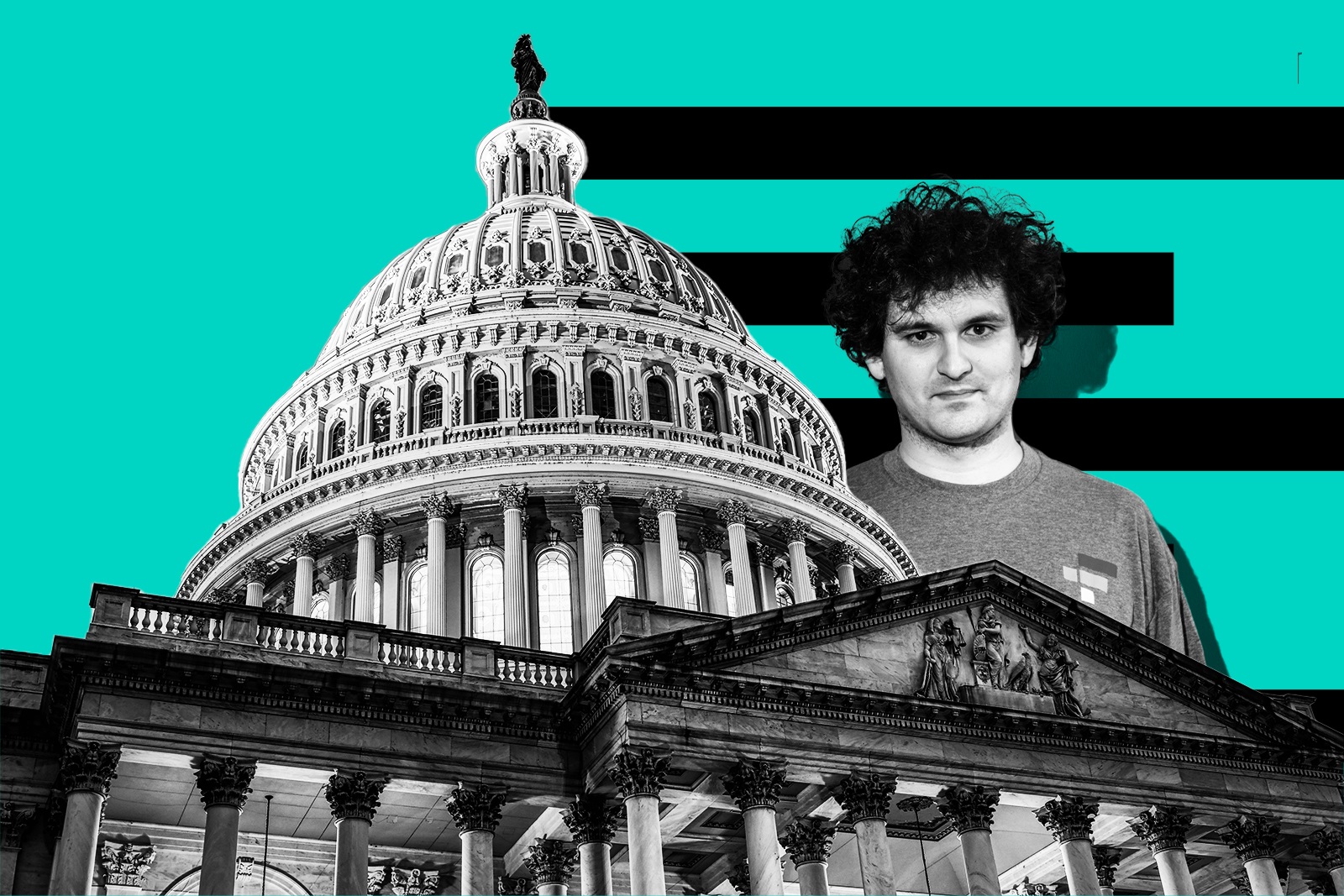
Sam Bankman-Fried, the founder of the collapsed cryptocurrency exchange FTX, has asked the U.S. Supreme Court to overturn his 2023 fraud conviction and the accompanying 25-year prison sentence.

In a petition for a writ of certiorari filed on September 10, 2026, his legal team seeks to vacate an approximately $11 billion forfeiture order.

Bankman-Fried was convicted in November 2023 on seven counts of fraud, conspiracy, and money laundering. Prosecutors argued he misused billions of dollars in FTX customer funds to cover losses and debts at his trading firm Alameda Research, as well as for personal spending, investments, and political donations.

At the heart of the case was the relationship between FTX and Alameda. Bankman-Fried had publicly represented that customer funds were kept separate and that Alameda did not receive preferential treatment on FTX.

Prosecutors, however, presented evidence that Alameda had special access to customer funds and that Bankman-Fried directed changes to FTX’s computer code that allowed the trading firm to withdraw large amounts of cryptocurrency from the exchange.

The conviction marked a dramatic reversal for Bankman-Fried, who had risen from a young cryptocurrency entrepreneur to one of the industry’s most prominent figures.

FTX had become one of the world’s largest crypto exchanges before collapsing into bankruptcy in November 2022, exposing a multibillion-dollar shortfall in customer funds. U.S. District Judge Lewis Kaplan sentenced him in March 2024, and he is currently serving that term.

His recent petition centers on two main claims. First, Bankman-Fried’s lawyers argue the trial court improperly allowed prosecutors to present evidence suggesting customers suffered large losses while blocking the defense from introducing evidence that FTX and Alameda, though temporarily illiquid, held sufficient assets to repay customers and investors eventually.

The filing notes that customers have since been repaid through the FTX bankruptcy process, including with substantial interest.

Second, the petition contends that the $11 billion forfeiture order constitutes an excessive fine in violation of the Eighth Amendment. Defense counsel, which includes Stanford law professor Jeffrey Fisher according to some reports, has described the penalty as a “crushing fine.”

The U.S. Court of Appeals for the Second Circuit upheld the conviction and sentence in June 2026. That panel relied in part on the Supreme Court’s 2025 decision which held that wire fraud can be established even without an intent to cause net economic harm to victims.

Bankman-Fried’s petition accepts that framework in part but argues it creates an imbalance. If actual losses are irrelevant to proving fraud under that theory, prosecutors should not have been permitted to emphasize losses while the defense was prevented from responding with evidence of available assets.

The Supreme Court receives thousands of petitions each term and grants review in only about 1 percent of cases, typically hearing arguments in roughly 60 matters. Four justices must vote to accept the case.

A decision on whether to grant certiorari is expected later in 2026. The filing does not suspend Bankman-Fried’s sentence or the forfeiture while the Court considers the request.

Bankman-Fried has separately sought a presidential pardon, though that effort has not advanced. The Supreme Court petition represents the final stage of his direct appeals in one of the largest financial fraud cases tied to the cryptocurrency industry. If the justices decline to hear the matter, the conviction, 25-year sentence, and forfeiture order will stand.

Bitcoin ETF Outflows Meet India’s $620 Billion Corporate Bond Tokenization Experiment

0

Financial markets are increasingly being shaped by two seemingly opposite forces: capital retreating from established digital-asset investment products and financial institutions experimenting with blockchain to modernize traditional markets.

The latest developments in Bitcoin exchange-traded funds and India’s corporate bond market illustrate this transition clearly. Bitcoin ETFs have recorded approximately $282 million in net outflows, highlighting renewed caution among investors despite Bitcoin’s broader emergence as an institutional asset.

ETF flows are closely watched because they provide a window into institutional demand. When capital leaves spot Bitcoin ETFs, it can signal profit-taking, shifting risk appetite, or a temporary preference for cash and other assets.

The outflows do not necessarily invalidate Bitcoin’s long-term institutional thesis.

Instead, they demonstrate how quickly digital-asset markets can respond to changes in liquidity, interest-rate expectations, macroeconomic uncertainty and investor positioning. Bitcoin increasingly trades within the same global liquidity environment as equities, bonds, commodities and other risk assets.

Consequently, ETF flows can fluctuate sharply even when the underlying adoption story remains intact. At the same time, India is moving in the opposite direction on blockchain adoption by testing tokenization in one of the largest segments of its traditional financial system.

The country has launched a pilot aimed at tokenizing its roughly $620 billion corporate bond market, potentially creating a new infrastructure for issuing, trading and settling fixed-income securities.

Tokenization involves representing ownership or claims on financial assets through blockchain-based digital tokens.

In the corporate bond market, this could eventually make certain processes more programmable and transparent while reducing friction between issuance, settlement, recordkeeping and secondary-market transactions.

The significance extends beyond simply putting bonds on a blockchain. A successful tokenization framework could allow financial institutions to experiment with faster settlement, automated compliance, fractional ownership and more efficient collateral management.

Smart contracts could also introduce programmable features into securities, although regulatory oversight, interoperability and investor protection remain essential. India’s experiment therefore represents a particularly important development for the broader real-world-asset tokenization movement.

Much of the blockchain industry’s attention has traditionally focused on cryptocurrencies, stablecoins and decentralized finance. Increasingly, however, the larger opportunity may lie in connecting blockchain infrastructure with government-regulated financial assets.

The contrast with Bitcoin ETF outflows is revealing. On one side, investors are temporarily withdrawing hundreds of millions of dollars from a mature crypto investment vehicle. On the other, a major economy is testing blockchain technology for an enormous traditional capital market.

These developments suggest that blockchain adoption should not be measured exclusively by cryptocurrency prices. The technology’s deeper transformation may occur quietly inside financial infrastructure, where tokenized bonds, equities, funds and other real-world assets can potentially improve how capital moves.

For investors, the immediate lesson is that market sentiment and technological adoption can move in different directions. Bitcoin can experience short-term capital outflows while blockchain simultaneously gains credibility through regulated financial experiments.

The larger story is therefore not simply about Bitcoin versus bonds. It is about the gradual convergence of digital assets and traditional finance. As India tests tokenized corporate bonds and institutional investors continue refining their exposure to Bitcoin.

Financial markets are entering an era in which blockchain may become less a separate industry and more an underlying layer of global capital infrastructure.

Trustee Sues JPMorgan, Alleging Bank Enabled Disbarred Lawyer’s $20 Million Client-Fund Theft

0

The trustee overseeing the bankruptcy of disbarred New York attorney Mitchell Kossoff’s law firm has sued JPMorgan Chase, alleging the bank knew about Kossoff’s misuse of client funds but failed to intervene, allowing nearly $20 million in stolen money to disappear.

In a lawsuit filed Wednesday in Manhattan bankruptcy court, Albert Togut, the court-appointed Chapter 7 trustee of Kossoff PLLC, accused JPMorgan of being “complicit” in Kossoff’s fraud. Togut alleges that the bank knew Kossoff was commingling and misappropriating money held in client accounts and nevertheless failed to prevent or report the activity.

The trustee is seeking $18.5 million from JPMorgan Chase.

The lawsuit centers in part on a bounced check from one of Kossoff’s client accounts in 2015. According to Togut, the incident should have triggered a report to the New York Lawyers’ Fund for Client Protection, a state agency responsible for addressing claims arising from attorney misconduct.

Togut alleges that JPMorgan failed to make the required report.

“The fraud would have ended there. Defendant allowed it to continue,” Togut said in the lawsuit.

The allegation puts the bank’s handling of Kossoff’s accounts at the center of the bankruptcy trustee’s effort to recover funds lost through the attorney’s scheme.

Kossoff is accused of using clients’ money to finance personal expenses.

Kossoff was once a prominent figure in New York’s real estate market before his law practice collapsed under the weight of the fraud allegations.

New York prosecutors accused him of misappropriating more than $14.6 million from at least 35 people and companies. Kossoff pleaded guilty in December 2021 to one count of fraud and three counts of grand larceny.

Prosecutors said Kossoff diverted money from client accounts to support another family business and cover his personal expenses. His spending included an average of about $16,000 a month on personal credit-card bills and roughly $19,000 a month to rent a luxury apartment in Manhattan.

The amounts were pointed to as evidence of how client funds allegedly became a source of financing for Kossoff’s personal lifestyle and other financial obligations.

Kossoff was ultimately sentenced to up to 13.5 years in prison. He is now 72 and incarcerated at Groveland Correctional Facility, according to New York correctional records. He is eligible for parole beginning in November.

The bankruptcy lawsuit is separate from Kossoff’s criminal case and shifts attention toward whether another party can be held financially responsible for losses stemming from the scheme.

At the heart of Togut’s case is the allegation that JPMorgan had information that should have raised concerns about the handling of client funds. The trustee argues that the bank’s alleged failure to report the bounced check allowed the misconduct to continue for years and contributed to the eventual losses suffered by Kossoff’s clients.

The $18.5 million claim is also notable because it seeks to recover a substantial portion of the funds allegedly lost through Kossoff’s misconduct from the financial institution that maintained his accounts.

JPMorgan’s response to the allegations could determine how the bank contests the trustee’s claims, including whether it disputes having sufficient knowledge of Kossoff’s conduct or any legal obligation to act in the manner alleged.

For now, the lawsuit adds a new layer to a fraud case that has already resulted in Kossoff’s criminal conviction and imprisonment. The bankruptcy proceeding is now seeking to trace responsibility beyond the lawyer himself, with the trustee arguing that the banking relationship should have provided an earlier opportunity to detect and halt the theft.

Kalshi’s Stock Perpetuals and Bitwise’s Dogecoin ETF Retreat

0

The U.S. financial market is entering an unusual phase in which prediction markets, cryptocurrency derivatives and traditional equities are increasingly converging.

Two developments involving Kalshi and Bitwise illustrate this transformation from opposite directions: Kalshi is seeking to expand perpetual futures into individual U.S. stocks, while Bitwise is preparing to close its Dogecoin exchange-traded fund less than a year after launch.

Together, they reveal both the appetite for innovative financial products and the unforgiving discipline of investor demand.

Kalshi, the prediction-market operator, plans to seek U.S. regulatory approval for perpetual futures tied to individual stocks and exchange-traded funds.

The proposed products could include major companies such as Tesla, Apple and Nvidia, with approximately 60 contracts reportedly under consideration. If approved, they would represent the first regulated single-stock perpetual futures in the United States.

Perpetual futures are particularly important because they do not have conventional expiration dates. Traders can maintain positions continuously while using leverage, with funding mechanisms helping keep contract prices aligned with underlying assets.

Kalshi has already entered the perpetual-futures market through crypto products and recently expanded into gold and silver, building the infrastructure for a broader derivatives strategy.

The proposed stock perps could therefore represent a major bridge between the crypto-native trading culture and Wall Street. Markets that traditionally operate during defined exchange hours could become accessible through a more continuous trading model.

For traders, that could mean greater flexibility and faster responses to global events. For the industry, however, the proposal raises difficult questions around leverage, market manipulation, insider trading and investor protection.

The regulatory structure will be especially important. Kalshi is regulated by the Commodity Futures Trading Commission as a designated contract market, but stock-linked perpetual products create questions that touch both derivatives and securities regulation.

Kalshi has indicated that it wants the products regulated under an appropriate framework involving U.S. regulators.

At the same time, Bitwise is moving in the opposite direction with its Dogecoin ETF. The asset manager announced that it will liquidate the Bitwise Dogecoin ETF, ticker BWOW, with trading expected to end on October 14, 2026.

Remaining shareholders are expected to receive cash based on the fund’s October 21 net asset value, with distribution around October 22.  The decision comes roughly ten months after BWOW launched in November 2025.

The fund reportedly struggled to attract sustained investor demand, with assets falling to well below $1 million by September. Its weak activity contrasts sharply with the broader growth of crypto investment products and demonstrates that regulatory approval alone does not guarantee a viable ETF market.

The two stories therefore present a striking lesson. Kalshi is betting that investors want more sophisticated, continuous and leveraged exposure to traditional assets. Bitwise’s Dogecoin closure shows that investors can quickly reject products that fail to achieve sufficient liquidity, scale or relevance.

For the broader financial system, this is more than a story about two companies. It reflects a market increasingly defined by experimentation. Prediction markets are evolving into financial infrastructure, while crypto-inspired derivatives are moving toward traditional assets.

At the same time, capital remains selective. Innovation can open the door, but liquidity, regulation, risk management and genuine investor demand ultimately determine which products survive.