DD
MM
YYYY

PAGES

DD
MM
YYYY

spot_img

PAGES

Home Blog Page 1133

Tottenham Hotspur Ends 17-Year Trophy Drought, Beats Man U 1 -0 to Lift Europa League

0

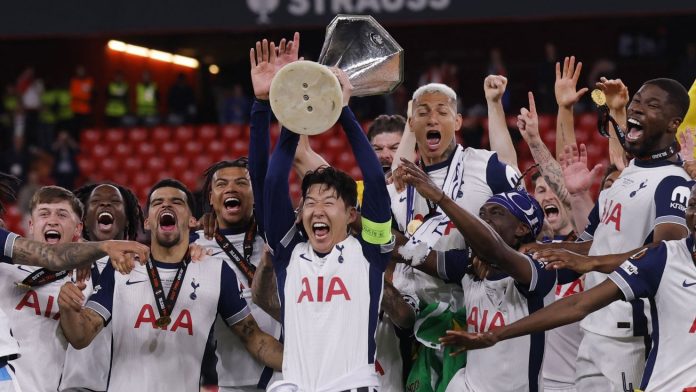
Tottenham Hotspur ended a 17-year trophy drought on Wednesday night with a gritty 1-0 victory over Manchester United in the UEFA Europa League final, held at the iconic San Mamés Stadium in Bilbao, Spain.

The win marks not just the club’s first major silverware since their League Cup triumph in 2008, but also their first continental title since the 1984 UEFA Cup — and it came at the hands of a manager who insisted from day one that he came to win.

The stadium was drenched in emotion at full-time. Thousands of Spurs supporters, many of whom had made the journey across Europe wearing their white and navy with hope and trepidation, were in tears as the whistle confirmed a long-awaited triumph. Tottenham, long derided for faltering in decisive moments, finally buried the “nearly men” tag that has followed them for over a decade.

It was not a classic, but few finals are. The first half saw both teams struggle to find rhythm. Sloppy passes and a lack of urgency meant chances were few. But in the 42nd minute, Tottenham found the moment that would decide the match. A right-footed cross from Pape Sarr into United’s box deflected off Luke Shaw before brushing off Spurs’ top scorer and falling kindly for Brennan Johnson. The Welshman, alert to the opportunity, stabbed the ball past André Onana to give his side the lead, prompting wild celebrations from the Tottenham end.

The goal, Johnson’s most important yet in a Spurs shirt, came just in time to lift a flat half — and it proved decisive.

While the first half belonged to Johnson, the second belonged to Micky van de Ven. The Dutch defender’s scissor-kick goal-line clearance in the 62nd minute was as spectacular as it was vital. With goalkeeper Guglielmo Vicario caught out from a failed attempt to claim a free-kick, United’s Rasmus Højlund looked certain to equalize with a free header into an empty net. But van de Ven, reading the moment to perfection, launched his body into the air to hook the ball off the line and preserve Spurs’ slender lead.

Vicario, shaky earlier, redeemed himself with key saves from Alejandro Garnacho and Luke Shaw late on to ensure a clean sheet and, with it, the trophy.

A Reward Beyond the Trophy

The Europa League win does more than end a trophy drought, it opens the door to the UEFA Champions League next season. Despite enduring a dismal domestic campaign that saw Spurs languishing in 17th place with 21 league defeats, European success means they return to Europe’s elite competition, complete with the prestige and financial windfall it brings.

Ironically, Manchester United, also in the midst of a torrid season that has seen them win just four Premier League matches since January, came into the final with similar hopes of salvaging a campaign gone wrong. Instead, they leave empty-handed, mired in crisis.

“This season hasn’t been good at all, but I swear, not one of us players right now care about that,” said match-winner Brennan Johnson, draped in the Welsh flag during his post-match interview. “The club hasn’t won a trophy for 17 years. Honestly, this is what it means. All the fans get battered, we get battered about not winning a trophy… I’m so happy.”

Postecoglou’s Prophecy

The win was especially vindicating for manager Ange Postecoglou, whose belief in the project, even during Spurs’ worst league form in years, never wavered. The Australian, appointed in June 2023, had boldly predicted success in his second season, a pattern that has followed him throughout his career in Australia, Japan, and Scotland.

“I don’t usually win things… I always win things in my second year. Nothing has changed,” Postecoglou said confidently back in September, even after a loss to Arsenal.

Speaking after the final, Postecoglou explained his mindset: “I think people misinterpreted it. It wasn’t really boasting, it was me making a declaration. And I believed it.”

“At the time I said it, I was still in the Carabao Cup. I just had this thing inside me. More than anything else, I know our league form has been terrible – nowhere near good enough and unacceptable – but us finishing third wasn’t going to change this football club. The only thing that would change this football club is us winning something. And when I said that, that was my intent.”

“I was prepared to wear it if it didn’t happen. The beauty of it is that people kept reminding me of it… There was still a chance to do it. I was comfortable with it.”

Postecoglou has now turned Tottenham from perennial underachievers into continental champions — all within two seasons.

Son Makes History

The triumph was historic not only for the club but also for its captain. Son Heung-min, who took over the armband this season following Harry Kane’s departure, became the first South Korean captain to lead a European club to a major continental title.

Already a national icon in his homeland, Son’s achievement further cements his place in football history and is expected to inspire a new generation of Asian players dreaming of top-level success in Europe.

In many ways, the moment is a fitting reward for Son, who has remained loyal to Spurs through years of near-misses and painful defeats. On Wednesday night, he lifted the trophy that had long eluded the club — and did so as captain.

A New Chapter Begins?

Spurs fans won’t want to get carried away just yet, especially with Premier League survival still technically undecided. But Wednesday night felt like more than just a trophy win. It felt like the start of a new chapter — one where Tottenham are no longer haunted by past failures, but instead led by a manager who dares to believe, and a captain who dared to deliver.

For now, though, the white half of north London has earned the right to celebrate. It’s been 17 years in the making.
Elon Musk Backs Off Political Spending After $277m Trump-Era Splurge: “I’ve Done Enough”

0

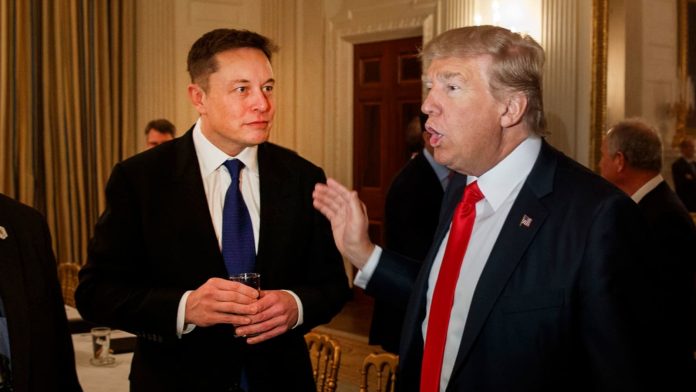
Elon Musk says he’s pulling the plug, at least for now, on the kind of political largesse that made him the single biggest donor of the 2024 U.S. election cycle.

In a video interview Tuesday at the Qatar Economic Forum, the billionaire entrepreneur signaled a dramatic retreat from political financing, suggesting that his time—and perhaps his fortune—might be better spent elsewhere.

“In terms of political spending, I’m going to do a lot less in the future,” Musk said. “I think I’ve done enough.”

He stopped short of directly linking the decision to recent backlash over his political entanglements, deflecting a question about whether public or institutional blowback was the reason.

“Well, if I see a reason to do political spending in the future, I will do it,” Musk added. “I do not currently see a reason.”

The comments mark a sharp departure from Musk’s recent posture as a powerbroker. His super PAC, once gearing up for a splash in the 2026 midterms, had already poured at least $277 million into helping re-elect President Donald Trump and supporting Republican candidates in 2024. That record made Musk the top donor of the cycle, overshadowing longtime GOP megadonors like Ken Griffin and Sheldon Adelson’s estate.

But the payoff has been mixed—politically and financially.

A Liability in the Trump Era

Since Trump returned to the White House in January, Musk has become a polarizing figure. Once celebrated in bipartisan circles as a tech visionary, his deeper entanglement in Trump’s political orbit has been costly. He now serves as the face of the White House’s DOGE Office—an experimental initiative backed by the administration to cut the government’s wasteful spending and ensure the efficiency of federal institutions.

But public polling shows his favorability has slumped in the months following Trump’s inauguration. Many have called out Musk’s increasingly partisan alignment, his social media feuds, and his erratic behavior.

His political capital also took a tangible hit when his super PAC pumped $15.5 million into Wisconsin’s Supreme Court race earlier this year, only to see his preferred conservative candidate lose to a progressive challenger. The high-stakes race was billed as a bellwether for post-Trump judicial influence, but the outcome dealt a blow to Musk’s perceived influence.

Tesla Takedown and a Troubled Image

Beyond politics, the backlash has reached Musk’s business empire. Tesla, long a darling of Wall Street, has seen its stock underperform compared to last year, as broader markets climb. At the same time, the “Tesla Takedown” movement—a loosely coordinated campaign by activists angered by Musk’s politics—has taken aim at the company, leading to protests, boycotts, and even reported acts of vandalism across several U.S. cities.

Musk, who has previously shrugged off criticism, sounded more reflective in Tuesday’s interview.

“I’ve taken all that’s happened with Tesla personally,” he said, alluding to the company’s recent struggles and the public backlash. When asked whether it made him regret his foray into political kingmaking, Musk dodged, instead expressing frustration.

“Massive violence was committed against my companies. Massive violence was threatened against me,” he said, without specifying incidents.

It’s not the first time Musk has framed criticism as an existential threat. In March, he posted on X (formerly Twitter) that “activist mobs” and “fake news” were deliberately targeting Tesla and SpaceX to punish him for his political views.

From Political Titan to Strategic Withdrawal?

Despite his retreat from campaign finance, Musk has not entirely ruled out future political involvement. His comments suggest a temporary step back, not a permanent exit.

“If I see a reason… I will do it,” he repeated.

However, his tone on Tuesday reflected a growing wariness of the political spotlight. Having gone from innovator to political patron to, now, a reluctant player surrounded by controversy, Musk seems to be reevaluating the value of his high-profile engagement.

Whether his influence will truly wane is another question. With hundreds of millions spent and connections at the highest levels of U.S. power, Musk’s footprint is unlikely to disappear anytime soon.

But for now, at least, the world’s richest man appears ready to leave the campaign checkbook closed.

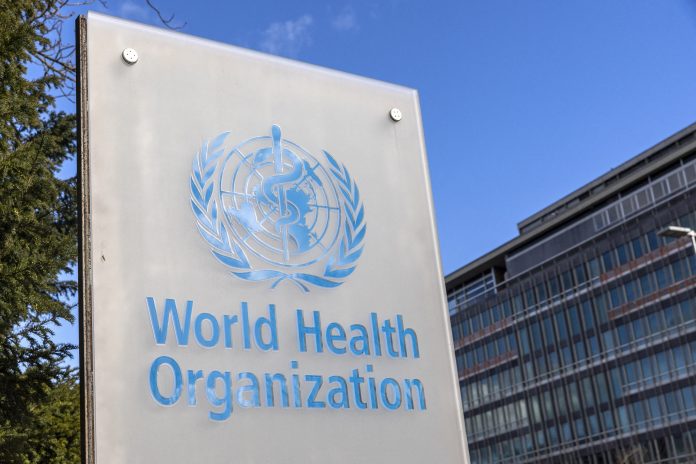
China Steps Up as WHO’s Top Donor with $500m After U.S. Exit, Marking Shift in Global Health Leadership

0

In a move that cements China’s rising influence in global health diplomacy, Vice Premier Liu Guozhong announced on Tuesday that Beijing would provide an additional $500 million to the World Health Organization (WHO) over the next five years.

The pledge, made during the annual World Health Assembly in Geneva, follows the United States’ formal withdrawal from the organization and leaves it scrambling to fill a gaping financial void once covered by Washington.

The development not only alters the power dynamics within the United Nations’ health agency but also underscores the tangible effects of President Donald Trump’s enduring “America First” doctrine, which continues to drive a retreat from multilateral institutions and global cooperation.

With the U.S. no longer participating in the WHO, China is stepping into the leadership vacuum.

“The world is now facing the impacts of unilateralism and power politics bringing major challenges to global health security,” Liu said in his address to delegates. “Multilateralism is a sure pass to addressing difficulties.”

The statement was a veiled criticism of Washington’s growing disengagement from international bodies, with China positioning itself as a champion of global health cooperation.

The WHO is facing a 21% reduction in its 2026–2027 budget, now revised to $4.2 billion, due largely to the financial shortfall triggered by the U.S. withdrawal. On the first day of Trump’s presidency, his administration formally pulled out from the agency, ending decades of American leadership and contributions that had made the U.S. the WHO’s single largest donor.

To mitigate the financial crisis, WHO member states have adopted a new budget that increases mandatory fees by 20% over the next two years. China, with its fresh commitment and the increased assessed contributions, is now the WHO’s largest state donor. However, it is unclear whether the $500 million from Beijing includes the new mandatory fee or is entirely voluntary.

WHO Director-General Dr. Tedros Adhanom Ghebreyesus previously warned that the funding gap—estimated at $1.9 billion—was already impacting healthcare in at least 70 countries, leading to the shutdown of health facilities, layoffs of health workers, and rising out-of-pocket costs for patients.

Kennedy’s Rebuke of the WHO

Cementing Washington’s decision, U.S. Health and Human Services Secretary Robert F. Kennedy Jr. appeared in a pre-recorded video played to the assembly, where he lambasted the WHO as “moribund” and bloated with bureaucracy.

“We don’t have to suffer the limits of a moribund WHO,” Kennedy said. “Let’s create new institutions or revisit existing institutions that are lean, efficient, transparent, and accountable.”

Kennedy, an environmental lawyer and vocal vaccine skeptic, went further to urge other countries to follow Washington’s example.

“I urge the world’s health ministers and the WHO to take our withdrawal from the organization as a wake-up call,” he said. “We’ve already been in contact with like-minded countries and we encourage others to consider joining us.”

His remarks, aired shortly after WHO member states adopted a new pandemic agreement aimed at improving preparedness for future global health emergencies, drew no applause. Delegates reportedly watched in silence.

Kennedy dismissed the newly adopted accord as a document that would “lock in all the dysfunctions of the WHO pandemic response,” reinforcing a growing anti-globalist sentiment in the Trump administration.

The Tide Turns

This moment marks a clear turning point in the balance of global health leadership. For decades, the WHO served as a space where the United States exercised soft power through funding, expertise, and policy influence. With Washington stepping away, China is actively moving in, not only to provide financial support but also to shape the narrative around global cooperation and multilateralism.

The Trump administration’s posture, rooted in a worldview that prioritizes national sovereignty over global alliances, is reorienting America’s role in international institutions. For the WHO, this means adapting to a new reality where China is no longer just a stakeholder, but a leader.

The WHO’s next chapter, shaped by new funding sources and a shifting geopolitical backdrop, is likely to reflect Beijing’s values on global cooperation, marking a major reconfiguration of influence in one of the world’s most critical health institutions.

However, the rise of China as the WHO’s top funder raises questions about the future of multilateral health governance and the direction of the organization’s priorities. Critics of Beijing’s growing role worry about transparency and political influence, while advocates say its support is vital to ensure the WHO survives a period of unprecedented financial strain.

How SpacePay Is Designed for Worldwide Crypto Payments – Top Presale to Buy?

0

SpacePay’s presale has crossed the $1 million mark at $0.003181 per token by creating a payment system that works across diverse global markets. The platform’s design tackles specific regional commerce challenges and maintains universal compatibility.

The system’s 0.5% flat fee structure works equally well for high-volume Western retailers, mobile-first Asian markets, and emerging economies with limited banking infrastructure.

Breaking Payment Barriers in Emerging Markets

Emerging economies face several payment challenges that SpacePay addresses through several targeted capabilities. The platform’s compatibility with standard Android terminals proves particularly valuable in regions where specialized payment hardware remains prohibitively expensive.

Many smaller merchants in developing nations already use Android-based point-of-sale systems for basic transactions; SpacePay’s software approach allows these businesses to accept cryptocurrency without purchasing new equipment they cannot afford.

Currency volatility affects emerging markets disproportionately, where local currencies often fluctuate against major global currencies. SpacePay’s instant settlement mechanism protects merchants in these regions. This is done by allowing them to receive stable currencies like USD or EUR immediately, regardless of which cryptocurrency the customer uses.

Cross-border payments bring particular benefits to emerging economies dependent on remittances and international trade. The flat 0.5% fee undercuts traditional remittance services that often charge 5-10% for sending money across borders.

Meeting Western Market Payment Expectations

Western consumers and businesses maintain high standards for payment experiences. SpacePay’s 2-5 second transaction confirmation meets these expectations and provides speed comparable to credit card processing without sacrificing security. This quick verification allows Western retail environments to maintain their typical checkout pace even when customers pay with cryptocurrency.

Western markets typically demand cost-effective processing, particularly for businesses operating on thin margins. SpacePay’s flat 0.5% fee structure delivers substantial savings compared to the 2.5-3.5% charged by credit card networks plus the additional fixed fees per transaction.

For high-volume retailers common in Western economies, this fee difference creates bottom-line improvements that matter in competitive markets. While these merchants might accept cryptocurrency payments, most prefer immediate conversion to their operational currency to maintain accounting simplicity and avoid market exposure.

SpacePay delivers this conversion automatically. This allows Western businesses to experiment with crypto acceptance without changing their financial operations.

Asia-Pacific Region: Crypto Adoption Meets Payment Infrastructure

The Asia-Pacific region combines world-leading cryptocurrency adoption with a different payment culture that SpacePay addresses through specific regional capabilities. Countries like South Korea, Japan, and Singapore feature high crypto ownership alongside advanced digital payment infrastructures.

SpacePay bridges these elements by connecting to local Android-based payment terminals and also supports the diverse cryptocurrencies popular in each market.

Mobile-centric payment behavior dominates many APAC economies, with consumers accustomed to scanning QR codes for transactions. SpacePay’s QR-based system aligns perfectly with this cultural norm and it needs no behavioral change for consumers already familiar with scanning to pay.

The system feels native to markets where mobile payment adoption exceeds credit card usage and allows easy incorporation of cryptocurrency into existing habits.

Settlement currency diversity proves essential in the fragmented APAC economic landscape. SpacePay supports settlement in regional currencies and others beyond the major Western options. This multi-currency capability allows merchants to receive funds in their operational currency without additional conversion steps or fees.

Global Payment Unification Through $1M SPY Presale

The $1 million presale milestone at $0.003181 per token funds SpacePay’s vision of unified global payments that moves across regional boundaries while respecting local needs. This capital supports the technical foundation necessary for true cross-border functionality that connects rather than replaces regional payment ecosystems.

The SPY token itself acts as a unifying element across diverse markets. From the total 34 billion supply, 20% goes directly to the public presale. This allows for global participation regardless of location. The token’s revenue sharing model distributes value from transactions occurring worldwide back to holders in all regions.

When a merchant in Singapore processes a payment from a Japanese tourist using a European cryptocurrency, the transaction fee benefits token holders globally through the revenue distribution mechanism.

Wallet compatibility serves as another unification factor. With 325+ supported wallets, SpacePay accommodates the fragmented wallet preferences across different markets. Consumers can use regionally popular options without downloading new applications.

The platform’s regulatory approach balances global reach with local compliance. Rather than forcing a single payment methodology across all markets, SpacePay adapts to each region’s regulatory framework.

This respectful stance maintains the platform’s ability to operate in unsanctioned nations worldwide while adapting to specific requirements in each jurisdiction.

Participation in the ongoing presale shows this global approach. Investors from any location can connect their preferred wallet through the official website and purchase SPY tokens using USDT, USDC, ETH, BNB, MATIC, AVAX, BASE, or bank card.


                                  JOIN THE SPACEPAY (SPY) PRESALE NOW 

       Website    |    (X) Twitter    |  Telegram


Central Bank of Nigeria Holds Interest Rate at 27.5% Amid Inflation Drop, Keeps CRR At 50%

0

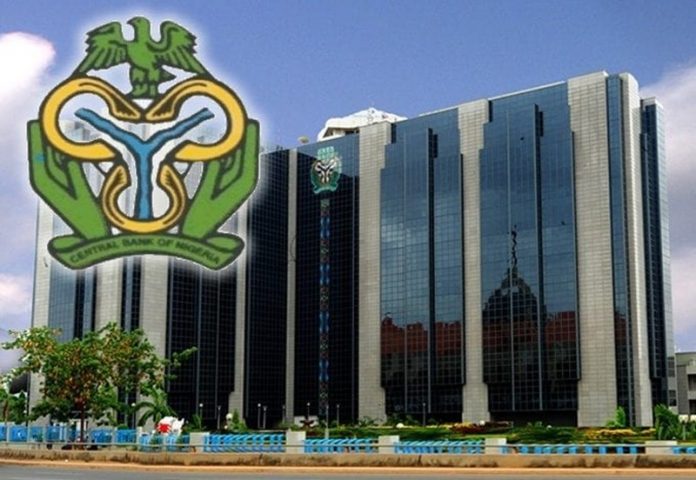
The Central Bank of Nigeria (CBN) on Tuesday opted to keep its benchmark interest rate unchanged at 27.5 percent, despite growing expectations from sections of the financial community for a rate cut following signs of easing inflation.

Governor Olayemi Cardoso, who announced the decision at the end of the two-day Monetary Policy Committee (MPC) meeting in Abuja, said the decision was unanimous among committee members and hinged on what the bank described as “relative improvements” in macroeconomic indicators.

“The MPC noted the relative improvements in some key macroeconomic indicators which are expected to support the overall moderation in prices in the near to medium term,” Cardoso said.

He pointed to progress in narrowing the foreign exchange gap, a positive balance of payments position, easing PMS prices, and a drop in food inflation as key justifications for maintaining the status quo.

It was the second straight meeting in which the CBN held the Monetary Policy Rate (MPR) steady, following a rapid tightening cycle earlier in the year. Between February and March 2024 alone, the CBN raised the rate by 600 basis points—from 18.75 percent to 27.75 percent—before trimming it slightly to 27.5 percent in April.

The MPR, a key instrument the central bank uses to control liquidity and tame inflation, has seen a cumulative increase of 875 basis points since 2022, when the rate stood at 11.5 percent.

Analysts Had Hoped for a Cut

Some financial analysts and market observers had anticipated that the CBN would ease rates at this meeting, pointing to the marginal decline in headline inflation reported for April. The National Bureau of Statistics (NBS) pegged April inflation at 23.71%, a marginal improvement from the 24.23% recorded in March.

Although the decline was not dramatic, it prompted expectations that the apex bank might shift toward supporting economic growth by easing borrowing costs for businesses and households already struggling with the consequences of earlier rate hikes.

The Chairman of the Organized Private Sector of Nigeria, Dele Oye, advocated for a reduction of the MPR to prevent slowed business growth while criticizing the existing rate, stating, “The economy cannot run on the 27.5 percent interest rate. Nobody can borrow money at the current rate and make a profit from business.”

However, the CBN seemed to have taken a more cautious stance, choosing to allow more time for previous rate hikes to fully filter through the economy.

Cardoso, in his address, stressed that while the inflation outlook was improving, underlying inflationary pressures remained due to factors such as high electricity tariffs, persistent FX demand, and structural inefficiencies.

Policy Tools Unchanged

Beyond the interest rate, the MPC also left all other monetary policy parameters unchanged. The asymmetric corridor around the MPR was retained at +500/-100 basis points. The Cash Reserve Ratio (CRR) was kept at 50 percent for commercial banks and 16 percent for merchant banks, while the liquidity ratio remained at 30 percent.

These tools are used by the central bank to manage the volume of money circulating in the economy and ensure financial system stability.

Cardoso said the committee was encouraged by recent federal government policies to boost local production, reduce import dependence, and stabilize the exchange rate—all aimed at easing pressure on consumer prices.

He also praised the federal government’s efforts in improving food supply through targeted interventions in agriculture and better security in farming regions.

Cardoso has repeatedly positioned the CBN’s current approach as a deliberate reset to restore credibility and reinstate orthodoxy in monetary policy after years of opacity and unorthodox interventions under the previous leadership. The bank has also resumed the release of long-suppressed data, including its audited financial statements and breakdown of gross versus net external reserves.

Presently, the central bank seems committed to maintaining a tight stance in the short term, hoping that existing monetary tools and fiscal coordination will eventually tame inflation and revive growth. But with unemployment high, consumer demand suppressed, and borrowing costs choking business activity, the call for interest rate relief may grow louder in the months ahead, especially if inflation continues its downward drift.

The next MPC meeting is expected in July, where all eyes will again turn to whether the CBN finally responds to the inflation signal or remains on its cautious path.