DD
MM
YYYY

PAGES

DD
MM
YYYY

spot_img

PAGES

Home Blog Page 1142

French Banking Giant Société Générale Becomes The First Global Bank to Launch Dollar-Backed Stablecoin

0

Société Générale is preparing to break new ground as the first major global bank to launch a publicly tradable, dollar-backed stablecoin, a move that deepens institutional adoption of blockchain-based finance and signals growing confidence in the role of stablecoins as the future of money movement.

The new digital asset, dubbed “USD CoinVertible”, will be issued by SG-FORGE, the bank’s digital asset-focused subsidiary, and will debut on the Ethereum and Solana blockchains. It is expected to begin public trading in July, expanding the reach of the euro-based stablecoin infrastructure SocGen began building in 2023.

Though Société Générale’s earlier euro-denominated token has seen limited uptake—only €41.8 million in circulation—this new dollar-pegged launch aligns with market dynamics where dollar-backed stablecoins dominate global digital asset liquidity, driven primarily by private players like Tether and Circle. By offering a regulated, MiCA-compliant alternative, SG-FORGE aims to capitalize on surging institutional demand for more transparent and regulated stablecoin solutions.

“There is a very, very strong need for well-regulated, robust offerings in the crypto and stablecoin space,” said Jean-Marc Stenger, CEO of SG-FORGE, adding that more than 15 crypto exchanges and brokers are already being onboarded as clients.

The USD CoinVertible will be fully backed by U.S. dollars held in custody by BNY Mellon, one of the world’s largest custodians. Initially, reserves will remain in cash accounts, but SG-FORGE says it will eventually begin investing them into low-risk, yield-generating assets—mirroring a key revenue model used by other stablecoin giants.

A Signal of Growing Institutional Confidence

SocGen’s entry reflects a broader institutional shift into stablecoins, a sector once seen as speculative but now increasingly embraced by banks, fintechs, and governments. Stablecoins, digital tokens pegged to fiat currencies, allow faster and cheaper cross-border payments, facilitate crypto trading, and support blockchain-based finance systems such as DeFi.

Tether, the sector’s dominant force, now has over $155 billion in circulation. In 2024, the company became the seventh-largest buyer of U.S. Treasuries, a testament to the scale and influence that stablecoin issuers now wield in global finance.

Circle, the second-largest issuer, went public on June 5 and saw its shares jump nearly 50% in the first two days of trading, further cementing confidence in the stablecoin business model.

On the policy side, U.S. lawmakers are actively advancing legislation to regulate stablecoins, with bipartisan support emerging for frameworks that would bring transparency to reserve holdings and operational standards. Earlier this year, Bank of America’s CEO confirmed the bank is exploring its own stablecoin, while other major financial institutions are rumored to be considering a joint digital dollar project.

Meanwhile, the European Union’s MiCA regulation, already in force, gives EU-based players like SocGen a legal head start in launching stablecoins that meet rigorous consumer protection and reserve transparency standards—something U.S. regulators are still debating.

Traditional Finance Eyes DeFi Railroads

SG-FORGE’s dollar stablecoin is designed to support a range of use cases, from foreign exchange transactions and cross-border payments to collateral management and crypto trading. Unlike earlier bank experiments that limited token usage to internal transfers or private blockchains, this launch is aimed at public crypto markets, a critical leap into a space traditionally dominated by decentralized players.

While crypto-native firms have long ruled the stablecoin space, Société Générale’s move blurs the line between traditional banking and decentralized finance, opening the door for regulated institutions to directly challenge crypto incumbents on their turf.

With the USD CoinVertible rollout, the question now becomes whether regulation, stability, and brand trust can outweigh the speed and first-mover advantage of private issuers like Tether and Circle. SocGen’s push suggests that, at least in Europe and among corporate clients, the answer may be yes.

As the lines between crypto and traditional banking continue to dissolve, the launch of bank-issued stablecoins like CoinVertible is expected to mark the beginning of a new phase—where central banks and commercial banks start shaping the future of money, not from the sidelines, but from the blockchain itself.


The Nasdaq’s Record Close Underscores Tech Resilience

0
NASDAQ

The Nasdaq Composite closed at 19,509.90 on June 6, 2025, marking its highest weekly close since February 2025, according to Yahoo Finance data. This followed a 0.6% weekly gain, driven by solid corporate earnings and easing trade tensions, despite a slight 0.2% dip on the final trading day. Posts on X also noted the Nasdaq’s strong performance, with some highlighting it as the highest close since February 21. However, volatility remains a concern due to upcoming economic data and policy uncertainties.

The Nasdaq’s highest weekly close since February 2025, at 19,509.90, reflects a mix of optimism and underlying tensions in the market, with broader implications for investors, the economy, and the growing divide in market performance. The Nasdaq’s rise, driven by strong corporate earnings (e.g., tech giants like Nvidia, Apple), signals investor confidence in technology and growth stocks. Yahoo Finance reported a 0.6% weekly gain, supported by easing trade tension fears and robust Q2 earnings.

However, the slight 0.2% dip on June 6 suggests caution, possibly due to anticipation of key economic data like inflation reports or Federal Reserve moves. A strong Nasdaq often indicates expectations of economic growth, as tech stocks are forward-looking. However, X posts highlight concerns about volatility from potential policy shifts (e.g., tariffs, Fed rate decisions). Rising Treasury yields, noted in web sources like Reuters, could pressure growth stocks if borrowing costs increase, potentially capping further Nasdaq gains.

The rally may encourage retail and institutional investors to pour more capital into tech, but it also raises risks of overvaluation. Some X users warned of a “bubble” in AI and tech stocks, citing high price-to-earnings ratios. Conversely, others on X see this as a bullish signal, predicting further gains if trade policies stabilize and earnings continue to beat expectations.

The Nasdaq outperformed the S&P 500 and Dow Jones Industrial Average, which saw more modest gains or flat performance. Yahoo Finance data shows the S&P 500 up only 0.3% for the week, while the Dow was nearly flat. This divergence highlights a concentration of gains in tech and growth stocks, while value stocks, small-caps, and sectors like energy or financials lag, as seen in MarketWatch reports.

Mega-cap tech firms like Apple, Microsoft, Nvidia drive Nasdaq gains, masking weaker performance in smaller or non-tech firms. X posts noted that the top 10 Nasdaq stocks account for over 40% of its market cap, creating a skewed perception of market health. Smaller companies, especially in the Russell 2000, face headwinds from higher interest rates and trade uncertainties, per Bloomberg. The Nasdaq’s rally contrasts with broader economic concerns, such as persistent inflation (CPI expected at 3.1% for June, per Reuters) and slowing consumer spending. X users flagged disconnects between stock market highs and real-world issues like rising costs or wage stagnation.

This divide fuels debates about whether the market reflects a “K-shaped” recovery, where wealthier investors and tech sectors thrive, while others struggle. Retail investors on platforms like X are split: some are bullish on tech’s momentum, while others fear a correction due to overvaluation or external shocks (e.g., geopolitical tensions, Fed tightening). Institutional investors, per Reuters, are hedging with options to protect against volatility, indicating caution despite the rally.

The global markets, like Japan’s Nikkei (down 0.5% weekly), aren’t keeping pace, suggesting the Nasdaq’s strength is U.S.-centric and vulnerable to international headwinds. Upcoming data releases (e.g., CPI, retail sales) and Fed decisions could widen or narrow the divide, depending on whether they bolster or undermine tech’s dominance.

The Nasdaq’s record close underscores tech’s resilience but highlights a growing divide between tech-driven gains and broader market or economic struggles. Investors should monitor economic data and policy shifts closely, as these could either sustain the rally or trigger a correction, exacerbating the divide.

Dubai Records $399M In Tokenized Real Estate Sales

0

In May 2025, Dubai recorded approximately $399 million in tokenized real estate sales, representing 17.4% of the total real estate transactions for the month. This aligns with the emirate’s broader push toward real estate tokenization, exemplified by the launch of the Prypco Mint platform by the Dubai Land Department (DLD). The platform, built on the XRP Ledger, enables fractional ownership of properties starting at AED 2,000 (about $540), with transactions conducted in UAE Dirhams.

The $399 million figure is part of Dubai’s real estate market, which saw a total sales value of $18.2 billion (AED 66.8 billion) across 18,700 transactions in May, reflecting a 44% year-on-year increase in transaction value and a 6% rise in volume. Tokenization, supported by regulatory updates from the Dubai’s Virtual Assets Regulatory Authority (VARA)  and partnerships like the $3 billion agreement between MultiBank Group, MAG, and Mavryk, is driving this growth by enhancing liquidity and accessibility for investors.

The DLD projects that tokenized assets could represent 7% of Dubai’s real estate market by 2033, equivalent to $16 billion. However, some skepticism exists. Tokenization may primarily address accessibility rather than fundamentally altering market dynamics, as high property prices in Dubai remain a barrier for many, and fractional ownership doesn’t necessarily reduce costs but redefines ownership structures. Regulatory clarity and investor education will be critical to sustaining this momentum.

The $399 million in tokenized real estate volume in Dubai during May 2025 highlights both the transformative potential and the challenges of real estate tokenization, creating a divide in implications for investors, the market, and society. Tokenization allows fractional ownership, lowering the entry barrier for investors. With platforms like Prypco Mint enabling investments as low as AED 2,000 ($540), smaller retail investors can participate in Dubai’s high-value real estate market, previously dominated by wealthy individuals or institutions.

Tokenized assets are more liquid than traditional real estate, as they can be traded on blockchain platforms, potentially attracting global investors and increasing market efficiency. The $399 million represents 17.4% of May’s $18.2 billion in total real estate transactions, signaling strong adoption. The Dubai Land Department’s projection of tokenized assets reaching $16 billion by 2033 (7% of the market) suggests sustained growth.

Blockchain-based platforms like the XRP Ledger ensure transparency, security, and faster transactions, fostering trust and encouraging further adoption. Partnerships, such as the $3 billion MultiBank Group-MAG-Mavryk deal, underscore institutional confidence. Dubai’s Virtual Assets Regulatory Authority (VARA) provides a clear framework, positioning the emirate as a global leader in tokenized real estate. This regulatory clarity attracts foreign investment and aligns with Dubai’s vision to be a blockchain and fintech hub.

Tokenization could diversify Dubai’s economy, reducing reliance on traditional real estate cycles and enhancing resilience against market downturns. Tokenization democratizes access, allowing middle-class or retail investors to own fractions of premium properties. This could reduce the wealth gap by enabling wealth creation through real estate.

High property prices in Dubai (e.g., average villa prices at AED 6 million) mean tokenization doesn’t lower the underlying cost—it just splits it. Investors still need significant capital for meaningful returns, and the poorest may remain excluded. Tech-savvy and younger investors benefit from the ease of trading tokenized assets on digital platforms, potentially broadening the investor base. Tokenization requires understanding blockchain, digital wallets, and regulatory risks, which may alienate less tech-literate or risk-averse investors, creating a knowledge divide.

Increased liquidity and global participation could stabilize the market by diversifying ownership and reducing reliance on local economic conditions. Tokenization may fuel speculation, as fractional ownership lowers barriers to speculative trading, potentially inflating prices or creating volatility, especially if regulatory oversight lags. Dubai’s tokenized real estate market could attract international capital, boosting its global financial status.

Local residents may face stiffer competition from foreign investors, driving up prices and exacerbating affordability issues for Dubai’s middle and lower classes. Tokenization in Dubai’s real estate market is a game-changer, enhancing accessibility, liquidity, and innovation while aligning with the emirate’s tech-forward vision. However, it risks deepening divides—between those who can leverage the technology and those who cannot, and between global investors and local residents.

Paramount Cuts Another 3.5% of U.S. Workforce as Legacy TV Declines Deepen— It Isn’t an AI-Driven Layoff

0

Paramount Global is eliminating 3.5% of its U.S. workforce in another round of job cuts, the latest signal of deepening distress within the traditional media industry as audiences continue to migrate away from cable television.

This marks the company’s second major workforce reduction in a year, following a far more sweeping 15% cut in 2024, and comes as Paramount attempts to stabilize its balance sheet and sharpen its focus on streaming.

Although the broader corporate world is in the midst of a wave of AI-induced layoffs—with major firms citing automation and artificial intelligence as reasons for shrinking headcounts—Paramount’s decision appears to be more closely tied to structural shifts in its business model rather than AI replacing jobs. According to internal sources, the reductions are aimed at streamlining operations as revenue from its legacy television businesses continues to shrink.

“These changes are necessary to address the environment we are operating in and best position Paramount for success,” wrote Paramount’s co-CEOs George Cheeks, Chris McCarthy, and Brian Robbins in a memo to staff.

Old Media, New Pressures

Paramount, which had 18,600 employees globally as of the end of 2024, is one of several legacy media companies now in a second wave of painful downsizing. In recent days, Disney and Warner Bros. Discovery have also cut staff to adapt to the collapsing economics of linear TV. Despite continuing to generate cash, the traditional television model—based on bundled cable subscriptions and advertising—is rapidly being eclipsed by streaming.

This media-wide reset has led Warner Bros. Discovery and Comcast to announce plans to spin off their linear TV units into standalone businesses, essentially severing their ties to a once-core revenue stream now seen as a drag on long-term growth.

Paramount, which owns CBS and MTV among other channels, hasn’t announced a spinoff. Instead, it is attempting to reposition through a proposed merger with Skydance Media—a deal that is now being closely watched not just by investors but also by regulators and political stakeholders, given CBS’s entanglement in a legal dispute involving President Donald Trump and the network’s flagship news magazine, 60 Minutes.

Not an AI Story—This Time

The latest round of job cuts comes as companies across industries have begun pointing to AI technologies as a reason for reducing their workforces. From Big Tech firms like Google and Meta to banks and even media outlets, automation and generative AI tools have started to replace certain roles—particularly in support, administrative, and content production teams.

However, Paramount’s cuts appear to be motivated more by macroeconomic pressure and declining linear revenue than by any direct AI rollout, according to executives familiar with the matter. While the company has invested in streaming innovation, there’s no indication that artificial intelligence played a central role in the latest round of layoffs.

Even so, the timing of the announcement—at a moment when AI is making headlines for reshaping job markets—raises broader questions about how the entertainment industry will evolve as automation capabilities mature.

Leadership Shakeup & Strategic Uncertainty

The restructuring follows a major leadership shakeup. CFO Naveen Chopra has exited to join Roblox, a gaming and social platform. Paramount has appointed Andrew Warren—a longtime advisor to the CEO’s office—as interim finance chief. Meanwhile, the company is also reeling from the recent departures of Wendy McMahon and Bill Owens, two top news executives who reportedly quit over frustrations tied to CBS’s handling of the Trump legal saga.

Paramount executives have emphasized that despite the challenges, the company continues to post streaming success. Recent hits such as Mission: Impossible — The Final Reckoning, MobLand, and the NCAA Tournament have delivered strong performances on Paramount+, the company’s flagship streaming platform.

However, streaming has only recently begun to turn a profit, and with mounting regulatory hurdles for its merger, internal leadership gaps, and the ever-present risk of political interference, Paramount is under pressure to show that it can transition away from its decaying legacy model without losing its creative edge—or its talent.

The company says the layoffs may also eventually impact international staff, pending local laws. In the U.S., most affected workers are being notified this week.

Paramount will reduce its U.S. workforce by 3.5%, affecting several hundred employees, according to an internal memo reviewed by several news outlets. The news comes shortly after reported headcount reductions at rivals Disney and Warner Bros. Discovery. Last June, Paramount announced a plan to cut jobs and reduce spending; in August, the company cut 15% of its U.S. workforce. Paramount’s pursuit of regulatory approval for a proposed merger with Skydance Media, meanwhile, has been held up by a legal battle between CBS and the federal government.

“Next Year 60% will be looking for work:” Vista’s CEO Says AI Will Displace Most Finance Workers

0

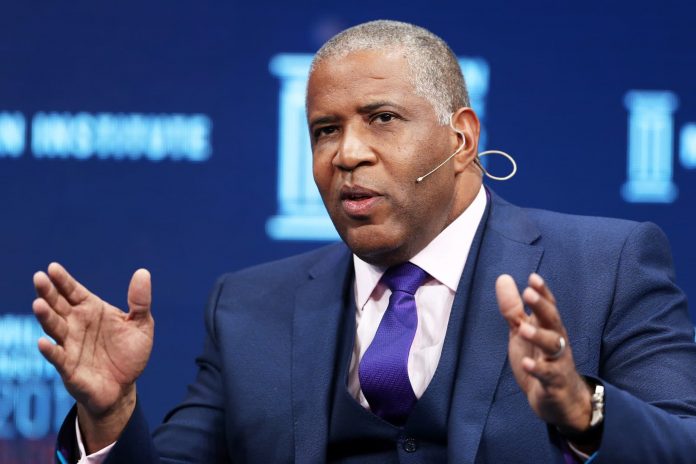
Robert F. Smith, CEO of Vista Equity Partners, has issued a warning about the fate of finance jobs in the age of artificial intelligence, predicting that a majority of professionals in the sector may soon be out of work as AI tools take over critical functions.

Speaking Thursday at the SuperReturn International private capital conference in Berlin, Smith told a crowd of more than 5,500 private equity leaders that the job market is on the brink of a sweeping transformation—and the disruption is coming faster than most expect.

“We think that next year, 40% of the people at this conference will have an AI agent, and the remaining 60% will be looking for work,” Smith said, referencing autonomous software programs capable of executing complex, multi-step financial tasks.

The conference, regarded as the world’s largest private equity gathering, included senior executives from global investment giants like Goldman Sachs, BlackRock, and KKR. Smith’s remarks hit close to home for many in the audience, particularly as AI deployment across banking and finance accelerates.

A Shared Warning from the Top

Smith is far from alone in sounding the alarm. JPMorgan Chase CEO Jamie Dimon said in October 2023 that AI could one day lead to a 3.5-day workweek as it replaces jobs and boosts productivity. While he acknowledged its benefits, he emphasized the societal challenges posed by mass displacement. Similarly, IBM CEO Arvind Krishna stated in May 2023 that the company was pausing hiring for roles that AI could replace, estimating that nearly 30% of back-office jobs, such as HR and administrative positions, could be automated within five years.

These high-level concerns are no longer theoretical. Layoffs attributed to AI and automation are already underway in some of the world’s most powerful financial institutions and tech-adjacent firms.

Earlier this year, JPMorgan Chase eliminated hundreds of jobs across its tech and operations divisions, part of a broader effort to streamline functions that AI can now handle. While the bank did not explicitly state AI as the reason, it has significantly ramped up its investment in AI tools—including building its own ChatGPT-like platform, “IndexGPT,” to serve clients.

Goldman Sachs laid off over 3,000 employees in early 2023, citing a shift in business priorities. Analysts say the move also aligned with the firm’s internal automation efforts to reduce redundancy in middle-office operations, especially in areas like compliance and risk modeling.

In the tech world, Google’s parent company, Alphabet, confirmed in January 2024 that it had let go of employees in its advertising sales unit as part of a restructuring effort heavily influenced by automation and AI-driven ad tools. Meta (Facebook’s parent company) also cited automation when it cut tens of thousands of jobs during its “year of efficiency.”

These moves echo Smith’s core argument: AI is not just changing jobs—it is eliminating them.

“All of the jobs that the one billion knowledge workers do today will change,” Smith told the Berlin audience. “I’m not saying they will all go away, but they will all change. You will have hyperproductive people in organizations, and you will have people who will need to find other things to do.”

Finance Faces the Frontline

The financial industry is uniquely exposed to this disruption. A June 2024 report from Citigroup found that 54% of jobs in finance—particularly those in accounting, trading, and portfolio management—have a “high potential for automation.” Another 12% could be significantly “augmented” by AI, with humans working alongside machines.

Citi’s report also projected that global banking profits could jump from $1.7 trillion to nearly $2 trillion by 2028, largely because of productivity gains from AI. However, that boost in profits will likely come at the cost of headcount.

In a survey released in January by Bloomberg Intelligence, Wall Street firms said they expect as many as 200,000 job cuts in the next five years due to AI—targeting roles in research, compliance, risk, and even dealmaking.

Preparing for the Inevitable

Smith, whose firm Vista Equity Partners manages more than $100 billion in assets and specializes in software and tech companies, has a front-row view of this shift. His message to industry professionals is that AI adoption will create a smaller, more efficient workforce and those who fail to adapt may find themselves outpaced and unemployed.

The implications reach far beyond finance. Smith’s call to action, alongside similar warnings from other business titans, suggests a future in which AI not only changes how work gets done but who gets to do it.

The question now is how institutions, regulators, and workers themselves will respond as AI redefines the structure of global employment—and whether those left behind will have a place in the next chapter of the economy.