DD
MM
YYYY

PAGES

DD
MM
YYYY

spot_img

PAGES

Home Blog Page 1146

The Cetus Exploit And Relaunch Highlight DeFi’s Dual Nature

1

Cetus Protocol, a decentralized exchange (DEX) on the Sui and Aptos blockchains, relaunched on June 8, 2025, at 9 AM (UTC+8) after a $223 million exploit on May 22, 2025. The exploit stemmed from an integer overflow flaw in a shared math library, allowing the attacker to manipulate token values and drain liquidity pools. Approximately $162 million of the stolen funds were frozen by Sui validators, with $61 million bridged to Ethereum before the freeze.

The relaunch restored 85-99% of liquidity pools using $7 million from Cetus’ reserves, a $30 million USDC loan from the Sui Foundation, and recovered assets. A compensation plan allocates 15% of CETUS tokens (5% immediately available, 10% unlocking over 12 months from June 10) to affected users, tied to LP position NFTs. The protocol patched the vulnerability, conducted security audits, and introduced a white-hat bounty program. Cetus also plans to go fully open-source to enhance security and community trust.

Legal action continues against the attacker, who ignored a $6 million white-hat bounty offer and is attempting to launder funds. Cetus’ swift recovery, backed by Sui’s community vote (90.9% approval) to release frozen funds, has positioned it back in the top ten DEXs by trading volume. However, the CETUS token dropped 12% post-relaunch, trading at $0.11, and total value locked fell from $284 million to $124 million.

The Cetus Protocol exploit and relaunch on the Sui blockchain carry significant implications for the decentralized finance (DeFi) ecosystem, highlighting both technical and social dynamics. The $223 million exploit underscores persistent vulnerabilities in DeFi, particularly in smart contract code (e.g., the integer overflow flaw in a shared math library). Despite audits, such issues can evade detection, eroding user trust.

Cetus’ swift response—patching the flaw, conducting new audits, and launching a bounty program—sets a positive precedent for recovery. However, the 12% drop in CETUS token price and a 56% reduction in total value locked (TVL) from $284 million to $124 million signal lingering market skepticism. DeFi exploits in 2025 have already surpassed $1.2 billion, per recent X posts, reinforcing the need for robust security practices like open-sourcing code (Cetus’ planned move) and multi-layered audits.

Community and Governance Resilience

Sui’s validator community’s rapid action to freeze $162 million of stolen funds and the 90.9% approval vote to release them for compensation demonstrate the strength of decentralized governance in crisis response. The $30 million USDC loan from the Sui Foundation and Cetus’ $7 million reserve allocation highlight community-driven financial backing, a model for other protocols. Yet, reliance on centralized entities like the Sui Foundation raises questions about true decentralization.

This contrasts with slower or less coordinated responses in other chains (e.g., Ethereum’s historical DAO hack), showing Sui’s edge in validator agility but also the limits of cross-chain recovery (e.g., $61 million lost to Ethereum). The compensation plan (15% CETUS token allocation, with 5% immediate and 10% vesting over 12 months) aims to restore user confidence but may not fully offset losses, especially for large liquidity providers (LPs).

Restoring 85-99% of liquidity pools is a technical success, but the token’s price decline and reduced TVL suggest users remain cautious. The use of LP position NFTs for compensation is innovative but complex, potentially alienating less tech-savvy users. Similar compensation models (e.g., Curve Finance’s 2023 hack recovery) show mixed results, with token-based repayments often failing to match pre-exploit value due to market volatility.

The attacker’s rejection of a $6 million white-hat bounty and ongoing laundering attempts highlight the challenges of enforcing accountability in DeFi. Legal action, while underway, faces jurisdictional hurdles in a pseudonymous ecosystem. Cetus’ pursuit of justice may deter future attacks but risks being symbolic without asset recovery. The white-hat bounty program could incentivize ethical hacking, aligning with industry trends (e.g., Immunefi’s $100 million in paid bounties).

High-profile 2025 hacks, like the $112 million OKX breach, show attackers increasingly exploit cross-chain bridges, complicating recovery and emphasizing the need for global regulatory frameworks. Cetus’ return to the top ten DEXs by trading volume post-relaunch signals resilience but also intense competition in a crowded DeFi market (e.g., Uniswap, PancakeSwap). The exploit may deter new users, but open-sourcing the protocol and enhanced security could attract developers and institutional players. Sui’s high-throughput blockchain (up to 297,000 TPS) gives Cetus a technical edge over Ethereum-based DEXs.

DeFi TVL globally exceeds $150 billion in 2025, but user retention hinges on trust. Cetus’ recovery could inspire smaller protocols but risks losing ground if further vulnerabilities emerge. The Cetus exploit and relaunch reveal a divide in stakeholder perspectives and systemic outcomes, reflecting broader tensions in DeFi. Retail LPs and traders, hit by losses, may view the 15% CETUS compensation as insufficient, especially with the token’s 12% price drop. Vesting schedules and NFT-based claims add friction, potentially alienating non-technical users.

Cetus and Sui prioritize long-term viability, using reserves and loans to restore liquidity and enhance security. They argue that partial compensation and transparency (e.g., open-sourcing) rebuild trust, but immediate user dissatisfaction persists. Short-term user losses clash with the protocol’s long-term recovery strategy, a common tension in DeFi hacks where full restitution is rare.

The Sui Foundation’s $30 million loan and validator-driven fund freeze reflect centralized intervention, enabling rapid recovery but sparking debate about DeFi’s ethos. Cetus’ community vote (90.9% approval) and plans to go open-source align with decentralization, but reliance on foundation funds and legal action blurs the line. Purists may criticize centralized crutches, while pragmatists see them as necessary for survival in a nascent industry.

The exploit highlights the risks of rapid DeFi innovation, pushing for rigorous audits, formal verification, and slower rollouts. Cetus’ post-exploit audits and bounty program cater to this view. Sui’s high-speed blockchain and Cetus’ cross-chain ambitions drive DeFi’s growth, but cutting-edge tech often outpaces security. The shared math library flaw exemplifies this tradeoff. Balancing speed-to-market with bulletproof code remains a core DeFi challenge, with Cetus’ relaunch leaning toward security but not eliminating innovation risks.

The hacker’s laundering efforts and rejection of a $6 million bounty show profit-driven motives, exploiting DeFi’s pseudonymous nature and cross-chain gaps. Cetus, Sui, and users unite to recover funds and pursue legal action, but the $61 million loss to Ethereum reveals systemic weaknesses in bridge security. The cat-and-mouse game between attackers and protocols persists, with DeFi’s openness enabling both innovation and exploitation.

The Cetus exploit and relaunch highlight DeFi’s dual nature: a frontier of innovation with persistent risks. Implications include heightened security demands, stronger community governance, and evolving compensation models, but the divides—between users and protocols, centralization and decentralization, security and innovation, and attackers and ecosystems—underscore unresolved tensions. Cetus’ recovery is a case study in resilience, but its long-term success depends on restoring user trust, preventing future exploits, and navigating these divides in a competitive, high-stakes market.


Cardano Pushes Upgrades Slowly—Meanwhile, Lightchain AI Delivers Presale Gains and Builder Incentives

0

Cardano continues its careful, methodical approach to network upgrades—but while that slow progress unfolds, Lightchain AI is moving fast, delivering tangible momentum through presale gains and powerful builder incentives. With $20.8 million already raised at a fixed token price of $0.007, Lightchain AI is attracting not just investors, but developers ready to launch intelligent applications on a next-gen network.

Its ecosystem isn’t built on future promises—it’s built on active engagement, smart tokenomics, and a roadmap that rewards contribution. As Cardano fine-tunes, Lightchain AI accelerates, proving that real traction comes from execution, community alignment, and the right incentives at the right time.

Cardano Advances Cautiously With Gradual Network Upgrades

Cardano continues its methodical evolution in 2025, emphasizing secure, decentralized, and community-driven development. The network has entered the Voltaire era, marked by the Plomin hard fork, which introduced on-chain governance and treasury systems. This empowers ADA holders to propose and vote on protocol changes, treasury allocations, and constitutional amendments, solidifying Cardano’s transition to a self-sustaining ecosystem.

To enhance scalability, Cardano is advancing the Hydra Layer 2 solution, enabling parallel transaction processing to support high-throughput applications. Additionally, consensus upgrades like Ouroboros Leios and Peras are in development, aiming to improve transaction finality and throughput without compromising security.

Cardano’s commitment to gradual, research-driven upgrades ensures a robust foundation for decentralized applications and governance, reinforcing its position as a resilient and forward-thinking blockchain platform.

Lightchain AI Rewards Early Support With Strong Presale Growth

Lightchain AI is rewarding early supporters with impressive presale growth, marking over $20.8 million raised as it enters its Bonus Round. With Stage 15 fully completed, the project continues to gain traction by offering fixed pricing for LCAI tokens before the mainnet launch.

This growth reflects confidence in Lightchain AI’s robust architecture, featuring intelligent systems like the AI Virtual Machine and the PoI consensus. The original 5% Team Allocation has been reallocated to fuel development, grants, and ecosystem incentives—underscoring a community-first approach.

Early supporters benefit not only from token access but also from contributing to a transformative Layer 1 that blends AI and blockchain. Lightchain AI is proving that smart support at the right time leads to real value.

Calling All Builders—Lightchain AI Wants You!

Ready to make your mark? Lightchain AI is rolling out the red carpet for innovators. With live developer tools, open grant funding, and a rock-solid infrastructure, the stage is set for you to create something extraordinary. This isn’t empty hype—it’s your chance to build real-world applications on a chain that rewards your ideas and action.

Don’t wait—early access won’t last forever. Join the movement today!

https://lightchain.ai

https://lightchain.ai/lightchain-whitepaper.pdf

https://x.com/LightchainAI

https://t.me/LightchainProtocol

Dogecoin Retests Support Levels, But Lightchain AI Flashes Green as 2025’s Most Anticipated Utility Token

0

Dogecoin is once again retesting key support levels, stirring uncertainty among holders and traders alike. But while some projects stall, Lightchain AI is flashing green—emerging as one of 2025’s most anticipated utility tokens.

With over $20.8 million raised in its presale and a fixed entry price of $0.007, Lightchain AI isn’t relying on hype cycles or meme momentum. It’s gaining real traction through intelligent design, utility-focused architecture, and strong early backing.

As the market matures and shifts toward infrastructure with substance, Lightchain AI is quickly becoming the name investors and developers alike are watching—ready to lead the next wave of purposeful blockchain growth.

Dogecoin Struggles to Hold Ground Amid Market Pullback

Dogecoin (DOGE) is under trouble pressure on the broader market pullback and it changes hands at at $0.2233,?with a decrease of 2.16% on a day-to-day basis. This pullback comes on?the heels of a surge late last week that saw XRP reach a high of $0.2584, and the price is currently sitting just above key support in the region of $0.22.

Technical?indicators are giving mixed signals. The RSI (Relative Strength Index) of the stock is?60.09, which signifies that the stock is not particularly over or undervalued at the moment. Furthermore, a bearish double?top pattern just formed which also increases the probability of a lower movement.

But despite these short-term headwinds, there are a number?of analysts who are bullish. Dogecoin has seen similar pullbacks in the past, and?historical data shows that these were followed by huge rallies. History shows previous corrections of greater than 50%, in fact, have usually led?into massive price runs.

Summing up, although anticipation for this week’s launch is fading in a more challenging technical environment, the potential for relief rallies to take hold remains?considering history if multiple layers of support hold.

Lightchain AI Gains Strength With Surging Investor Confidence

Lightchain AI is gaining strength as investor confidence surges, driven by its technical clarity and cross-industry relevance. The platform’s architecture is built to support collaboration across sectors like healthcare, finance, and logistics—industries that demand secure, AI-powered solutions.

With transaction throughput exceeding 10,000 TPS in test environments, Lightchain AI demonstrates its ability to handle real-time, computation-heavy workloads at scale. This performance is backed by a clear risk mitigation strategy, addressing challenges such as governance centralization and gradient privacy leaks through quadratic voting, federated learning, and differential privacy.

Zero-Knowledge Proofs ensure secure validation without data exposure, while dynamic scaling mechanisms maintain consistent performance. These strengths are turning Lightchain AI into a magnet for early adopters seeking intelligent, future-ready blockchain infrastructure with real-world applications.

2025’s Breakout Utility Leader- Lightchain AI is Here to Disrupt

All signs are clear—Lightchain AI is shaping up to be 2025’s breakout leader in utility. With cutting-edge infrastructure, real-time AI execution, and $20.8 million already raised, this isn’t about hype—it’s about action. Builders are diving in through a live portal, supercharged with grants and a 5% reallocated team fund. While others are stuck in neutral, Lightchain is scaling fast.

The Bonus Round is live, the tech is up and running, and the next blockchain revolution is happening right now. Don’t just watch—be a part of it.

https://lightchain.ai

https://lightchain.ai/lightchain-whitepaper.pdf

https://x.com/LightchainAI

https://t.me/LightchainProtocol

Dropbox CEO Slams Return-to-Office Mandates, Defends Remote Work as Smarter and More Productive

0

Dropbox CEO Drew Houston has delivered a blistering critique of the rising trend among major corporations to force employees back into the office, describing such mandates as outdated and ineffective.

Speaking on Fortune’s “Leadership Next” podcast, Houston said remote work isn’t just a convenience—it represents a smarter way of working that better fits the digital age.

“We can be a lot less dumb than forcing people back into a car three days a week or whatever, to literally be back on the same Zoom meeting they would have been at home,” Houston said. “There’s a better way to do this.”

He likened return-to-office (RTO) mandates to the futile effort of dragging people back into shopping malls or movie theaters.

“Nothing wrong with the movie theater,” he added, “but it’s just a different world now.”

Dropbox is one of the few tech companies that has fully embraced remote work since the pandemic, implementing a “virtual-first” model in 2021. Under this policy, employees work from home nearly all year, with a handful of scheduled in-person events making up roughly 10% of the time. The company has continued with that approach even as others reverse course.

Houston said he believes the future of work lies in flexibility and trust. “You need a different social contract and to let go of control,” he said. “But if you trust people and treat them like adults, they’ll behave like adults. Trust over surveillance.”

Several U.S. corporations are tightening their grip on office attendance. Companies like Amazon, Dell, and Disney have all issued warnings to staff: return to the office or risk losing your job.

Amazon’s chief executive Andy Jassy said last year in a memo to staff: “We’ve decided that we’re going to return to being in the office the way we were before the onset of Covid,” he said, adding that it would help staff be “better set up to invent, collaborate, and be connected enough to each other”.

Walt Disney Company also ordered employees to return to the office four days per week, with CEO Bob Iger arguing it is essential for collaboration and creativity.

Meta, while more flexible than others, has also resumed monitoring office attendance, telling staff in 2023 that failure to comply with hybrid schedules would be noted in performance reviews. Google has taken a similar approach, linking physical attendance to evaluations and promotions.

These rigid mandates have been met with growing resistance from employees, many of whom say they are more productive at home. A 2023 Stanford study found that remote workers were 13% more productive than their in-office peers. Another survey showed that nearly half of UK workers would refuse to return to full-time office work, with women and working parents being the least likely to comply.

Some workers are even willing to take a financial hit for flexibility. Multiple studies show that employees are prepared to give up between 10% and 15% of their salary in exchange for remote work privileges.

The Bigger Debate

While many executives claim that office work fosters innovation and accountability, Houston believes those are excuses rooted in outdated thinking.
“Forcing people back to the office is probably gonna be like trying to force people back into malls and movie theaters,” he said.

Houston argues that the question isn’t about whether people can work from home, but whether the benefits of doing so outweigh the perceived benefits of physical presence. And for Dropbox, that answer is clear.

Dropbox’s model has enabled the company to reduce real estate costs, widen its talent pool beyond geographic constraints, and increase employee satisfaction—all without losing productivity.

While the RTO debate rages on, Houston’s stance underscores a growing cultural divide in corporate America. On one side are traditionalists insisting on office-based work; on the other are leaders who see flexibility and trust as the foundations of a more efficient and humane workplace.

Nvidia CEO Jensen Huang Hails AI as The “Great Equalizer For Programming

0

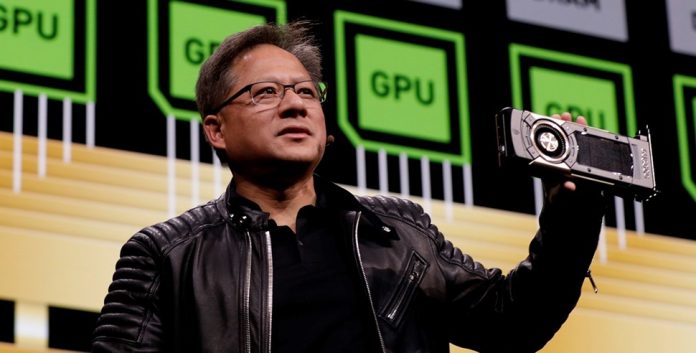
Nvidia CEO Jensen Huang has described Artificial Intelligence (AI), as a transformative force, dubbing it a “great equalizer”, for its ability to let anyone program using everyday language.

He made this statement at the London Tech Week on Monday, noting that the core tech skill was once complex, which required mastery of programming languages and system design. “We had to learn programming languages. We had to architect it. We had to design these computers that are very complicated,” he said.

CEO Huang, whose company engineers some of the world’s most advanced semiconductors and AI chips, highlighted that very few people know how to use programming languages like C++ or Python, but “everybody knows ‘human’.”

“The way you program a computer today, to ask the computer to do something for you, even write a program, generate images, write a poem — just ask it nicely,” he said. “And the thing that’s really really quite amazing is the way you program an AI is like the way you program a person.”

With conversational AI chatbots emerging, users can now interact easily and naturally with computers, the way they want. Several chatbots and AI tools enable programming through natural language, allowing users to code, debug, or generate scripts without deep knowledge of programming languages.

Below are some notable examples:

ChatGPT (OpenAI)

Users can ask ChatGPT to write code in languages like Python, JavaScript, or C++, debug errors, or explain code snippets. For example, they can prompt it to “write a Python script to sort a list” or “fix this buggy JavaScript function.” It supports a conversational approach, refining code based on follow-up requests.

Popular among developers and non-coders alike, with OpenAI reporting 400 million weekly active users as of February 2025. It’s used by businesses (3 million paying users) for tasks like automating workflows or generating scripts.

Grok 3 (xAI)

Grok, built by xAI, supports natural language programming, enabling users to generate code, execute simple scripts, or troubleshoot errors by describing tasks in plain English. For instance, users could say, “Create a Python function to calculate Fibonacci numbers,” and it will provide a working solution. It can also assist with visualizing basic charts or executing code in a canvas panel.

Gemini (Google)

Gemini allows users to generate code, explain programming concepts, or automate tasks through conversational prompts. It supports multiple languages and can handle complex queries like “write a React component for a to-do list.”

Integrated into Google’s ecosystem, it’s used for both personal and professional coding tasks, competing closely with ChatGPT.

Copilot (Microsoft)

Powered by OpenAI’s tech, Copilot is tailored for developers, integrating directly into IDEs like Visual Studio Code. It suggests code completions, generates functions, and supports natural language queries like “create a REST API in Node.js.” It’s particularly strong for real-time coding assistance.

Claude (Anthropic)

Offers conversational coding support, focusing on safe and interpretable outputs. It can generate and debug code but is less widely discussed for programming compared to ChatGPT or Copilot.

These tools leverage large language models (LLMs) trained on vast datasets, including code repositories, enabling them to understand and generate code from human-like prompts.

As Nvidia’s Jensen Huang noted, this “human” programming language democratizes coding, letting anyone from beginners to experts create software by describing tasks naturally. He further touted AI’s ability to help workers do their jobs more efficiently, encouraging them to embrace the technology as they look to make themselves valuable in the workplace.