DD
MM
YYYY

PAGES

DD
MM
YYYY

spot_img

PAGES

Home Blog Page 1148

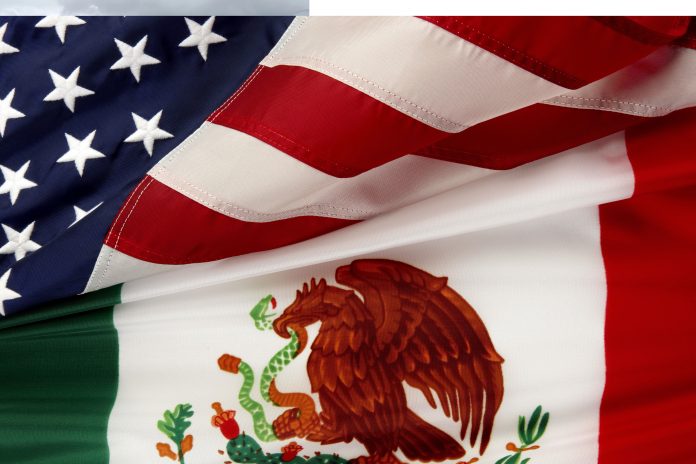
U.S.-Mexico Trade Deal On Steel Tariffs Could Stabilize Bilateral Trade

0

The United States and Mexico are nearing an agreement to reduce or eliminate the 50% tariffs on Mexican steel imports, as reported by Reuters and Bloomberg on June 10, 2025. The deal would allow U.S. companies to import Mexican steel tariff-free up to a certain volume based on historical trade levels, with imports exceeding this quota potentially facing the full 50% tariff. The arrangement may resemble a quota system, though specific volumes and final terms are still under negotiation.

This follows President Trump’s broader tariff policies, which include a 25% levy on imports not covered by the US-Mexico-Canada Agreement (USMCA) and additional tariffs linked to fentanyl concerns. Mexico’s President Claudia Sheinbaum has pushed for clarity to stabilize trade, given that over 80% of Mexican exports go to the U.S. No final agreement has been confirmed, and Trump’s approval is required. The potential U.S.-Mexico trade deal, particularly regarding steel tariffs, carries significant economic, political, and social implications for both nations.

Reducing or eliminating the 50% tariffs on Mexican steel imports could stabilize bilateral trade, which is critical as Mexico is the U.S.’s largest trading partner, with over $800 billion in annual trade under the USMCA. A quota-based system would allow Mexican steel to flow into the U.S. market tariff-free up to a certain volume, preserving cost advantages for U.S. manufacturers reliant on Mexican steel. If the quota is set too low, it could limit Mexico’s steel exports, raising costs for U.S. industries like construction and automotive, which depend on affordable steel.

Conversely, a high quota could flood the U.S. market, potentially harming domestic steel producers. Tariffs increase costs for imported goods, which can drive inflation. A deal to reduce tariffs could mitigate price increases for U.S. consumers and businesses, particularly in industries using steel. However, if negotiations stall or tariffs remain, higher costs could persist, impacting sectors like automotive and infrastructure.

A trade deal could strengthen North American supply chains by ensuring predictable access to Mexican steel, a key input for U.S. industries. This is vital under the USMCA, which emphasizes regional integration. However, uncertainty around final terms could disrupt planning for businesses on both sides of the border. Mexico’s economy, heavily reliant on U.S. exports (over 80% of its total exports), could face significant disruption if tariffs are not reduced. A favorable deal would support Mexican jobs and industries, particularly steel production, while failure to reach an agreement could lead to retaliatory tariffs from Mexico, escalating trade tensions.

President Trump’s push for tariffs, including the 50% on Mexican steel and additional 25% on non-USMCA goods, is tied to his broader agenda of protecting U.S. industries and addressing issues like fentanyl trafficking. A deal could be framed as a win for his administration, balancing protectionism with pragmatic trade relations. However, failure to secure a deal could embolden critics who argue his tariff policies are disruptive.

Mexican President Claudia Sheinbaum’s call for clarity reflects domestic pressure to protect Mexico’s export-driven economy. Her administration’s willingness to negotiate quotas shows flexibility, but Mexico may push back with retaliatory measures if the U.S. imposes harsh terms, potentially straining diplomatic ties. The deal operates within the USMCA, which both nations (along with Canada) signed to promote free trade. A successful agreement could reinforce the USMCA’s relevance, while prolonged disputes might prompt calls for renegotiation, especially with the agreement’s 2026 review approaching.

Trump’s tariffs are partly linked to concerns over fentanyl smuggling from Mexico. A trade deal could include commitments from Mexico to enhance border security, potentially easing U.S. concerns but raising domestic challenges for Mexico in addressing drug cartels. In the U.S., steel tariffs aim to protect domestic jobs in states like Pennsylvania and Ohio, but they risk raising costs for industries employing far more workers, such as automotive manufacturing. In Mexico, tariff reductions would safeguard jobs in steel-producing regions, but restrictive quotas could lead to layoffs.

Border regions, heavily reliant on integrated economies, could benefit from a deal that minimizes trade disruptions. Conversely, prolonged tariffs could harm cross-border commerce, affecting communities in states like Texas and California and Mexican states like Baja California. U.S. steelworkers and unions, particularly in Rust Belt states, support tariffs to protect jobs from foreign competition. However, industries like automotive and construction, along with free-trade advocates, argue tariffs raise costs and harm broader economic interests.

Republicans aligned with Trump’s “America First” agenda favor tariffs, while Democrats and some business-friendly Republicans warn of economic fallout. This split pressures negotiators to balance domestic interests. The U.S. prioritizes protecting its steel industry and addressing fentanyl, while Mexico focuses on preserving export markets and avoiding economic disruption. These differing goals create tension over tariff levels and quotas.

The U.S. links trade to non-trade issues like drug trafficking, which Mexico views as a domestic law enforcement matter, complicating negotiations. U.S. steel producers benefit from tariffs, while manufacturers reliant on affordable steel imports oppose them. In Mexico, steel exporters push for open markets, but other sectors fear U.S. tariffs could trigger broader trade restrictions.

The U.S. aims to curb reliance on Chinese steel (often routed through Mexico), while Mexico seeks to maintain its role as a key U.S. supplier. This global-regional tension shapes the quota discussions, as the U.S. seeks to limit transshipped steel without punishing Mexican producers. A U.S.-Mexico trade deal on steel tariffs could stabilize bilateral trade, lower costs for U.S. industries, and reinforce the USMCA framework, but it hinges on reconciling competing interests.

The divides—between protectionism and free trade, U.S. and Mexican priorities, and industry-specific needs—create a complex negotiation landscape. If successful, the deal could ease economic pressures and strengthen North American integration. However, failure to agree risks escalating tariffs, retaliatory measures, and strained relations, with broader implications for inflation, jobs, and regional stability.
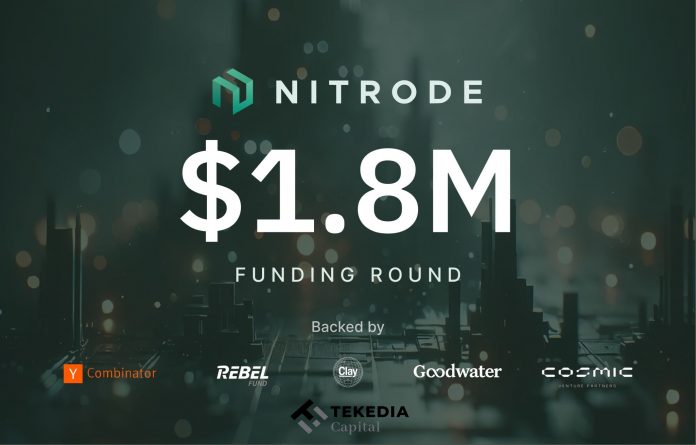

Tekedia Capital congratulates Nitrode for its $1.8 million raise

0

Tekedia Capital congratulates Nitrode for its $1.8 million raise, from some of the leading funds in the world, including Rebel Fund, Rebel Maiora Ventures, Y Combinator, Clay VC, Cosmic Venture Partners, Goodwater Capital, Eight Capital, and Tekedia Capital.

The business model of Nitrode is very refreshing – making gamers to also become creators: “With Nitrode, playing and creating games go hand in hand. Our platform offers a seamless and intuitive space for gamers to discover and play, while our dedicated creation engine (built off of Godot) provides powerful tools to simplify game development and launch. With features such as world generation, code-assist, and a new interface, every developer is now a game developer.” QED.

Visit nitrode.com and experience the “ultimate AI Game Engine: design, script, and deploy—all in one AI-native engine”, and capital.tekedia.com to learn about Tekedia Capital.

Yahoo Mail Launches AI “Catch Up” Feature in Fresh Push to Revive Market Relevance

0

Yahoo Mail is rolling out a new artificial intelligence feature called “Catch Up,” a move that signals the company’s deeper foray into AI as it seeks to modernize and regain relevance in an era dominated by competitors like Gmail and Outlook.

The feature, exclusive to Yahoo Mail’s iOS and Android mobile apps, aims to help users instantly skim through their unread emails with AI-powered summaries and intuitive inbox sorting—presented in a “game-like experience” to make email feel less like work.

To promote the launch, Yahoo has partnered with streetwear label Anti Social Social Club on a limited-edition apparel line dubbed “The Anti Email Email Club.” The collaboration includes T-shirts and sweatshirts and is accompanied by a campaign video featuring comedian Morgan Jay, portraying the chaos of managing incoming emails and how the new AI feature eases the burden.

According to Yahoo, the tool was developed in response to how younger users—Millennials and Gen Z—engage with email. A Pollfish survey commissioned by Yahoo Mail found that while 70% of respondents check their personal email multiple times a day, about half reported missing key events due to a cluttered or overwhelming inbox. Yahoo Mail claims that its AI-powered tool is the first of its kind among email platforms and is designed to streamline this growing demand for more intelligent and intuitive communication management.

Kyle Miller, general manager of Yahoo Mail, said the company is rethinking the email experience to make it less of a burden.

“We’re all ‘anti email’ when it becomes another tiring task,” he said. “If you’re anti how email has worked for decades — welcome to our club.”

A Push for Revival

Yahoo’s latest AI push is more than a product upgrade—it’s part of a broader effort to revive the company’s identity and re-establish a competitive foothold in the internet landscape it once ruled. Founded in 1994 as one of the first web directories and portals, Yahoo was an early leader in email, news aggregation, search, and online advertising. By the early 2000s, Yahoo Mail was the most widely used webmail service globally, dominating the inboxes of millions.

But a series of strategic missteps and missed opportunities eventually sent Yahoo into a long decline. In 2002, Yahoo had the chance to buy Google for $5 billion but walked away. In 2006, it failed to acquire Facebook for $1 billion after backing out of a deal. In 2008, Yahoo rejected a $44.6 billion takeover offer from Microsoft, a decision widely criticized after the company’s market value continued to plummet.

The rise of Gmail, with better storage, smarter spam filters, and faster updates, began to erode Yahoo Mail’s dominance. In 2013, Yahoo suffered a massive data breach that eventually affected all 3 billion of its user accounts—a PR and trust disaster that further weakened the brand.

Despite once being valued at over $125 billion, Yahoo was sold in 2017 to Verizon for just $4.48 billion, and its internet business was merged under a new division called Oath, which also included AOL. In 2021, Verizon sold Yahoo to private equity firm Apollo Global Management for $5 billion, marking a new chapter in the company’s long road to reinvention.

Now operating under Yahoo Inc., the company is trying to rebuild its brand through AI, tapping into the current wave of interest surrounding generative technologies. While competitors like Google have begun integrating AI across their services—such as Gmail’s Smart Reply and Smart Compose—Yahoo’s move with “Catch Up” is a notable attempt to leapfrog years of stagnation and speak directly to mobile-first, younger users who grew up with faster, sleeker alternatives.

While the stakes are high, Yahoo is betting that by blending utility with playful branding—like the “Anti Email Email Club” streetwear—it can begin carving out a niche that’s both functional and culturally resonant. The apparel line, priced between $55 and $99, is available for preorder on Anti Social Social Club’s website.

Only time will tell whether “Catch Up” becomes a turning point. But for a company that helped define the early internet, Yahoo’s return to innovation may be its best shot at rewriting its legacy in the AI age.

Blockchain’s Mainstreaming Among Fortune 500 Companies Signals A Paradigm Shift

0

A recent Coinbase survey indicates that 60% of Fortune 500 companies are actively engaged in blockchain projects, reflecting a significant shift toward decentralized technologies in corporate America. The survey, part of Coinbase’s Q2 2025 State of Crypto report, highlights that blockchain adoption is driven by its potential to enhance efficiency, transparency, and security across industries like supply chain management, digital identity, and decentralized finance.

Additionally, 20% of Fortune 500 executives view on-chain initiatives as central to their long-term strategies, with 80% of institutional investors planning to increase crypto exposure in 2025. Stablecoin usage is also surging, with a 54% year-on-year supply growth and $27.6 trillion in transfer volume, surpassing Visa and Mastercard combined. However, 90% of executives stress the need for clearer U.S. crypto regulations to fully realize blockchain’s potential.

Small and medium-sized businesses are also adopting crypto, with one-third currently using it—double the 2024 figure—and 46% of non-users planning to integrate it within three years. The Coinbase survey’s finding that 60% of Fortune 500 companies are working on blockchain projects signals a transformative shift in corporate strategy, with far-reaching implications.

Blockchain’s ability to streamline processes through decentralized ledgers is driving adoption in supply chain management, financial services, and data verification. For instance, smart contracts can automate transactions, reducing costs and errors—potentially saving billions annually across industries. Sectors like finance, logistics, and healthcare face disruption as blockchain enables peer-to-peer transactions, transparent record-keeping, and secure data sharing. This could erode the dominance of centralized intermediaries like banks or clearinghouses.

With 20% of executives prioritizing on-chain strategies, companies are racing to integrate blockchain to maintain competitive edges. Early adopters may set industry standards, locking in long-term advantages. The $27.6 trillion in stablecoin transfer volume (surpassing Visa and Mastercard) underscores their role as a stable, scalable medium for corporate transactions, cross-border payments, and DeFi applications. This could reshape global financial systems.

The 90% of executives calling for clearer U.S. crypto regulations highlights a bottleneck. Ambiguity stifles innovation, but clear frameworks could unlock broader adoption, potentially boosting blockchain-related investments and job creation. The doubling of small and medium-sized enterprises (SMEs) using crypto (one-third currently, 46% of non-users planning adoption) suggests blockchain’s democratization. This could level the playing field, enabling smaller firms to compete with giants in efficiency and transparency.

The 60% of Fortune 500 companies embracing blockchain contrast with the 40% yet to engage. Non-adopters risk falling behind in efficiency and innovation, especially as early movers establish standards. SMEs show a similar split, with one-third adopting crypto while others lag, potentially creating a competitive gap. The U.S. lags behind regions like the EU, which has implemented MiCA (Markets in Crypto-Assets regulation), offering clearer guidelines.

This creates a divide between U.S. firms constrained by uncertainty and global competitors in more permissive environments. Financial services and tech lead blockchain adoption, leveraging DeFi and tokenization, while slower-moving sectors like manufacturing or retail trail. This creates an uneven pace of transformation across industries.

Large corporations with capital and expertise dominate blockchain innovation, while SMEs face barriers like cost, technical know-how, and infrastructure. This could widen economic disparities unless adoption tools become more accessible. Stablecoin growth and cross-border blockchain applications highlight a divide between globalized firms leveraging crypto for international transactions and local businesses focused on traditional systems, limiting their scalability.

Blockchain’s mainstreaming among Fortune 500 companies signals a paradigm shift toward decentralized, efficient systems, but it also exposes divides between adopters and laggards, regulated and unregulated markets, and resource-rich versus resource-constrained entities. Clear regulations and accessible technology will be critical to bridging these gaps and maximizing blockchain’s potential.

U.S. Producer Price Index Rose 2.6% YoY Slightly Below Market Expectations

0

The US Producer Price Index (PPI) for final demand rose to 2.6% year-over-year, slightly below market expectations. Core PPI, excluding volatile food and energy components, came in at 3.0%, also under the anticipated 3.1%. These figures suggest inflationary pressures at the producer level are moderating, potentially influencing expectations for Federal Reserve policy.

Implications of Moderating Producer-Level Inflation

With producer price inflation (e.g., PPI at 2.2% annually in May 2025, as noted), the Fed may face less pressure to tighten monetary policy. Recent X posts and web analyses suggest markets expect the Fed to hold rates steady or consider cuts in late 2025 if consumer prices (CPI) also cool, potentially stabilizing borrowing costs. If the Fed cuts rates too soon and demand surges, inflation could rebound, forcing a policy reversal. Core inflation (excluding volatile food and energy) remains sticky, per recent reports, which could keep the Fed cautious.

Lower inflation expectations could boost equities and bonds, as seen in market rallies following soft PPI data. However, uncertainty about Fed moves may sustain volatility. Slower producer price growth reduces input costs, potentially improving profit margins for manufacturers and retailers. This could delay price hikes for consumers, supporting purchasing power.

While producer prices often lead consumer prices, the pass-through isn’t immediate. If supply chains remain stable, CPI could ease, but persistent wage growth or energy shocks could counteract this. Moderating U.S. inflation aligns with global trends in some economies (e.g., Eurozone), but divergent policies elsewhere (e.g., China’s stimulus) could affect commodity prices, impacting U.S. inflation.

Easing inflation may allow the Fed to prioritize employment over price control, supporting a robust labor market (unemployment ~3.8% per recent data). However, slower growth in producer prices could signal weakening demand, risking layoffs in some sectors. A softer inflation outlook supports moderate growth (projected ~2% for 2025), but over-tightening or external shocks could tip the economy toward recession.

Some Fed officials, citing sticky core inflation (~3% core PCE), argue for sustained high rates to prevent entrenched inflation expectations. They see moderating PPI as temporary, per FOMC minutes. Others view cooling producer prices and stable unemployment as justification for pausing hikes or cutting rates to avoid recession. This split fuels uncertainty in Fed guidance. Mixed signals confuse markets and businesses, complicating investment and hiring decisions.

Manufacturing and goods-producing sectors benefit more from lower input costs, while service industries face persistent wage pressures. Retail may see uneven relief depending on consumer demand. Moderating inflation helps lower-income households reliant on goods, but high shelter and service costs (still elevated per CPI) disproportionately burden them. Wealthier households, with assets tied to markets, gain from rate cut expectations.

Uneven cost relief could widen economic gaps, fueling social tensions. Some X users and analysts view cooling PPI as a sign of “soft landing” success, boosting confidence in Fed policy and economic resilience. Others argue inflation remains above target, and global risks (e.g., oil price spikes, geopolitical tensions) could reignite pressures, eroding trust in institutions.

Polarized views shape consumer and voter behavior, influencing mid-term economic decisions and 2026 elections. The U.S.’s ability to moderate inflation contrasts with some emerging markets facing currency depreciation and import-driven inflation. Divergent monetary policies could strain global trade. U.S. rate decisions may strengthen the dollar, impacting export competitiveness and global capital flows.

May 2025 data shows PPI at 2.2% year-over-year, down from 2.7% in April, per web reports. Consumer inflation at ~3.1% annually, with core CPI at ~3.4%, indicating persistent pressures. Current federal funds rate at 4.75–5%, with markets pricing in a 60% chance of a 25 bps cut by Q4 2025 (CME FedWatch).