DD
MM
YYYY

PAGES

DD
MM
YYYY

spot_img

PAGES

Home Blog Page 1189

Palantir CEO Alex Karp Warns of U.S.-China AI Arms Race: “Either We Win or China Will Win”

0

Palantir Technologies CEO Alex Karp has warned that the global artificial intelligence (AI) arms race between the United States and China will culminate with one country decisively outpacing the other.

Speaking on CNBC’s Squawk on the Street on Thursday, Karp said, “My general bias on AI is it is dangerous. There are positive and negative consequences, and either we win or China will win.”

Karp, a vocal proponent of U.S. technological superiority, has repeatedly stressed the need for an “all-country effort” to develop more advanced AI systems.

“We need to run harder, run faster,” he said earlier in January, emphasizing that U.S. dominance in AI is vital for both economic and national security interests. In a recent letter to shareholders, Karp highlighted Palantir’s role in strengthening U.S. defense capabilities, portraying the company as central to the country’s efforts to stay ahead in the race for next-generation technologies.

Palantir, based in Denver, has become a key player in AI and national security. Its government contracts have fueled investor confidence, driving the company’s stock up by 74% in 2025. Karp credits this to Palantir’s unique approach—one that combines deep domain expertise with fast adaptation to emerging technologies.

“There is no economy in the world with this kind of corporate leadership,” he said. “Our allies in the West, in Europe, are going to have to learn from us.”

But the company’s rise hasn’t been without scrutiny. A recent New York Times report claimed Palantir was aiding the Trump administration in domestic surveillance efforts. Karp denied the allegations, saying, “We are not surveilling Americans.”

Karp’s warnings come amid rising concern among American officials and industry leaders about China’s rapid progress in AI, quantum computing, and semiconductor technology. In response, the U.S. government has imposed a series of export controls and sanctions aimed at slowing Beijing’s momentum.

In 2022, Washington tightened restrictions on the sale of advanced AI chips and semiconductor manufacturing tools to China, blocking companies like Nvidia from exporting their most powerful chips to Chinese firms. The Biden-era rules—which the Trump administration has since expanded—also bar U.S. citizens from working with Chinese firms involved in AI and chip development without special approval.

But China has been actively defying these restrictions. Despite the embargoes, Huawei in 2023, unveiled a smartphone powered by a 7-nanometer chip developed domestically, shocking analysts and signaling that China’s semiconductor ambitions remain very much alive. Beijing has also ramped up investment in homegrown AI startups and accelerated efforts to localize its tech stack to reduce dependence on U.S. technologies.

A key concern in Washington is China’s integration of AI into military systems and its use of surveillance technologies in ways deemed authoritarian. In 2021, the U.S. blacklisted several Chinese firms linked to military AI development, including SenseTime and iFlytek, citing human rights abuses and security risks.

Industry Leaders Voice Similar Warnings

Karp’s outlook mirrors the sentiments of other influential tech leaders who see China’s technological ambitions as a direct threat to U.S. global influence.

Nvidia CEO Jensen Huang has warned that the Chinese AI ecosystem is advancing at a rapid pace and cannot be underestimated.

“Like everybody else, they are doubling, quadrupling capabilities every year,” Huang said earlier this year. He believed that will continue.

Former Google CEO Eric Schmidt, who chaired the U.S. National Security Commission on Artificial Intelligence, has consistently cautioned that the U.S. risks falling behind without a more coherent strategy.

Schmidt initially stated that the U.S. was two to three years ahead of China in AI, but he now recognizes that DeepSeek’s rapid development and cost-effectiveness challenge that assumption. He views the emergence of DeepSeek as a “turning point” in the global AI landscape, highlighting China’s growing capabilities.

As both nations continue to pour billions into AI development, the divide grows deeper—and more dangerous. Karp’s assertion that the contest will have a clear winner reflects mounting fears that the AI rivalry may shape not only economic power but global political order for decades to come.
Ahead of WWDC, Apple Boasts $1.3tn Developer Ecosystem as Antitrust Scrutiny Mounts

0

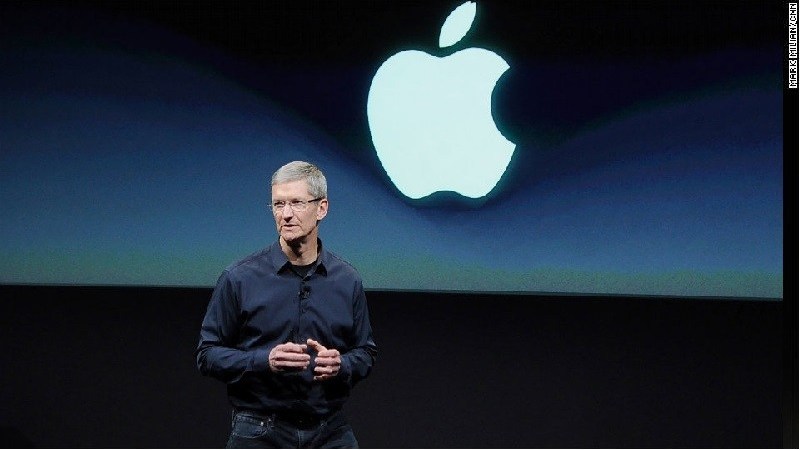
As it prepares for its Worldwide Developer Conference on June 9, Apple is touting its global App Store business as a massive engine of economic activity, revealing that developers generated $1.3 trillion in billings and sales in 2024.

The company emphasized that 90% of that sum did not involve any commission paid to Apple, highlighting what it frames as a supportive ecosystem for developers.

According to a new Apple-funded study, billings and sales from digital goods and services reached $131 billion in 2024, with the momentum largely driven by mobile games, photo and video editing tools, and business-centric applications. But the most dramatic growth came from physical goods and services — like food delivery and online retail — which surpassed $1 trillion in sales, showing a strong appetite for app-driven commerce beyond Apple’s cut.

In-app advertising also played a significant role, generating $150 billion last year alone.

Apple says spending across digital goods, physical services, and advertising has more than doubled since 2019, with physical commerce leading the pack at a growth rate of more than 2.6 times. The company sees these figures as proof that the App Store fuels far more economic activity than its own bottom line, arguing that it offers a platform for innovation and discovery that benefits both users and developers.

Apple’s glowing self-assessment comes amid rising pressure at home and abroad. The data, compiled by Professor Andrey Fradkin of Boston University and Dr. Jessica Burley of the Apple-aligned Analysis Group, is part of the tech giant’s broader effort to reshape the narrative surrounding its tightly controlled app ecosystem — particularly as courts and regulators are increasingly siding with developers who want Apple’s grip loosened.

In the U.S., Apple was recently ordered by a federal judge to comply with earlier rulings in the Epic Games antitrust lawsuit. Among other mandates, the company must now allow app developers to link users to external websites for payment — bypassing Apple’s standard commission structure. The ruling marked a key win for Epic Games and other critics who argue Apple uses its control of iOS to block fair competition.

Meanwhile, in Europe, Apple is pushing back against sweeping changes required by the European Union’s Digital Markets Act (DMA). The DMA directs major platform operators like Apple to allow developers to inform customers about alternative payment options, challenging Apple’s long-standing prohibition against off-platform transactions.

The Cupertino-based company has attempted to frame the App Store as more than a toll booth, listing a wide range of investments including anti-fraud systems, analytics tools, developer support teams, and coding frameworks as evidence of the value it provides. It also claims the App Store now draws 813 million average weekly visitors globally — a testament to the reach developers can tap into.

However, many believe Apple’s portrayal glosses over how entrenched and mature the App Store has become. Developers today have more resources than ever to build and distribute apps independently, but Apple’s restrictions — including the inability to offer alternative stores or sideloading options — have kept them locked into its framework. That’s now changing, albeit slowly, under judicial and regulatory pressure.

Apple also highlighted growth trends in specific regions: App Store-facilitated billings and sales more than doubled in the U.S., China, and Europe over the past five years. In the U.S., mobile payment spending alone has increased sevenfold since 2019 — a shift Apple credits to the rise of contactless payments via iPhones and Apple Pay.

While Apple is seeking to showcase its ecosystem as a pillar of global innovation and commerce, the timing of the release — days ahead of WWDC and amid growing scrutiny — suggests the company knows it must persuade not just developers, but lawmakers and regulators, that it’s playing fair.

Whether these numbers will do that remains uncertain.

“Kill The Bill:” Musk Escalates Attacks on Trump’s “Big Beautiful Bill,” Proposes Radical Fiscal Reform

0

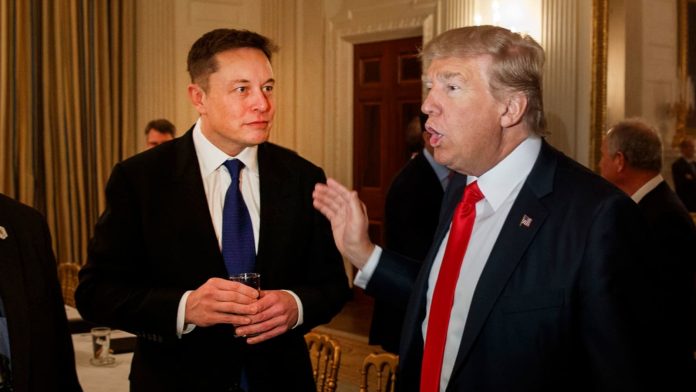
Elon Musk is intensifying his crusade against President Donald Trump’s marquee fiscal package — the so-called “Big Beautiful Bill” — using his platform and influence to rally opposition against what he calls a reckless march toward “debt slavery.”

The SpaceX and Tesla CEO has now spent several days on X, denouncing the legislation that independent projections say would add more than $2 trillion to the U.S. deficit over the next decade.

Doubling down on his campaign, Musk this week endorsed a hypothetical constitutional amendment that would bar members of Congress from seeking re-election if the federal budget deficit exceeds 3% of Gross Domestic Product. He quoted a 2012 tweet by Trump, which said “No member of Congress should be eligible for re-election if our country’s budget is not balanced—deficits not allowed!”

The billionaire’s vocal opposition marks one of the loudest conservative pushbacks yet against the Trump-backed bill, which passed the House last month with strong Republican support. Musk has dubbed the measure the “Debt Slavery Bill,” and has urged followers to pressure lawmakers into rejecting it, calling on Republicans to scrap the proposal entirely and start from scratch.

“Call your Senator, Call your Congressman, Bankrupting America is NOT ok! KILL the BILL,” he said.


He punctuated his message by posting an image from the film Kill Bill, signaling his resolve to derail the legislation that he believes betrays fiscal responsibility. “This bill is a betrayal of the next generation,” Musk said in one post.

Despite Musk’s attacks, President Trump — known for aggressively swatting at critics, even within his own party — has not directed his ire at the tech magnate. His silence is notable given Musk’s sustained and highly public condemnation of a bill Trump has championed as key to fueling long-term economic growth.

In contrast, Trump swiftly lashed out at Senator Rand Paul, a longtime ally, after Paul criticized the bill’s cost. “He doesn’t understand the tremendous GROWTH this bill will generate,” Trump posted on Truth Social. “Very disappointed in Rand.”

Trump’s press secretary, Karoline Leavitt, attempted to downplay Musk’s influence, brushing aside the controversy.

“Look, the president already knows where Elon Musk stood on this bill,” she said.

There was no further effort from the campaign to address Musk’s proposed amendment or his ongoing posts urging a fiscal revolt.

Some Republicans have quietly speculated that Musk’s business interests may be fueling his anger, particularly as the bill includes provisions phasing out tax credits for electric vehicles — a move that affects Tesla. Reports say Musk had previously lobbied lawmakers to keep those credits intact. House Speaker Mike Johnson acknowledged that reality in earlier remarks, saying: “I know that has an effect on his business, and I lament that.”

Even so, Musk’s concerns have struck a chord among fiscal hawks. His messages have been shared widely by Republicans worried about ballooning deficits, but they have yet to trigger a break in party leadership’s support for the bill.

“The Big Beautiful Bill is a debt bomb ticking. It’s also the biggest missed opportunity conservatives have ever had to put our country back on a track of fiscal sanity. If we defeat this bill, a better one can be offered that won’t bankrupt our country,” said Rep Thomas Massie.

Musk, who recently parted ways with the Trump White House after a brief alignment on energy and space policy, has signaled he won’t back down.

“You can’t print prosperity,” he posted Wednesday. “This is a financial cliff disguised as a ‘beautiful’ bill.”

Leadership Lessons from the Ants, Attend Tekedia Mini-MBA

0

In 2010, on a way to the National Leadership meeting of the Institute of Electrical Electronics Engineers (IEEE), USA, as the Chair of GOLD Boston Chapter of IEEE, at the rest area on the highway, I watched some ants, and wrote this piece for Harvard Business Review https://hbr.org/2010/10/business-lessons-from-the-ants .

On Monday, we will begin the next edition of Tekedia Mini-MBA. We will learn from the ants and picked some attributes on why in the Igbo Nation, the elders will say “the anthills are not built by the elephants, but by the collective efforts of the little ants”. Yes, ants offer so many lessons in the leadership playbook.

Every business must have a strategic mission to fix the friction it was established for in the market. Finding a mechanism to motivate people to achieve bigger things is foundational to that call. The ants teach us how to work as a team to achieve more than the sum of our individual parts.

On Monday, I will relocate to School Rd to attend Tekedia Mini-MBA. We hope you will join us. Your house key is here https://school.tekedia.com/course/mmba17/ ; register for the 17th edition of Tekedia Mini-MBA. What we do here is special. Experience how to lead.

JPMorgan to Accept Crypto ETFs as Loan Collateral For Wealth Management Clients

0

JPMorgan Chase, the largest U.S bank by assets, is preparing to launch a new offering that will allow its wealth-management clients to use cryptocurrency exchange-traded funds (ETFs) as loan collateral, marking a significant step toward deeper integration of digital assets within traditional finance.

The bank will now treat crypto ETFs much like traditional assets when assessing clients borrowing capacity. The policy will apply globally, benefiting everyone from retail investors to high net-worth individuals.

Report by Bloomberg reveals that the banking giant will start by accepting shares of BlackRock’s iShares Bitcoin Trust (IBIT) as collateral. Clients will be able to borrow against these ETF holdings, effectively unlocking liquidity without selling their digital assets. The bank is expected to roll out this service in the coming weeks, with plans to expand it to support other Bitcoin ETFs.

Previously, JPMorgan only allowed crypto ETF-backed loans on a case-by-case basis. However, this new move will standardize and scale this capability, targeting clients with significant crypto holdings to access larger lines of credit.

A Strategic Shift Amid Easing Regulation

This development by JPMorgan comes at a time of regulatory softening in the U.S. towards digital assets.

In 2025, the U.S. has seen a significant shift toward regulatory softening for digital assets, driven by the Trump administration’s pro-innovation stance. On January 23, 2025, President Trump signed an Executive Order titled “Strengthening American Leadership in Digital Financial Technology,” aiming to promote U.S. leadership in digital assets while protecting economic liberty.

It established the Presidential Working Group on Digital Asset Markets, chaired by David Sacks, to develop a federal regulatory framework for digital assets, including stablecoins, with a report due by July 22, 2025.

Also, Wall Street institutions are increasingly embracing crypto. These institutions are beginning to treat Bitcoin as pristine collateral, a milestone that, not long ago, was just a vision among early crypto believers. This embrace of cryptocurrencies has accelerated in 2025, driven by client demand, and the maturing crypto market. Major financial institutions have already begun to integrate digital assets into their operations, marking a shift from skepticism to strategic adoption.

Major banks like Bank of America, Citigroup, and Wells Fargo are reportedly exploring a joint stablecoin project, signaling a collective push into crypto. Goldman Sachs, once dismissive, has invested $1.6 billion in Bitcoin ETFs, while Morgan Stanley allows advisors to recommend these products.

Despite JPMorgan CEO Jamie Dimon’s well-known skepticism of cryptocurrencies, the bank’s recent move underscores a growing institutional demand for digital asset-based financial services. This puts JPMorgan in line with other major financial players like Fidelity and Standard Chartered, both of which have recently launched digital asset trading platforms to serve institutional and retail clients.

Digital Assets Enter The Financial Mainstream

This pivot is part of a broader transformation within the wealth management sector. In 2025, 28% of American adults over 65 million people—own cryptocurrency, and 67% of them plan to increase their holdings, according to recent industry data. Bitcoin’s consistent outperformance of the S&P 500 since 2023 has played a key role in attracting more high-net-worth individuals and institutional investors.

As digital assets evolve from speculative fringe investments to mainstream financial tools, offerings like JPMorgan’s crypto-collateralized lending represent a new era of financial inclusion and flexibility. With crypto increasingly being used as core collateral for sophisticated banking products, the future of wealth management is undoubtedly becoming more digital, diversified, and decentralized.