DD
MM
YYYY

PAGES

DD
MM
YYYY

spot_img

PAGES

Home Blog Page 12

Spartans.com Is Giving Away a One-of-a-Kind Hypercar; The MANSORY Jesko Spartans Edition Draw Is Now Open

0

A hypercar most collectors will never lay eyes on is now the grand prize in a crypto casino giveaway. And unless you’re watching closely, your shot at it could pass you by. Spartans.com has launched an unprecedented promotion featuring the MANSORY Jesko Spartans Edition, a hypercar that exists as a single unit globally. Not for sale. Not at auction. Not in a showroom. This vehicle is the result of MANSORY’s high-spec transformation of an already rare Koenigsegg Jesko, and it will be awarded to one verified entrant in a transparent, blockchain-tracked draw.

No staking. No token purchases. No complex requirements. Just a deposit and a chance at something completely unattainable, until now.

Why This Car Is a Bigger Deal Than It First Seems

Each year, Koenigsegg manufactures roughly 50 cars. The Jesko is one of its most exclusive models, with limited availability and a waitlist that often spans years. Vehicles of this caliber are rarely modified, and when they are, the results are usually kept in private garages out of public view.

But MANSORY, known for its luxury automotive transformations, took a Jesko and pushed its limits. It reengineered the body using forged carbon fiber, updated the interior with custom hand-finished detailing, and refined its aerodynamics for peak efficiency and design.

The result is the MANSORY Jesko Spartans Edition, a build that was never intended to be public. It exists as a single vehicle with no duplicates.

Now, thanks to Spartans.com, that vehicle is available through one simple action: a deposit.

How the Entry Process Has Been Built for Transparency

There’s nothing complex about how this works.

Make a deposit on Spartans.com. That alone gets you entered. Play games on the platform and gain more entries as you go. When the campaign wraps up, a winner will be selected via a provably fair random number generator, fully tracked on the blockchain and audited by independent legal advisors.

Every participant has the same chance. No boosts for whales. No bonuses for high-volume players. No hidden algorithms adjusting the odds behind the scenes.

This kind of transparency is rare in crypto gaming. But Spartans.com has kept it clean by design.

No Tokens. No Bonuses. Just Math That Works in Your Favor

Most crypto casinos rely on native tokens, flashy airdrops, and bonus schemes that tend to overpromise and underdeliver. Spartans.com decided to go a different way.

The platform uses a system called CashRake. It provides up to 3% cashback on losses immediately and returns up to 33% of the house edge over time. There’s nothing to opt into, no expiry date, and no wagering hoops to jump through.

The Jesko giveaway is structured using the same principles. Clear eligibility. Transparent mechanics. Results anyone can verify.

No confusion. No friction.

Time’s Running Out. The Chance Won’t Come Back.

Entries are still open, but the deadline is quickly approaching. Interest in the giveaway has grown steadily, with more users recognizing the rarity and scale of what Spartans.com is offering. As word spreads, competition is rising, and the window to take part in this campaign is narrowing by the day.

Spartans.com has pulled off something few platforms have ever managed to achieve. It has taken a hypercar that isn’t just rare, it’s essentially unattainable, and placed it within reach of everyday users through a transparent, provably fair draw. This is not a promotional stunt with a catch or a prize wrapped in fine print. It’s a one-of-a-kind vehicle, custom-built by MANSORY, that will go to one verified winner.

There are no reruns. No second chances. Once the draw is complete, the opportunity will be gone forever.

One individual will walk away with the keys to the MANSORY Jesko Spartans Edition, a car that was never supposed to be available to the public.

Everyone else will be left wondering why they didn’t act when they had the chance.


Find Out More About Spartans:

Website: https://spartans.com/

Instagram: https://www.instagram.com/spartans/

Twitter/X: https://x.com/SpartansBet

YouTube: https://www.youtube.com/@SpartansBet

Next Crypto to Explode: BNB & ZEC Price Climbs in Q1 While BlockDAG Eyes A $1 Breakout As Presale Ends

0

The crypto market is showing contrasting momentum this week. Binance Coin price today has climbed from $787 to $911, breaking a bearish pattern and moving above key technical levels ahead of the Fermi hard fork, which cuts block times to 0.45 seconds and strengthens BSC’s network speed.

Meanwhile, Zcash news highlights a 9% surge as whales reduce sell-side pressure and leveraged longs build on confidence in a breakout above $408. Both movements reflect active trading and technical catalysts, but BlockDAG tells a different story.

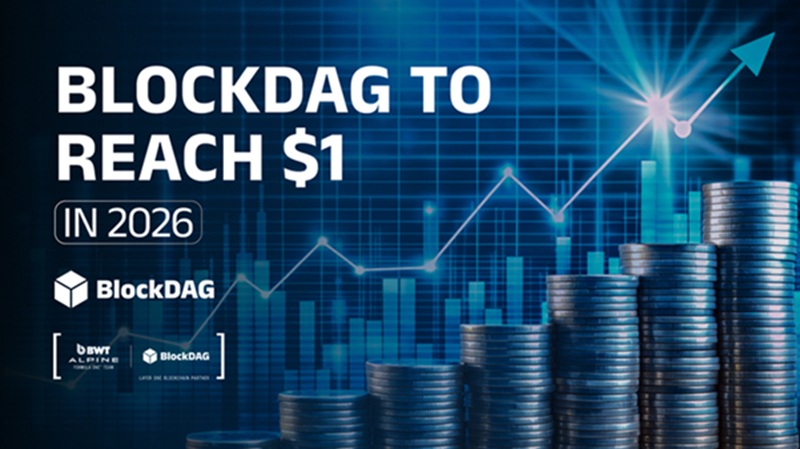
BlockDAG is not reacting to speculation, it is building a structural advantage. With a presale price at $0.001, current batch at $0.005, and confirmed listing at $0.05, adoption is already widespread through 3.5 million+ X1 mobile users and 312,000 wallets. Unlike BNB and ZEC, BDAG combines real network readiness with mathematically backed upside, making it the next crypto to explode.

Binance Coin Price Today Rises Ahead of BSC’s Fermi Hard Fork

Binance Coin price today has shown steady gains, rising from $787 in late November to around $911. The recent move breaks a bearish pennant pattern and pushes BNB above its 50-day moving average and the Supertrend indicator, signaling renewed momentum.

The Binance Smart Chain will activate the Fermi hard fork on January 14, cutting block times from 0.75 to 0.45 seconds. This upgrade aims to improve transaction speed and network stability, strengthening BSC’s position against competitors like Solana and Ethereum.

Investors are also eyeing a potential BNB ETF filing by Grayscale and a scheduled 1.3 million token burn, which could reduce circulating supply and create upward pressure on price. Binance Coin price today suggests a bullish outlook and a possible move toward $1,000 as the network upgrades unfold.

Zcash News: ZEC Jumps 9% as Whales and Traders Signal Bullish Momentum

Zcash is seeing strong buying activity, pushing ZEC up about 9%. Large holders have withdrawn thousands of ZEC from exchanges, reducing immediate sell pressure, while some traders have taken leveraged long positions, showing confidence in further gains.

Price is consolidating within a multi-month triangle, holding support near $371 and facing resistance around $408. This tight pattern suggests rising tension and a likely breakout once buyers or sellers take control.

Open Interest has increased, reflecting more positions building ahead of a potential move. Top traders remain mostly long, with a 61% bias, indicating optimism despite current consolidation. Zcash news points to conditions favoring continued upside. With whale accumulation, rising derivatives exposure, and a stable support zone, ZEC could see further gains if participation and momentum persist.

From $0.001 to $1: Why BlockDAG Could Be the Next 50× Crypto

BlockDAG (BDAG) is in its final presale phase, and the numbers tell the story. Right now, the presale price is just $0.001, and the current batch sits at $0.005. When BDAG lists on exchanges on February 16 at a confirmed $0.05, that’s already a guaranteed 50× from today’s entry. That kind of built-in upside is rare in crypto, especially for a Layer-1 network that’s fully live and operational before listing.

What makes BlockDAG more than just a quick flip opportunity is its structure. Millions of users are already active through the X1 mobile app, and more than 312,000 wallets hold BDAG. Mining hardware sales are closed, so the token supply is shrinking while demand grows. Analysts see the $1 mark as achievable, not as wishful thinking, but as a result of real adoption trends. Every new user, developer, and application added to the network strengthens this trajectory.

This isn’t hype, it’s math. From $0.001 to $0.05, the presale offers immediate potential. From $0.05 to $1, sustained adoption could push BDAG into a rare Layer-1 breakout. With only a few days left before the presale ends on January 26, every moment counts. Missing this window means watching the price move without access to the fixed early-stage entry.

Final Observation

Looking across these three assets, short-term moves for Binance Coin price today and Zcash reflect trading-driven momentum and upcoming catalysts like network upgrades and whale accumulation. Both show interesting technical setups, but neither offers the early-entry structural advantage that BlockDAG provides.

BDAG’s final presale phase at $0.001 and listing at $0.05 creates a guaranteed 50× base return. The network is fully operational, smart contracts are live on testnet, and millions of users are already active. Analysts see $1 as achievable through continued adoption, a trajectory rooted in real usage rather than hype.

For investors scanning for the next crypto to explode, BDAG stands apart. The countdown to January 26 defines urgency, offering a rare window to secure early-stage exposure before the market sets the price, positioning BlockDAG as the standout opportunity among the three.

Presale: https://purchase.blockdag.network

Website: https://blockdag.network

Telegram: https://t.me/blockDAGnetworkOfficial

Discord: https://discord.gg/Q7BxghMVyu

ZKP Invests $17M in Proof Pods for Failure Mitigation and Unlock Massive 100x-10000x ROI

0

When crypto projects fail, it is not due to a lack of demand. Most failures occur because the system cannot handle real-world activity. Networks freeze. Transactions stall. Rewards get delayed or vanish. When that happens, trust erodes, the token price drops, and momentum disappears.

Zero Knowledge Proof (ZKP) is taking a different approach. The project is spending $17 million before launch to prevent these exact issues. Unlike other presales that prioritize marketing or long-term roadmap promises, ZKP is funding infrastructure aimed at reducing the risk of failure. These investments are called Proof Pods. They are structured, fully budgeted systems designed to absorb risk, prevent stalls, and keep operations running smoothly even under heavy pressure.

While the token price is still forming during its live Initial Coin Auction (ICA), early participants are entering at a stage where the project has already addressed technical risk. That is uncommon. This is early-stage advantage at its best.

Proof Pods Redefine How Presales Operate

Most crypto presales follow a familiar pattern. Tokens are sold first, the platform is built later, and scaling happens eventually. The main risk in this model is hidden technical failures that emerge after people invest. When these failures appear, downtime, lost rewards, or broken blocks become public issues that damage reputation and confidence.

ZKP’s Proof Pods change that approach. They are not just another feature. They are a $17 million layer built to prevent system breakdowns under high load or real transaction pressure. The infrastructure exists before the presale auction ends.

This shifts the risk and reward balance. Early buyers are not just betting on future success. They are participating in a system that already has a safety net in place. The disaster recovery is funded and ready, giving investors an edge during price discovery.

Analysts and community members see this as the defining feature that could protect ZKP from the type of failures that destroyed confidence in past early-stage projects. That is why ZKP is being highlighted as one of the best crypto presales currently available.

100x To 10000x ROI From Stable Infrastructure

Most presales talk about growth. ZKP funds stability.

After several high-profile network failures in recent months, investors are refocusing on reliability. A presale auction backed by proven infrastructure may prove more valuable than marketing hype.

If ZKP’s Proof Pods perform as intended, the system will not only survive launch. It will maintain demand without breaking down, ensuring the network scales smoothly. This is the moment when potential ROI calculations can shift dramatically.

The Initial Coin Auction is already live. Token distribution continues. Price discovery happens daily. However, ZKP is not built to survive the launch only. The system is designed to handle post-launch growth from day one.

Analysts estimate the project could raise $1.7 billion. With technical risk mitigation already implemented, early entry might be undervalued. That asymmetry is where potential 100x to 10,000x returns originate. Success is tied to system reliability, not speculation.

How Early Investors Gain a Strategic Advantage Today

ZKP is not relying on trust. It is buying confidence.

Investing $17 million in Proof Pods is not marketing. It is a budget dedicated to system survival. In the current presale market, this may be the most underappreciated signal of project quality.

For anyone evaluating the best crypto presales to join, the key question is not only upside. It is how prepared the project is to withstand failure. ZKP addresses this directly and proves it with funding.

The presale auction is live. The infrastructure is real. Safety measures are in place. The token price is still in discovery.

Explore Zero Knowledge Proof:


Website: https://zkp.com/

Auction: https://auction.zkp.com/

X: https://x.com/ZKPofficial

Telegram: https://t.me/ZKPofficial

Taiwan Pitches Itself as Washington’s AI Partner After Landmark Trade Deal Deepens Semiconductor Ties

0

Taiwan is seeking to lock in a deeper strategic role in the United States’ artificial intelligence push after clinching a sweeping trade and investment deal that ties tariff relief to massive new commitments by Taiwanese technology companies on U.S. soil.

According to Reuters, Vice Premier Cheng Li-chiun said on Friday that the agreement was framed not just as a trade bargain, but as a long-term partnership aimed at positioning Taiwan as a close AI ally of the United States at a time when Washington is racing to rebuild domestic chip capacity and secure supply chains critical to national security.

“In this negotiation, we promoted two-way Taiwan–U.S. high-tech investment, hoping that in the future we can become close AI strategic partners,” Cheng said at a press conference in Washington, broadcast live.

The deal, announced on Thursday, cuts tariffs on many Taiwanese exports while anchoring fresh investment into U.S. semiconductors, energy, and artificial intelligence. U.S. Commerce Secretary Howard Lutnick said Taiwanese firms would invest $250 billion directly in these sectors, a figure that includes $100 billion already committed by Taiwan Semiconductor Manufacturing Company in 2025, with further investment expected. Taiwan will also provide an additional $250 billion in credit guarantees to support future deals.

For President Donald Trump’s administration, the agreement fits squarely into a broader industrial strategy that has leaned heavily on allies with advanced manufacturing capabilities to re-shore production of chips that power AI systems, data centers, and defense technologies. Only about 10% of global semiconductors are currently produced in the United States, a gap Washington has repeatedly described as both an economic vulnerability and a security risk.

Taiwan, which produces more than half of the world’s semiconductors, sits at the centre of that strategy. Cheng described the agreement as “win-win,” stressing that it was designed to expand supply chains rather than hollow them out.

“We believe this supply-chain cooperation is not ‘move,’ but ‘build,’” she said. “We expand our footprint in the U.S. and support the U.S. in building local supply chains, but even more so, it is an extension and expansion of Taiwan’s technology industry.”

That reassurance is aimed partly at domestic critics. The deal will require ratification by Taiwan’s parliament, where opposition lawmakers have warned that closer alignment with U.S. industrial policy risks weakening Taiwan’s own chip ecosystem by shifting too much production offshore.

Taiwanese officials pushed back on those concerns, arguing that investment decisions are being led by companies responding to customer demand rather than government mandates. Cheng said Taiwanese firms would continue to invest at home even as they scale up abroad. Economy Minister Kung Ming-hsin added that new investments would also cover AI servers and energy infrastructure, though he said it was up to companies to disclose how much of the spending would be directly tied to chipmaking.

Markets appeared to welcome the deal. Taiwan’s benchmark stock index closed at a record high on Friday, buoyed by strong fourth-quarter earnings from TSMC and investor optimism that the tariff cuts would shield exporters from future U.S. trade actions.

Analysts said the agreement sends a clear signal about Taiwan’s standing in Washington. Chang Chien-yi, president of the Taiwan Institute of Economic Research, said the tariff terms underscored that the United States sees Taiwan as a core strategic partner in semiconductors and related technologies. He noted that Taiwan was the first country publicly identified by Washington as receiving preferential treatment for chips.

The geopolitical implications are harder to ignore. China, which claims democratically governed Taiwan as its territory, has long objected to high-level U.S.-Taiwan engagement. While Cheng acknowledged the sensitivities, she framed the deal as an economic necessity rather than a political provocation, rooted in global demand for AI and advanced computing.

TSMC, the linchpin of Taiwan’s chip industry and the world’s leading producer of advanced AI processors, struck a careful tone. In a statement, the company welcomed the prospect of “robust” U.S.-Taiwan trade arrangements but emphasized that its investment decisions were driven by market conditions.

“The market demand for our advanced technology is very strong,” TSMC said. “We continue to invest in Taiwan and expand overseas.”

Still, the scale of the commitments has sharpened debate about how far production could tilt toward the United States. Lutnick said the objective was to bring 40% of Taiwan’s entire chip supply chain and production capacity to the U.S., warning that chips not made domestically could face tariffs as high as 100%.

Kung said he was unsure how that figure was calculated, adding that Taiwan’s own estimates point to a much more modest shift: by 2036, an 80/20 production split between Taiwan and the United States for the most advanced chips.

“This round of deployment will strengthen the resilience of Taiwan–U.S. and global semiconductor supply,” Kung said, adding that some diversification was inevitable as the biggest AI orders increasingly come from the U.S. market.

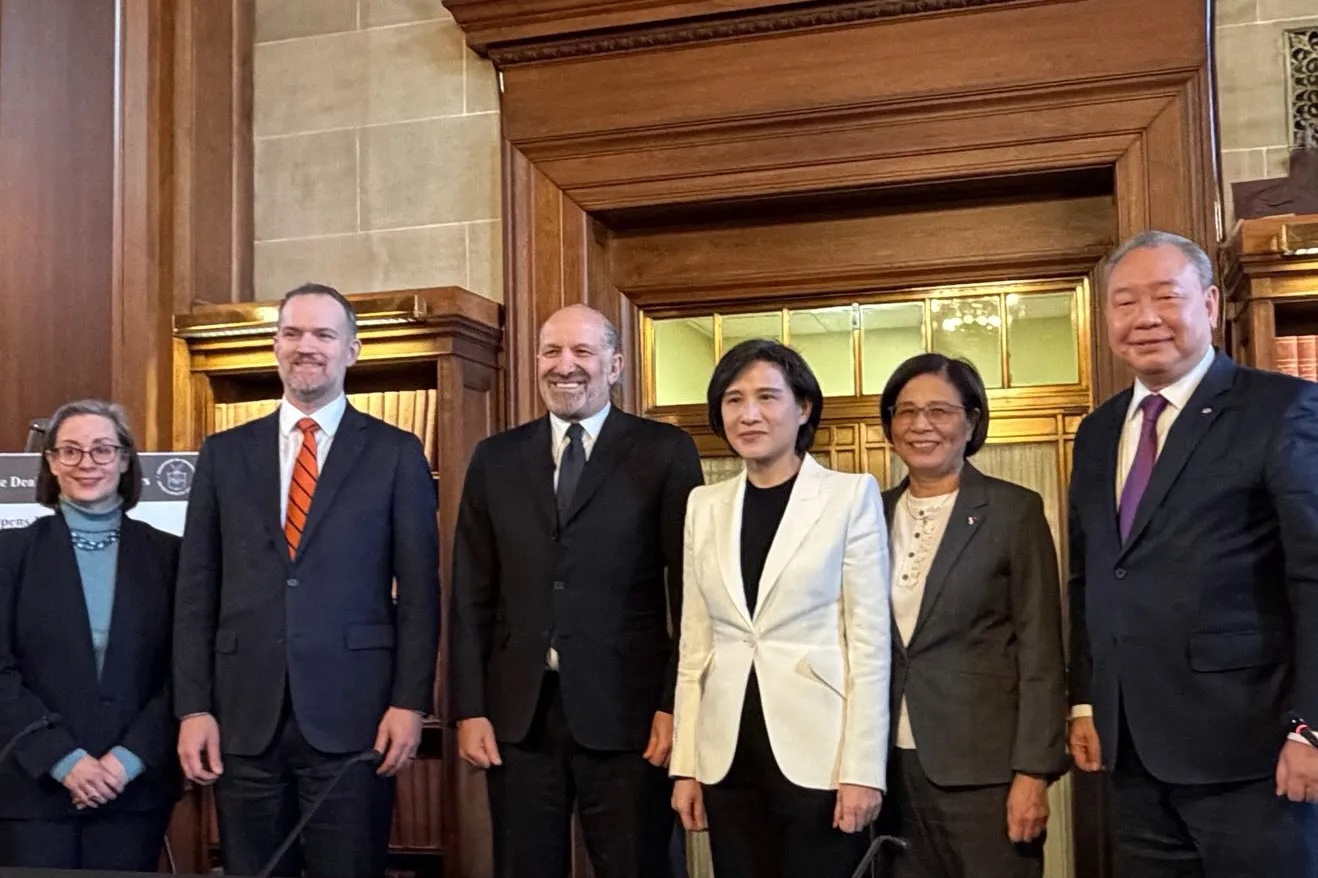
The deal is being billed as a milestone for the Trump administration. Lutnick described it as the largest semiconductor investment in U.S. history, sharing images of himself alongside Cheng, Taiwan’s top trade negotiator, Yang Jen-ni, and U.S. Trade Representative Jamieson Greer.

Taiwan’s Vice President Hsiao Bi-khim echoed that sense of momentum, writing on Facebook that the island had demonstrated its importance on the global trade stage.

“Taiwan may not be large in area, but we are agile and innovative,” she said. “We are an indispensable force for good within the global supply chain.”

U.S. warns Canada over Chinese EV Access, Says Ottawa Will Regret it

0

Senior officials in the Trump administration on Friday sharply criticized Canada’s decision to allow a limited number of Chinese electric vehicles into its market, warning that Ottawa would come to regret the move and making clear that the vehicles would be barred from entering the United States.

Speaking at a Ford manufacturing plant in Ohio, U.S. Transportation Secretary Sean Duffy said Canada’s decision risked opening the door to deeper Chinese influence in the North American auto market at a time when Washington is working to shield domestic manufacturers and workers.

“I think they’ll look back at this decision and surely regret it to bring Chinese cars into their market,” Duffy said, addressing an audience of government officials and auto industry figures at the event, which was organized to highlight the administration’s efforts to make vehicles more affordable for American consumers.

Canada last year imposed a 100% tariff on Chinese electric vehicles, mirroring similar measures already in place in the United States. However, its more recent move to allow the import of up to 49,000 Chinese EVs has triggered concern in Washington that the policy could provide Beijing with a foothold in North America, even as the U.S. adopts an increasingly hardline stance on Canadian vehicles and auto parts.

U.S. Trade Representative Jamieson Greer sought to downplay any immediate impact on American automakers, saying the limited volume of Chinese EVs would not disrupt U.S. vehicle exports to Canada.

“I don’t expect that to disrupt American supply into Canada,” Greer said. “Those cars are going to Canada — they’re not coming here.”

Still, Greer described Canada’s decision as “problematic” in a separate interview, arguing that U.S. tariffs on Chinese vehicles are designed to protect American auto workers and consumers.

“There’s a reason why we don’t sell a lot of Chinese cars in the United States,” he said. “It’s because we have tariffs to protect American auto workers and Americans from those vehicles.”

The disagreement highlights growing friction in North American trade relations as the U.S. seeks to curb China’s global expansion in electric vehicles, a sector in which Chinese manufacturers have become increasingly competitive on cost and scale. U.S. officials fear that even limited access to the Canadian market could allow Chinese firms to build supply chains, brand recognition, and political leverage across the region.

Under the terms of the new arrangement with Beijing, Canadian Prime Minister Mark Carney said he expects China to lower tariffs on Canadian canola seed by March 1 to a combined rate of about 15%. Greer questioned the wisdom of that trade-off, warning that Ottawa could face longer-term consequences.

“I think in the long run, they’re not going to like having made that deal,” he said.

Beyond tariffs, Greer pointed to regulatory barriers that he said would make it difficult for Chinese vehicles to enter the U.S. market even if trade restrictions were eased. Rules adopted in January 2025 governing internet-connected vehicles and navigation systems pose a major obstacle, he said, citing U.S. cybersecurity standards.

“There are rules and regulations in place in America about the cybersecurity of our vehicles and the systems that go into those,” Greer said. “I think it might be hard for the Chinese to comply with those kind of rules.”

The administration’s stance reflects a broader consensus in Washington against Chinese-made vehicles. Lawmakers from both major parties have voiced strong opposition, echoing warnings from U.S. automakers that Chinese competition poses a serious threat to the domestic auto sector.

Ohio Senator Bernie Moreno, a Republican, drew applause at the Ohio event when he declared his opposition in blunt terms.

“As long as I have air in my body, there will not be Chinese vehicles sold the United States of America — period,” Moreno said.

The rhetoric stands in contrast to comments from President Donald Trump, who has said he would welcome Chinese automakers building vehicles in the United States, a position that underscores the tension between encouraging domestic investment and blocking imports seen as unfairly subsidized or strategically risky.

U.S. officials are making it clear that Canada’s decision will not soften Washington’s approach, at least for now. Even as Ottawa navigates its own trade-offs with Beijing, the Trump administration is signaling that Chinese electric vehicles will face firm resistance south of the border, reinforcing the United States’ determination to keep its auto market — and its supply chains — tightly guarded.