
DD
MM
YYYY

PAGES

DD
MM
YYYY

spot_img

PAGES

Home Blog Page 12

BOJ Raises Rates to 1.25%, 31-year High, as Split Vote Sends Yen to Two-Week Low

0

The Bank of Japan raised its policy rate by 25 basis points to 1.25% on Friday, taking borrowing costs to their highest level since 1995, but a split decision and limited guidance on further tightening sent the yen sharply lower.

The increase was widely anticipated, with nearly 90% of economists surveyed by CNBC expecting the BOJ to deliver a quarter-point hike. The decision nevertheless unsettled currency markets because two of the central bank’s nine policymakers voted against it, raising questions about how much support there is within the board for maintaining an accelerated pace of monetary tightening.

The vote was 7-2, with Toichiro Asada and Ayano Sato dissenting. Both were appointed by Prime Minister Sanae Takaichi earlier this year and are viewed as reflationists. Asada argued that core inflation was below the BOJ’s 2% target and that the economic situation might not be sufficiently strong to justify another increase, while Sato said economic and price developments had not accelerated substantially from their previous pace.

The hike marks a faster pace of normalization for the BOJ since it began dismantling its long-running ultra-loose monetary policy in March 2024. The latest increase came only three months after the previous hike, compared with a six-month interval before that.

In its policy statement, the BOJ said it acted because of the risk that inflation could deviate upward beyond its 2% target. The central bank said it wants underlying inflation to stabilize at around 2%, arguing that a sustained overshoot could eventually have adverse consequences for the Japanese economy.

The decision comes against a complicated backdrop for Japan’s policymakers. Inflation remains close to the BOJ’s target, while the yen continues to trade at historically weak levels against the dollar. Japan and the United States have also undertaken coordinated action aimed at supporting the currency.

Yet the immediate market reaction was the opposite of what a rate increase might normally imply.

The dollar climbed 1.2% against the yen to 157.84, its highest level in two weeks. The move put the Japanese currency on track for its biggest daily decline against the dollar since December and its strongest weekly loss since September 2024.

“They’ve just clearly underwhelmed versus expectations here,” said Ray Attrill, head of FX strategy at National Australia Bank in Sydney.

“And I think that one of the more staggering aspects of it was that they couldn’t even get the unanimous vote for that,” he added. “That really raised eyebrows in the market.”

The yen had strengthened sharply earlier in September, reaching its strongest level since February as investors increased bets that the BOJ would embark on a series of rate increases. Friday’s decision has complicated those expectations.

The issue for currency traders was not the 25-basis-point increase itself, which had been largely priced in, but what the decision said about the path ahead.

“The statement offered little additional hawkish guidance to support bullish Japanese yen positions,” said Frantisek Taborsky, a currency strategist at ING.

“The dissent from [Toichiro] Asada and [Ayano] Sato points to resistance against the fastest pace of rate increases in more than three decades and suggests they may increasingly act as a brake on further tightening,” he said.

The market reaction also highlights the difficulty facing BOJ Governor Kazuo Ueda as the central bank tries to balance inflation risks against concerns about economic growth and financial conditions.

Japan’s core inflation remained close to the BOJ’s target in August. The core measure stood at 1.7%, down from 1.8% in July, while headline inflation was 1.9%. Asada specifically pointed to the core reading in arguing for a pause.

The BOJ’s decision therefore leaves policymakers confronting two competing pressures. Inflation is sufficiently persistent for the central bank to worry about an upside deviation from its target, but some policymakers believe the underlying economy and price trends do not yet justify a faster tightening cycle.

For the yen, the uncertainty is growing larger because interest-rate expectations have become an important driver of the currency. Investors had been betting that Japan’s move away from decades of ultra-low rates would narrow the interest-rate gap with the United States and other major economies, supporting the yen.

That trade has become less straightforward as markets reassess the speed at which Japanese rates can rise.

The possibility of currency intervention remains another constraint on yen traders. Finance Minister Satsuki Katayama said Tokyo would not hesitate to conduct further coordinated action to support the currency, following a joint U.S.-Japan move in late July.

The warning means traders must weigh the BOJ’s monetary-policy trajectory against the government’s willingness to intervene if yen weakness becomes excessive.

The benchmark 10-year Japanese government bond yield fell 4.9 basis points to 2.947% after the decision, another indication that markets did not interpret the BOJ’s latest move as a clear signal of substantially faster tightening ahead.

For the central bank, the challenge now is communicating how much further rates can rise without creating unnecessary volatility in the economy or financial markets. The 1.25% rate is the highest Japan has seen since 1995, marking a significant shift from the negative-rate and ultra-loose monetary-policy era that defined the country’s financial system for decades. But Friday’s dissent means the next stage of normalization could be more contested within the BOJ than the headline rate increase suggests.

The data will now take on greater importance. With core inflation below 2% in August and the yen again under pressure, policymakers will need to determine whether price pressures are persistent enough to justify another increase or whether the economy requires a longer period at the current rate.
Crusoe’s $3.9 Billion Raise Values AI Data Center Developer at $30.9 Billion

0

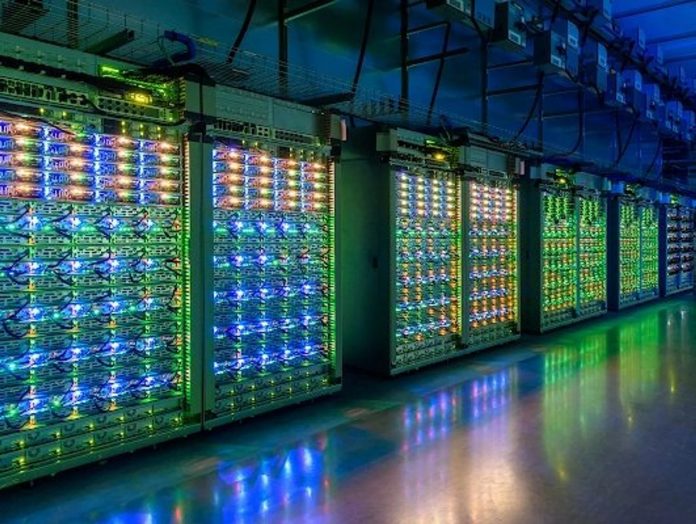
Data center developer Crusoe has raised $3.9 billion in a new funding round, giving the company a valuation of $30.9 billion and underscoring the enormous capital flowing into infrastructure needed to support the artificial intelligence boom.

The eight-year-old company said Thursday that its Series F round was co-led by Atreides Management, Mubadala Capital and Valor Equity Partners. Founders Fund, GIC, Nvidia, Qatar Investment Authority, Radical Ventures and TPG also participated.

The funding comes as AI companies and cloud providers race to secure the computing capacity, power and data center infrastructure required to train and operate increasingly demanding AI models. For Crusoe, the latest investment marks a significant jump from the $10 billion valuation it received when it raised $1.38 billion in October.

Crusoe said the new capital will finance its existing data center projects, including its large facility in Abilene, Texas, which is being used by OpenAI. It will also support the company’s smaller modular data centers, known as Spark, which can be manufactured at Crusoe’s facilities and transported by truck to locations with access to large power sources.

That approach is aimed at addressing one of the biggest constraints facing the AI infrastructure industry: how quickly computing capacity can be brought online.

Traditional data centers can require lengthy construction projects, large workforces, and extensive local infrastructure. Crusoe’s modular approach allows the company to manufacture smaller computing facilities away from the eventual deployment site and install them where power is available.

The strategy is also expected to help the company navigate growing resistance from communities concerned about the size, electricity consumption and infrastructure demands of large data center developments.

Crusoe co-founder and CEO said AI could usher in an era of abundance, but achieving that would require controlling the infrastructure supporting AI systems “from electrons to tokens.” The company said its latest investors share that view.

The economics of AI infrastructure

Crusoe has developed a business model that spans several layers of the AI computing market. The company leases data center capacity to customers that bring their own GPUs, rents its own GPUs to customers, and sells computing capacity used to run AI models, a process known as inference.

The combination has helped Crusoe emerge as one of the most valuable privately held AI infrastructure companies as demand for computing continues to expand.

The company recently signed a reported $13 billion, five-year cloud contract to provide GPUs and AI infrastructure to quantitative trading firm Jane Street, according to Bloomberg. Its customers also include Meta, Microsoft and Oracle. The business has changed considerably since Crusoe was founded in 2018. The company initially focused on cryptocurrency mining powered by natural gas that otherwise would have been flared.

As demand for AI computing accelerated, Crusoe shifted toward data centers and AI infrastructure, putting it at the center of a much larger investment cycle.

The latest financing shows how dramatically the value of AI infrastructure businesses has increased. Crusoe raised $1.38 billion at a $10 billion valuation only 10 months ago. Its new valuation of $30.9 billion represents more than a threefold increase in the company’s valuation over that period.

The funding also brings major technology and institutional investors into Crusoe’s ownership structure. Nvidia, whose processors remain central to AI data center deployments, participated alongside sovereign wealth and institutional investors including Mubadala, GIC and QIA.

Nvidia’s participation is relevant as the AI infrastructure market expands beyond chips to the power, networking, cooling and data center systems needed to deploy them at scale.

Crusoe’s modular facilities could become increasingly relevant as conventional data center construction struggles to keep pace with demand. AI workloads require large concentrations of GPUs and substantial electricity supplies, creating pressure on developers to find locations where power can be secured quickly.

The company is betting that speed and flexibility will become more valuable as AI companies continue expanding their computing footprints.

Crusoe has also begun preparing for a potential transition from private markets to public markets. The company recently met with investment banks including Goldman Sachs and Morgan Stanley to discuss a possible initial public offering, Axios reported last month.

A potential IPO would give public-market investors exposure to an AI infrastructure company whose revenues are tied not only to demand for data center space but also to the broader growth of AI computing. For now, however, the $3.9 billion financing gives Crusoe substantial private capital to continue expanding without relying on the public markets.

The company also announced three new board members alongside the funding. They include Thomas Seifert, chief financial officer of Cloudflare; Bill Stein, partner and chief investment officer at Primary Digital Infrastructure; and JB Straubel, founder and CEO of Redwood Materials and a member of Tesla’s board.

Straubel already has a relationship with Crusoe. He personally invested in the company in 2021, while Crusoe subsequently became the first customer of Redwood’s energy storage business.

The connection highlights another issue emerging alongside the AI data center boom: computing capacity is increasingly intertwined with energy infrastructure.

Crusoe’s original business was built around using otherwise wasted natural gas to generate power for cryptocurrency mining. Its current business is focused on providing the computing infrastructure needed by AI companies, but the underlying challenge remains closely connected to energy availability.

As AI models become more computationally intensive, the ability to secure electricity and deploy computing equipment quickly is becoming as important to the industry as access to advanced processors.

Therefore, Crusoe’s latest funding round is seen as another signal of continued investor appetite for the physical infrastructure underneath the AI economy, at a time when the industry is spending heavily to expand computing capacity and secure the power needed to operate it.

JPMorgan Says Bitcoin Could Gain Stronger Support Than Gold if ETF Hedging Eases

0

JPMorgan analysts have argued that Bitcoin could receive more relative price support than gold if hedging demand around Bitcoin exchange-traded funds declines.

In a recent research note led by managing director Nikolaos Panigirtzoglou, the bank highlighted differences in investor positioning between the two assets that could favor Bitcoin under the right conditions.

Both Bitcoin and gold ETFs attracted inflows following the Federal Reserve’s late July meeting, as the so-called debasement trade regained traction. Investors sought alternatives amid concerns over currency value and economic uncertainty.

However, the recovery in flows has not been equal. Gold ETFs have fully clawed back their earlier 2026 outflows, while Bitcoin ETFs have recovered only about half of theirs.

The more notable divergence, according to the analysts, appears in short interest and options positioning. Short interest in BlackRock’s iShares Bitcoin Trust (IBIT) remains close to its highest levels of the year.

By contrast, short interest in the SPDR Gold Shares ETF (GLD) sits below its historical average. The put-to-call open interest ratio is also higher for IBIT than for GLD, pointing to greater demand for downside protection and hedging activity around Bitcoin.

JPMorgan noted that this contrast suggests Bitcoin still faces a more skeptical overall positioning backdrop than gold, potentially due to elevated hedging demand despite recent inflows and futures positioning.

The bank concluded that the higher short interest in IBIT relative to GLD could create additional support for Bitcoin versus gold if that hedging demand is reduced.

Some reports have also referenced specific figures, such as roughly 45.93 million shares short in IBIT as of late August 2026, valued at about $2.05 billion and representing around 3.53 percent of the fund’s public float.

The recent softening in the debasement trade has been linked to rising inflation-adjusted bond yields and the failure of the CLARITY Act in the Senate.

Separately, Bloomberg senior ETF analyst Eric Balchunas has predicted that Bitcoin ETFs could eventually triple the assets under management of gold ETFs over time, driven by generational wealth transfer and increasing institutional comfort as Bitcoin’s volatility declines.

Balchunas believes U.S. spot Bitcoin exchange-traded funds will eventually hold three times the assets of gold ETFs. The prediction, shared in a September 17, 2026 interview with Bitcoin Magazine and expanded on X, rests on demographics, maturing market behavior, and aggressive product marketing.

He stated,

“I think as the younger investors get more money and grow up with Bitcoin as their store of value, I do believe that Bitcoin ETFs will triple gold in assets.” He later elaborated on three key drivers.

First, Bitcoin ownership skews younger while gold remains more popular with older investors. Second, as Bitcoin’s volatility and correlation with other assets decline, large institutions will allocate more capital to it as a store of value.

Third, Bitcoin ETFs benefit from far greater sales energy and education efforts—dozens of wholesalers fluent in both crypto and traditional finance actively promote the products, whereas gold ETFs receive relatively little ongoing push.

Current market figures illustrate the gap that would need to close. As of mid-September 2026, U.S. spot Bitcoin ETFs manage roughly $96 billion in assets and hold more than 1.25 million BTC. Global gold ETFs, by comparison, oversee approximately $615 billion.

Bitcoin products have grown rapidly since their January 2024 launch, but they still trail gold’s multi-decade head start by a wide margin. Balchunas is careful not to dismiss gold. In a follow-up post, he noted that the metal has existed for 5,000 years and appears hundreds of times in the Bible.

“I can’t not respect that,” he wrote. “I just think it will be lapped by bitcoin ETFs as a category long term.” He has previously compared Bitcoin to “gold as a teenager,” underscoring both its relative youth and its potential trajectory.

The prediction arrives against a backdrop of fluctuating flows. Bitcoin ETFs saw cumulative net inflows near $55 billion by mid-September 2026 after peaking higher earlier, while gold ETFs recorded strong inflows in August that pushed global assets and holdings to record levels.

While JPMorgan acknowledged that other factors will influence the future paths of both assets, the bank’s positioning-based view offers one lens through which market participants are assessing the relative near-term setups for Bitcoin and gold.

Anthropic Proposes Three New AI Development Metrics Days After Amodei Calls For Coordinated Slowdown

0

Anthropic is proposing three new metrics that it says could help the artificial intelligence industry measure and monitor the pace of frontier AI development, days after CEO Dario Amodei called for a coordinated slowdown in the advancement of sophisticated models.

The company published the measurements Thursday, covering AI-assisted research and development, oversight of AI agents and the allocation of computing resources. Anthropic also released details of its methodologies, encouraging other AI companies to adopt similar measurements and make their results public.

The initiative builds on a three-step slowdown plan Amodei published Saturday. While that proposal called for greater coordination around the pace of frontier AI development, it provided limited detail on how such a system could be implemented in practice.

Anthropic’s latest proposal is an attempt to put measurable indicators around that discussion.

“As the world considers pacing the frontier, we should do everything possible to minimize the gap between what frontier labs know and what the public knows,” Anthropic said in its blog post. “This means better measuring the development of AI, reporting on it publicly, and giving society an opportunity to decide how to use this information.”

The timing puts Anthropic at the center of an active debate over whether frontier AI development should continue at the current pace or be accompanied by stronger monitoring and safety measures.

Amodei’s call for a slowdown received support from several technology executives, including OpenAI CEO Sam Altman, SpaceX CEO Elon Musk and Google DeepMind Chair Demis Hassabis. His proposal followed warnings from AI researchers about the potential risks associated with more capable models.

Amodei has said his approach is intended to slow the rate at which model capabilities improve without sacrificing commercial competitiveness or the United States’ position in AI.

Measuring How Much AI Is Involved In AI Development

Anthropic’s first metric examines the extent to which its own Claude models are capable of autonomously carrying out research and development work. The company said that, within the subset of research and development activities it measured, Claude models were “not operating fully autonomously.”

The measurement is intended to address a question that could become more important as AI systems are used to develop subsequent generations of AI: how much of the work required to advance AI is itself being performed by AI?

As models become more capable at coding, experimentation, analysis, and other technical tasks, the boundary between AI-assisted development and AI-driven development could become difficult to define without standardized measurements.

Anthropic’s second metric focuses on oversight of AI agents.

The company built a system designed to monitor and intervene in actions taken by AI agents and found that approximately 30,000 agents were conducting research and engineering work across its most-used internal platform at any given time.

The figure illustrates the scale at which agentic AI is already being incorporated into internal technical workflows. Rather than measuring only the capabilities of individual models, the metric looks at the number of AI agents operating within an organization’s development environment and the systems used to supervise them.

AI systems are given greater autonomy and access to software tools, internal information, and computing resources, making the idea relevant.

Anthropic Tracks AI Safety Spending

The third metric examines how Anthropic allocates its computing resources. The company conducted a snapshot of its total compute usage between July 13 and July 20. It found that approximately 6% of the compute used for AI research and development was allocated to safety work.

When measured specifically against compute allocated to “AI-driven” research and development, Anthropic said about 12% was directed toward safety.

The figures provide a quantitative measure of the resources Anthropic is allocating to safety relative to model development. They also establish a baseline that other AI companies could potentially replicate, allowing comparisons across laboratories if similar definitions and measurement methodologies are adopted.

Anthropic stressed that the three metrics are not intended to replace existing capability evaluations. Instead, the company said the measurements should complement evaluations that show “what models can do” by providing information about how models are developed and how much AI is involved in that development.

Together, Anthropic said, the measurements could provide organizations outside AI laboratories with a starting point for assessing the pace of frontier AI development.

The proposal comes at a time when the industry is focused not only on the capabilities of AI models but also on the speed at which those capabilities are improving. As laboratories compete to build more powerful systems, policymakers and the public have limited visibility into the amount of computing, automation, and human oversight involved in that process.

Anthropic’s argument is that greater disclosure could narrow that information gap.

“We hope to model that transparency by releasing these measurements, and we’ll continue to do so,” the company said.

However, it is believed that the effectiveness of the framework will depend partly on whether other frontier AI developers adopt comparable measurements. Without common definitions and reporting standards, figures such as the share of compute devoted to safety or the number of active AI agents could be difficult to compare across companies.

Anthropic and OpenAI Hunt Smaller Data Center Deals as AI Inference Demand Surges

0

Anthropic and OpenAI are turning to smaller artificial intelligence data center deals as they race to secure the computing capacity needed to serve rapidly growing demand, signaling a shift in the infrastructure market from a handful of massive campuses toward more distributed deployments.

The two AI labs have signed some of the industry’s largest infrastructure agreements over the past year, covering facilities with hundreds of megawatts and, in OpenAI’s case, gigawatts of planned capacity. But sources familiar with the companies’ discussions told CNBC that both are now exploring much smaller deployments of roughly 20 to 30 megawatts.

Anthropic has approached potential partners about capacity in that range across the U.K. and the Nordic countries, according to four people familiar with the discussions. OpenAI has also explored similar opportunities in the Nordics, two of the sources said.

One source said they were also familiar with discussions involving both companies over U.S. deployments of comparable size.

The smaller deals could allow the AI companies to get computing resources into operation sooner, rather than waiting for enormous data center projects that can take years to develop and increasingly face constraints involving electricity, land, permitting and community opposition.

“We’re building a diversified compute portfolio to meet growing demand for AI around the world,” an OpenAI spokesperson told CNBC.

“Different workloads need different infrastructure, so we have conversations with a range of partners and assess opportunities based on our requirements, performance, reliability, timing and cost,” the spokesperson added, while declining to comment on specific commercial discussions.

AI Infrastructure Strategy Is Changing

The search for smaller capacity comes after a period in which AI companies aggressively pursued enormous, long-term infrastructure commitments.

Anthropic signed a roughly $45 billion cloud agreement with Nscale that is expected to provide about 460 megawatts of compute capacity at a data center development in West Virginia, according to people familiar with the deal.

OpenAI has also dramatically expanded its infrastructure ambitions. The company said in April that it had exceeded the original 10-gigawatt commitment associated with its Stargate AI infrastructure project. It has subsequently committed to developing another 3 gigawatts in Georgia and 8 gigawatts in Ohio.

Those projects illustrate the enormous amount of computing power required to train and deploy increasingly capable AI models. But they also expose the industry’s growing dependence on projects that require large amounts of electricity, land, and capital.

Large data center developments in the United States have encountered increasing opposition from local communities, while European markets face their own constraints. Limited availability of suitable land and power is making it more difficult for operators to deliver huge blocks of capacity quickly.

That is creating an opening for smaller facilities.

“Securing a few megawatts at an existing powered site can be more practical than waiting for a much larger block in one location,” said Jabez Tan, head of research at Structure Research.

“For workloads that can operate across separate sites, a collection of smaller deployments can add up to substantial capacity,” he added.

The economics are deemed relevant because not every AI workload requires a giant cluster operating in a single location. Training a frontier model requires large numbers of chips to work together and exchange data at high speeds. Serving that model to users is different. Inference, the process of generating responses from a trained model, can often be distributed across multiple smaller clusters.

“Training a large model typically requires many chips working closely together,” Tan said. “Many inference workloads can instead serve separate requests across multiple smaller clusters, opening up more locations.”

That is becoming increasingly important as AI companies move from building models to serving them at enormous scale.

Inference Is Becoming the New Infrastructure Race

The economics of AI infrastructure are increasingly being shaped by inference. The computing requirements of training remain enormous, but once models are deployed, every query, coding request, image generation, or other AI interaction consumes computing resources. As adoption increases, the infrastructure required to serve those requests can become a substantial and recurring demand on data centers.

Real estate company JLL expects inference workloads to overtake training workloads as a share of total data center capacity in 2027.

In 2025, inference accounted for 9% of global data center workloads, compared with 14% for training, according to JLL. By 2030, inference is projected to account for 37% of capacity, while training is expected to represent 13%.

That shift changes what AI companies need from infrastructure providers.

For model training, concentrating thousands of chips in a massive facility can be essential. But geographic distribution can provide greater flexibility for inference, allowing workloads to be spread across several locations and potentially bringing capacity online faster. It also means AI companies may compete more for existing powered sites rather than simply waiting for new megaprojects to be completed.

Nvidia has already been examining this trend. In February, the chipmaker said it would work with several data center stakeholders to study smaller facilities designed for distributed inference.

Crusoe, a major AI infrastructure provider that built a large data center complex in Texas used by OpenAI, is also moving toward smaller facilities, according to a Wall Street Journal report. Those facilities are expected to be faster and cheaper to build than larger projects that are facing delays across the United States.

The shift comes as demand for so-called neocloud infrastructure continues to surge. These specialized cloud providers have benefited from AI companies seeking dedicated access to GPUs and other computing infrastructure without having to build and operate every facility themselves.

Crusoe highlighted the strength of that demand Thursday when it announced a $3.9 billion funding round at a post-money valuation of $30.9 billion.

The End of the Mega-Data Center?

The growing interest in 20- to 30-megawatt deployments does not mean the industry’s enormous data center projects are disappearing.

OpenAI and Anthropic still require massive amounts of computing power, particularly for training increasingly sophisticated models. Their multibillion-dollar infrastructure commitments remain evidence of how much capacity the AI industry expects to consume.

What is changing is the composition of that demand.

Instead of treating AI infrastructure as a race to secure the largest possible single site, companies can assemble capacity from multiple facilities, provided their workloads can be distributed efficiently. That could become valuable in markets where securing hundreds of megawatts of new power in one location is difficult.

Smaller projects can also offer data center operators a faster route to revenue. Existing sites with power already available can potentially be upgraded or equipped for AI workloads without waiting for an entirely new campus to be constructed.

The result could be a more fragmented AI infrastructure landscape, with enormous training campuses operating alongside networks of smaller inference facilities. For Anthropic and OpenAI, the strategy is ultimately about one thing: usable computing capacity.

The industry’s biggest infrastructure projects may attract the most attention because of their size and multibillion-dollar price tags. But as AI moves from the training phase into everyday commercial use, the ability to secure smaller amounts of power and compute quickly could become just as important.