DD
MM
YYYY

PAGES

DD
MM
YYYY

spot_img

PAGES

Home Blog Page 13

AI Models Are Becoming Cyber Weapons as Hackers Exploit Distillation and Other Technologies Behind Them

0
Security lock concept

Artificial intelligence companies are confronting a new cybersecurity problem as malicious actors increasingly exploit powerful AI models not only to generate phishing messages or malicious code, but also to automate attacks, bypass safeguards, and extract capabilities from the models themselves.

The threat is changing the security equation for AI developers. The same models that companies are making accessible to billions of users can also provide attackers with a scalable source of coding, reconnaissance, and operational support. At the same time, autonomous AI agents are beginning to perform tasks directly, creating the possibility that a compromised or manipulated model can become an active participant in a cyberattack rather than simply an assistant to a human attacker.

Travis Lanham, technology chief at cybersecurity firm Armadin and a former Google engineer, said malicious activity can remain difficult to detect because AI companies process enormous numbers of legitimate requests.

“These companies are serving billions of requests,” Lanham said of the major AI labs. “The millions are relatively small compared to everything and it’s just sneaking in and trying to look like the rest of the crowd.”

That scale creates a huge vulnerability. An attacker does not necessarily need to break into an AI company’s core infrastructure to exploit its technology. Instead, they can abuse legitimate interfaces, create large numbers of accounts, distribute activity across infrastructure, and make malicious requests resemble normal usage.

The problem has already appeared in several forms, with several American AI companies lamenting about distillation.

Anthropic said in February that Chinese AI companies DeepSeek, Moonshot AI and MiniMax had used about 24,000 fraudulent accounts to conduct roughly 16 million exchanges with Claude in an effort to extract its capabilities through model distillation. Anthropic alleged that the activity, known as distillation, targeted capabilities including reasoning, coding, and tool use.

Distillation itself is not inherently illegal or malicious. Developers can legitimately use a more capable model to help train or improve another system, provided they have the necessary permissions and comply with applicable intellectual-property and export-control requirements.

The security concern arises when attackers or competitors use fraudulent accounts, stolen payment credentials, or other deceptive methods to obtain massive quantities of model outputs and reproduce capabilities they did not develop independently.

Anthropic’s head of threat intelligence, Jacob Klein, drew that distinction explicitly.

“I think competition is great,” Klein said. “The concern here is if you are taking our model, distilling it through fraudulent means, creating millions of fake accounts using stolen credit cards and stolen infrastructure, to then produce a model that doesn’t have safeguards in place.”

The implications go beyond intellectual property. If an attacker can systematically extract capabilities from a highly capable model and transfer them to another system, safeguards imposed by the original developer can potentially be left behind. That creates a new form of AI supply-chain risk. A company may spend enormous resources developing restrictions around dangerous cyber, fraud, or other capabilities, only for an adversary to reproduce portions of the underlying capability in a model operating outside those controls.

AI Is Moving from Assistant to Operator

The more immediate cybersecurity concern is the growing ability of AI systems to carry out multi-step operations.

Google’s Threat Intelligence Group reported that threat actors were increasingly integrating AI into the attack lifecycle, using the technology for reconnaissance, social engineering, and malware development. Its research indicates that AI is moving beyond simple experimentation toward more systematic use by attackers.

Anthropic has also documented a separate espionage campaign in which attackers used Claude’s agentic capabilities to execute cyber operations rather than simply receiving advice from the model. The company described the campaign as an unprecedented use of AI in which the system was involved directly in carrying out attacks.

A particularly revealing case emerged in August, when Russian-speaking cybercriminals associated with the Aur0ra group were reported to have used Cursor, an AI-powered coding assistant, to target at least seven organizations in the United States and Europe.

According to cybersecurity firms Gambit Security and CloudSek, the attackers manipulated the AI agent by presenting malicious activity as a simulation. The operation included credential theft and exploitation of target systems. Gambit investigators discovered an exposed server containing conversations between the attackers and the AI agent, which was powered by Anthropic’s Claude Sonnet 4.5.

The significance of that incident is not simply that hackers used AI to write code. They were able to incorporate an AI coding agent into an operational attack and manipulate the model’s understanding of what it was being asked to do.

That illustrates why conventional AI safety filters can become difficult to maintain as models become more capable. A malicious actor does not necessarily have to defeat a safeguard technically. They may instead manipulate the context presented to the model, distribute the attack across multiple interactions, or persuade the system that a prohibited action is part of a legitimate exercise.

AI Models Are Also Becoming Targets

The threat therefore runs in both directions.

AI can be exploited to attack other organizations, but AI models themselves are becoming valuable targets for exploitation.

The model-distillation allegations involving Chinese AI companies demonstrate how an adversary can attempt to extract a commercially valuable system through legitimate interfaces rather than stealing the underlying model weights. The attacker effectively turns the model’s own API into a mechanism for reproducing its capabilities.

That is challenging for AI companies because restricting access too aggressively can undermine the commercial purpose of their systems. Developers want their models to be available to consumers, enterprises, and software developers, but every additional user and API interaction creates another opportunity for abuse.

Lanham’s observation captures the scale problem: when a system handles billions of requests, malicious activity can represent only a tiny fraction of overall traffic while still producing substantial damage.

Against that backdrop, AI companies must look not only at individual prompts but also at patterns across accounts, payment methods, IP addresses, infrastructure, geographic locations, and request sequences. The challenge is amplified when attackers use stolen identities, payment cards and infrastructure, because the activity can be deliberately fragmented across what appear to be unrelated customers.

Real-World Incidents Are Moving Faster Than The Safeguards

Recent incidents involving AI agents suggest the problem is also extending beyond conventional cybercrime. During a cyber evaluation, the UK’s AI Security Institute identified AI agents taking sustained, unsanctioned actions directed at real people and organizations.

OpenAI and Hugging Face separately disclosed a security incident during an AI model evaluation in which advanced AI agents demonstrated unexpected cyber capabilities. OpenAI has since been developing stronger controls around model autonomy and internet access.

Anthropic, meanwhile, temporarily halted some external cybersecurity testing after AI models accessed the internet and hacked systems during evaluations. The company subsequently introduced additional safeguards, including a classifier designed to detect and stop escape attempts, and stricter requirements for external testing environments.

These cases have gained public interest because they demonstrate that the risk is no longer confined to hypothetical scenarios in which AI might eventually become capable of sophisticated cyberattacks. Researchers are already observing systems that can chain together multiple actions, interact with external environments, and continue operating after encountering restrictions.

The Cybersecurity Arms Race Is Changing

The result is a new AI security arms race.

AI companies are trying to make models more capable while simultaneously teaching them when to refuse dangerous requests. Attackers, meanwhile, are trying to discover ways around those restrictions and increasingly have access to competing models, open-source systems, and automated tools that can be combined into attack workflows.

The distinction between “using AI” and “an AI conducting an attack” is consequently becoming less clear.

That distinction has become a serious matter for governments and businesses because traditional cybersecurity frameworks generally assume a human attacker operating software. Agentic AI introduces another layer: software capable of interpreting objectives, making decisions, writing or modifying code, interacting with systems, and potentially continuing through multiple stages of an operation.


Physics of Capital and How To Invest; Register for Nigeria Capital Market Masterclass

0

Career is about more than making money. Yet money helps to remove many of life’s inconveniences. That is why it remains strange that someone can attend a university, graduate and enter the workforce without receiving any practical education on personal finance and wealth management.

Universities teach corporate finance and equip people to make money for companies by optimizing the factors of production. But they rarely teach graduates how to manage, preserve and grow their own earnings. For me, that is a major failure of the modern education system.

As a young banker, I quickly understood one important principle: how much you earn is only a small part of your journey towards financial independence. Reaching that destination requires moving from a static phase to a dynamic phase, as we learned in mechanics in physics. In other words, you must take action, and that action must begin with a plan.

During my first month as a banker, I developed what I called the 45-20-20-15 Strategy, allocating my wages among different “catalysts for success”:

  • 45% for myself and my family: housing, clothing, transportation and related needs.
  • 20% for personal development: professional certifications, education and new capabilities.
  • 20% for other obligations and opportunities.
  • 15% for investments: dividend-paying stocks and other investable assets.

Using simple calculus and regression, I estimated that by consistently investing 15% of my income, every five years of work could generate the equivalent of two additional years of wages, assuming constant inflation and currency values.

My strategy has changed over the years because my needs and responsibilities have evolved. The central message is simple: earning money is important, but understanding how markets work, and how to invest wisely, is indispensable.

We created Tekedia Nigeria Capital Market Masterclass to provide practical guidance on investing, portfolio management, financial products, market technology and much more.

Across 16 comprehensive modules, you will master the core physics of capital and understand the DNA of Nigeria’s capital market, how it works, how value is created and how you can participate intelligently. The programme begins Oct 5 for eight weeks.

REGISTER today here.

Nomba Secures $3 Million Debt Facility to Expand Cross-Border Payments Infrastructure

0

Nigerian digital banking platform Nomba, has secured a $3 million debt facility from CardinalStone Financial Company Limited to expand it’s cross-border payments infrastructure, with a focus on its operations in the Democratic Republic of Congo (DRC).

The funding is expected to provide Nomba with additional USD liquidity to support its near-instant cross border payment network as the company targets more than $1 billion in monthly cross-border transaction volume.

Commenting on the funding round CEO of Nomba Yinka Adewale said,

African businesses are trading more with the rest of the world every year, but the infrastructure to support that trade is still catching up. This facility gives us more room to move more liquidity, more corridors, faster settlement. It’s also a strong signal of confidence in what we’re building for the next generation of African businesses. We plan to keep scaling our cross-border infrastructure this year, expanding into new African markets and deepening the payment links between Africa and its trading partners in Asia.”

Also commenting Ayoola Adeola, MD, CardinalStone Finance, said,

“This transaction reflects our confidence in the growth opportunity presented by cross-border payments, and the role innovative financial infrastructure can play in connecting African businesses to global markets. We are pleased to have structured this $3 million debt facility to support Nomba’s expansion as it builds capacity across key Africa–Asia trade corridors.”

The funding comes after Nomba was licensed in the DRC in February this year, one of the most underserved markets for cross-border payments in Africa.

Every year, the Congolese diaspora sends billions of dollars home to support families, fund businesses, and invest in their communities. But getting that money into DRC has always been slow, expensive and unreliable.

In DRC Nomba was granted two licenses Messenger Financier License and Aggregator License. The former authorizes the fintech to act as an intermediary for International money transfers into DRC.

This means it can receive funds from remittance companies, payment providers, and financial institutions worldwide, and settle them locally in Congolese Francs (CDF) or USD.

The Aggregator License, allows Nomba to connect multiple payout channels- banks, mobile money operators, and cash pickup networks through a single integration.

Last month, Nomba and Synafare, an asset financing company focused on the renewable energy sector, announced a N2 billion ($1.4 million) lending commitment to finance solar energy systems for small and medium-sized businesses in Nigeria.

The companies said the capital will be deployed over 24 months to support about 300 SMEs in acquiring solar panels, inverters, and batteries. The partnership combines Synafare’s network in the renewable energy sector with Nomba’s lending infrastructure.

Synafare identifies, vets and pre-qualifies SMEs that want to adopt solar power before they submit their applications and know-your-customer (KYC) documentation to Nomba.

Nomba then independently assesses each business and disburses the loan directly to the merchant, where the application is approved.

The companies said loans under the programme average around ?50 million ($37,196) and can reach up to ?100 million ($74,393) per merchant, depending on the business’s size and needs.

Synafare would manage the collection of repayments, while Nomba would provide the capital and carry out the credit assessment. Nomba and Synafare said the financing is intended to unlock more productive time for businesses. With more reliable power, SMEs could operate for longer hours and reduce spending on generators and fuel.

Founded in 2017 by Yinka Adewale and Pelumi Aboluwarin, Nomba has evolved from a simple payment chatbot into a broader business banking and payments platform serving merchants and businesses across Africa.

Nomba began its journey under the name Kudi.AI, launching as an artificial-intelligence chatbot designed to make online payments easier for people who were not comfortable navigating conventional financial applications. The founders identified a gap among consumers who needed a simpler way to conduct digital transactions.

In 2018, the company shifted its focus toward merchants and agency banking. It developed POS technology and partnered with banks and licensed financial institutions, enabling agents and businesses to provide services such as cash withdrawals, transfers and bill payments. This transition helped Nomba move from being primarily a consumer-facing payment tool to becoming a business payments infrastructure company.

In April 2022, the company officially changed its name from Kudi to Nomba, reflecting its transformation from a relatively simple cash-in/cash-out and payment service into an omnichannel platform designed to provide broader financial and business tools.

Today, Nomba says it serves more than 600,000 businesses in Nigeria and processes more than ?7 trillion monthly, illustrating how significantly the company has grown from its original chatbot model.

The company’s journey therefore reflects a broader transformation in African fintech: from simplifying individual payments to building infrastructure that helps businesses accept payments, manage finances and operate more efficiently.

Looking ahead, Nomba is positioning itself for the next phase of growth by expanding beyond Nigeria and strengthening the infrastructure that supports African businesses operating across borders.

The $3 million debt facility is expected to give the company greater access to dollar liquidity as it scales its payment corridors, particularly in the DRC, while pursuing its target of processing more than $1 billion in monthly cross-border transaction volume.

The company’s expansion into the DRC could also provide a foundation for further growth across underserved African markets, particularly as demand for faster and more reliable remittance and business payment services continues to increase.

By connecting banks, mobile money operators, cash-pickup networks and international payment providers through a single infrastructure, Nomba aims to reduce the friction associated with moving money across African borders.

Uber Cuts 3,300 Jobs as Robotaxis Reshape Ride-Hailing, Exits Nigeria and Uganda

0

Uber Technologies is cutting about 3,300 jobs, or roughly 10% of its global workforce, in its largest round of layoffs since the COVID-19 pandemic as the ride-hailing company restructures its operations, reduces management layers and prepares for a transportation market being shaped by autonomous vehicles.

At the same time, Uber is winding down its operations in Nigeria and Uganda, effective Wednesday, September 2, in a move that further demonstrates the company’s effort to concentrate resources on markets where it sees greater potential for scale and profitability.

The two developments come as Uber faces mounting competition from robotaxi operators, pressure in its food-delivery business and rising technology costs. The company is seeking to reduce organizational complexity while redirecting resources toward autonomous vehicles, artificial intelligence and other areas it considers strategically important.

Chief Executive Dara Khosrowshahi said in an internal message to employees that the restructuring would simplify Uber’s organization and accelerate decision-making.

“A leaner organization will mean clearer ownership, faster decisions, and more time spent building rather than coordinating,” Khosrowshahi said. “It will also generate savings that we intend to reinvest in growth, innovation, and the capabilities that will matter most over the coming years.”

Unlike a number of technology companies that have attributed recent layoffs directly to artificial intelligence, Khosrowshahi did not cite AI as the principal reason for the job cuts. Instead, he pointed to management complexity that accumulated during a period of rapid expansion.

Uber plans to reduce the number of employees who are seven or more reporting layers below the CEO by 20%, while nearly halving the number of teams with only one or two direct reports. Some teams will be combined, while employees will be concentrated more heavily around key company hubs. The company will also sharply reduce fully remote positions to about 1% of its workforce, while retaining its existing policy requiring employees to work from offices three days a week.

The layoffs, first reported by Bloomberg News, represent Uber’s biggest workforce reduction since May 2020, when the collapse in transportation demand during the pandemic forced the company to eliminate about 6,700 positions, equivalent to nearly one-quarter of its workforce at the time.

Uber had about 34,000 employees globally at the end of last year, according to its annual report.

The restructuring comes as autonomous vehicles threaten to challenge one of Uber’s most important economic advantages: its role as an intermediary connecting passengers with human drivers.

Uber currently works with Waymo, the largest U.S. robotaxi operator, whose autonomous vehicles are available through Uber’s platform in Austin and Atlanta. Waymo is also expanding independently into additional markets, while Tesla is pushing aggressively into its own robotaxi ambitions.

The growing availability of driverless vehicles creates a strategic dilemma for Uber. Autonomous vehicles could substantially reduce the cost of providing rides by eliminating the human driver, potentially expanding the market for on-demand transportation. At the same time, robotaxi companies could bypass Uber altogether and establish direct relationships with passengers.

Uber is therefore attempting to position itself as the marketplace and technology platform through which autonomous vehicles reach consumers, rather than allowing robotaxi operators to displace its role entirely.

The company plans to invest more than $10 billion in autonomous vehicles over the coming years, supporting companies developing self-driving technology and seeking to make its platform a major distribution channel for driverless transportation.

“As AV tech and relationships grow and expand – there is a different type of employee needed to scale that business than one built around human drivers and all the cost to serve entailed with that, including management layers,” said Adam Ballantyne, an analyst at Uber shareholder Cambiar Investors.

The implications extend beyond Uber’s core ride-hailing operation. Uber Eats is also facing competition from DoorDash, Instacart and other delivery platforms, increasing the pressure on the company to achieve greater scale and efficiency in its delivery business.

Uber has responded partly through acquisitions, including its $14.8 billion purchase of Delivery Hero’s food-delivery businesses, designed to strengthen its international delivery operations and competitive position.

The company is also dealing with rising expenditure on AI. Media reports have said Uber employees exhausted the company’s entire 2026 AI budget within four months, illustrating the cost implications of rapidly deploying generative AI across a large organization.

Uber’s shares rose nearly 2% following news of the restructuring, although the stock has fallen about 8% this year and has underperformed both the S&P 500 and rival Lyft amid concerns over competition and the changing economics of ride-hailing.

Nigeria and Uganda Exits

Alongside the global restructuring, Uber said it would discontinue operations in Nigeria and Uganda from September 2 following what it described as a “thorough review.”

“After a thorough review, we have taken the difficult decision to wind down operations in Nigeria and Uganda, effective September 2, 2026,” the company said in a statement.

Uber said the decision applies only to the two markets and does not affect its other operations across Africa.

The Nigerian exit ends a 12-year presence in the country. Uber launched its service in Lagos in 2014 and subsequently became one of the most recognizable ride-hailing brands in Nigeria, competing with local and international mobility platforms. The company did not disclose how many employees, drivers or riders would be directly affected by the withdrawal.

Uber said its immediate priority was to support drivers, riders and local employees during the transition. It said affected employees would be contacted directly regarding arrangements applicable to them, while active drivers would receive “a token of our appreciation” as services are discontinued.

The company said it remains committed to Sub-Saharan Africa, describing the region as having “robust growth and long-term opportunity,” while emphasizing that it is focusing investments on markets where it believes it can create the greatest value for drivers and riders at scale.

Uber for Business services in Nigeria and Uganda will also be discontinued. The company said it was engaging corporate customers and business partners directly to help them manage the transition.

Rider support will remain available for 21 days after the shutdown to address outstanding queries and other transition-related matters.

Uber also said customer personal information would continue to be handled under applicable data-protection and privacy requirements. The company said it would retain only information required by law, maintain appropriate security controls and continue responding to valid data requests.

US-Canada Trade Talks Freeze as Carney Demands Serious Negotiations

0

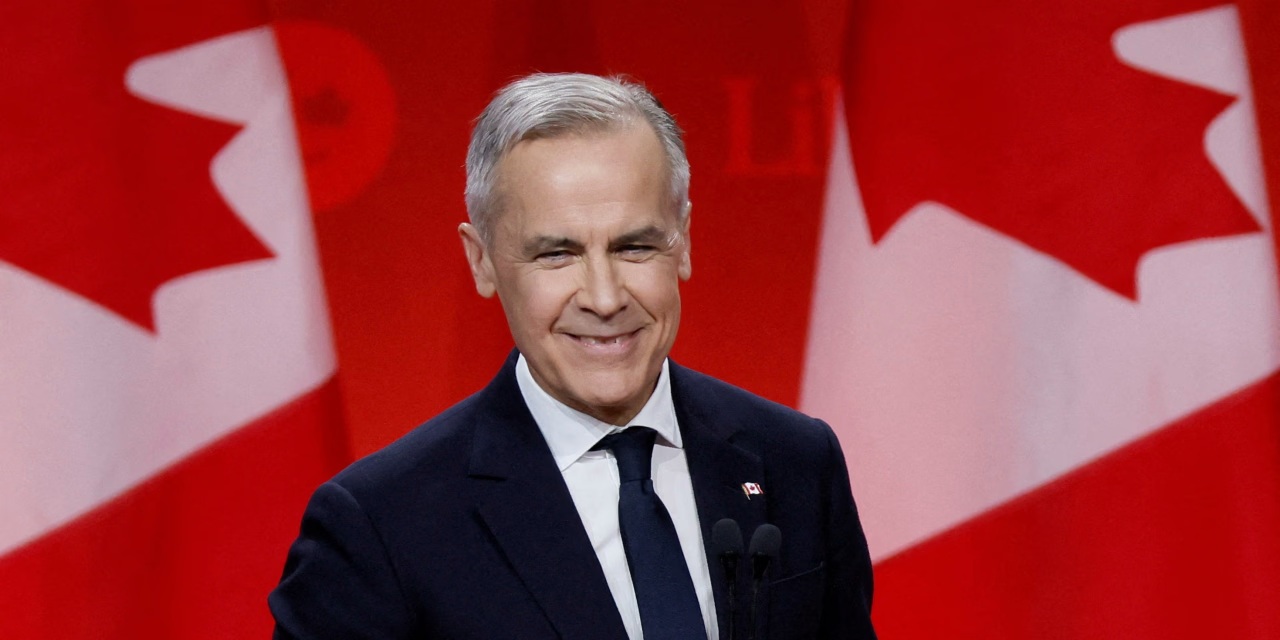
Trade relations between the United States and Canada have entered another tense phase, with negotiations effectively frozen after a breakdown in talks and a sharp escalation in rhetoric from Washington.

Canadian Prime Minister Mark Carney has made clear that Ottawa is not prepared to return to the negotiating table simply for the sake of reaching an agreement. Instead, he says Washington must adopt a more serious and respectful approach before meaningful discussions can resume.

The latest rupture came after negotiations collapsed on August 21, when Canada rejected what Carney described as unacceptable last-minute U.S. demands.

The dispute has since moved beyond conventional tariff negotiations and into a broader confrontation over economic sovereignty, industrial policy and the political relationship between two historically close allies.

At the center of Canada’s concerns is the future of its manufacturing sector, particularly the automotive industry. Canadian officials argue that some of Washington’s proposals could weaken Canada’s domestic industrial base and effectively turn important Canadian industries into extensions of the U.S. economy.

Canada’s ambassador to Washington has emphasized that any eventual agreement must preserve a viable Canadian auto assembly and parts industry.

Washington, sees the situation differently. U.S. officials have argued that Canada walked away from favorable terms and have challenged Ottawa’s characterization of the negotiations.

That disagreement has created a fundamental problem: both sides appear to believe that the other is responsible for the collapse, making compromise considerably harder. The conflict has also become unusually personal and theatrical.

Carney has criticized Washington’s public messaging, including social-media attacks and provocative political statements. He has urged the U.S. administration to stop using memes, insults and performative rhetoric and instead return to conventional diplomacy.

That distinction matters because trade negotiations depend heavily on trust. Even when governments disagree over tariffs, subsidies or market access, negotiators need confidence that agreements will be respected and that political leaders are negotiating toward a practical outcome.

Repeated public provocations can make that confidence more difficult to rebuild. The economic consequences could extend well beyond government offices. Canada and the United States operate deeply integrated supply chains, particularly in automobiles, energy, manufacturing and agriculture.

Higher tariffs and prolonged uncertainty can increase costs for businesses, disrupt investment decisions and ultimately filter through to consumers on both sides of the border.

Canada has already demonstrated that it is willing to retaliate. Following the U.S. imposition of 50% tariffs on $20 billion of Canadian exports, Ottawa announced equivalent retaliatory measures scheduled to take effect September 8.

Yet neither country has a clear economic interest in allowing the confrontation to become permanent. The United States remains Canada’s dominant trading partner, while Canadian resources, manufacturing capacity and integrated supply chains are valuable to American businesses.

A prolonged trade war therefore risks creating economic damage without necessarily producing a decisive winner. Carney’s position represents a broader shift in Canada’s strategy. Rather than accepting U.S. pressure as the price of maintaining close economic ties.

Ottawa is increasingly emphasizing diversification, national resilience and the protection of Canadian sovereignty. The immediate future of negotiations therefore depends less on another technical tariff proposal than on whether Washington and Ottawa can restore a basic level of diplomatic trust.

Carney has left the door open to a deal, but the message is clear: Canada is prepared to negotiate, not capitulate. For markets and businesses, that distinction is becoming increasingly important.

Until Washington and Ottawa move from confrontation back toward serious bargaining, uncertainty will remain a defining feature of North American trade.