DD
MM
YYYY

PAGES

DD
MM
YYYY

spot_img

PAGES

Home Blog Page 13

Uber Cuts 3,300 Jobs as Robotaxis Reshape Ride-Hailing, Exits Nigeria and Uganda

0

Uber Technologies is cutting about 3,300 jobs, or roughly 10% of its global workforce, in its largest round of layoffs since the COVID-19 pandemic as the ride-hailing company restructures its operations, reduces management layers and prepares for a transportation market being shaped by autonomous vehicles.

At the same time, Uber is winding down its operations in Nigeria and Uganda, effective Wednesday, September 2, in a move that further demonstrates the company’s effort to concentrate resources on markets where it sees greater potential for scale and profitability.

The two developments come as Uber faces mounting competition from robotaxi operators, pressure in its food-delivery business and rising technology costs. The company is seeking to reduce organizational complexity while redirecting resources toward autonomous vehicles, artificial intelligence and other areas it considers strategically important.

Chief Executive Dara Khosrowshahi said in an internal message to employees that the restructuring would simplify Uber’s organization and accelerate decision-making.

“A leaner organization will mean clearer ownership, faster decisions, and more time spent building rather than coordinating,” Khosrowshahi said. “It will also generate savings that we intend to reinvest in growth, innovation, and the capabilities that will matter most over the coming years.”

Unlike a number of technology companies that have attributed recent layoffs directly to artificial intelligence, Khosrowshahi did not cite AI as the principal reason for the job cuts. Instead, he pointed to management complexity that accumulated during a period of rapid expansion.

Uber plans to reduce the number of employees who are seven or more reporting layers below the CEO by 20%, while nearly halving the number of teams with only one or two direct reports. Some teams will be combined, while employees will be concentrated more heavily around key company hubs. The company will also sharply reduce fully remote positions to about 1% of its workforce, while retaining its existing policy requiring employees to work from offices three days a week.

The layoffs, first reported by Bloomberg News, represent Uber’s biggest workforce reduction since May 2020, when the collapse in transportation demand during the pandemic forced the company to eliminate about 6,700 positions, equivalent to nearly one-quarter of its workforce at the time.

Uber had about 34,000 employees globally at the end of last year, according to its annual report.

The restructuring comes as autonomous vehicles threaten to challenge one of Uber’s most important economic advantages: its role as an intermediary connecting passengers with human drivers.

Uber currently works with Waymo, the largest U.S. robotaxi operator, whose autonomous vehicles are available through Uber’s platform in Austin and Atlanta. Waymo is also expanding independently into additional markets, while Tesla is pushing aggressively into its own robotaxi ambitions.

The growing availability of driverless vehicles creates a strategic dilemma for Uber. Autonomous vehicles could substantially reduce the cost of providing rides by eliminating the human driver, potentially expanding the market for on-demand transportation. At the same time, robotaxi companies could bypass Uber altogether and establish direct relationships with passengers.

Uber is therefore attempting to position itself as the marketplace and technology platform through which autonomous vehicles reach consumers, rather than allowing robotaxi operators to displace its role entirely.

The company plans to invest more than $10 billion in autonomous vehicles over the coming years, supporting companies developing self-driving technology and seeking to make its platform a major distribution channel for driverless transportation.

“As AV tech and relationships grow and expand – there is a different type of employee needed to scale that business than one built around human drivers and all the cost to serve entailed with that, including management layers,” said Adam Ballantyne, an analyst at Uber shareholder Cambiar Investors.

The implications extend beyond Uber’s core ride-hailing operation. Uber Eats is also facing competition from DoorDash, Instacart and other delivery platforms, increasing the pressure on the company to achieve greater scale and efficiency in its delivery business.

Uber has responded partly through acquisitions, including its $14.8 billion purchase of Delivery Hero’s food-delivery businesses, designed to strengthen its international delivery operations and competitive position.

The company is also dealing with rising expenditure on AI. Media reports have said Uber employees exhausted the company’s entire 2026 AI budget within four months, illustrating the cost implications of rapidly deploying generative AI across a large organization.

Uber’s shares rose nearly 2% following news of the restructuring, although the stock has fallen about 8% this year and has underperformed both the S&P 500 and rival Lyft amid concerns over competition and the changing economics of ride-hailing.

Nigeria and Uganda Exits

Alongside the global restructuring, Uber said it would discontinue operations in Nigeria and Uganda from September 2 following what it described as a “thorough review.”

“After a thorough review, we have taken the difficult decision to wind down operations in Nigeria and Uganda, effective September 2, 2026,” the company said in a statement.

Uber said the decision applies only to the two markets and does not affect its other operations across Africa.

The Nigerian exit ends a 12-year presence in the country. Uber launched its service in Lagos in 2014 and subsequently became one of the most recognizable ride-hailing brands in Nigeria, competing with local and international mobility platforms. The company did not disclose how many employees, drivers or riders would be directly affected by the withdrawal.

Uber said its immediate priority was to support drivers, riders and local employees during the transition. It said affected employees would be contacted directly regarding arrangements applicable to them, while active drivers would receive “a token of our appreciation” as services are discontinued.

The company said it remains committed to Sub-Saharan Africa, describing the region as having “robust growth and long-term opportunity,” while emphasizing that it is focusing investments on markets where it believes it can create the greatest value for drivers and riders at scale.

Uber for Business services in Nigeria and Uganda will also be discontinued. The company said it was engaging corporate customers and business partners directly to help them manage the transition.

Rider support will remain available for 21 days after the shutdown to address outstanding queries and other transition-related matters.

Uber also said customer personal information would continue to be handled under applicable data-protection and privacy requirements. The company said it would retain only information required by law, maintain appropriate security controls and continue responding to valid data requests.
US-Canada Trade Talks Freeze as Carney Demands Serious Negotiations

0

Trade relations between the United States and Canada have entered another tense phase, with negotiations effectively frozen after a breakdown in talks and a sharp escalation in rhetoric from Washington.

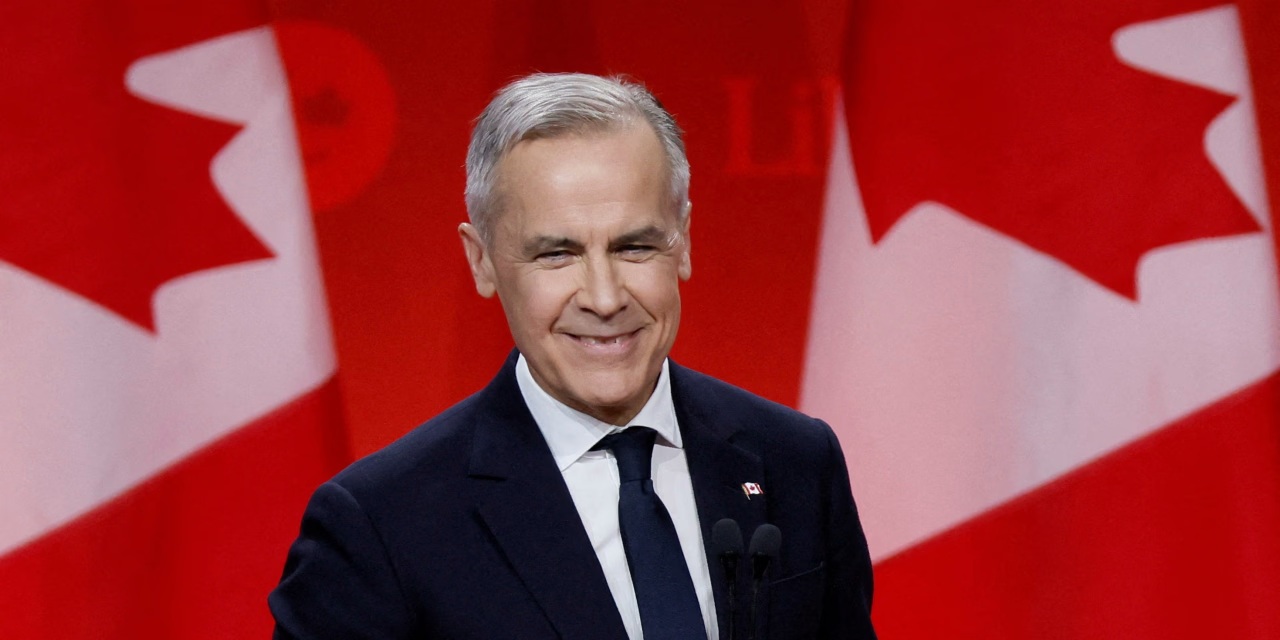
Canadian Prime Minister Mark Carney has made clear that Ottawa is not prepared to return to the negotiating table simply for the sake of reaching an agreement. Instead, he says Washington must adopt a more serious and respectful approach before meaningful discussions can resume.

The latest rupture came after negotiations collapsed on August 21, when Canada rejected what Carney described as unacceptable last-minute U.S. demands.

The dispute has since moved beyond conventional tariff negotiations and into a broader confrontation over economic sovereignty, industrial policy and the political relationship between two historically close allies.

At the center of Canada’s concerns is the future of its manufacturing sector, particularly the automotive industry. Canadian officials argue that some of Washington’s proposals could weaken Canada’s domestic industrial base and effectively turn important Canadian industries into extensions of the U.S. economy.

Canada’s ambassador to Washington has emphasized that any eventual agreement must preserve a viable Canadian auto assembly and parts industry.

Washington, sees the situation differently. U.S. officials have argued that Canada walked away from favorable terms and have challenged Ottawa’s characterization of the negotiations.

That disagreement has created a fundamental problem: both sides appear to believe that the other is responsible for the collapse, making compromise considerably harder. The conflict has also become unusually personal and theatrical.

Carney has criticized Washington’s public messaging, including social-media attacks and provocative political statements. He has urged the U.S. administration to stop using memes, insults and performative rhetoric and instead return to conventional diplomacy.

That distinction matters because trade negotiations depend heavily on trust. Even when governments disagree over tariffs, subsidies or market access, negotiators need confidence that agreements will be respected and that political leaders are negotiating toward a practical outcome.

Repeated public provocations can make that confidence more difficult to rebuild. The economic consequences could extend well beyond government offices. Canada and the United States operate deeply integrated supply chains, particularly in automobiles, energy, manufacturing and agriculture.

Higher tariffs and prolonged uncertainty can increase costs for businesses, disrupt investment decisions and ultimately filter through to consumers on both sides of the border.

Canada has already demonstrated that it is willing to retaliate. Following the U.S. imposition of 50% tariffs on $20 billion of Canadian exports, Ottawa announced equivalent retaliatory measures scheduled to take effect September 8.

Yet neither country has a clear economic interest in allowing the confrontation to become permanent. The United States remains Canada’s dominant trading partner, while Canadian resources, manufacturing capacity and integrated supply chains are valuable to American businesses.

A prolonged trade war therefore risks creating economic damage without necessarily producing a decisive winner. Carney’s position represents a broader shift in Canada’s strategy. Rather than accepting U.S. pressure as the price of maintaining close economic ties.

Ottawa is increasingly emphasizing diversification, national resilience and the protection of Canadian sovereignty. The immediate future of negotiations therefore depends less on another technical tariff proposal than on whether Washington and Ottawa can restore a basic level of diplomatic trust.

Carney has left the door open to a deal, but the message is clear: Canada is prepared to negotiate, not capitulate. For markets and businesses, that distinction is becoming increasingly important.

Until Washington and Ottawa move from confrontation back toward serious bargaining, uncertainty will remain a defining feature of North American trade.

South Korea Bought $20bn of SK Hynix’s Dollar Proceeds to Rebuild FX Reserves

0

South Korean foreign exchange authorities bought roughly $20 billion of U.S. dollars sold by SK Hynix following the chipmaker’s record $26.5 billion American depositary receipt listing in July, using the transaction to replenish foreign-exchange reserves and help stabilize the won, a source with direct knowledge of the matter told Reuters on Wednesday.

The Foreign Exchange Stabilization Fund, jointly managed by the finance ministry and the Bank of Korea, purchased the bulk of the dollars through over-the-counter transactions as SK Hynix repatriated the proceeds to South Korea, according to the source.

The purchases reveal for the first time who ultimately absorbed most of the dollars that SK Hynix brought back to the country after its landmark Wall Street offering. It had been widely expected that the company would repatriate the funds, but the identity of the main buyer had not previously been reported.

The transactions differ from the more conventional foreign-exchange interventions South Korean authorities have historically used to support the won. Rather than simply selling dollars to defend the currency, the authorities were able to absorb dollars generated by a major corporate capital-raising and add them to the country’s foreign-exchange holdings.

South Korea’s foreign-exchange authorities have faced sustained pressure on their dollar resources following months of intervention aimed at containing weakness in the won.

The government does not publicly disclose the precise asset composition or current size of the Foreign Exchange Stabilization Fund, a sovereign pool consisting of U.S. dollars and Korean won. Market participants and macroeconomists have speculated that the fund’s dollar holdings have fallen sharply in recent months as the central bank repeatedly intervened in the foreign-exchange market.

The latest transactions therefore provide authorities with an unusual opportunity to rebuild dollar liquidity without relying solely on market purchases or other reserve-management operations.

The move also comes as the won has staged a sharp reversal. The South Korean currency was among Asia’s weakest performers in 2025, but has strengthened substantially in recent months. The dollar-won exchange rate, which approached a 17-year high of around 1,550 won per dollar in late June, has since fallen by more than 12%, marking a dramatic recovery for the won.

The authorities’ ability to purchase SK Hynix’s repatriated dollars is expected to also reduce the potential foreign-exchange market impact of such a large corporate conversion. Converting tens of billions of dollars into won in a short period could otherwise generate substantial demand for the local currency and amplify volatility in the exchange rate.

SK Hynix’s July ADR sale was the largest U.S. equity offering by a foreign issuer. The memory-chip maker said it would use the proceeds to fund new factories and equipment as it races to expand production capacity amid surging demand for artificial-intelligence chips.

The company’s fundraising underlines the growing importance of South Korea’s semiconductor industry to the country’s capital flows and foreign-exchange market. Large overseas financing transactions can generate significant dollar inflows, creating both an opportunity and a challenge for policymakers managing the won.

Converting the proceeds into domestic currency provides funds for SK Hynix’s South Korean operations and investment plans. For the authorities, purchasing those dollars allows them to capture part of the resulting foreign-currency inflow and add it to official reserves rather than allowing the entire amount to flow through the commercial FX market.

The scale of the transaction is notable against the size of the stabilization fund. The fund stood at 135.1 trillion won ($98.7 billion) under an operational plan confirmed by the National Assembly last year. Under the government’s budget proposal unveiled Tuesday, however, its projected size is around 106.5 trillion won.

The roughly $20 billion purchase from SK Hynix therefore marks a substantial amount relative to the fund’s overall resources and could provide a meaningful boost to its dollar liquidity.

More broadly, the development indicates that there are changing tools available to South Korean policymakers as they navigate volatile global capital flows, semiconductor investment and pressure on the won. With corporate dollar inflows becoming increasingly significant, authorities can potentially use such transactions to replenish reserves while limiting abrupt movements in the currency market.

The challenge will be balancing reserve accumulation against the need to allow the foreign-exchange market to function normally. As the won’s recent rally demonstrates, market forces can shift rapidly, making the management of both reserve levels and exchange-rate volatility crucial for policymakers.

Apple Emerges as Investors’ Safe Haven as AI Trade Faces Growing Doubts

0

Apple is increasingly emerging as an unlikely defensive play for investors as concerns over the durability of the artificial intelligence boom and the risk of a global bond-market sell-off push money away from some of the technology sector’s biggest AI beneficiaries.

Shares of Apple rose 2.6% on Tuesday even as technology stocks broadly declined, extending a period of relative strength that has seen the iPhone maker move in the opposite direction from the broader technology market.

The divergence is unusually pronounced. According to CNBC analysis of ThinkOrSwim data, Apple’s 30-day correlation with the Nasdaq-100 has fallen to levels not seen since 2005. The correlation reached negative 0.86 on Thursday and stood at negative 0.82 at the latest reading.

A correlation of -1 means two assets move perfectly in opposite directions, making the current reading notable for a company that remains one of the largest constituents of the technology-heavy Nasdaq-100. Apple accounts for about 7.5% of the index.

Apple has historically experienced periods when its shares moved inversely to the Nasdaq-100, including during the first quarter of 2024. But the current divergence is both stronger and more persistent.

In early 2024, Apple was under pressure as investors redirected capital toward companies seen as the primary beneficiaries of the emerging AI boom. Now, the direction of the trade appears to be reversing, with Apple benefiting as investors question whether the enormous valuations attached to AI-related companies can be sustained.

“When the AI trade gets questioned, Apple doesn’t sell off with it, because it was never carrying that risk in the first place,” said Dave Mazza, chief executive of Roundhill Investments, which operates an Apple ETF using swaps to generate weekly income.

“It has become the hedge inside the Nasdaq,” Mazza said.

That shift marks a significant change in Apple’s position within the technology sector. For much of the year, the company lagged the Nasdaq as investors favored chipmakers, cloud providers and other companies directly exposed to AI spending.

Apple has since reversed that pattern. After trailing the Nasdaq-100 during the first six months of the year, Apple is now up about 20%, compared with a roughly 15% gain for the index. The longer-term performance gap remains narrower. Over the past three years, the Nasdaq-100 has gained about 90%, while Apple has advanced roughly 82%.

The renewed demand for Apple is also visible in the derivatives market, where options traders appear to be positioning for continued relative strength.

Nearly 1.5 million Apple call options changed hands during Tuesday’s session, compared with fewer than 700,000 puts. ThinkOrSwim data indicated that about 543,000 calls were likely opened by buyers, versus fewer than 220,000 put positions initiated by buyers.

Barchart’s analysis of options flows likewise showed a strong bullish skew in net delta exposure, a measure of how sensitive option positions are to movements in Apple’s share price. Trading activity was unusually heavy. Apple options were the second-most actively traded contracts on Tuesday, with volume roughly twice the 30-day average, according to SpotGamma and Cboe LiveVol data.

The market positioning suggests investors are not simply using Apple as a defensive alternative to AI stocks. Some are actively betting that the company’s relative strength can continue.

Apple’s appeal in the current environment stems partly from what it does not represent. Unlike Nvidia and several other major AI beneficiaries, Apple has not been valued primarily on expectations of explosive AI infrastructure spending. Its enormous installed base, hardware ecosystem, services business, and recurring consumer demand give investors a different earnings profile from companies whose valuations are more directly tied to the pace of AI investment.

That is becoming more relevant as investors reassess the scale of spending required to build AI infrastructure and question how quickly those investments will translate into profits.

There is also a broader macroeconomic dimension. Rising government bond yields can put pressure on expensive growth stocks by increasing the discount rate applied to their future earnings. If investors become more concerned about inflation, fiscal deficits or a broader global rate sell-off, companies with valuations heavily dependent on distant future cash flows can become particularly vulnerable.

Apple is not immune to those forces. Its shares remain expensive by many traditional measures, and the company still faces questions over iPhone growth, China demand, tariffs, and the pace at which its own AI initiatives can generate meaningful revenue.

But its current market role is changing.

Rather than being treated simply as another mega-cap technology stock, Apple is being used as a relative safe harbor within the Nasdaq. The unusually negative correlation with the index suggests investors are separating the company from the broader AI trade and viewing its earnings and cash-generation characteristics as a source of stability when enthusiasm for AI-related assets weakens.

If that pattern persists, it could mark a meaningful shift in technology-market leadership, where investors may not necessarily be abandoning technology, but reallocating within the sector from the most aggressive AI exposures toward companies perceived to offer stronger and more diversified underlying businesses.

Donald Trump Jr’s Prediction Market Conflict of Interest

0

Donald Trump Jr. has positioned himself in an unusually advantageous corner of America’s rapidly expanding prediction-market industry: one where he could benefit regardless of which major platform ultimately emerges as the dominant player.

Through his venture firm, 1789 Capital, Trump Jr. is reportedly committing $300 million to Polymarket’s $1 billion financing round, giving the prediction-market company a valuation of approximately $21 billion.

At the same time, he maintains a paid advisory position and equity interest in Kalshi, another major player in the sector, whose valuation has reportedly reached roughly $22 billion.

The arrangement effectively gives Trump Jr. financial exposure to both sides of an increasingly competitive market. Prediction markets have moved from a niche corner of the internet into a significant financial and political phenomenon.

Platforms such as Polymarket and Kalshi allow users to trade contracts based on the outcomes of elections, economic indicators, sporting events and other real-world developments. Their rapid growth has also attracted substantial investment, institutional attention and regulatory scrutiny.

Trump Jr.’s involvement is particularly notable because of the timing and breadth of his relationships. He became an adviser to Kalshi in January 2025 and subsequently joined Polymarket’s board approximately seven months later.

His simultaneous connections to two competing companies raise questions about governance, incentives and potential conflicts of interest, particularly because prediction markets operate in a regulatory environment that remains politically sensitive.

Kalshi has maintained that Trump Jr.’s advisory work is focused on marketing and does not involve regulatory matters.

That distinction is important because prediction markets have faced intense debates over whether certain event contracts should be treated primarily as financial instruments, gambling products or something occupying a distinct regulatory category.

However, reporting by The New York Times has added another layer to the controversy. According to the newspaper, Trump Jr. privately urged Republican attorneys general to ease their opposition to prediction markets during a closed-door gathering in March.

If accurate, the episode raises questions about where private business interests end and political influence begins. The broader issue is not simply whether Trump Jr. has invested in competing companies.

Diversifying investments across rival businesses is common in venture capital, particularly when an investor believes an entire industry is likely to grow.

The more sensitive question is whether his political access, advisory positions and board membership could influence the regulatory environment in ways that benefit companies in which he has a financial interest.

That distinction matters because regulation could become one of the biggest determinants of which prediction-market platforms thrive. If regulators adopt rules that expand the legality and accessibility of event contracts, established operators could gain enormously.

Conversely, restrictive policies could limit their growth or force changes to their business models. Trump Jr.’s position therefore illustrates the increasingly blurred boundaries between politics, finance and emerging technology.

Prediction markets are themselves designed around uncertainty, but investors and executives seek to manage that uncertainty through strategic positioning. Holding interests in both Polymarket and Kalshi can be viewed as precisely that kind of strategy.

Yet financial hedging does not automatically eliminate ethical concerns. If someone has meaningful economic exposure to competing platforms while simultaneously possessing political influence over the regulatory debate surrounding those platforms, transparency becomes essential.

The prediction-market industry may produce one clear winner, several durable competitors or an entirely new financial category. Whatever happens, Trump Jr. appears positioned to participate in the upside.

The question now is whether the public and regulators can clearly distinguish between legitimate investment, strategic influence and potential conflicts of interest as prediction markets become an increasingly important part of modern finance.