DD
MM
YYYY

PAGES

DD
MM
YYYY

spot_img

PAGES

Home Blog Page 13

China Expected To Keep Lending Rates Unchanged Despite Slowing Growth As Policymakers Shift Focus To Fiscal Support

0

China is widely expected to leave its benchmark lending rates unchanged for a 14th consecutive month in July, signaling that policymakers remain reluctant to deploy broad-based monetary stimulus even as economic growth slows and domestic demand remains weak.

A Reuters survey of 23 market participants found unanimous expectations that the People’s Bank of China (PBOC) will keep both the one-year and five-year loan prime rates (LPRs) unchanged when they are announced on Monday.

The one-year LPR, which serves as the benchmark for most new corporate and household loans, is expected to remain at 3.00%, while the five-year LPR, the reference rate for most mortgages, is forecast to stay at 3.50%.

The decision would mark the 14th straight month without a change in China’s benchmark lending rates, underscoring Beijing’s preference for targeted policy measures rather than aggressive monetary easing.

The LPR is calculated monthly after 20 designated commercial banks submit proposed lending rates to the central bank, making it China’s primary benchmark for commercial lending.

The market consensus comes shortly after data showed China’s economy expanded at its slowest pace in more than three years during the second quarter, missing analysts’ forecasts despite resilient exports and manufacturing.

The latest figures reinforced concerns that the world’s second-largest economy remains characterized by a “K-shaped” recovery, where export-oriented manufacturers and advanced technology sectors continue to perform relatively well while households, property markets and consumer-facing industries struggle.

Weak consumer spending remains one of the biggest drags on the economy, reflecting persistent concerns over employment, falling property values and subdued household confidence. The prolonged property downturn has eroded household wealth and continues to suppress borrowing and consumption, limiting the effectiveness of monetary easing.

Although manufacturing output and exports have remained relatively resilient, helped by strong overseas demand for electric vehicles, batteries, solar equipment and other advanced industrial products, economists are questioning whether export-led growth alone can sustain the broader economy amid rising global trade tensions.

The divergence between external strength and domestic weakness has prompted calls for additional policy support. However, most economists believe Beijing is unlikely to respond with sweeping interest rate cuts. Instead, policymakers appear to be prioritizing fiscal measures and targeted liquidity support while preserving monetary policy flexibility.

Goldman Sachs economists said the weaker-than-expected GDP figures have modestly increased the probability of additional monetary easing later this year, but stopped short of changing their baseline outlook.

“In our view, the weaker-than-expected Q2 GDP data have increased somewhat the likelihood of further monetary easing, although rate and reserve requirement ratio (RRR) cuts this year are still not in our baseline,” Goldman Sachs economist Xinquan Chen said.

He added that policymakers are more likely to accelerate the implementation of existing fiscal measures while the PBOC continues providing ample liquidity to the banking system.

That approach underpins Beijing’s growing emphasis on fiscal policy rather than interest rate reductions to support growth. Recent measures have included increased infrastructure investment, consumer subsidy programmes and support for strategic sectors such as artificial intelligence, advanced manufacturing and semiconductors.

Attention is now shifting to China’s upcoming Politburo meeting, one of the country’s most closely watched policy gatherings, where senior Communist Party leaders are expected to outline economic priorities for the second half of the year.

Investors will look for signals on whether authorities intend to introduce additional stimulus to support consumption, stabilize the property market, and sustain economic growth amid mounting external uncertainties.

While the consensus points to unchanged lending rates, some economists continue to expect modest easing.

Analysts at Citi forecast that the PBOC could cut benchmark rates by 10 basis points as early as this month alongside faster deployment of fiscal stimulus.

“We expect incremental policies to drive a mild rebound ahead, including a potential 10-basis-point rate cut from the PBOC as soon as this July and an acceleration in fiscal policy deployment,” Citi said in a research note.

Banks Remain Cautious Despite Central Bank Pressure

Even if the PBOC eventually lowers benchmark rates, economists caution that monetary policy alone is unlikely to revive borrowing demand.

Chinese banks continue to face a weak appetite for loans from households and businesses despite repeated calls from regulators to increase lending. Financial institutions have instead become more selective as rising consumer loan defaults and persistent weakness in the property sector increase credit risks.

Recent data showed new bank lending remained weaker than expected, while short-term household loans continued to contract, highlighting the limited effectiveness of lower borrowing costs when consumer confidence remains subdued.

The central bank has also sought to stabilize financial conditions through targeted liquidity operations rather than aggressive interest rate reductions. Earlier this week, regulators instructed some banks to avoid conducting bill re-discount operations below 0.5% after unusually low rates reflected excess liquidity and weak credit demand.

That move indicates that the PBOC is working on a broader strategy of maintaining orderly financial markets while avoiding the kind of large-scale monetary easing that could further weaken the yuan or inflate financial risks.

With inflation remaining subdued, economic growth slowing, and external uncertainties, including ongoing trade frictions with the United States, continuing to weigh on the outlook, economists expect Beijing to maintain a measured policy approach. This means relying on a combination of targeted monetary support and expanded fiscal spending rather than broad interest rate cuts to steer the economy through the remainder of the year.


Transcorp Power H1 2026 Profit Slips As Transmission Constraints Weigh On Earnings, Declares N1.50 Interim Dividend

0

Transcorp Power Plc reported a weaker first half of 2026 as recurring transmission infrastructure challenges and lower electricity sales weighed on revenue and profitability, although improved cost discipline helped cushion the impact and enabled the company to maintain margins.

The power generation company posted a pre-tax profit of N54.99 billion for the six months ended June 30, 2026, representing a 6.37% year-on-year decline from N58.73 billion recorded in the corresponding period of 2025.

The earnings slowdown was largely driven by a softer second quarter. Pre-tax profit fell 61.1% quarter-on-quarter to N15.40 billion from N39.59 billion in the first quarter and was marginally below the N15.44 billion posted in the second quarter of 2025, highlighting how operational constraints intensified during the period.

Even with the weaker earnings, the company declared an interim dividend of N1.50 per ordinary share, reaffirming confidence in its cash generation and long-term outlook. The dividend will be paid electronically on July 23, 2026, to shareholders on the register as of July 20, subject to the appropriate withholding tax and completion of e-dividend registration.

Revenue Declines As Transmission Bottlenecks Persist

Revenue declined across Transcorp Power’s major operating segments as the company generated less income from both electricity supplied to the grid and capacity payments.

Second-quarter revenue fell 12.95% to N87.37 billion from N100.37 billion a year earlier.

For the first half, revenue from energy delivered, the company’s largest source of income, declined to N138.94 billion from N150.80 billion, while capacity charge revenue fell to N43.02 billion from N55.00 billion.

Energy sales accounted for approximately 76.4% of total revenue during the period, while capacity payments contributed the remaining 23.6%, underscoring the company’s continued reliance on electricity generation volumes.

Domestic sales experienced the sharpest decline, with revenue from local customers falling to N116.66 billion from N146.77 billion. By contrast, international revenue increased to N65.30 billion from N59.04 billion, partly offsetting the weakness in the domestic market and demonstrating growing export opportunities through regional electricity trade.

Management attributed much of the pressure to recurring vandalism of transmission infrastructure, which limited the evacuation of available generation capacity. The issue illustrates a persistent structural challenge within Nigeria’s electricity value chain, where generation companies are often unable to fully monetize available capacity because transmission infrastructure cannot carry all the electricity produced.

The company indicated that while generating capacity remained available, damaged transmission lines prevented optimal dispatch, reducing energy sales and revenue despite steady operational capability.

Margins Improve Despite Lower Sales

One of the standout features of the results was the improvement in profitability margins despite declining revenue, suggesting stronger cost management.

Cost of sales declined 12.5% to N112.15 billion from N128.18 billion, broadly matching the pace of revenue decline.

The biggest cost savings came from:

  • Natural gas and fuel expenses, which declined to N102.33 billion from N109.17 billion
  • Repairs and maintenance costs, which fell sharply to N4.52 billion from N13.99 billion

These reductions limited the decline in gross profit to 11.95%, allowing gross margin to improve.

Administrative expenses, however, increased to N16.71 billion from N14.75 billion, including N8.07 billion in operating, maintenance, and commercial costs.

Even with higher overheads, operating profit in the second quarter increased 31.66% year-on-year to N19.13 billion, reflecting the company’s ability to preserve profitability through operational efficiencies.

Management noted that:

  • Gross margin improved to 38.4%
  • Operating margin rose to 30.6%
  • Pre-tax margin increased to 30.2%

Chief Financial Officer Evans Okpogoro attributed the stronger margins to cost optimization initiatives and disciplined financial management, demonstrating that management has focused on profitability rather than simply pursuing revenue growth.

Lower Finance Costs Provide Support

Another positive feature of the results was a substantial reduction in financing costs.

Finance costs fell to N1.36 billion from N6.41 billion, reducing pressure on earnings.

Finance income also declined, dropping to N1.34 billion from N3.45 billion, reflecting lower returns on cash balances and investments.

Although the reduction in borrowing costs supported profitability, it was insufficient to offset weaker operating performance.

Profit after tax for the first half declined 12.6% to N38.50 billion from N44.05 billion, while earnings per share fell to N5.13 from N5.87.

For the second quarter alone:

  • Profit after tax dropped 24.01% year-on-year to N8.80 billion
  • Earnings per share fell 46.1% to N0.83 from N1.54, highlighting the weaker quarterly performance.

Balance sheet reflects growing working capital pressure

The results also point to increasing working capital challenges facing Nigeria’s electricity generation companies.

Trade and other receivables climbed to N529.42 billion from N468.57 billion, indicating that larger amounts of revenue remain unpaid.

The increase reflects the persistent liquidity issues across Nigeria’s electricity market, where generation companies often wait extended periods before receiving payments from market participants.

Borrowings also increased significantly.

Total interest-bearing debt rose to N63.63 billion, more than doubling from N30.69 billion at the end of 2025.

Meanwhile, cash and cash equivalents declined sharply to just N667.93 million, compared with N2.22 billion six months earlier.

The combination of rising receivables, higher debt, and lower cash suggests the company has relied more heavily on borrowing to finance operations while awaiting payment for electricity already supplied.

Although the lower finance costs indicate favorable financing terms or debt restructuring, sustained growth in receivables remains an important area for investors to monitor, as delayed collections continue to strain liquidity across Nigeria’s power sector.

Total assets nevertheless expanded 9.86% to N619.02 billion, reflecting continued investment and growth in the company’s asset base.

Management Expects Stronger Second Half

Managing Director and Chief Executive Officer Peter Ikenga said the company remained profitable and operationally efficient despite the transmission challenges experienced during the first half.

He expressed confidence that Transcorp Power would recover lost ground during the remainder of the year and deliver a stronger full-year performance than in 2025.

That outlook will depend largely on improvements in transmission network reliability, which remains outside the direct control of generation companies.

If transmission constraints ease, the company could increase electricity dispatched from existing generation assets without requiring significant new capacity investments, providing an avenue for earnings recovery.

Transcorp Power currently has a market capitalization of approximately N1.84 trillion.

Its shares have declined about 20% year-to-date, falling from N307.00 at the start of 2026 to N245.50 as of July 17. The decline reflects broader investor caution toward Nigerian equities as well as concerns over operational headwinds affecting the power sector.

Nevertheless, the interim dividend announcement may provide support for investor sentiment, particularly among income-focused shareholders, while the improvement in operating margins demonstrates that management continues to exercise tight cost control even as sector-wide infrastructure bottlenecks constrain revenue growth.

Looking ahead, investors are likely to focus on three key issues: the pace of receivables collection, progress in addressing transmission constraints across the national grid, and whether management can translate stronger operating efficiency into renewed earnings growth during the second half of the year.

Why Shifting Alliances Are Transforming the Global Order in 2026

0

The global political landscape is undergoing a profound transformation as governments grapple with intensifying geopolitical rivalries, economic fragmentation, and rapid technological disruption.

From the impact of United States policy on Gulf security and North American trade to the United Kingdom’s evolving approach toward artificial intelligence and emerging technologies, the world is entering an era defined by shifting alliances, strategic competition, and growing uncertainty.

These developments are not isolated events but interconnected trends that are collectively reshaping international relations and global governance.

The United States remains the central actor in global security architecture, particularly in the Gulf region. American foreign policy decisions regarding military deployments, sanctions, and regional partnerships continue to influence the stability of the Middle East.

Recent tensions involving Iran, maritime security in the Strait of Hormuz, and changing US commitments to regional allies have generated concerns among Gulf states about the long-term reliability of Washington’s security guarantees.

Consequently, countries such as Saudi Arabia, the United Arab Emirates, and Qatar have increasingly diversified their diplomatic and economic partnerships, engaging more actively with China, India, and Russia.

This strategic diversification reflects a broader global trend: nations are no longer willing to rely solely on a single superpower. Instead, they are pursuing multi-alignment strategies to safeguard their national interests.

The Gulf states, for example, are leveraging their energy resources and sovereign wealth funds to build influence across Asia, Europe, and Africa, positioning themselves as critical players in an increasingly multipolar world order.

Meanwhile, North American trade dynamics are also experiencing significant changes.

The United States, Canada, and Mexico remain deeply interconnected through manufacturing supply chains and trade agreements, yet growing protectionist sentiments and geopolitical concerns are reshaping economic policies.

The push for supply-chain resilience, domestic industrial production, and strategic decoupling from China has accelerated investment in critical sectors such as semiconductors, rare earth minerals, and advanced manufacturing.

Trade policy is increasingly becoming an instrument of national security.

Governments now view economic interdependence through a strategic lens, recognizing that excessive reliance on foreign suppliers can create vulnerabilities during periods of geopolitical tension.

This shift has led to a renewed emphasis on friend-shoring and regional economic partnerships, with North America attempting to strengthen internal production capabilities while reducing exposure to external risks.

At the same time, technological competition is emerging as one of the defining features of twenty-first-century geopolitics. The United Kingdom has sought to position itself as a leading hub for artificial intelligence and advanced technologies, balancing innovation with regulatory oversight.

British policymakers increasingly recognize that AI will not only shape economic growth but also determine future geopolitical influence. The UK’s AI strategy reflects broader concerns about technological sovereignty, data governance, and national competitiveness.

Investments in research, semiconductor capabilities, and digital infrastructure are viewed as essential for maintaining economic relevance in an increasingly technology-driven global economy.

However, Britain also faces significant challenges, including competition from the United States and China, talent shortages, and the need to establish effective regulatory frameworks that encourage innovation without compromising security and ethical standards.

Artificial intelligence is rapidly becoming a strategic asset comparable to energy resources or military power. Nations capable of leading in AI development are likely to enjoy substantial advantages in economic productivity, defense capabilities, and global influence.

Consequently, competition over talent, computational infrastructure, and technological standards is intensifying across major economies. These developments illustrate a world in transition.

Traditional alliances are being reassessed, economic relationships are increasingly shaped by security concerns, and technological leadership has become a central pillar of national power. As geopolitical competition deepens and uncertainty persists, states are adapting their strategies to navigate an increasingly complex international environment.

The emerging global order will likely be characterized not by singular dominance but by a dynamic and competitive multipolar system in which security, economics, and technology are more interconnected than ever before.

Britain’s Next Prime Minister Faces Major AI and Technology Policy Decisions Amid Global Competition

0

Britain’s next prime minister will inherit an economy and political landscape increasingly shaped by technology and artificial intelligence.

Decisions made in the coming years could determine whether the United Kingdom emerges as a global leader in the AI revolution or falls behind competitors such as the United States, China, and the European Union. As technological competition intensifies.

The next government will face difficult choices involving regulation, innovation, national security, labor markets, and digital sovereignty. Artificial intelligence has rapidly become one of the defining technologies of the twenty-first century.

From healthcare and education to finance and defense, AI is transforming industries at an unprecedented pace. Britain already possesses significant advantages in this field.

The country is home to world-class universities, a thriving startup ecosystem, and leading AI firms such as DeepMind. London has also become one of Europe’s major technology hubs, attracting talent and investment from around the world.

Maintaining this position will require clear and decisive policymaking. One of the most pressing challenges for the next prime minister will be striking a balance between regulation and innovation. Excessive regulation could discourage investment and push companies to relocate to more business-friendly jurisdictions.

Conversely, weak oversight may expose society to risks such as misinformation, algorithmic bias, privacy violations, and the misuse of AI technologies. Another critical issue concerns economic competitiveness. The global race for AI leadership is increasingly linked to economic power.

Countries are investing billions in research infrastructure, semiconductor manufacturing, and advanced computing capabilities. Britain must decide whether to significantly increase public investment in AI research and digital infrastructure or rely primarily on private-sector initiatives.

Failure to invest could leave the country dependent on foreign technologies and diminish its influence in setting global standards.

The labor market presents another significant policy dilemma. AI has the potential to improve productivity and create entirely new industries, yet it may also disrupt millions of jobs. Automation could particularly affect administrative, customer service, transportation, and certain professional roles.

The next government will therefore need to develop comprehensive strategies for workforce retraining and education reform. Preparing citizens for an AI-driven economy will require investments in digital skills, science education, and lifelong learning programs.

National security considerations are equally important. Artificial intelligence increasingly plays a central role in cyber warfare, intelligence gathering, and military operations. Britain faces growing threats from state and non-state actors utilizing advanced technologies for espionage and disinformation campaigns.

The next prime minister will need to strengthen cybersecurity capabilities while ensuring that the United Kingdom remains at the forefront of defense-related AI innovation. Cooperation with allies such as the United States and NATO partners will become increasingly essential.

Data governance also represents a major policy challenge. AI systems rely heavily on vast amounts of data, making questions of privacy and ownership increasingly significant. The government must determine how to protect citizens’ personal information while enabling companies to access the data necessary for innovation.

Decisions regarding digital identity, cross-border data flows, and online platform regulation will have long-term implications for both economic growth and civil liberties. Britain must consider its broader geopolitical role in technology governance.

As global powers compete to establish rules for artificial intelligence, the United Kingdom has an opportunity to position itself as a bridge between different regulatory approaches. By promoting ethical AI standards and international cooperation, Britain could play a significant role in shaping the future global digital order.

The next prime minister’s approach to technology and artificial intelligence may define Britain’s economic and strategic trajectory for decades. The choices made regarding regulation, investment, education, and security will determine whether the country remains a leading innovator.

In an era increasingly defined by AI, technology policy is no longer a niche issue but a central question of national prosperity and global influence.

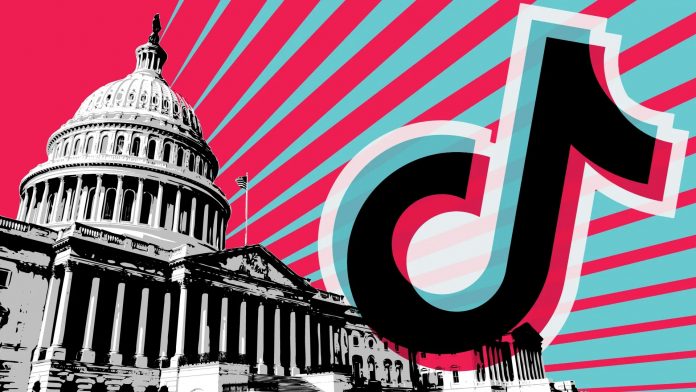
U.S. Lifts TikTok Ban On Federal Devices After Ownership Overhaul

0

The U.S. Department of Justice has told federal agencies they can once again allow employees to download TikTok on government-issued devices, reversing a restriction that had been in place since 2022 and marking another significant turn in Washington’s evolving approach to the popular video-sharing platform.

According to Reuters, the Justice Department concluded that the 2022 law banning TikTok from federal devices no longer applies following the completion of a restructuring that transferred control of TikTok’s U.S. operations to a new American-backed joint venture.

The DOJ memo reportedly states that President Donald Trump has authorized “employees of Executive Branch agencies” to download TikTok onto official devices, provided agencies approve the move and users comply with workplace cybersecurity and information technology policies.

The guidance effectively restores discretion to federal departments and agencies, allowing each to decide whether TikTok may be installed on government devices based on its own operational and security requirements.

The policy reversal follows the completion of a long-negotiated ownership restructuring designed to address U.S. national security concerns over TikTok’s ties to China.

TikTok’s U.S. operations are now controlled through a joint venture backed by Oracle, private equity firm Silver Lake, and Abu Dhabi investment company MGX. Oracle serves as the venture’s technology and security partner, overseeing data security and cloud infrastructure, while ByteDance, TikTok’s Chinese parent company, retains a 19.9% ownership stake.

The restructuring represents the latest chapter in a dispute that has stretched across multiple U.S. administrations. Concerns that ByteDance’s ownership could expose Americans’ data to the Chinese government or allow Beijing to influence content recommendations first prompted the federal government to prohibit TikTok on official devices in 2022. Those concerns later expanded beyond government networks. Congress subsequently passed legislation requiring ByteDance to divest TikTok’s U.S. business or face a nationwide ban, arguing that Chinese ownership posed unacceptable national security risks.

The nationwide restrictions briefly took effect early last year, causing TikTok to go offline in the United States for several hours before service was restored after President Donald Trump delayed enforcement while negotiations over a new ownership structure continued.

The latest DOJ guidance indicates that the administration believes the restructuring fundamentally changes the legal and national security considerations that underpinned the original federal-device prohibition.

A Dramatic Policy Shift Under Trump

The decision also reflects a broader evolution in the Trump administration’s handling of TikTok. During his first term, Trump sought to force ByteDance to sell TikTok’s U.S. operations and repeatedly warned that the platform represented a national security threat.

In his current administration, however, Trump has pursued a more pragmatic approach, aiming to preserve TikTok’s availability in the United States while restructuring its ownership to reduce Chinese control. Rather than enforcing an outright ban, the administration has focused on securing American oversight of TikTok’s U.S. operations, data infrastructure and governance.

The DOJ’s interpretation that the 2022 prohibition no longer applies suggests the administration believes those objectives have now been substantially achieved.

The move could also ease operational constraints for federal employees whose agencies rely on social media platforms for communications, public outreach and emergency information dissemination. Several government departments had previously been unable to use TikTok directly on official devices despite the platform’s enormous reach among younger audiences.

Regulatory Scrutiny Remains Far From Over

Despite the latest policy change, TikTok’s legal and regulatory challenges are unlikely to disappear entirely. ByteDance’s continued minority ownership may still attract scrutiny from lawmakers and national security officials who have argued that any continuing Chinese stake could leave room for influence over the platform’s operations or access to sensitive information.

Congress has remained divided over whether the ownership restructuring adequately addresses long-standing security concerns, and lawmakers could continue pushing for stricter oversight of the platform.

Moreover, the DOJ guidance does not automatically restore TikTok across the federal government. Agencies retain the authority to prohibit or restrict the app on government-issued devices if they determine it poses cybersecurity or operational risks.

The decision also applies only to federal government devices and should not be interpreted as ending broader oversight of TikTok. The platform remains subject to continuing national security monitoring under the new ownership structure, and future compliance with U.S. security requirements will likely determine whether the current arrangement remains acceptable.

More broadly, the reversal underpins a shift in Washington’s technology policy. Rather than pursuing outright bans on foreign-owned digital platforms, policymakers are now seeking structural solutions that preserve access to widely used services while attempting to place critical data, infrastructure, and governance under American oversight.

For TikTok, which has more than 170 million U.S. users, the latest decision is seen as a win in its effort to secure a long-term future in the United States.